Category
page 1Actuarial science

demography
alt=The Demography of the World Population from 1950 to 2100. Data source: United Nations — World Population Prospects 2017|thumb|350x350px|The Demography of the World Population from 1950 to 2100. Data source: United Nations — World Population Prospects 2017

risk
thumb|upright=1.35|Firefighters are exposed to risks of [[fire and building collapse during their work.]]

life expectancy
statistical measure of how long a person or organism may live, based on factors of their life
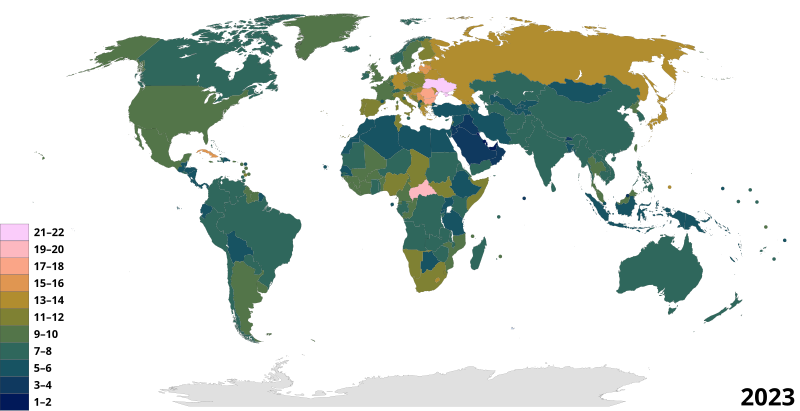
mortality rate
measure of the number of deaths in a population from a given cause, scaled by population, in a set period of time

risk management
management to identification, evaluation, and prioritization of risks

compound interest
when interest is added to the principal of a deposit or loan, so that, from that moment on, the interest that has been added also earns interest
mathematical statistics
branch of statistics, mathematical methods are used here

reinsurance
thumb|Headquarters of the Munich Reinsurance Company
credit risk
risk of default on a debt that may arise from a borrower failing to make required payments
actuarial science
discipline that applies mathematical and statistical methods to assess risk in the insurance and finance industries

discounting
In finance, discounting is a mechanism in which a debtor obtains the right to delay payments to a creditor, for a defined period of time, in exchange for a charge or fee. Essentially, the party that owes money in the present purchases the right to delay the payment until some future date. This transaction is based on the fact that most people prefer current interest to delayed interest because of mortality effects, impatience effects, and salience effects. The discount, or charge, is the difference between the original amount owed in the present and the amount that has to be paid in the future
Pareto distribution
probability distribution
financial economics
branch of economics concerned with financial or monetary transactions
value at risk
estimated, as yet unrealised loss for an investment for a given set of conditions
time value of money
conjecture that there is greater benefit to receiving a sum of money now rather than later
risk aversion
preference against risk, a common human behavior of attempting to lower uncertainty and avoid risk
underwriting
Underwriting (UW) services are provided by some large financial institutions, such as banks, insurance companies and investment houses, whereby they guarantee payment in case of damage or financial loss and accept the financial risk for liability arising from such guarantee. An underwriting arrangement may be created in a number of situations including insurance, issues of security in a public offering, and bank lending, among others. The person or institution that agrees to sell a minimum number of securities of the company for commission is called the underwriter.
life table
table which shows probability of death
generalized linear model
class of statistical models
failure rate
frequency with which an engineered system or component fails
predictive analytics
variety of statistical techniques to make predictions about future or otherwise unknown events
copula
statistical distribution for dependence between random variables
general insurance
typically defined as any insurance that is not determined to be life insurance
compound annual growth rate
CAGR is a term for the geometric progression ratio that provides a constant rate of return
asset allocation
implementation of an investment strategy that attempts to balance risk versus reward by adjusting the percentage of each asset in an investment portfolio according to the investor's risk tolerance, goals and investment time frame
Kaplan–Meier estimator
non-parametric statistic used to estimate the survival function

Gompertz–Makeham law of mortality
mathematical equation related to human death rate
enterprise risk management
methods and processes used by organizations to manage risks and seize opportunities related to the achievement of their objectives
Workers' compensation insurance
insurance for injuries during employment, in exchange for relinquishing the right to sue the employer
maximum life span
measure of the maximum amount of time individuals in a population have been observed to survive between birth and death
extreme value theory
branch of statistics focusing on large deviations
100-year flood
flood event that has a 1% probability of being equaled or exceeded in any given year
economic capital
amount of money needed to secure survival in a worst-case scenario
heavy-tailed distribution
probability distributions whose tails are not exponentially bounded
annuity
financial contract which provides an income stream in return for an initial payment with specific parameters
life annuity
type of annuity
financial modeling
task of building an abstract representation of a real world financial situation
Lexis diagram
diagram used in demographics
risk appetite
level of risk that an organization or individual is prepared to accept in pursuit of objectives, before action is deemed necessary to reduce the risk
value of life
economic value used to quantify the benefit of avoiding a fatality. It is also referred to as the cost of life, value of preventing a fatality (VPF), implied cost of averting a fatality (ICAF), and value of a statistical life (VSL)
years of potential life lost
estimate of the average years a person would have lived if they had not died prematurely
Credit valuation adjustment
economics term
Risk-adjusted return on capital
profitability measurement framework
Force of mortality
Function in actuarial science
computational finance
branch of applied computer science that deals with problems of practical interest in finance
model risk
the potential loss an institution may incur, as a consequence of decisions that could be principally based on the output of internal models, due to errors in the development, implementation or use of such models
embedded value
measure of value of a life insurance company
Wald's equation
theorem
Gompertz distribution
continuous probability distribution, named after Benjamin Gompertz
risk parity
approach to investment management
IFRS 17
financial standard on insurance contracts
risk measure
concept in financial mathematics that is used to determine the amount of an asset or set of assets to be kept in reserve