Category
page 1Agaricales families

Agaricaceae
The Agaricaceae are a family of basidiomycete fungi and include the genus Agaricus, as well as basidiomycetes previously classified in the families Tulostomataceae, Lepiotaceae, and Lycoperdaceae.

Amanitaceae
The Amanitaceae are a family of mushroom-forming fungi. The family, also commonly called the amanita family, is in order Agaricales, the gilled mushrooms. The family consists primarily of the large genus Amanita, but also includes the smaller genera Catatrama, Limacella, Limacellopsis, Saproamanita, and Zhuliangomyces.

Cortinariaceae
The Cortinariaceae are a large family of gilled mushrooms found worldwide, containing over 3200 species. The family takes its name from its largest genus, the varied species of the genus Cortinarius. Many genera formerly in the Cortinariaceae have been placed in various other families, including Hymenogastraceae, Inocybaceae and Bolbitiaceae.
Hygrophoraceae
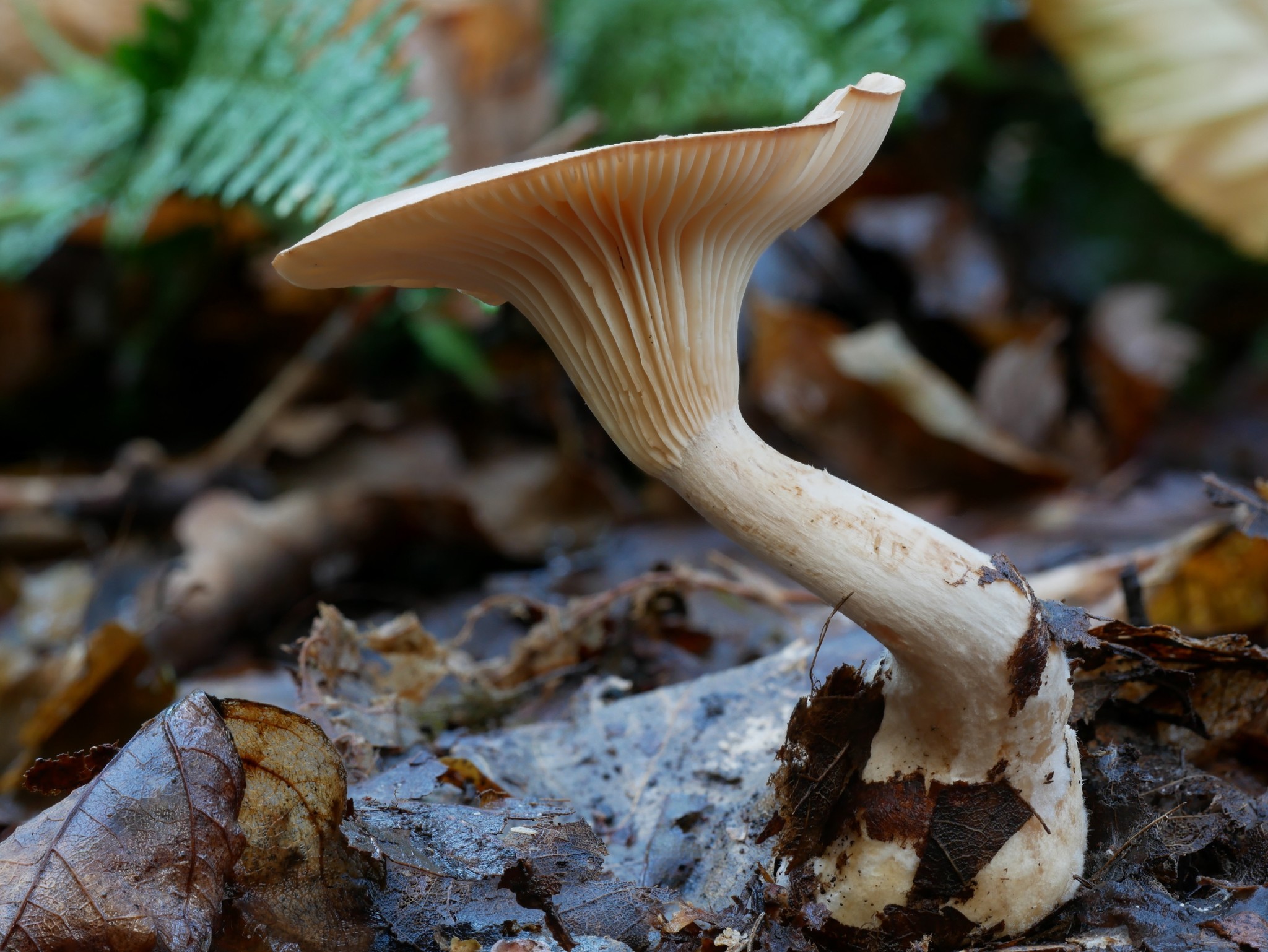
The Hygrophoraceae are a family of fungi in the order Agaricales. Originally conceived as containing white-spored, thick-gilled agarics (gilled mushrooms), including Hygrophorus and Hygrocybe species (the waxcaps or waxy caps), DNA evidence has extended the limits of the family, so it now contains not only agarics, but also basidiolichens and corticioid fungi. Species are thus diverse and are variously ectomycorrhizal, lichenized, associated with mosses, or saprotrophic. The family contains 34 genera and over 1000 species. None is of any great economic importance, though fruit bodies of some H

Pleurotaceae
The Pleurotaceae are a family of small to medium-sized mushrooms which have white spores. The family contains 13 genera over 412 species. Members of Pleurotaceae can be mistaken for members of Marasmiaceae. Perhaps the best known member is the oyster mushroom, Pleurotus ostreatus.

Physalacriaceae
The Physalacriaceae are a family of fungi in the order Agaricales. Species in the family have a widespread distribution, ranging from the Arctic, (Rhizomarasmius), to the tropics, e.g. Gloiocephala, and from marine sites (Mycaureola) and fresh waters (Gloiocephala) to semiarid forests (Xerula).

Pluteaceae
The Pluteaceae are a family of small to medium-sized mushrooms which have free gill attachment and pink spores. Members of Pluteaceae can be mistaken for members of Entolomataceae, but can be distinguished by the angled spores and attached gills of the Entolomataceae. The four genera in the Pluteaceae comprise the widely distributed Volvariella and Pluteus, the rare Chamaeota, and Volvopluteus, which was newly described in 2011 as a result of molecular analysis. The Dictionary of the Fungi (10th edition, 2008) estimates there are 364 species in the family.
Hymenogastraceae
The Hymenogastraceae is a family of fungi in the order Agaricales with both agaric and false-truffle shaped fruitbodies. Formerly, prior to molecular analyses, the family was restricted to the false-truffle genera. The mushroom genus Psilocybe in the Hymenogastraceae is now restricted to the hallucinogenic species while nonhallucinogenic former species are largely in the genus Deconica classified in the Strophariaceae.
Lyophyllaceae
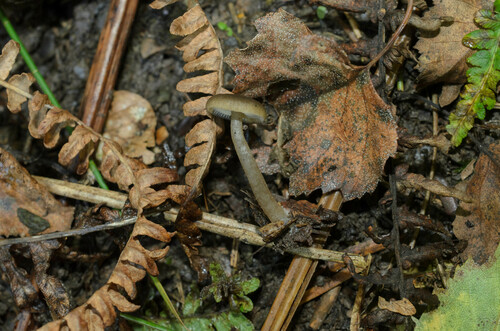
The Lyophyllaceae is a family of fungi in the order Agaricales. A 2008 estimate indicated eight genera and 157 species; , the Catalog of Life lists 13 genera in the family. The taxon was originally circumscribed in 1938 by mycologist Robert Kühner as the tribe Lyophylleae (in the family Tricholomataceae), but raised to the taxonomic rank of family and renamed the Lyophyllaceae by Walter Jülich in 1981.
Fistulinaceae
The Fistulinaceae are a family of fungi, the best-known member of which is the beefsteak fungus Fistulina hepatica. Molecular studies have now shown it to lie within the Agaricales.
Inocybaceae
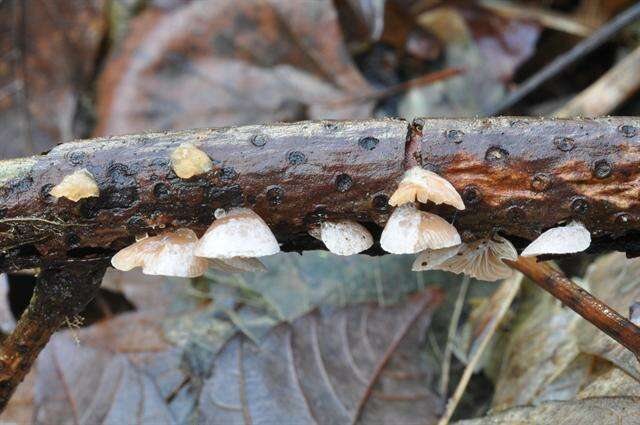
The Inocybaceae are a family of fungi in the order Agaricales, the largest order of mushroom-forming fungi. It is one of the larger families within Agaricales (gilled mushrooms). This family exhibits an ectomycorrhizal ecology. Members of this family have a widespread distribution in tropical and temperate areas.
Nidulariaceae
The Nidulariaceae (from "nidulus": "small nest") are a family of fungi in the order Agaricales. Commonly known as the '''bird's nest fungi''', their fruiting bodies resemble tiny egg-filled birds' nests. As they are saprobic, feeding on decomposing organic matter, they are often seen growing on decaying wood and in soils enriched with wood chips or bark mulch; they have a widespread distribution in most ecological regions. The five genera within the family, namely, Crucibulum, Cyathus, Mycocalia, Nidula, and Nidularia, are distinguished from each other by differences in morphology and peridiol

Schizophyllaceae
The Schizophyllaceae are a family of fungi in the order Agaricales. The family contains two genera and seven species. Species cause white rot in hardwoods. The most common member of the genus Schizophyllum is Schizophyllum commune, a widely distributed mushroom.

Typhulaceae
The Typhulaceae are a family of clavarioid fungi in the order Agaricales. Basidiocarps are small, simple, and typically club-shaped with a distinct stem. The family originally contained several genera, including Macrotyphula and Ceratellopsis, but molecular research, based on cladistic analysis of DNA sequences, has shown that only the type genus Typhula belongs in the Typhulaceae, the other genera being synonyms or belonging to other families. The monotypic Lutypha sclerotiophila has not yet been sequenced.
Omphalotaceae
The Omphalotaceae are a family of fungi in the order Agaricales. Basidiocarps (fruit bodies) are most frequently agarics (gilled mushrooms), but occasionally corticioid (in the genus Brunneocorticium) or poroid (in the genus Hymenoporus).

Hydnangiaceae
The Hydnangiaceae are a family of fungi in the mushroom order Agaricales. Widespread in temperate and tropical regions throughout the world, the family contains about 30 species in four genera. Species in the Hydnangiaceae form ectomycorrhizal relationships with various species of trees in both coniferous and deciduous forests.
Stephanosporaceae
The Stephanosporaceae are a family of fungi in the order Agaricales. Species in the family are gasteroid or corticioid, growing on the ground or on rotting wood or plant debris.
Phelloriniaceae
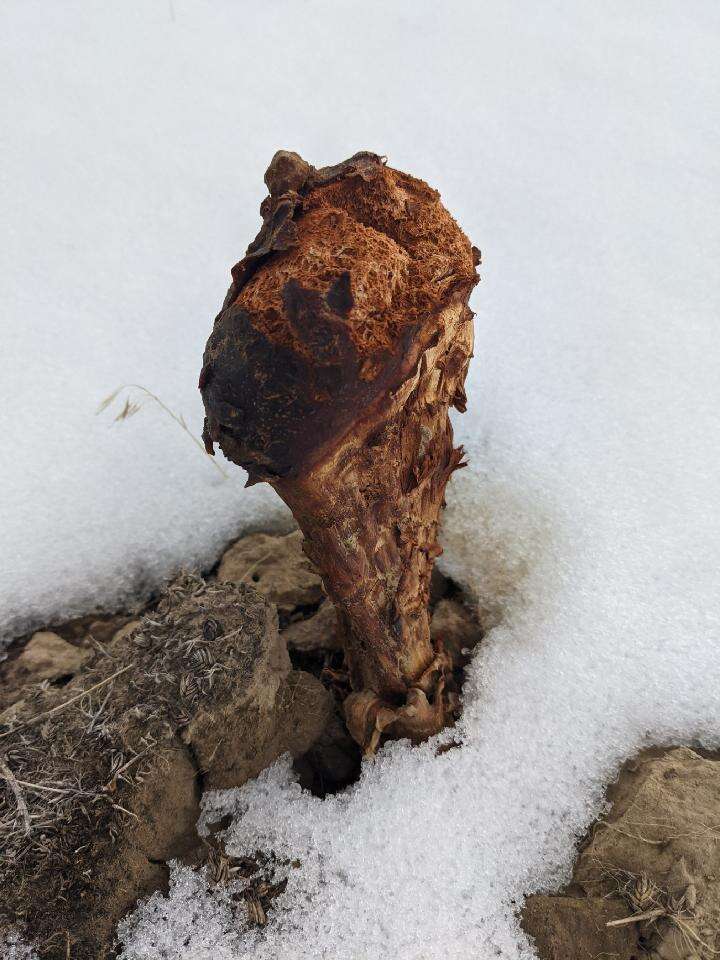
The Phelloriniaceae are a family of fungi in the order Agaricales. The family contains two monotypic genera, Dictyocephalos and Phellorinia. The family was circumscribed by the German botanist Oskar Eberhard Ulbrich in 1951.
Hemigasteraceae
REDIRECT Hemigaster
Crepidotaceae
The Crepidotaceae are a family of basidiomycete fungi.
Porotheleaceae
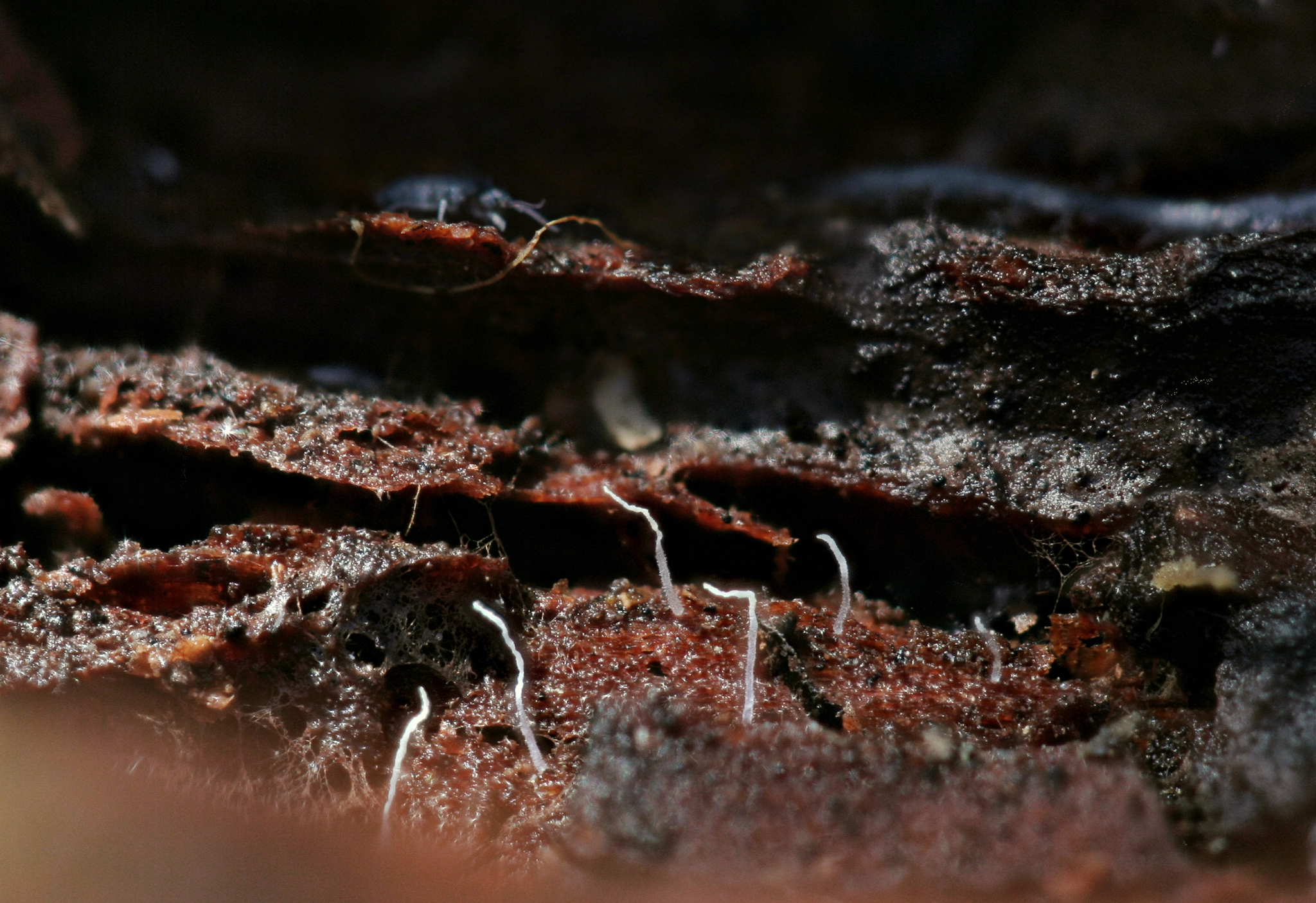
The Porotheleaceae are a family of saprotrophic, mainly wood-decay fungi in the order Agaricales that are primarily agarics, but also include cyphelloid fungi. The family has been informally cited in the literature as the 'hydropoid' clade. The type genus, Porotheleum, was placed in the phylogenetically defined clade in 2002, but the clade was more strongly supported in 2006, although without including Porotheleum. Its sister group is the Cyphellaceae, both of which are in the 'marasmioid clade'. Some included taxa are cultivated by ants. More recently, the family has been recognized in three
Gigaspermataceae
REDIRECT Gigasperma
Squamanitaceae
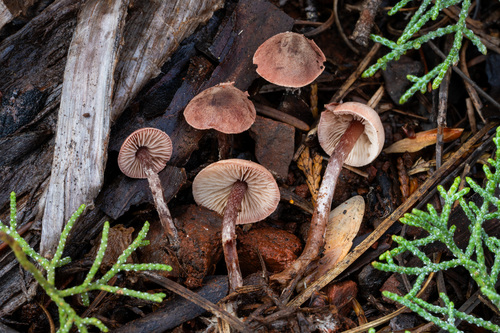
The Squamanitaceae are a family of fungi in the order Agaricales. All species in the family are agarics (gilled mushrooms). Species in two genera, Dissoderma and Squamanita, are parasitic on other agarics. Members of the Squamanitaceae are found worldwide.
Tubariaceae
The Tubariaceae is a family of basidiomycete fungi described by Alfredo Vizzini in 2008.
list of Agaricales families
Wikimedia list article
Mythicomycetaceae
The Mythicomycetaceae is a family of dark-spored agarics that have palely pigmented spores which lack germ pores. The two genera are monotypic and share features such as horn-like dark stems, pigmented mycelium at their bases, and are small brown mushrooms in north temperate forests. The family is closely related to the Psathyrellaceae.
Macrocystidiaceae
REDIRECT Macrocystidia
Crassisporiaceae
The Crassisporiaceae is a mushroom family of small brown, naucoroid, brown-spored agarics with thick to slightly thickened, smooth, basidiospore walls that darken to reddish brown in potassium hydroxide (KOH) solution, absence of chrysocystidia, presence of cheilocystidia, nongelatinized tissues in the lamellae, and a filamentous pileus cutis. The family is recognized based upon phylogenetic analyses using DNA sequences and depending upon the analyses varies in relationship to either the Cortinariaceae or, as described in greater detail prior to recognition as a separate family, near the Strop
Chromocyphellaceae
The Chromocyphellaceae are a family of basidiomycete fungi described by mycologist Henning Knudsen in 2010.
Callistosporiaceae
The Callistosporiaceae are a family of fungi in the order Agaricales. The family contains six genera. All species form agaricoid basidiocarps (gilled mushrooms). The family is based on recent DNA research.
Phyllotopsidaceae
The Phyllotopsidaceae are a family of fungi in the order Agaricales. Basidiocarps are either clavarioid (Macrotyphula), agaricoid (Tricholomopsis), or cyphelloid. Marcel Locquin originally established the family on the basis of shared morphological characteristics, but did not validly publish it. The name was later validated by Olariaga and the family was expanded to contain other genera as a result of molecular research, based on cladistic analysis of DNA sequences.
Biannulariaceae
The Biannulariaceae are a family of fungi in the order Agaricales. The family contains three genera. All species form agaricoid basidiocarps (gilled mushrooms). The family was originally described to accommodate the single genus Catathelasma, but has been extended as a result of DNA research.