Category
page 4Agaricales genera
Delicatula
Delicatula is a genus of fungi in the family Tricholomataceae. It was first described by Swiss mycologist Victor Fayod in 1889. The genus contains two widely distributed species.
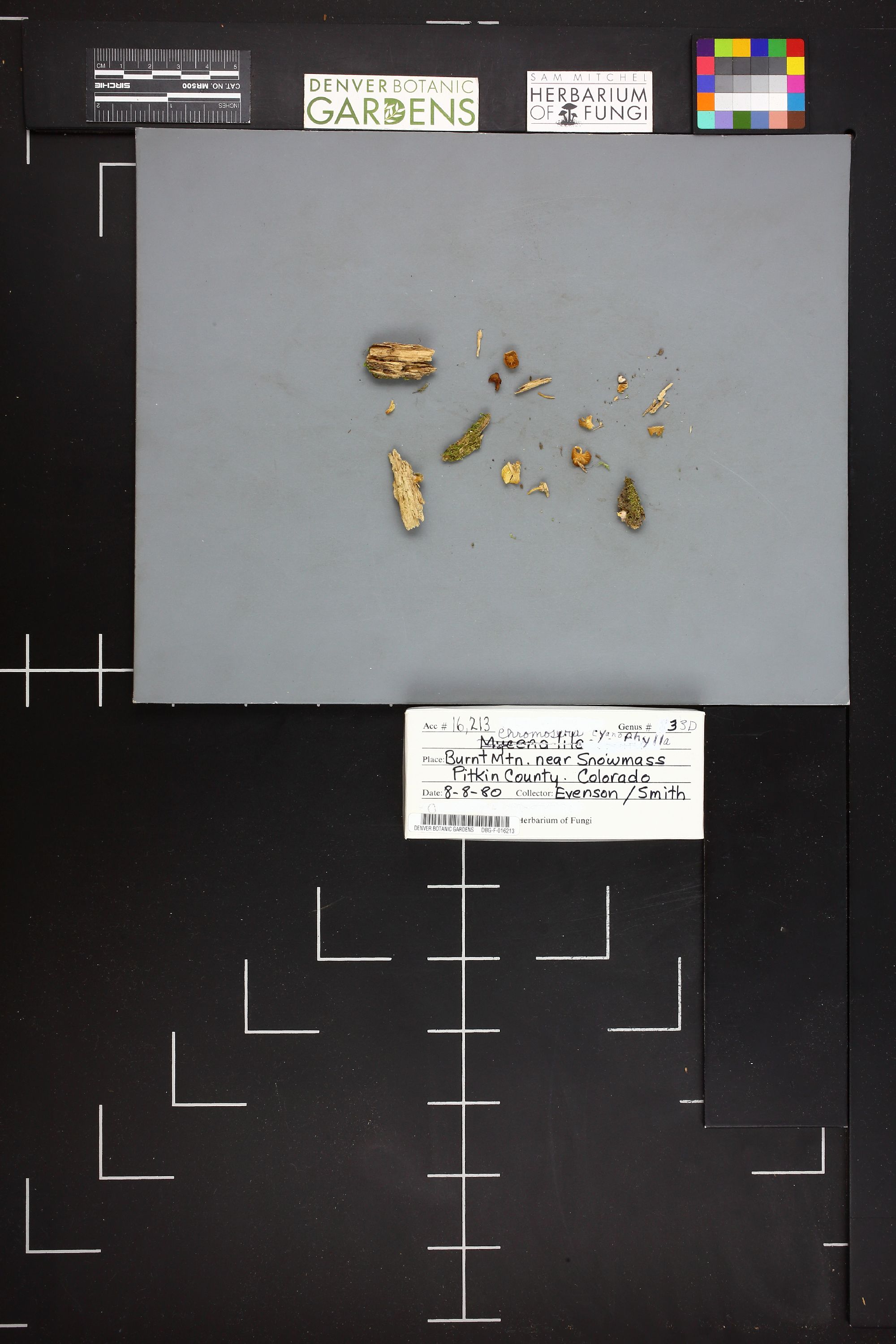
Chromosera
Chromosera is a genus of fungi in the family Hygrophoraceae. Within the family Hygrophoraceae it is closely related to the genus Gloioxanthomyces. It contains eight brightly colored species showing yellow and/or bluish to violet coloration. Three species are lignicolous, growing on decaying conifer wood. Other species grow on rich organic soil or peat. At least one species can be cultured and displays characteristic yellow and violet pigments in its mycelium. The generic name honors the mycologist Meinhard Moser, and also alludes (chromos) to the distinct coloration of the mushrooms, by overla
Xanthagaricus
Xanthagaricus is a genus of fungi in the family Agaricaceae. The genus contains 23 species found in India, Sri Lanka, Bangladesh, Thailand, China and Africa. Originally described in 1984 by Belgian mycologist Paul Heinemann as Hymenagaricus subgen. Xanthagaricus, it was promoted to generic status in 1997.
Protoglossum
Protoglossum is a genus of fungus in the family Cortinariaceae. Protoglossum was circumscribed by George Edward Massee in 1891.
Leucocybe
Leucocybe is a small mushroom genus, consisting of 3 named species that were formerly placed in the genus Clitocybe, which they resemble in overall appearance and morphology. They occur in woodlands growing on tree litter or disturbed ground.

Anthracophyllum
Anthracophyllum is a genus of fungi in the family Omphalotaceae in the order Agaricales. The genus is widespread in tropical regions, and contains 10 species.
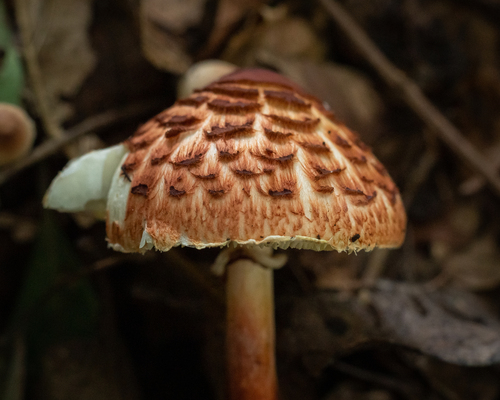
Rugosospora
Rugosospora is a genus of fungi in the family Agaricaceae. The genus contains two species: R. ochraceobadia, found in Africa, and R. pseudorubiginosa, found in Colombia and Mexico. These species have fruit bodies (mushrooms) with free gills, a white spore print, and a ring on the stipe. Rugosospora was circumscribed by Belgian mycologist Paul Heinemann in 1973.
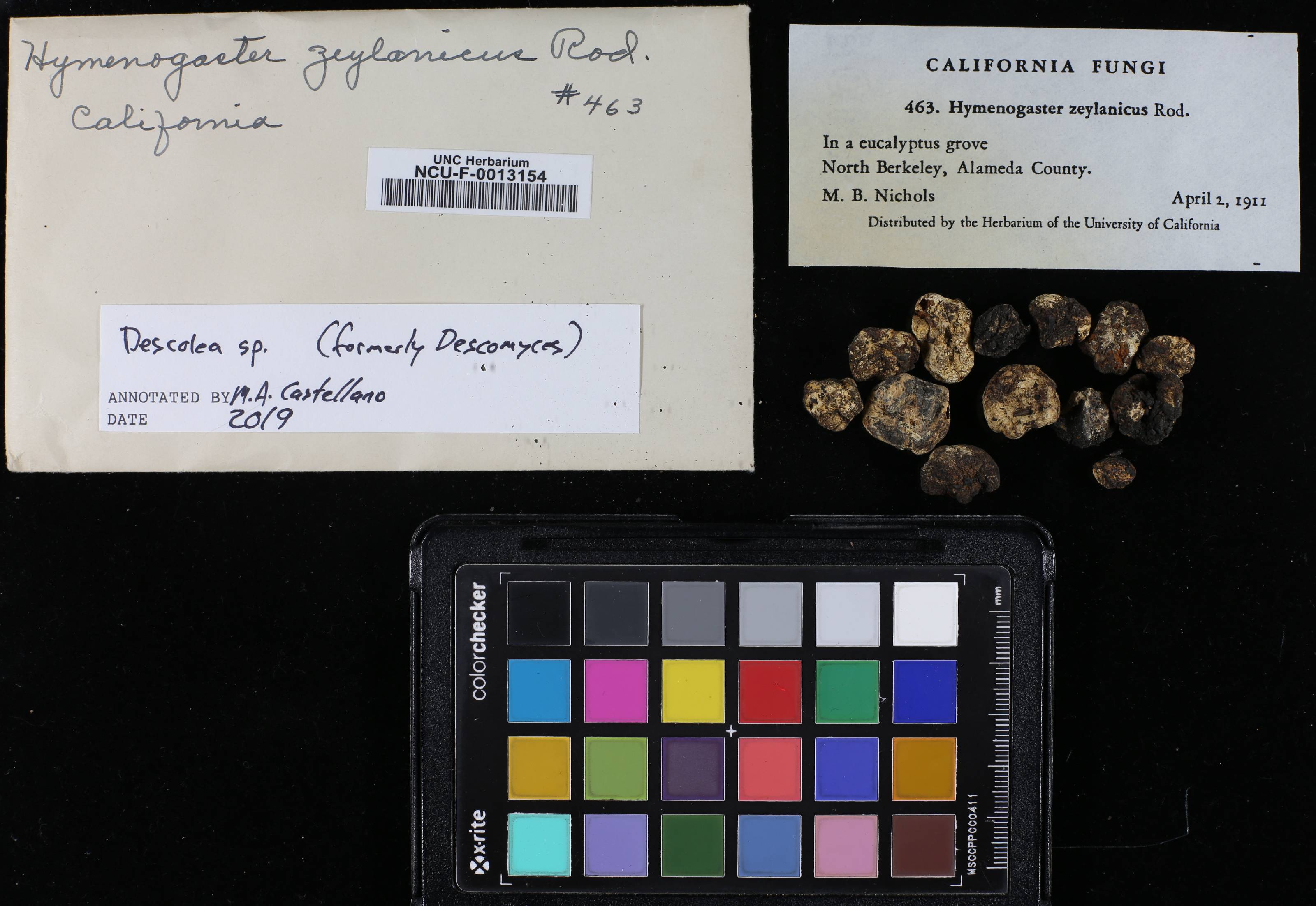
Descolea
Descolea is a genus of fungi in the family Bolbitiaceae. Described by mycologist Rolf Singer in 1952, the widespread genus contains about 15 species. It was formerly placed in the family Cortinariaceae because of its limoniform basidiospores and its ectomycorrhizal lifestyle. A 2013 molecular phylogenetics study by Tóth et al. found it to be closely related to the genus Pholiotina The genus Pseudodescolea, erected for the single Descolea-like species Pseudodescolea lepiotiformis, was formerly considered distinct until a 1990 study found it to be a synonym of Descolea antarctica.
Asproinocybe
Asproinocybe is a genus of fungi in the family Tricholomataceae. The genus contains five species found in tropical Africa.
Hemipholiota
Hemipholiota is a genus of agaric fungi in the order Agaricales. It was originally proposed by Rolf Singer in 1962 as a subgenus of Pholiota to contain species with absent or sparse pleurocystidia and absent chrysocystidia. Henri Romagnesi raised it to generic status in 1980, but this naming was invalid as it did not meet the requirements of the International Code of Nomenclature for algae, fungi, and plants. Marcel Bon published the genus validly in 1986.
Protostropharia
Protostropharia, is a coprophilous agaric fungal genus that produces glutinous, mostly yellowish to yellow brown fruit bodies. Characteristically most form chrysocystidia and rather large, smooth, violaceous basidiospores each with a prominent germ pore (as Stropharia subg. Stercophila). It is differentiated from Stropharia by production of astrocystidia on its mycelium rather than by acanthocytes that Stropharia produces. Phylogenetically, Protostropharia is distinct from Stropharia, Pholiota, and Leratiomyces. Two species, P. luteonitens and P. tuberosa, form pseudosclerotia within the dung
Moniliophthora
Moniliophthora is a genus of fungi in the family Marasmiaceae. The genus was described in 1978 with M. roreri as the type species. This fungus, formerly known as Monilia roreri, causes frosty pod rot, a serious disease of Theobroma cacao.
Crucispora
Crucispora is a genus of fungi in the family Agaricaceae. The genus, described by mycologist Egon Horak in 1971, contains two species found in New Zealand and Asia.
Hiatulopsis
Hiatulopsis is a genus of two species of fungi in the family Agaricaceae. The genus was circumscribed in 1967 by mycologists K. Grinling and Rolf Singer with H. amara as the type species. H. aureoflava was added to the genus by Singer in 1989.

Gymnoglossum
Gymnoglossum is a genus of fungi in the Bolbitiaceae family of mushrooms.
Smithiomyces
Smithiomyces is a genus of fungi in the family Agaricaceae. It was circumscribed by Rolf Singer in 1944. The type species, S. mexicanus, was formerly placed in Amanita, as well as the now obsolete genera Leucomyces and Venenarius. The genus was named to honor American mycologist Alexander H. Smith.
Seticyphella
Seticyphella is a genus of fungi in the Cyphellaceae family. The genus contains three species found in Europe.
Hymenopellis
Hymenopellis is a genus of fungi in the family Physalacriaceae. The genus was circumscribed by mycologist Ron Petersen in 2010. The type species is Hymenopellis radicata, originally described by British botanist Richard Relhan in 1780 as Agaricus radicatus.
Nochascypha
Nochascypha is a genus of fungus in the family Marasmiaceae. The genus contains six species found in South America.
Sphaerobasidioscypha
Sphaerobasidioscypha is a genus of fungi in the Cyphellaceae family. The genus contains two species found in New Zealand and Venezuela.
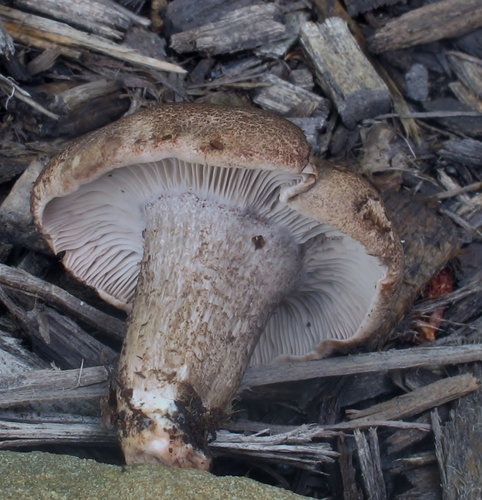
Porpoloma
Porpoloma is a genus of fungi in the family Tricholomataceae. The genus contains about 12 species found predominantly in South America. Porpoloma was described by mycologist Rolf Singer in 1952 with P. sejunctum as the type species.
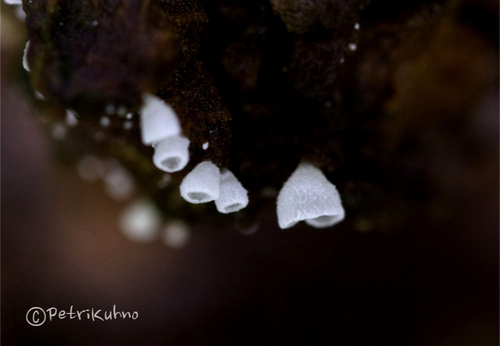
Calathella
Calathella is a genus of fungi in the mushroom family Marasmiaceae.

Physalacria
Physalacria is a genus of fungi in the family Physalacriaceae. The genus contains 30 species widely distributed in tropical regions of the Southern Hemisphere.
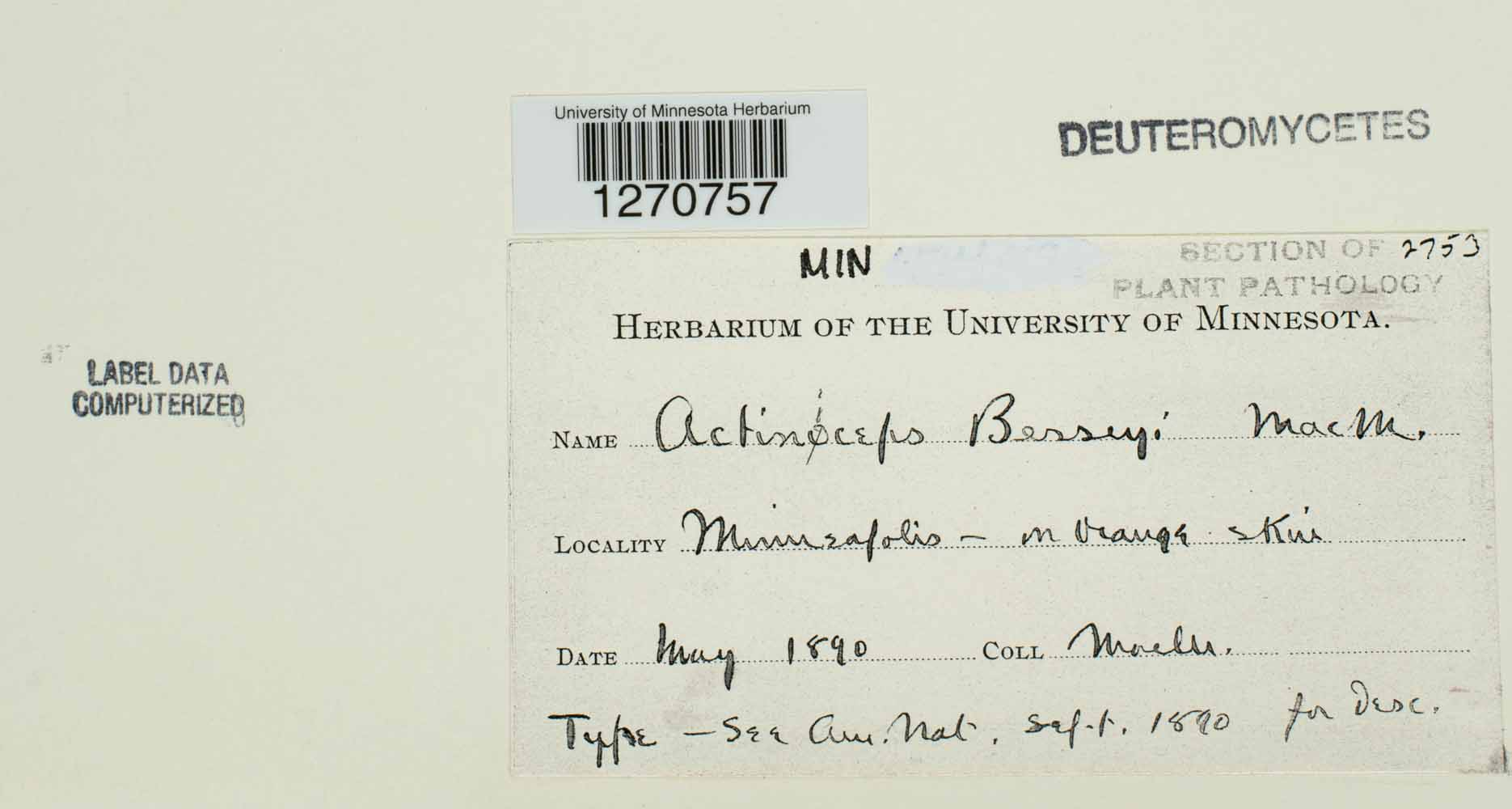
Actiniceps
Actiniceps is a genus of fungi in the Pterulaceae family. It has a widespread distribution in tropical regions.

Chrysomphalina
Chrysomphalina is a genus of three species of fungi with a north temperate distribution. The genus was circumscribed by Swiss mycologist Heinz Clémençon in 1982.

Nia
genus of fungi
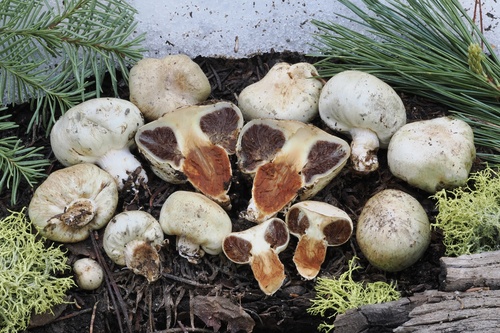
Nivatogastrium
Nivatogastrium is a genus of secotioid fungi in the family Strophariaceae. The genus has contained four species found in North America and New Zealand, but the type species, Nivatogastrium nubigenum, is now considered to be a gasteroid species of Pholiota, and was transferred to that genus in 2014.
Amyloflagellula
Amyloflagellula is a genus of fungi in the family Marasmiaceae.
Dictyonema
Dictyonema is a genus of mainly tropical basidiolichens in the family Hygrophoraceae. Unlike most lichens, which contain fungi related to yeasts and molds, Dictyonema species contain fungi more closely related to mushrooms. The genus includes about 40 recognized species found mainly in tropical regions, ranging from lowland forests to high mountain elevations up to 4,300 meters in the Andes. These lichens come in various forms, from crusty patches to leaf-like structures to thread-like mats, and most grow on soil, rocks, moss, or rotting logs. One species from the Amazon rainforest has traditi
Tetrapyrgos
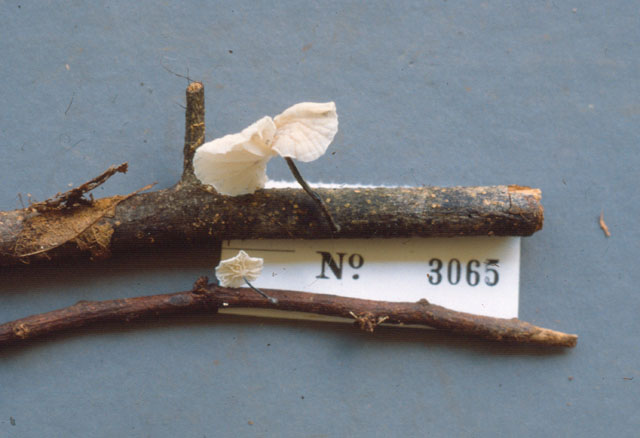
Tetrapyrgos is a genus of fungi in the mushroom family Marasmiaceae. The genus has a widespread distribution and contains 16 species.

Chromocyphella
Chromocyphella is a genus of fungi in the family Chromocyphellaceae. The genus is widespread and contains six species.
Dermoloma
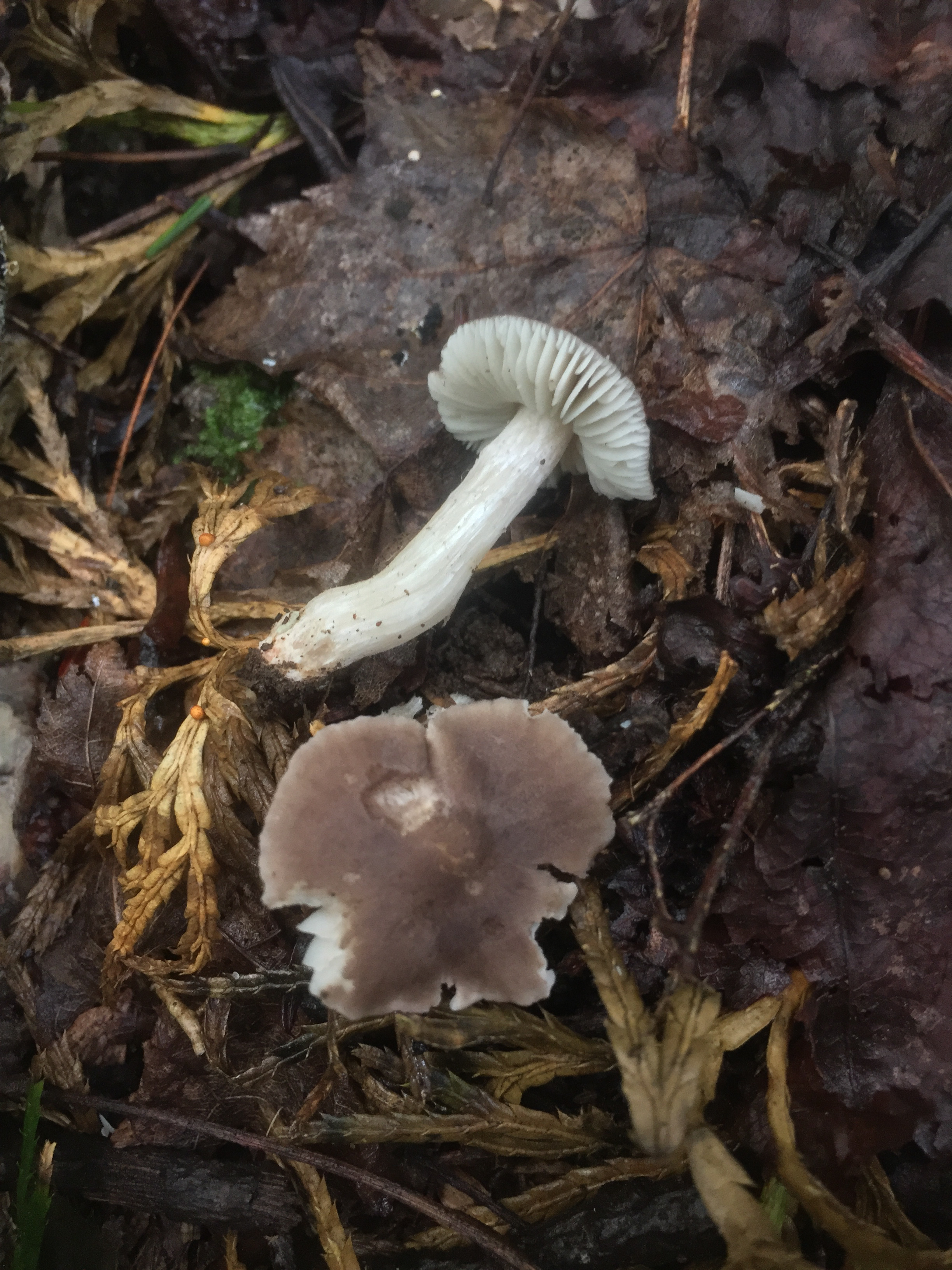
Dermoloma is a genus of fungi in the family Tricholomataceae. The widespread genus contains about 15 species.
Gastropila
Gastropila is a genus of fungi in the family Agaricaceae. The genus, described in 1973, contains four puffball-like species distributed in the Americas.
Rimbachia
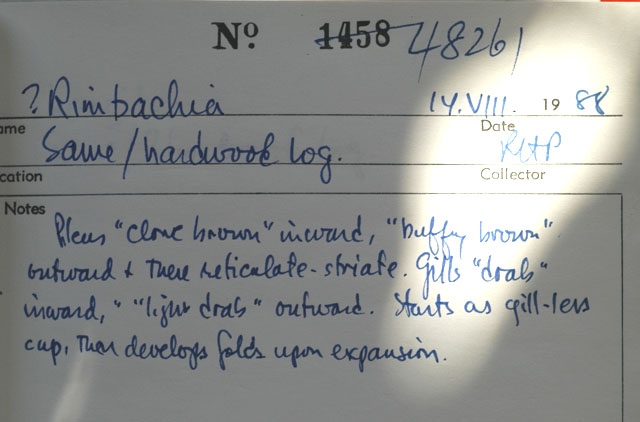
Rimbachia is a genus of fungi in the family Tricholomataceae. The genus contains about ten species with a widespread distribution in tropical regions.

Gerhardtia
Gerhardtia is a genus of fungi in the family Lyophyllaceae. It was circumscribed in 1994 by French mycologist Marcel Bon, with Gerhardtia incarnatobrunnea as the type species. It is distinguished from similar genera by having spores with an irregular outline. Some authorities place Gerhardtia in synonymy with Lyophyllum. The New Zealand species Gerhardtia pseudosaponacea, described as new to science in 2014, is similar in appearance to Tricholoma saponaceum, including its weakly soap-like odor.
Epicnaphus
Epicnaphus is a genus of mushroom-forming fungi in the family Marasmiaceae. The genus, circumscribed by mycologist Rolf Singer in 1960, contains two species found in South America. Fruitbodies of Epicnaphus species are similar in appearance to those in Marasmius section Sicci, but have a smooth hymenium and broom cells of the Rotalis-type. Singer initially included only the type species, E. phalaropus, which was originally collected from fallen branches in a Bolivian rainforest. The Argentinian species E. longispora was added to the genus by Jörg Raithelhuber in 1973.

Chlamydopus
Chlamydopus is a genus of fungi in the family Agaricaceae. It was circumscribed by Carlos Luigi Spegazzini in 1898.
Asterocyphella
Asterocyphella is a genus of fungi in the Cyphellaceae family. The widespread genus contains three species.
Metraria
Metraria is a genus of two species of fungi in the family Agaricaceae.
Atheniella
Atheniella is an agaric fungal genus that produces mostly brightly colored (yellow, pink, orange, or red) mycenoid fruit bodies on small plant debris on forest floors, in fields and bogs. It is not a member of the Mycenaceae, and unlike most Mycenaceae, its basidiospores and tissues do not react with iodine. Atheniella species were most recently classified in Mycena because of their stature. However, they lack amyloid spores and tissues bewildering taxonomists, leading to temporary placements in Hemimycena and Marasmiellus before being phylogenetically excluded from both genera and the Mycenac
Gloioxanthomyces
Gloioxanthomyces is a genus of fungi in the family Hygrophoraceae. It was circumscribed in 2013 to contain G. nitidus, and the type species, G. vitellinus. Within the Hygrophoraceae, it is in the tribe Chromosereae and closely related to the genus Chromosera. The generic name derives from the Greek gloio ("glutinous"), xantho ("yellow"), and myces (fungus).
Amparoina
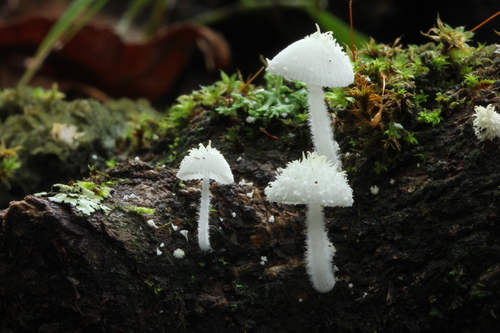
Amparoina is a genus of fungi in the family Tricholomataceae. The genus contains two species found in South America.
Hyphodontiella
Hyphodontiella is a genus of two species of wood-inhabiting corticioid fungi. The genus contains two species found in Nordic countries. Hyphodontiella was circumscribed by Swedish mycologist Åke Strid in 1975. Originally classified in the family Corticiaceae along with most other corticioid fungi, it was moved to the Clavariaceae in 2007 .
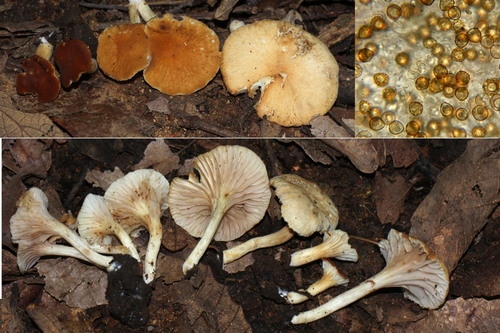
Neopaxillus
Neopaxillus is a genus of fungi in the family Crepidotaceae. According to the Dictionary of the Fungi (10th edition, 2008), the family contains five species found in Central and South America; a sixth, N. dominicanus, was reported in 2011. It was formerly considered to belong in the family Serpulaceae in the order Boletales, but molecular analysis showed that Neopaxillus is better placed in the Agaricales as a sister group to Crepidotus (of the family Crepidotaceae).

Entocybe
Entocybe is a genus of agaric fungi in the family Entolomataceae. It was circumscribed in 2011 to contain several former Entoloma species having obscurely angular spores with 6–10 angles (some formerly classified as Rhodocybe). Based on three locus DNA analysis, these species form a distinct, well-defined clade in the Entomolataceae that is basal to Entoloma. The genus name, a combination of Entoloma and Rhodocybe, alludes to similarities with species in those genera. E. melleogrisea, found in a subboreal forest in Québec, Canada, was described as a new species in 2013. Unlike the mostly
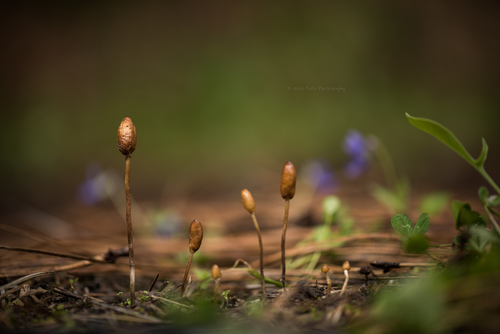
Galeropsis
Galeropsis is a genus of fungi in the Bolbitiaceae family of mushrooms. The genus is widespread in dry, arid habitats, and contains 16 species. Galeropsis was circumscribed by the Czech botanist Josef Velenovský in 1930.
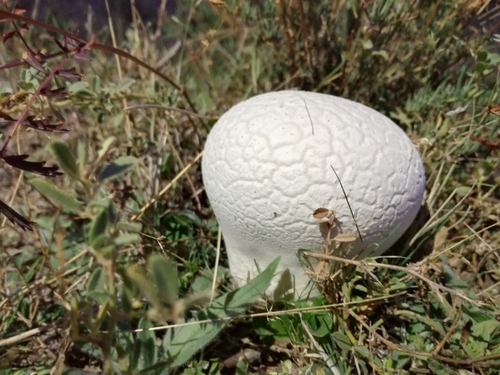
Bovistella
Bovistella is a genus of puffball fungi in the family Agaricaceae. The genus was circumscribed by mycologist Andrew Price Morgan in 1892.
Rhizocybe
Rhizocybe is a genus of fungus in the order Agaricales. The species resemble Clitocybe and grow amongst litter in predominantly coniferous forests.
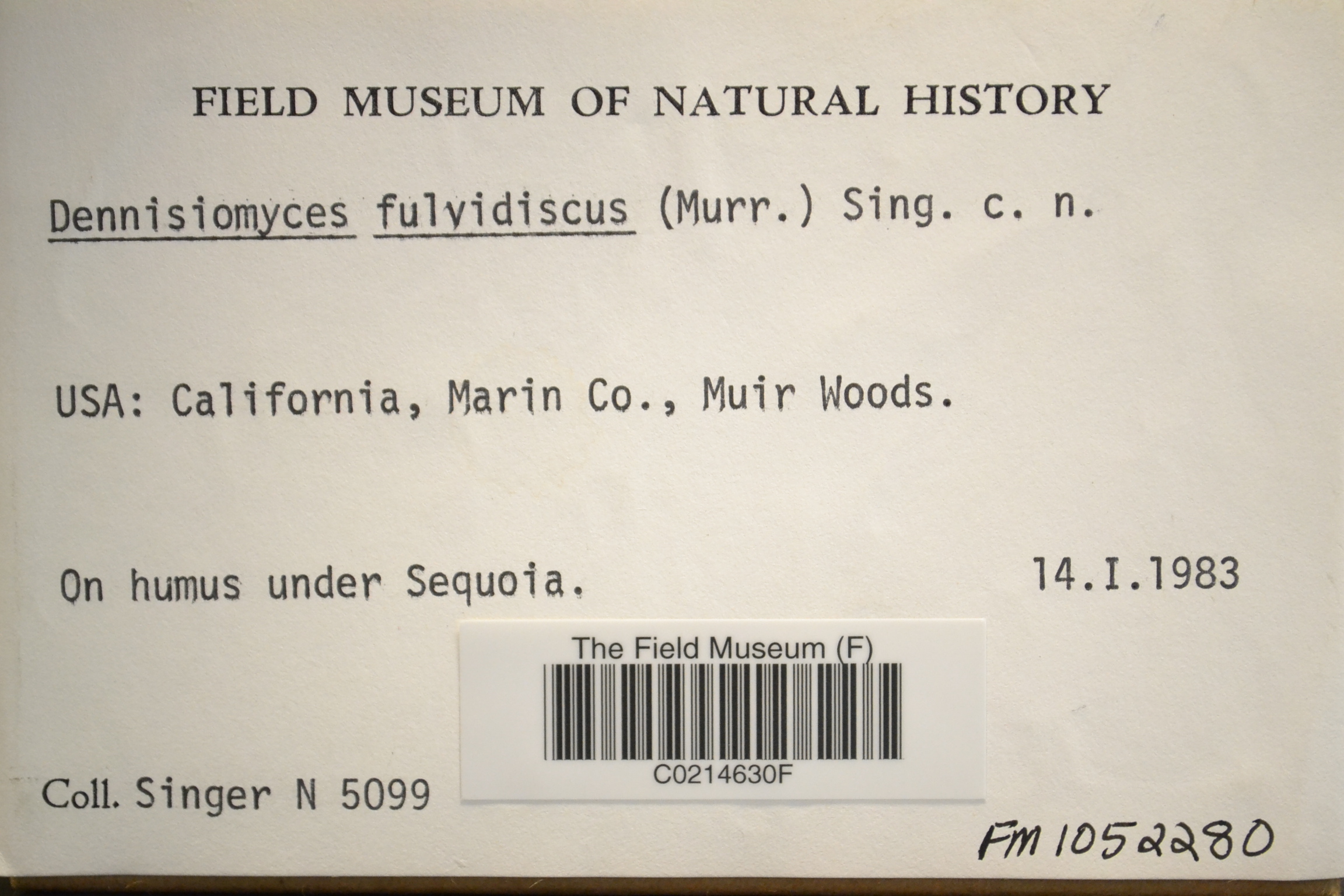
Dennisiomyces
Dennisiomyces is a genus of fungi in the family Tricholomataceae. Described by mycologist Rolf Singer in 1955, the genus contains five species found in South America.
Metrodia
Metrodia is a genus of fungi in the family Agaricaceae. It was circumscribed in 1971 by mycologist Jörg H. Raithelhuber, with M. collybioides as the type species. M. excissa was added to the genus in 1983.
Gigasperma
Gigasperma is an inactive genus of fungi in the order Agaricales with a single species. It was treated either as the only genus in the monotypic family Gigaspermataceae, or part of the wider Cortinariaceae. Gigasperma was circumscribed by Austrian mycologist Egon Horak in 1971.
Pseudoomphalina
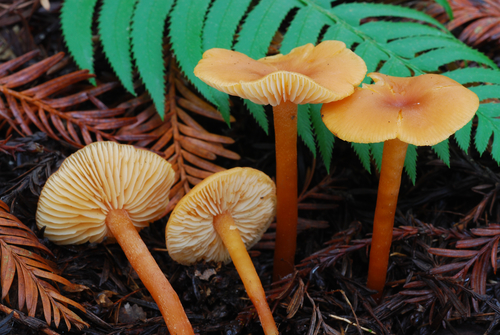
Pseudoomphalina is a genus of fungi placed in the family Tricholomataceae for convenience. The genus contains six species that are widespread in northern temperate areas. Pseudoomphalina was circumscribed by Rolf Singer in 1956. Pseudoomphalina was found to be paraphyletic to Neohygrophorus in a molecular phylogenetics study and since Pseudoomphalina is an older name, Neohygrophyorus was synonymized with it. The type species of Neohygrophorus was Neohygrophorus angelesianus, now Pseudoomphalina angelesiana. In earlier classifications based on anatomy prior to DNA sequence-based classifications
Rhodophana
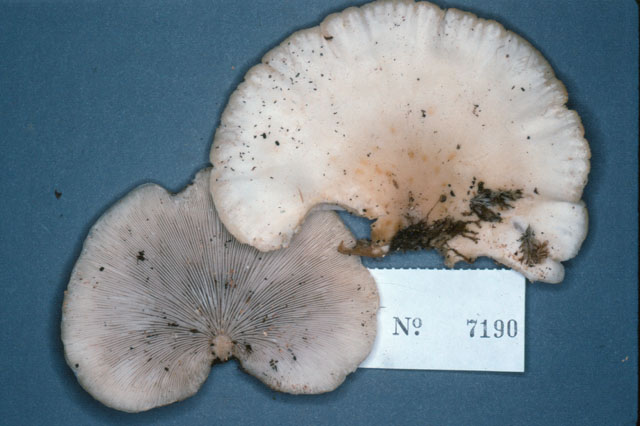
Rhodophana is a genus of mushroom-forming fungi in the family Entolomataceae. It originally described as a genus in 1947 by Robert Kühner, but the description was invalid until it was re-published in 1971, though as a subgenus of Rhodocybe. It did not find favour as a genus until Rhodocybe was found to be polyphyletic and Kluting et al. resurrected the name in 2014 as part of a DNA-based reclassification of the family.
Conchomyces
Conchomyces is a genus of fungi in the order Agaricales. The genus was named and described scientifically by Casper van Overeem in 1927. The genus contains two species found in Indonesia.
Deigloria
Deigloria is a genus of agaric fungus in the family Marasmiaceae. Described by mycologist Reinhard Agerer in 1980, the genus contains 10 species that are widespread in neotropical areas. The generic name derives from the Latin words Deus (God) and gloria (glory).
Neosecotium
Neosecotium is a genus of fungi in the family Agaricaceae. The genus was circumscribed in 1960 by American mycologists Rolf Singer and Alexander H. Smith. The type species, N. macrosporum, previously only known from the US, was recorded in Mexico in 2012.
Sagaranella
Sagaranella is a mushroom genus in the family Lyophyllaceae that has been segregated from both Lyophyllum and Tephrocybe using molecular analyses. The species resemble grey colored Collybias and grow in nitrogen-rich environments.
Hygroaster
Hygroaster is a genus of mushroom-forming fungi in the family Hygrophoraceae. The genus was described by mycologist Rolf Singer in 1955.
Ripartitella
Ripartitella is a genus of fungi in the family Agaricaceae. The genus was circumscribed by Rolf Singer in Mycologia vol.39 on page 85 in 1947.
Endoptychum
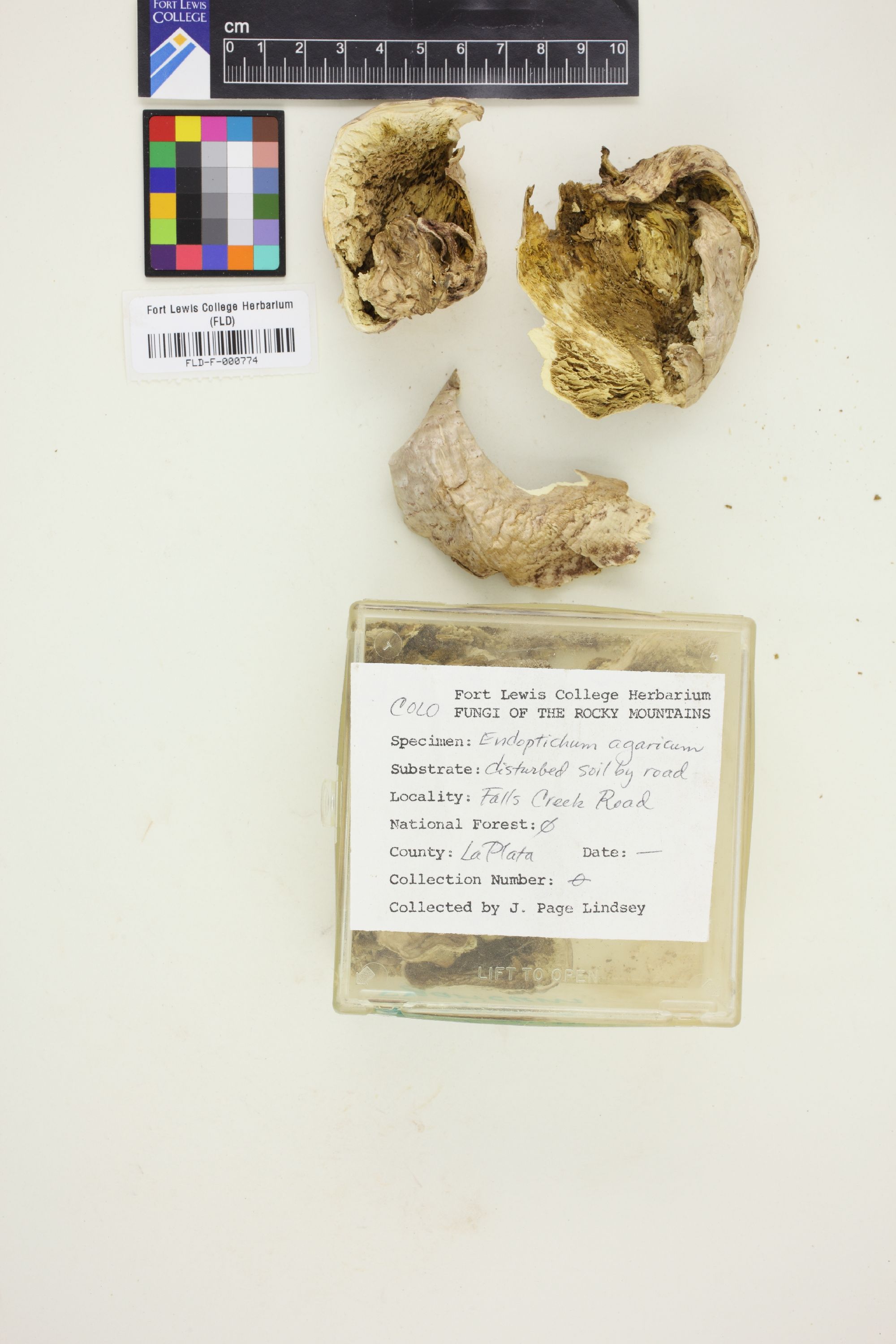
Endoptychum is a genus of secotioid fungi in the family Agaricaceae. Like the majority of secotioid taxa, the individual species of Endoptychum are thought to be recent mutations from agaricoid species, hence, Endoptychum is likely not a valid monophyletic genus.