Category
page 5Agaricales genera
Chlorolepiota
Chlorolepiota is a genus of fungi in the family Agaricaceae. It is characterized by mushrooms with a macrolepiotoid habit, a pruinose yellow-greenish spore print, and the lack of clamp connections in the hyphae. The genus was circumscribed in 1979, with C. mahabaleshwarensis as the type and only species. C. indica was described in 2013, and C. brunneotincta in 2014. All species are found in India. The generic name Chlorolepiota is a portmanteau of Chlorophyllum and Macrolepiota, two closely related genera.
Cryptomarasmius
Cryptomarasmius is a genus of fungi in the family Physalacriaceae.
Lactocollybia
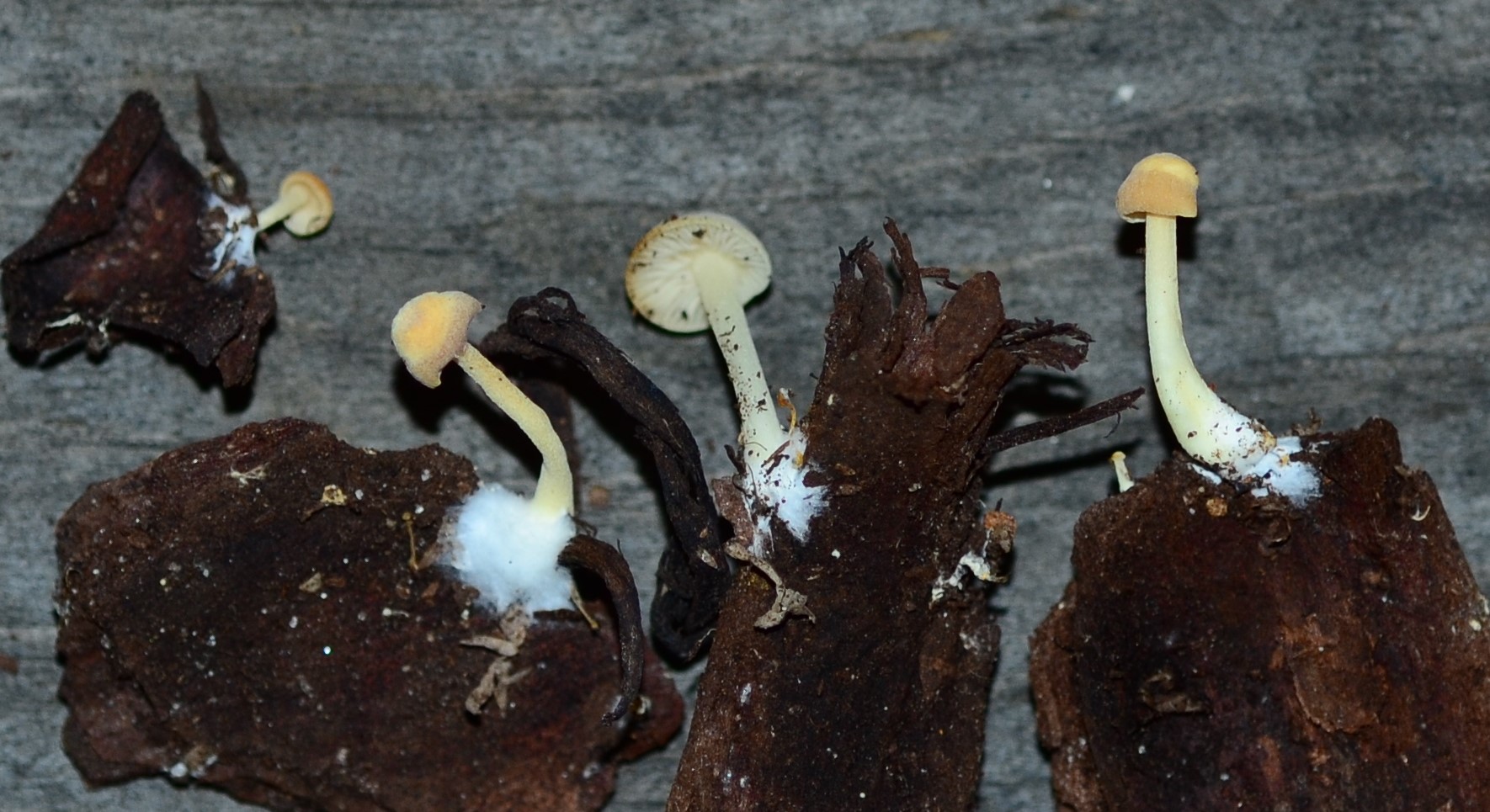
Lactocollybia is a genus of agaric fungi in the family Marasmiaceae. The widespread genus contains 17 species, many of which are found in tropical areas.
Cristinia
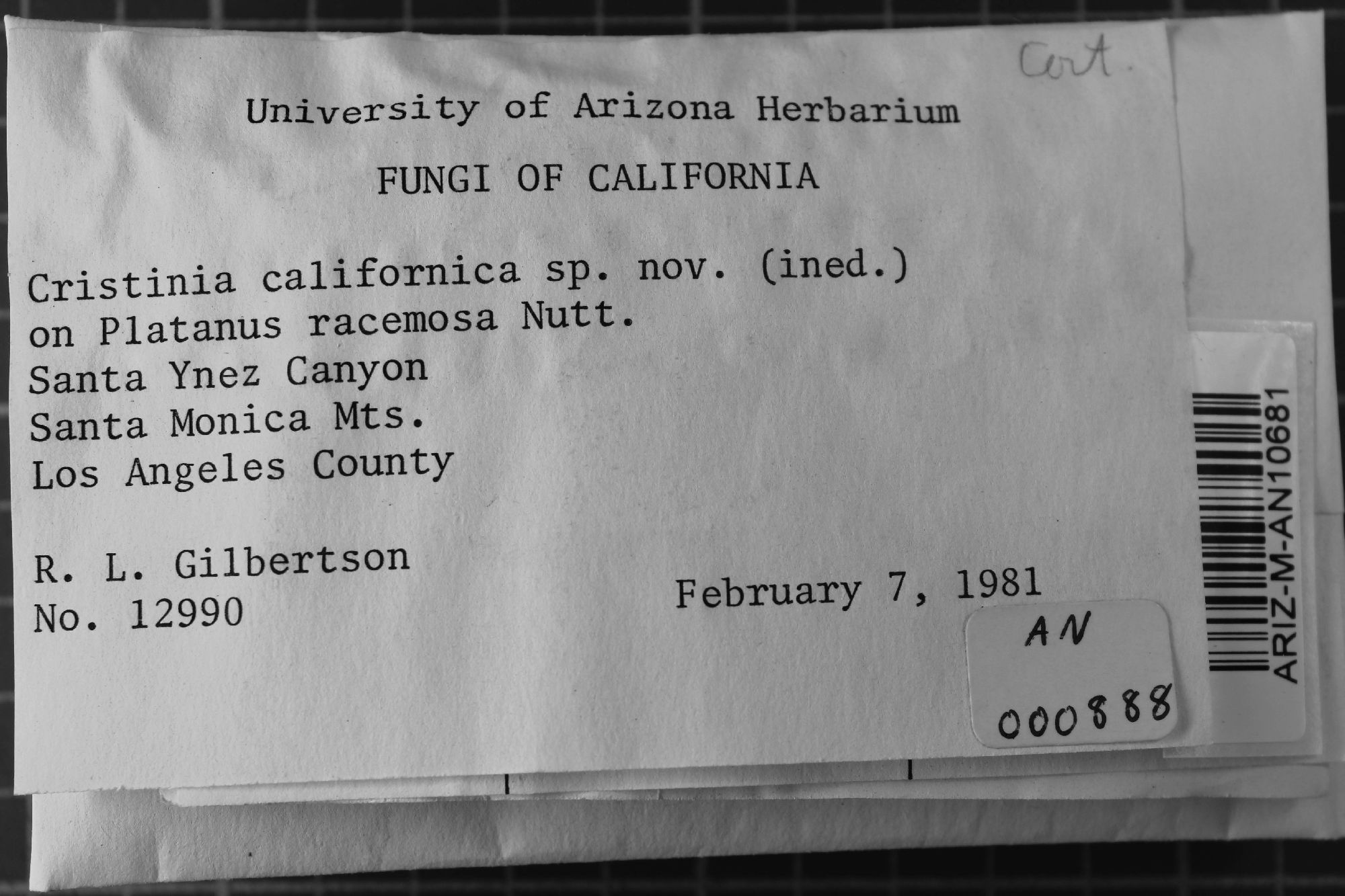
Cristinia is a genus of fungi belonging to the family Stephanosporaceae.

Aeruginospora
Aeruginospora is a genus of fungi in the family Hygrophoraceae. It was formerly placed in the family Tricholomataceae, but it was moved to the Hygrophoraceae in a recent review of the family based on its morphological similarity to Chrysomphalina and especially Haasiella. It might be that Haasiella, which differs in spore color and ecology, is a junior synonym of Aeruginospora, but this has not yet been tested in a molecular phylogenetics study. The genus, described by Franz Xaver Rudolf von Höhnel in 1908, currently contains two species found in New Zealand and Indonesia. Six species formerly
Chaetocalathus
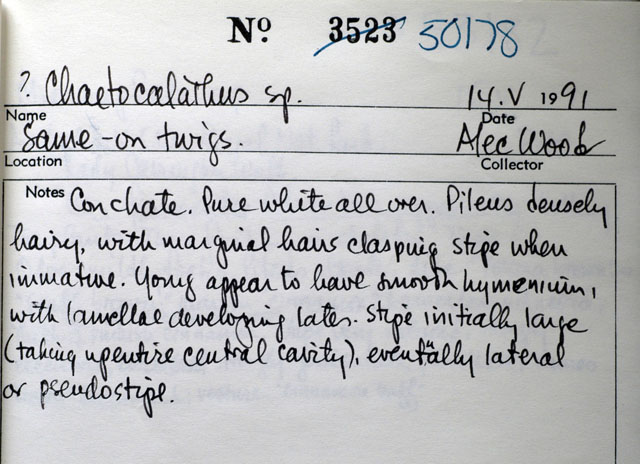
Chaetocalathus is a genus of fungus in the mushroom family Marasmiaceae.
Phaeogalera
Phaeogalera is a small genus of slender, fleshy bog and swamp-inhabiting mushrooms with large, brownish spores with a germ pore and a hymenium lacking chrysocystidia. Phaeogalera resemble Galerina in their habitat, macroscopic appearance, and spore print color, however, their microscopic characteristics (smooth spores with a distinct germ pore and non-tibiiform cystidia) more closely resemble Psilocybe. The type species, Phaeogalera stagnina, has an Arctic-alpine distribution in the Northern Hemisphere extending into the boreal forests and taiga. It grows along the edges of bogs in peaty soils
Cribbea
Cribbea is a genus of secotioid fungi in the family Physalacriaceae. The genus has a widespread distribution in southern temperate areas, and, according to a 2008 estimate, contains four species. A new species, Cribbea turbinispora, was reported from Australia in 2009, and in the same publication, C. lamellata was synonymized with C. gloriosa. The genus is named after mycologist Joan Cribb, in recognition of her contribution to fungal taxonomy.
Micropsalliota
Micropsalliota is a genus of small agaric fungi in the family Agaricaceae. The genus contains about 60 species, most of which are found in tropical areas.
Myochromella
Myochromella is a mushroom genus in the family Lyophyllaceae that has been segregated from both Lyophyllum and Tephrocybe using molecular analyses and was first informally labelled clade 'mycochromella' or section 'Tephrophana p.p.' before being recognized as a genus. The species resemble grey colored Collybias and grow in forests.
Chamaeota
Chamaeota is a genus in the Pluteaceae family of small- to medium-sized mushrooms. They have a central stipe, free gills, smooth pink spores, and a partial veil that usually forms an annulus (ring) on the stipe. Chamaeota can be distinguished from Volvariella by its lack of a volva and from Entolomataceae by its free gills and smooth spores.
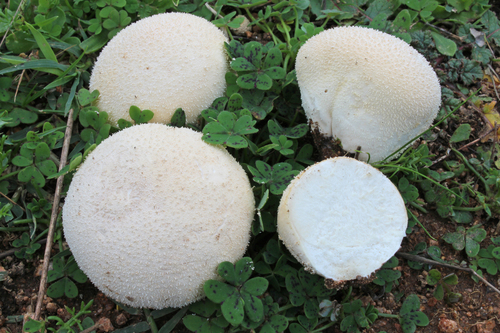
Vascellum
Vascellum is a genus of puffball fungi in the family Agaricaceae. The genus was defined by Czech mycologist František Šmarda in 1958.
Acutocapillitium
Acutocapillitium is a genus of fungi that is tentatively placed in the family Agaricaceae; its phylogenetic relationships to other genera in the family are not well known. The genus contains three species found in tropical America.
Skepperiella
Skepperiella is a genus of fungus in the family Marasmiaceae. The widespread genus contains four species.
The genus was circumscribed by Albert Pilát in Bull. Soc. Mycol. France vol.43 on page 56 in 1927.
Atractosporocybe
Atractosporocybe is a mushroom genus in the family Lyophyllaceae in the broad sense. The type species resembles Clitocybe and grows in forests.
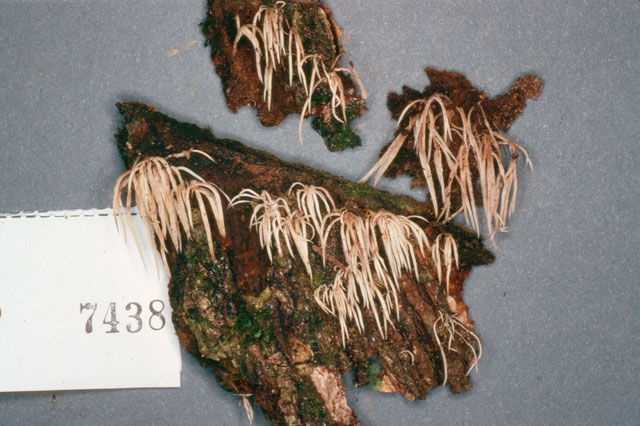
Deflexula
Deflexula is a genus of tooth fungi in the family Pterulaceae.
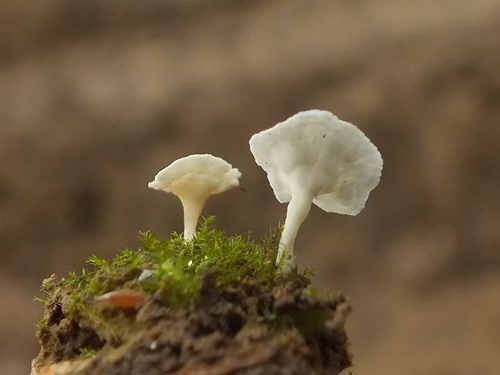
Cyphellostereum
Cyphellostereum is a genus of basidiolichens. Species produce white, somewhat cup-shaped fruit bodies on a thin film of green on soil which is the thallus. All Cyphellostereum species have nonamyloid spores and tissues, lack clamp connections, and also lack hymenial cystidia.

Clavogaster
Clavogaster is a genus of gasteroid fungi in the family Agaricaceae. The genus was circumscribed by German mycologist Paul Christoph Hennings in 1896 to contain the type species Clavogaster novozelandicus, which is now a synonym of Clavogaster virescens.

Phaeoporotheleum
Phaeoporotheleum is a genus of fungi in the Cyphellaceae family. The genus contains two species collectively distributed in Cuba and Argentina.
Rhodoarrhenia
Rhodoarrhenia is a genus of fungi in the family Bolbitiaceae. Most species of the genus Rhodoarrhenia have a tropical or subtropical distribution. The genus was circumscribed by mycologist Rolf Singer in 1963. He made R. pezizoidea the type species; in its taxonomic history, this fungus had been placed in the genera Merulius, Campanella, Rimbachia, and Arrhenia by various authors.
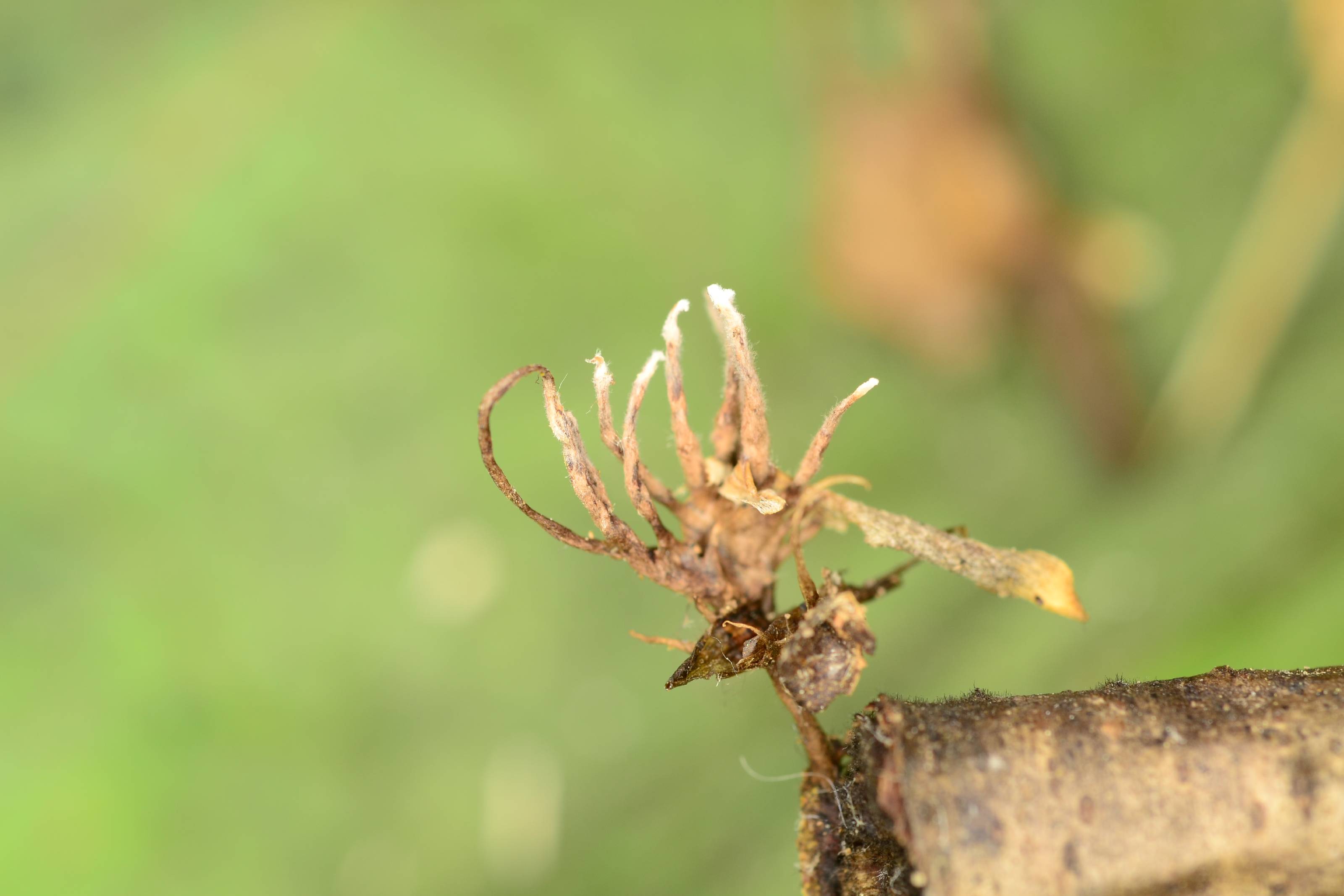
Collybiopsis
Collybiopsis is a resurrected genus of mushroom-forming fungi in the family Omphalotaceae.
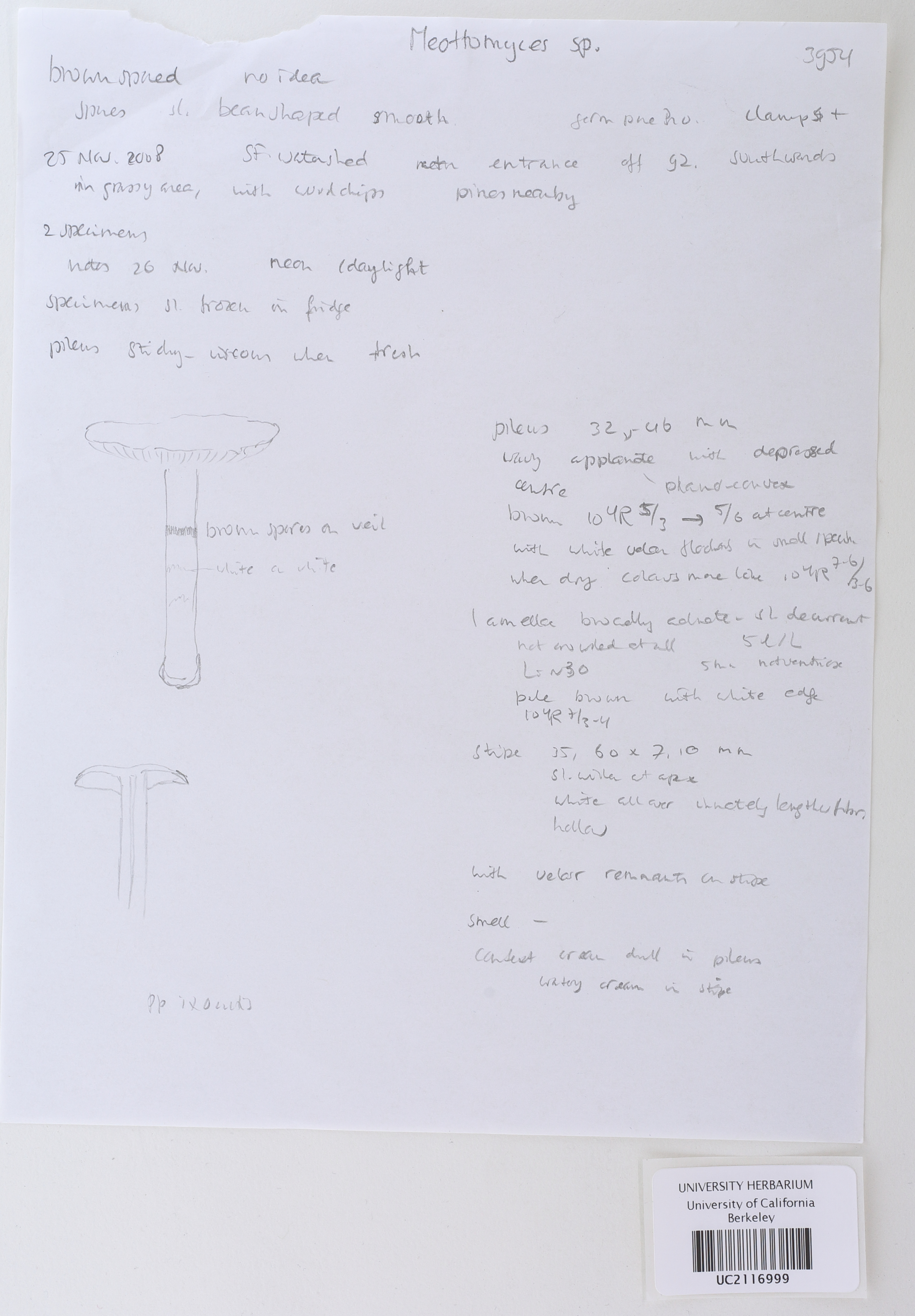
Meottomyces
Meottomyces is a small genus of relatively nondescript, fleshy, brown mushrooms related to Tubaria. In older classifications it had been included in Pholiota, Phaeogalera, or Hemipholiota. Modern molecular evidence suggested recognition of a separate genus when sequences of a collection first identified as Pholiota oedipus, now reclassified in Meottomyces, revealed a unique branch. Subsequently, that species was studied by Holec and later as Phaeogalera oedipus was shown to be distinct from Tubaria but not the type of Phaeogalera itself. Additional phylogenetic support was provided by Gitte Pe
Quadrispora
Quadrispora is a genus of fungi in the family Cortinariaceae.
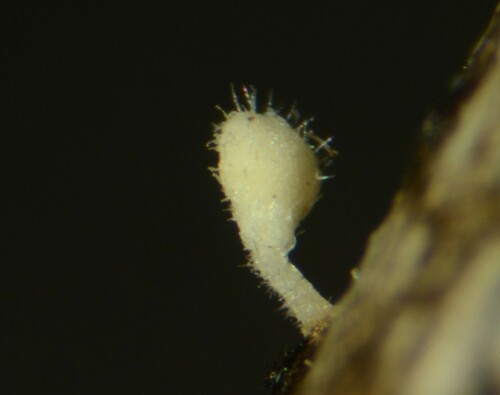
Chaetotyphula
Chaetotyphula is a genus of fungi in the Pterulaceae family. The genus is distributed largely in tropical areas, and contains seven species.
Saproamanita
The genus Saproamanita contains about 24 species of agarics and is one of six genera in the family Amanitaceae, of which the similar Amanita is also a member. Saproamanita differs from Amanita in that its species are saprophytic, and not ectomycorrhizal.

Clitocella
Clitocella is a genus of mushroom-forming fungi in the family Entolomataceae. It was circumscribed in 2014 with Clitocella popinalis as the type species. The generic name refers to its similarities and close relationship to the genera Clitopilus and Clitopilopsis; the Latin word cella, meaning "storage place", alludes to "taxa not belonging to Clitopilus or Clitopilopsis". Species have caps with centrally placed stipes; the gills are decurrent, and crowded closely together with a smooth edge. Mushrooms produce a pink spore print. The spores have thin walls (less than or equal to 0.5 μm) t
Agaricochaete
Agaricochaete is a genus of fungi in the Pleurotaceae family. The genus contains four species found in Africa and Asia.

Neoclitocybe
Neoclitocybe is a genus of fungi in the family Tricholomataceae. The widespread genus contains 10 species that are especially prevalent in tropical regions.
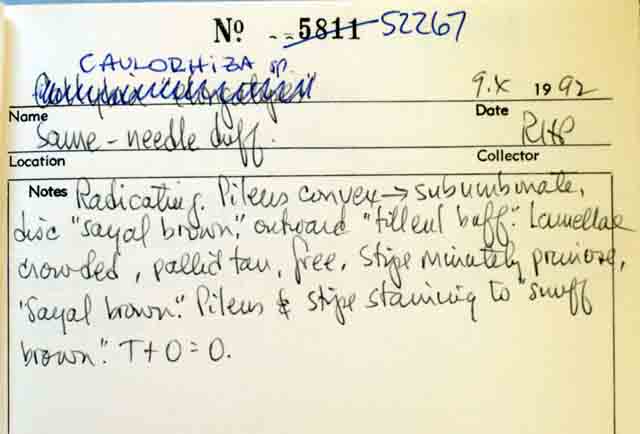
Caulorhiza
Caulorhiza is a genus of fungi in the family Tricholomataceae. The genus, which contains three species found in the US, was circumscribed by Joanne Lennox in 1979.
Typhrasa
Typhrasa is a genus of fungi in the family Psathyrellaceae. It contains four species:
Typhrasa gossypina
Typhrasa nanispora
Typhrasa polycystis
Typhrasa rugocephala
Glabrocyphella
Glabrocyphella is a genus of fungi in the family Marasmiaceae. The widespread genus contains 13 species.
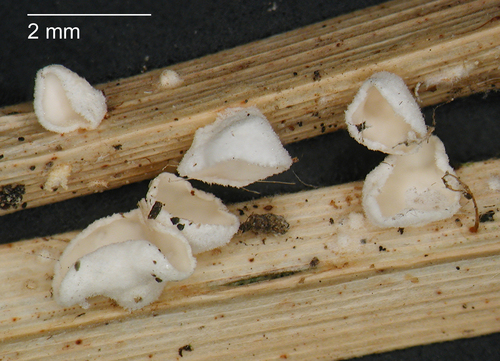
Cellypha
Cellypha is a genus of fungi in the family Tricholomataceae. The widespread genus contains 10 species.
Anastrophella
Anastrophella is a genus of fungi in the family Marasmiaceae.

Stephanospora
Stephanospora is a genus of truffle-like gasteroid fungi in the order Agaricales. In 2014, nine new Australasian species were described from collections previously thought to represent S. flava.
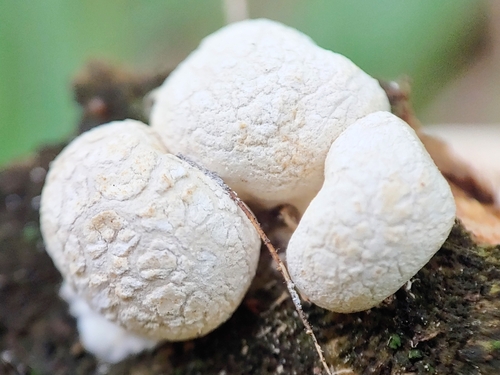
Lycogalopsis
Lycogalopsis is a genus of puffball fungi in the family Agaricaceae. It was circumscribed by mycologist Eduard Fischer in 1886, with L. solmsii as the type species.
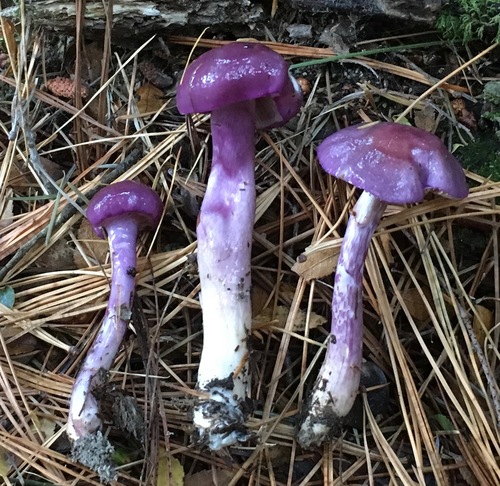
Thaxterogaster
Thaxterogaster is a genus of fungi in the family Cortinariaceae.
Metulocyphella
Metulocyphella is a genus of fungus in the family Marasmiaceae. The genus contains two species found in South America.

Antromycopsis
Antromycopsis is a genus of fungi in the Pleurotaceae family. The genus, an anamorphic form of Pleurotus, has a widespread distribution and contains three species.
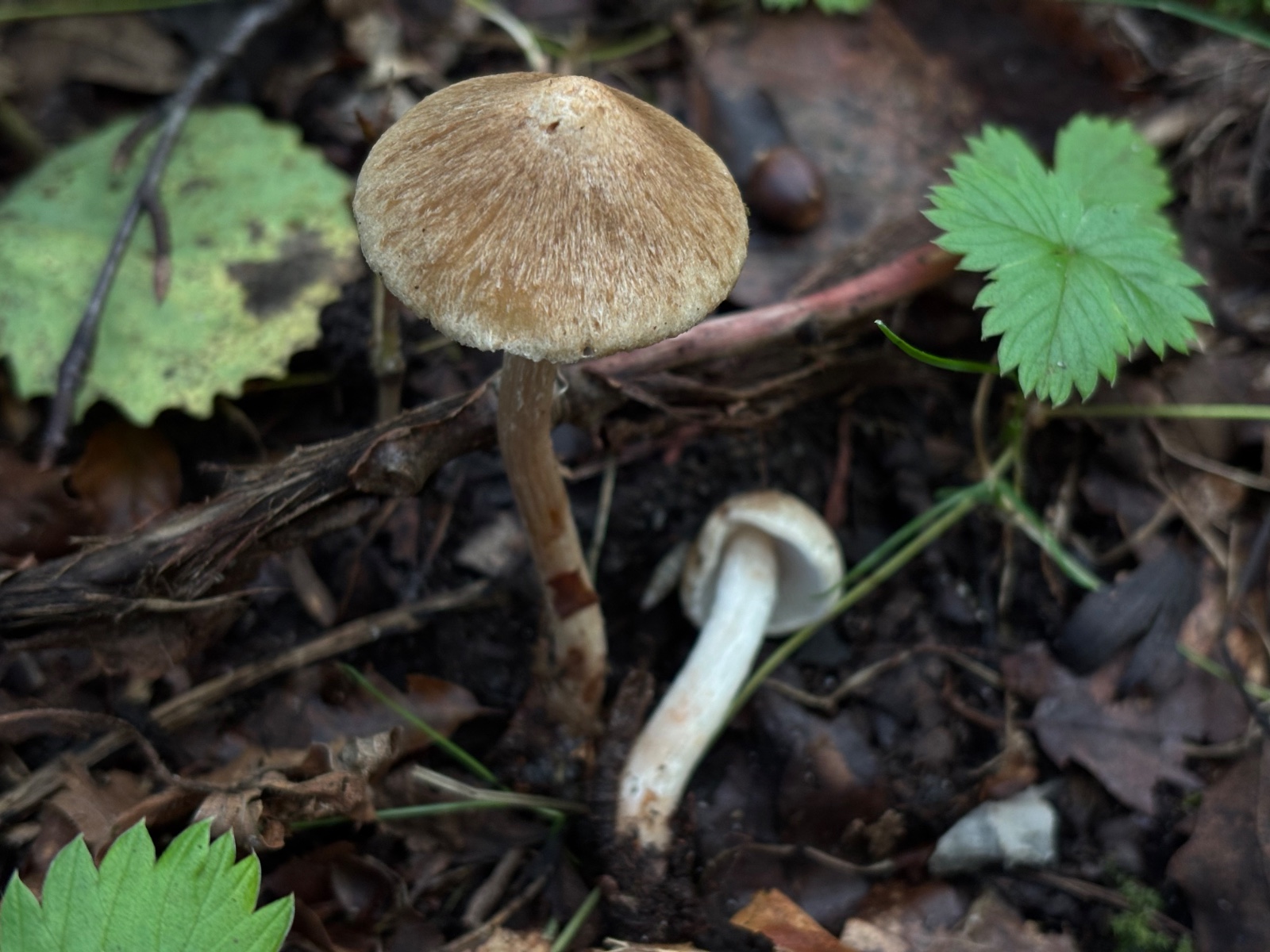
Inosperma
Inosperma is a genus of gilled mushroom in the family Inocybaceae. Previously defined as a subgenus within the large genus Inocybe by Robert Kühner in 1980, these fungi were found to be more distantly related in a 2019 multigene phylogenetic study by Matheny and colleagues.

Morganella
genus of fungi
Desarmillaria
Desarmillaria is a genus of fungi belonging to the family Physalacriaceae.
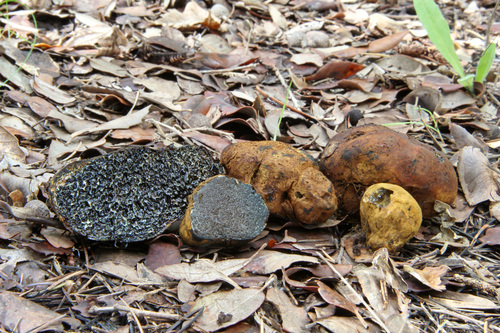
Broomeia
The Broomeiaceae are a family of fungi in the order Agaricales. The family is monotypic, and contains the single genus Broomeia, described by English naturalist Miles Joseph Berkeley in 1844, and named for his collaborator, Christopher Edmund Broome. Berkeley designated the type species to be Broomeia congregata. Species of this fungus family can be found in Mexico as well as various parts of Africa.
Setchelliogaster
Setchelliogaster is a genus of fungi in the order Agaricales. It is incertae sedis with respect to familial placement within the order, although Kirk and colleagues (Dictionary of the Fungi, 10th edition, 2008) consider it likely aligned with either the Bolbitiaceae or the Cortinariaceae. Species Fungorum class it as in the Bolbitiaceae family. The genus is widespread in warm, dry areas, originally containing five species, later degraded to 3 species. It was circumscribed by Czech mycologist Zdeněk Pouzar in 1958.
Tilachlidiopsis
Tilachlidiopsis is a genus of fungi in the family Tricholomataceae. It is an anamorphic form of Collybia.
Hodophilus
Hodophilus is a genus of agarics (gilled fungi) in the family Clavariaceae. Basidiocarps (fruit bodies) are dull-coloured and have dry caps, rather distant, decurrent lamellae, white spores, and smooth, ringless stems. In Europe species are characteristic of old, unimproved grasslands (termed waxcap grasslands) which are a declining habitat, making them of conservation concern. Several species have a distinct odour of naphthalene.
Brunneocorticium
Brunneocorticium is a genus of fungi which following DNA analysis has been placed in the family Omphalotaceae. The genus, described in 2007, contains two corticioid species and one species (B. corynecarpon) which does not seem to have any fruiting body.
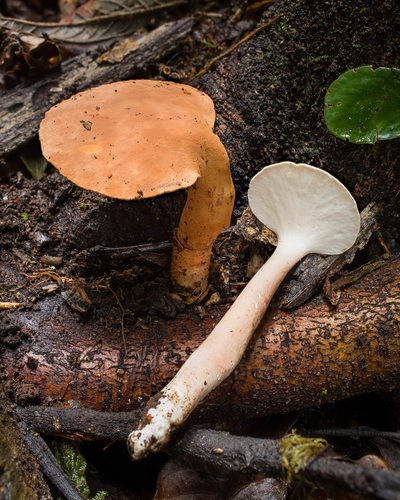
Pseudofistulina
Pseudofistulina is a genus of fungi in the family Fistulinaceae. It was circumscribed in 1962 by Oswaldo and Maria Fidalgo.
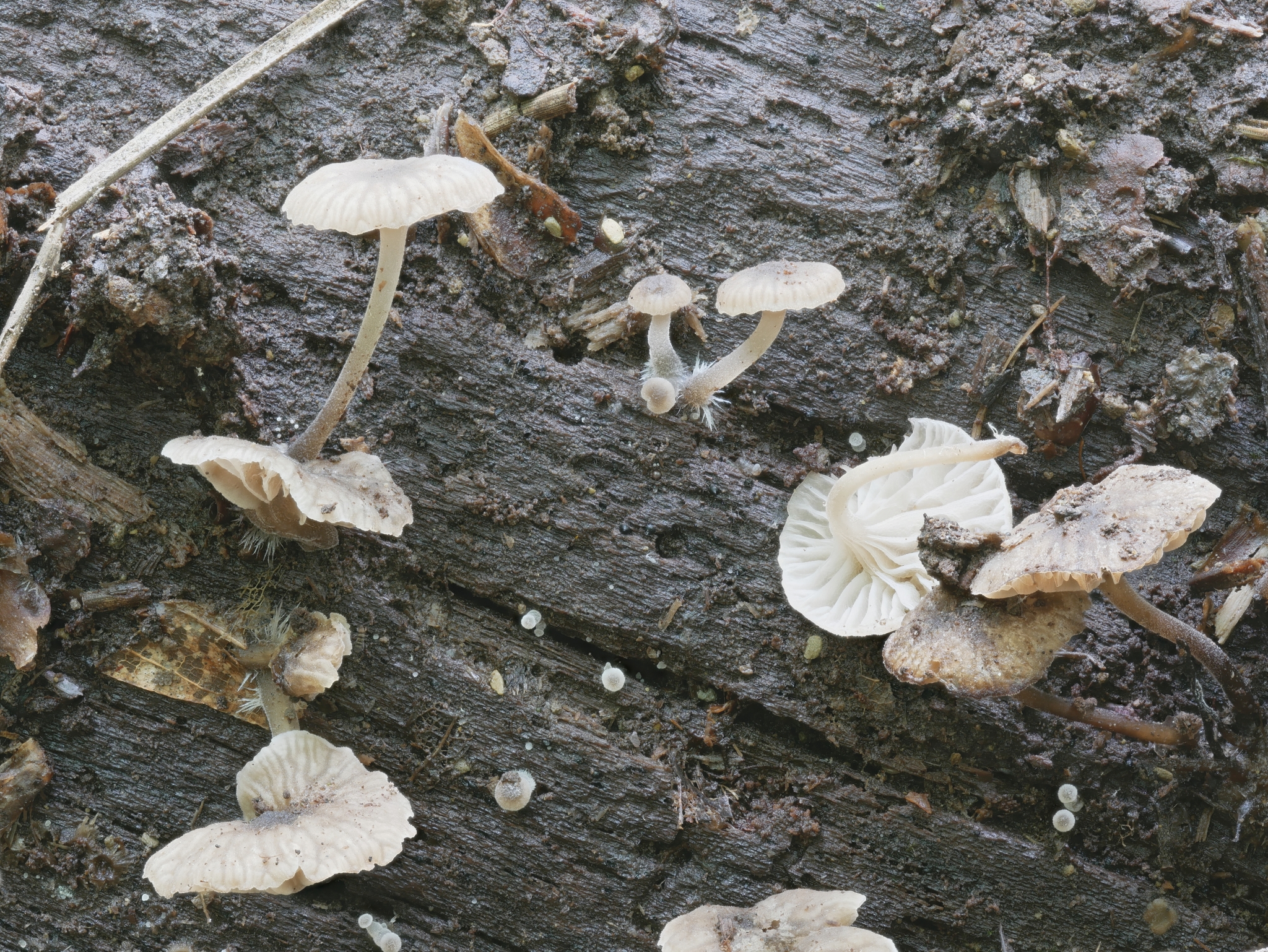
Phloeomana
Phloeomana is a bark-inhabiting agaric fungal genus that produces fuscous-colored to whitish mycenoid to omphalinoid fruit bodies in temperate forests. In addition to the type species Phloeomana speirea, 4 other species, P. alba, P. clavata (= M. thujina, M. phaeophylla), P. hiemalis and P. minutula (formerly Mycena olida), have been placed in the genus. The genus is characterized by nonamyloid smooth, hyaline (translucent) basidiospores and tissues, poorly to moderately differentiated cheilocystidia, diverticulate pileipellis hyphae and general smooth stipe hypha

Singerocybe
Singerocybe is a genus of fungi that contains six species. Singerocybe was circumscribed by the Finnish mycologist Harri Harmaja in 1988 with Singerocybe viscida as the type species.
Thujacorticium
Thujacorticium is a genus of corticioid fungi in the Cyphellaceae family. The genus, circumscribed by J. Ginns in 1988, contains two species.
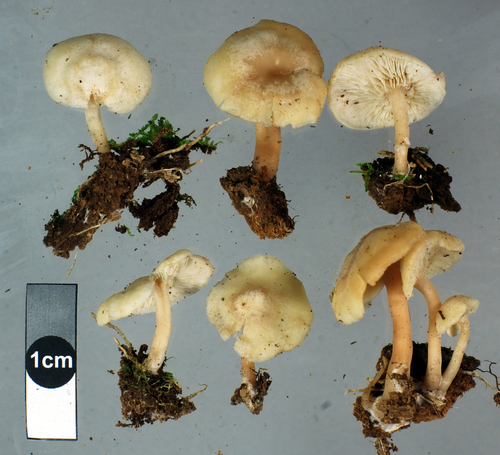
Pleurocollybia
Pleurocollybia is a genus of fungi in the family Callistosporiaceae. Basidiocarps (fruit bodies) are pleurotoid (gilled mushrooms with lateral stems) and grow on wood. DNA research has shown that the type species, P. praemultifolia belongs in the genus Callistosporium, making Pleurocollybia a synonym. Not all species have been investigated, however, and it is not clear that every Pleurocollybia species belongs in Callistosporium. Pleurocollybia cibaria has, for example, been transferred to the genus Gerhardtia.
Acantholichen
Acantholichen is a genus of basidiolichen-forming fungus species in the family Hygrophoraceae. The genus was established in 1998 by the Per Magnus Jørgensen based on a single species from Costa Rica, but has since grown to include seven recognized species found across Central and South America. These lichens form crusts made of tiny, scale-like flaps that give them a finely granular appearance, quite different from the thread-like growth of their close relatives. Acantholichen species partner with blue-green bacteria to create their living structures, using specialized fungal pegs to exchange
Phaeodepas
Phaeodepas is a genus of fungus in the family Marasmiaceae. The genus contains two species found in Venezuela.
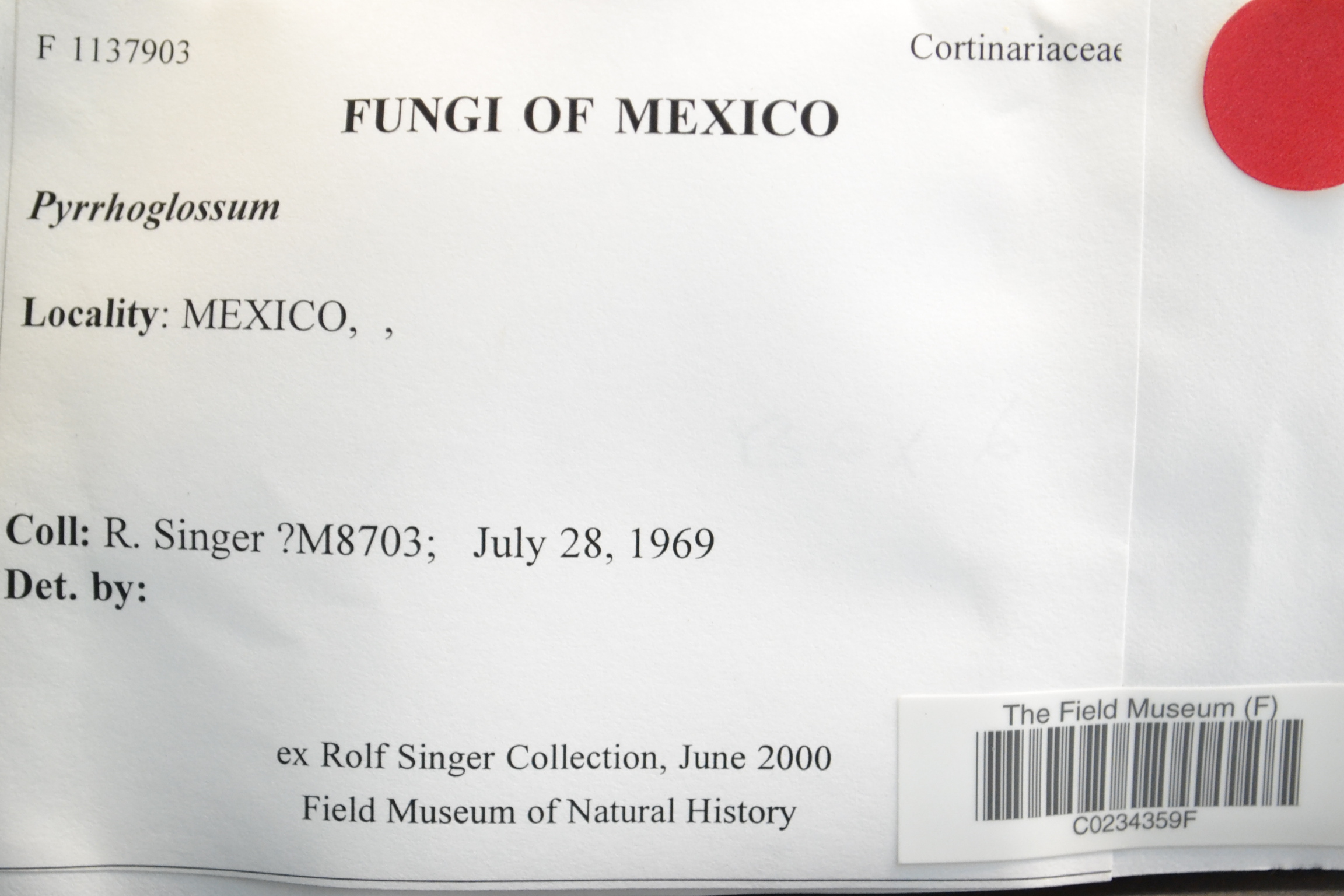
Pyrrhoglossum
Pyrrhoglossum is a genus of fungus in the family Cortinariaceae. The genus is widely distributed, especially in tropical regions, and contains 11 species. It was circumscribed by American mycologist Rolf Singer in 1944.
Galerella
genus of fungi

Calonarius
Calonarius is a genus of fungi in the family Cortinariaceae.
Romagnesiella
Romagnesiella is an agaric fungal genus that colonizes mineral, calcareous or sandy soils in Europe and North Africa. The small brownish fruitbodies have narrowly attached, broad and distant lamellae and poorly differentiated cheilocystidia and pleurocystidia. Spores are thick-walled, brown, smooth, and lack germ pore. The cap surface (pileipellis) is somewhat cellular with irregular puzzle-like to pyriform hyphae. Clamp connections are present in the hyphae. It is most closely related to Crassisporium, both genera being close to the Strophariaceae or the Cortinariaceae.
Cercopemyces
Cercopemyces is a mushroom genus allied to Ripartitella and not clearly aligned with well characterized mushroom families. The genus contains four species, one known from western and another, previously known as Ripartitella ponderosa or Cystoderma ponderosa, from eastern North America, a third from Europe, and a fourth species from South America.
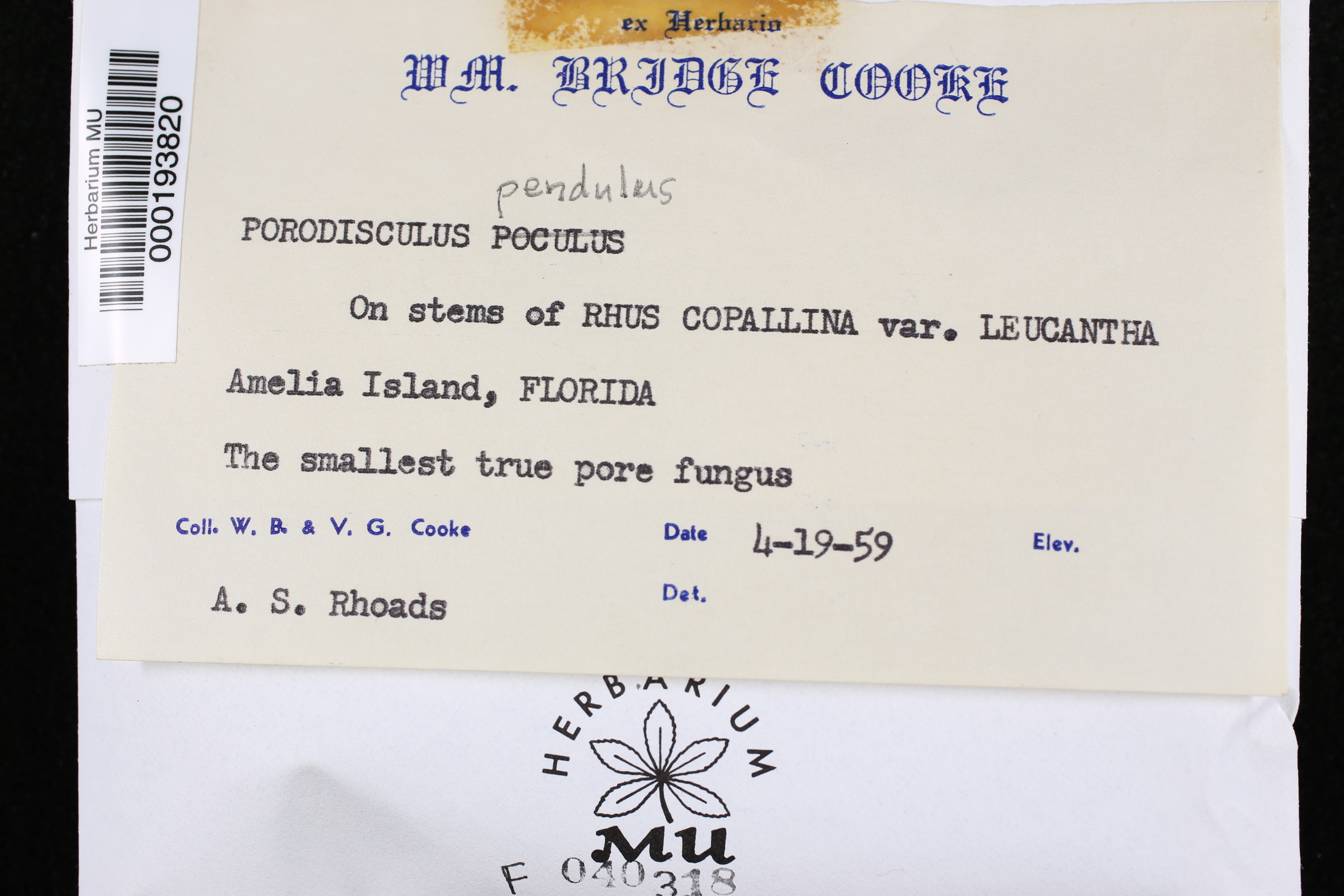
Porodisculus
Porodisculus is a ditypic genus of fungi in the family Fistulinaceae. It was circumscribed by American mycologist William Alphonso Murrill in 1907.
Limnoperdon
Limnoperdon is a fungal genus in the monotypic family Limnoperdaceae. The genus is also monotypic, as it contains a single species, the aquatic fungus Limnoperdon incarnatum. The species, described as new to science in 1976, produces fruit bodies that lack specialized structures such as a stem, cap and gills common in mushrooms. Rather, the fruit bodies—described as aquatic or floating puffballs—are small balls (0.5–1 mm diameter) of loosely interwoven hyphae. The balls float on the surface of the water above submerged twigs. Experimental observations on the development of the fruit body,