Category
page 3Agaricales genera
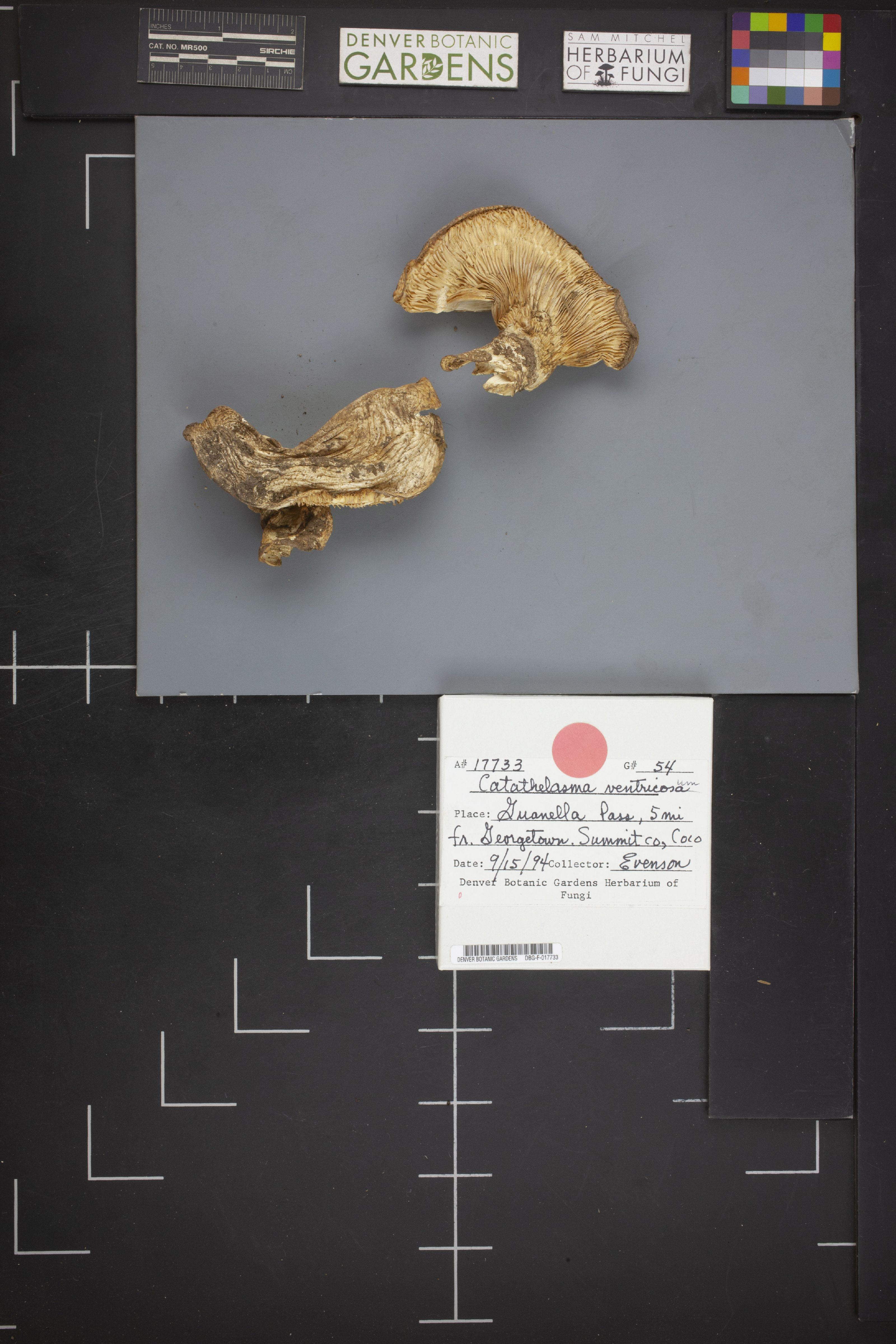
Catathelasma
Catathelasma is a genus of fungi in the family Biannulariaceae. Basidiocarps (fruit bodies) are agaricoid, with a conspicuous veil (leaving a double ring on the stem), adnate to decurrent lamellae, and amyloid basidiospores. The genus is separated on DNA characteristics as well as morphology. Species are known from North America, Europe, and Asia and are ectomycorrhizal, forming an association with the living roots of trees.
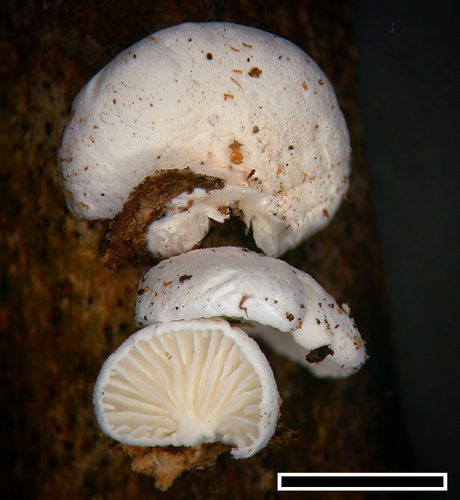
Cheimonophyllum
Cheimonophyllum is a genus of fungi in the family Cyphellaceae. The widely distributed genus contains three species.
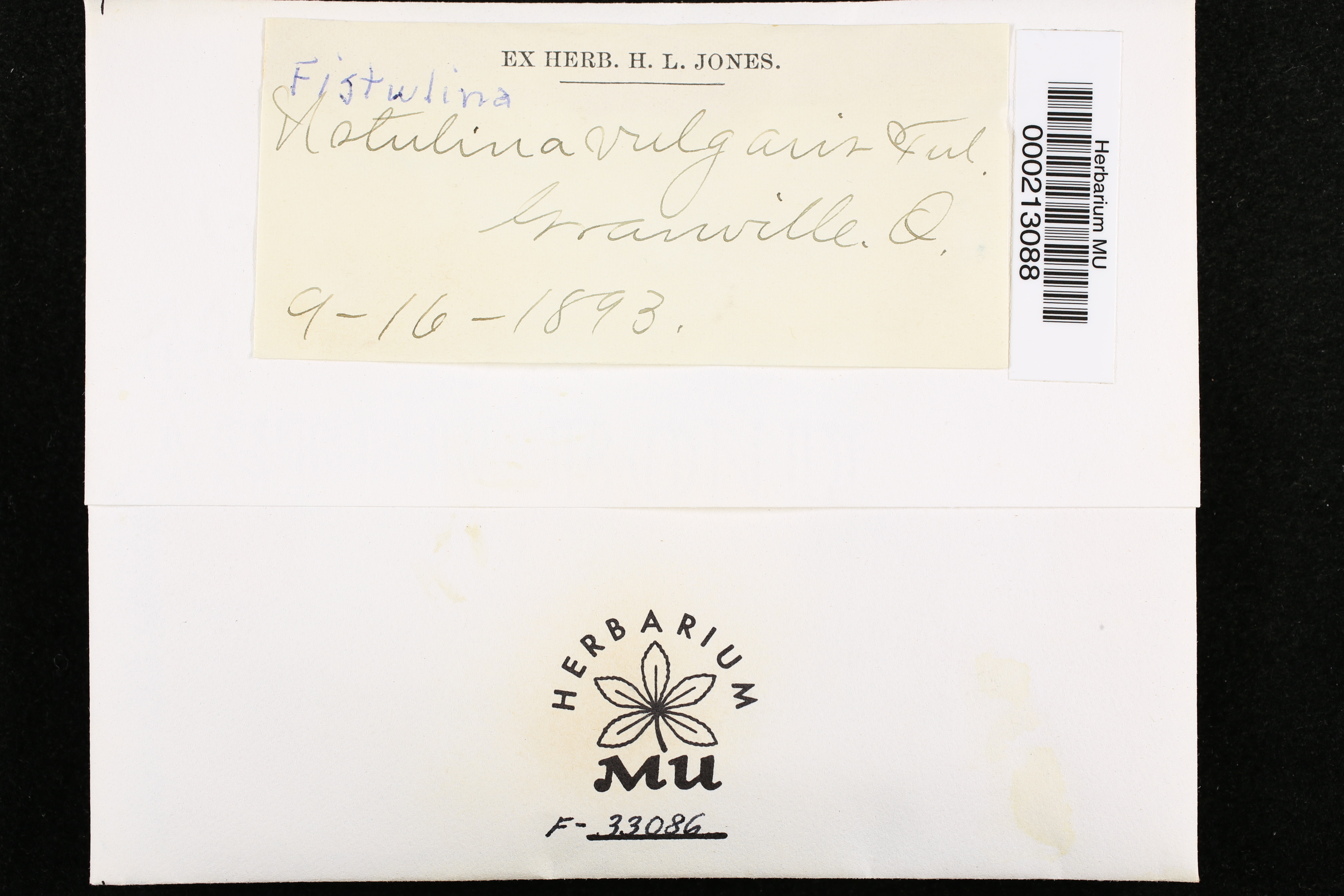
Fistulina
Fistulina is a genus of fungi in the family Fistulinaceae. Species in the genus cause a brown rot of both dead and living hardwood trees.
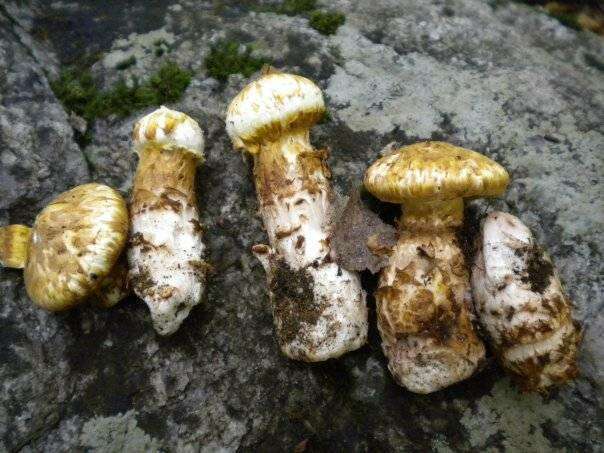
Squamanita
Squamanita is a genus of parasitic fungi in the family Squamanitaceae. Basidiocarps (fruit bodies) superficially resemble normal agarics (gilled mushrooms) but emerge from parasitized fruit bodies of deformed host agarics.

Mycetinis
Mycetinis is a genus of fungus in the Omphalotaceae family, containing about eight species formerly classified in Marasmius.
Tricholosporum
Tricholosporum is a genus of fungi in the family Tricholomataceae. It was circumscribed by Mexican mycologist Gastón Guzmán in 1975.
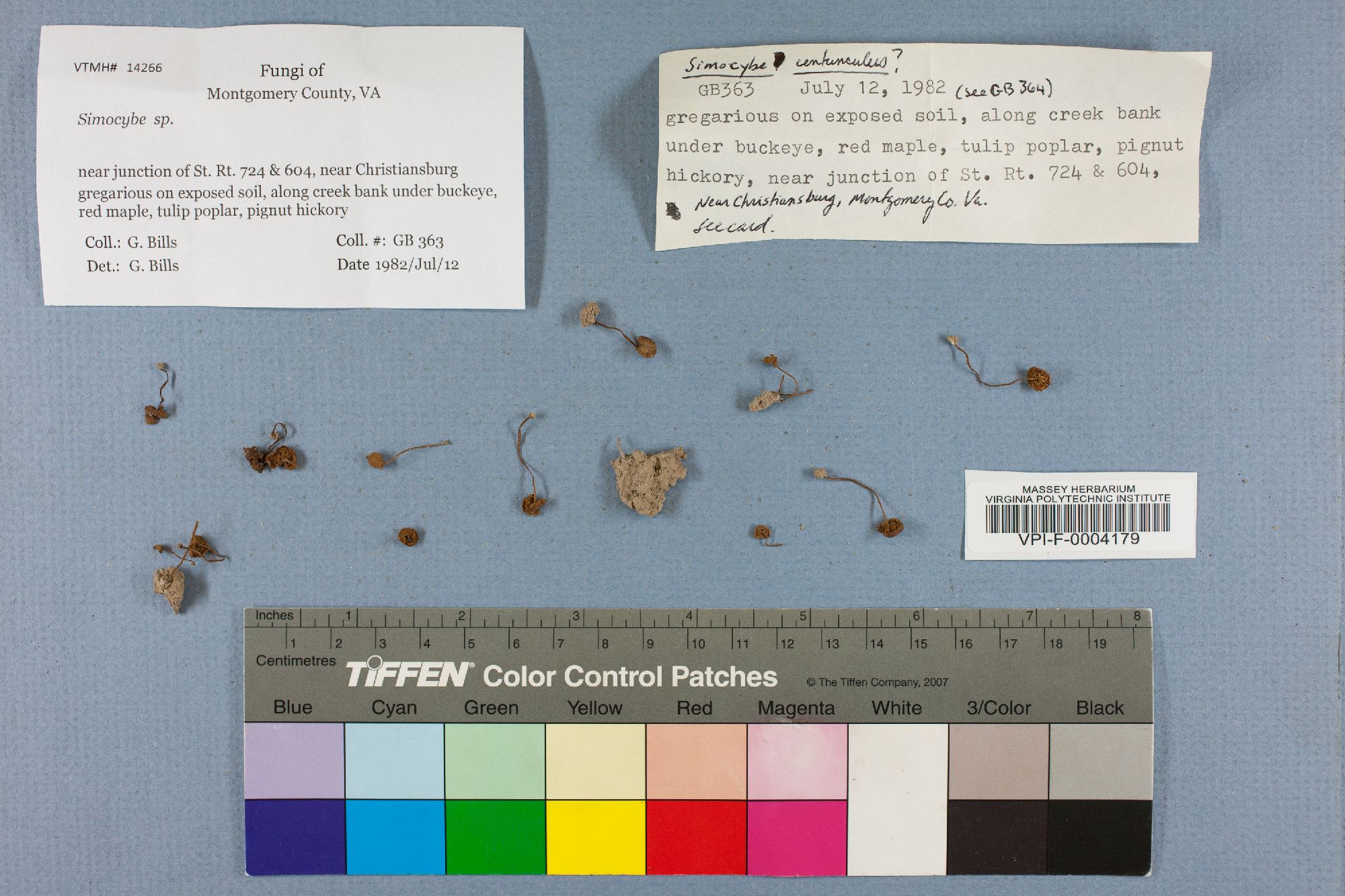
Simocybe
Simocybe is a genus of fungi in the family Crepidotaceae. The genus is widely distributed, and contains 25 species.
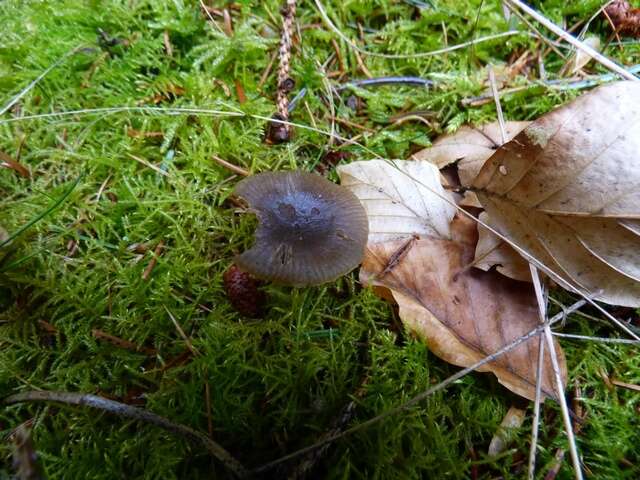
Omphaliaster
Omphaliaster is a genus of fungi in the family Tricholomataceae. The widespread genus contains seven species, predominantly in northern temperate regions.
Cunninghammyces
Cunninghammyces is a genus of corticioid fungi in the family Cyphellaceae. The genus, described by Joost Stalpers in 1985, contains two species known from New Zealand and Réunion.
Mycocalia
Mycocalia is a genus of fungi in the family Nidulariaceae. Basidiocarps (fruit bodies) are minute (typically under 5 mm in diameter) and irregularly spherical. Each produces one or more peridioles which contain the spores and are released from the disintegrating fruit bodies at maturity. Species are usually found growing on herbaceous stems and other plant debris. The genus was originally described in 1961 by British mycologist J.T. Palmer and has a north temperate distribution.

Pseudobaeospora
Pseudobaeospora is a genus of fungi in the family Tricholomataceae. A 2008 estimate placed about 20 species in the widespread genus.
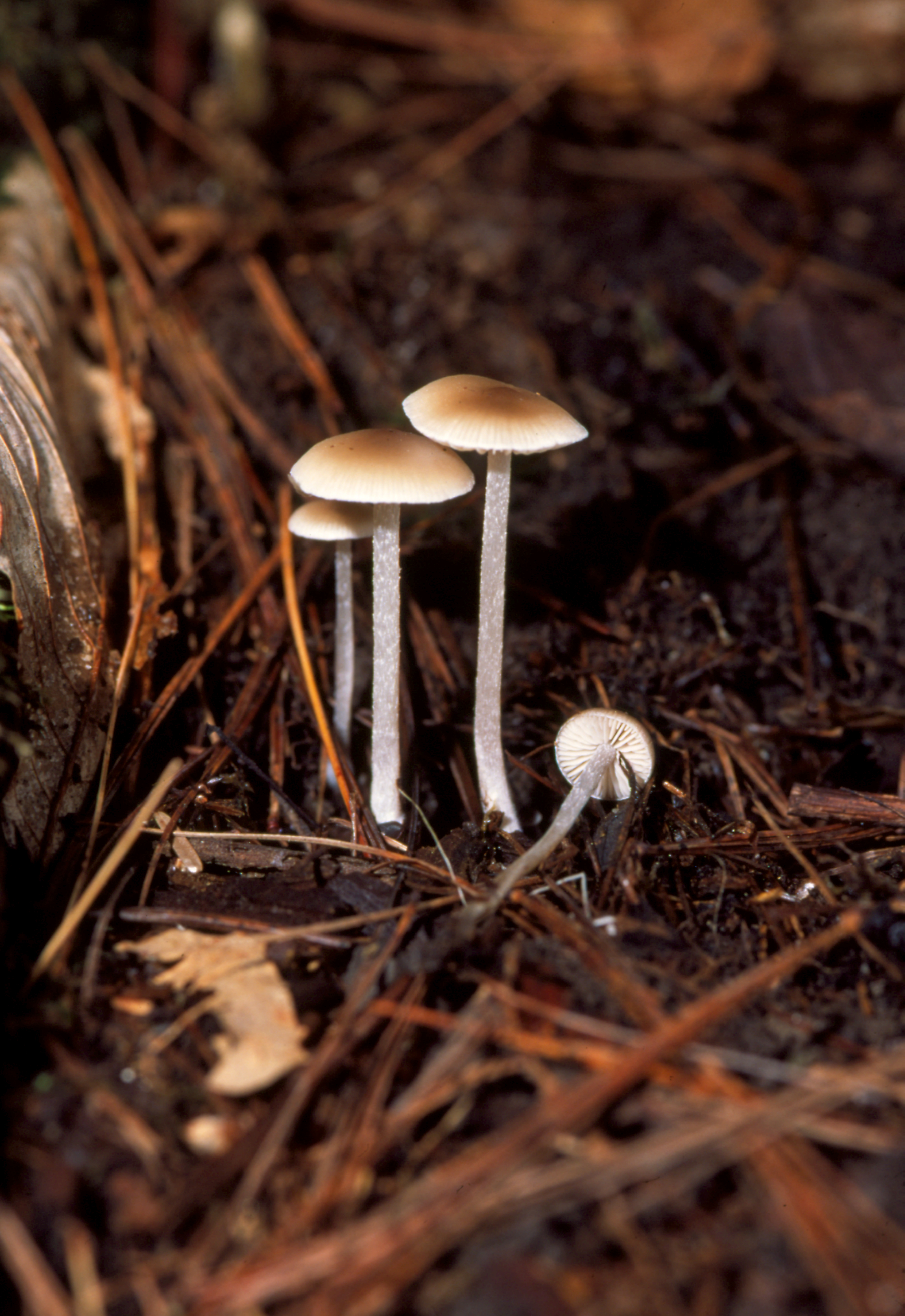
Mycenella
Mycenella is a genus of fungi in the family Tricholomataceae. The widespread genus contains 10 species, found mostly in temperate regions. Mycologist Rolf Singer circumscribed the genus in 1938.
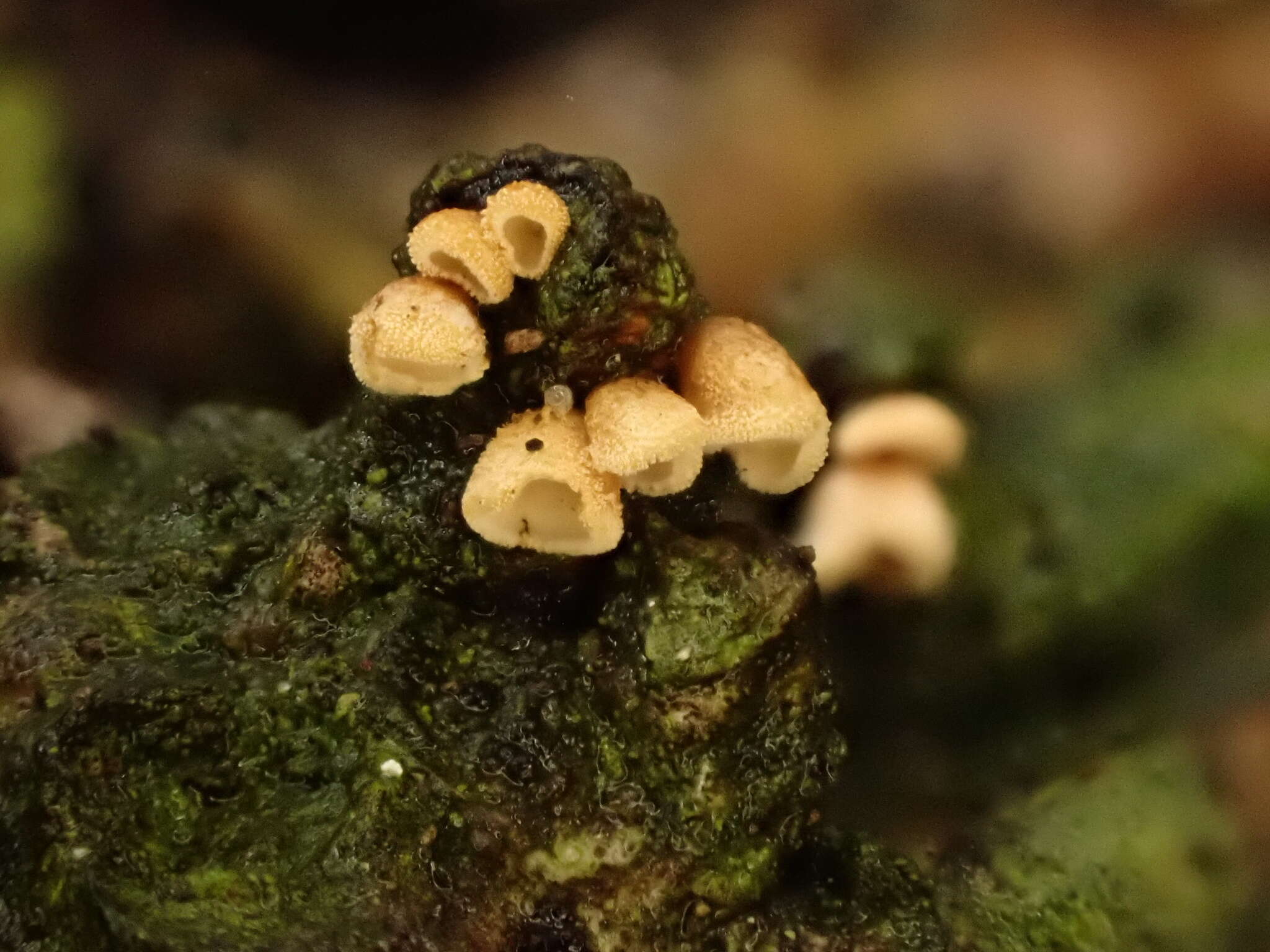
Cyphella
Cyphella is a genus of fungi in the family Cyphellaceae. A 2008 estimate placed about 300 species in the widely distributed genus.
==Selected species==
Cyphella digitalis
Floccularia
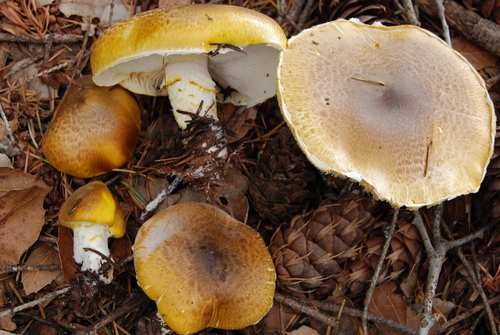
Floccularia is a genus of fungi in the order Agaricales. There are four recognized species in the genus, which have a widespread distribution, especially in northern temperate regions. Two former species are now classified as a Cercopemyces and an Amanita (or more specifically an Aspidella, Amanitaceae). Floccularia was circumscribed by Czech mycologist Zdeněk Pouzar in 1957.
Phaeomarasmius
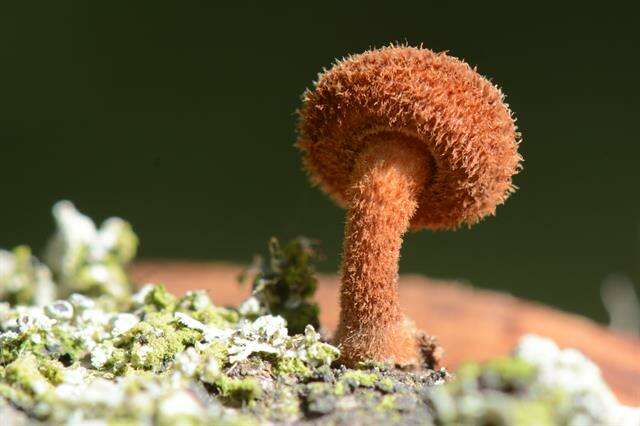
Phaeomarasmius is a genus of fungi in the family Tubariaceae. It was formerly thought to belong in the family Inocybaceae. The genus has a widespread distribution, and contains about 20 species.

Myxomphalia
Myxomphalia is a genus of fungi in the family Tricholomataceae. The genus has a widespread distribution in north temperate areas, and contains four species.
Cyclocybe
Cyclocybe is a genus of fungi belonging to the family Tubariaceae. The genus has a cosmopolitan distribution.
Hydropus
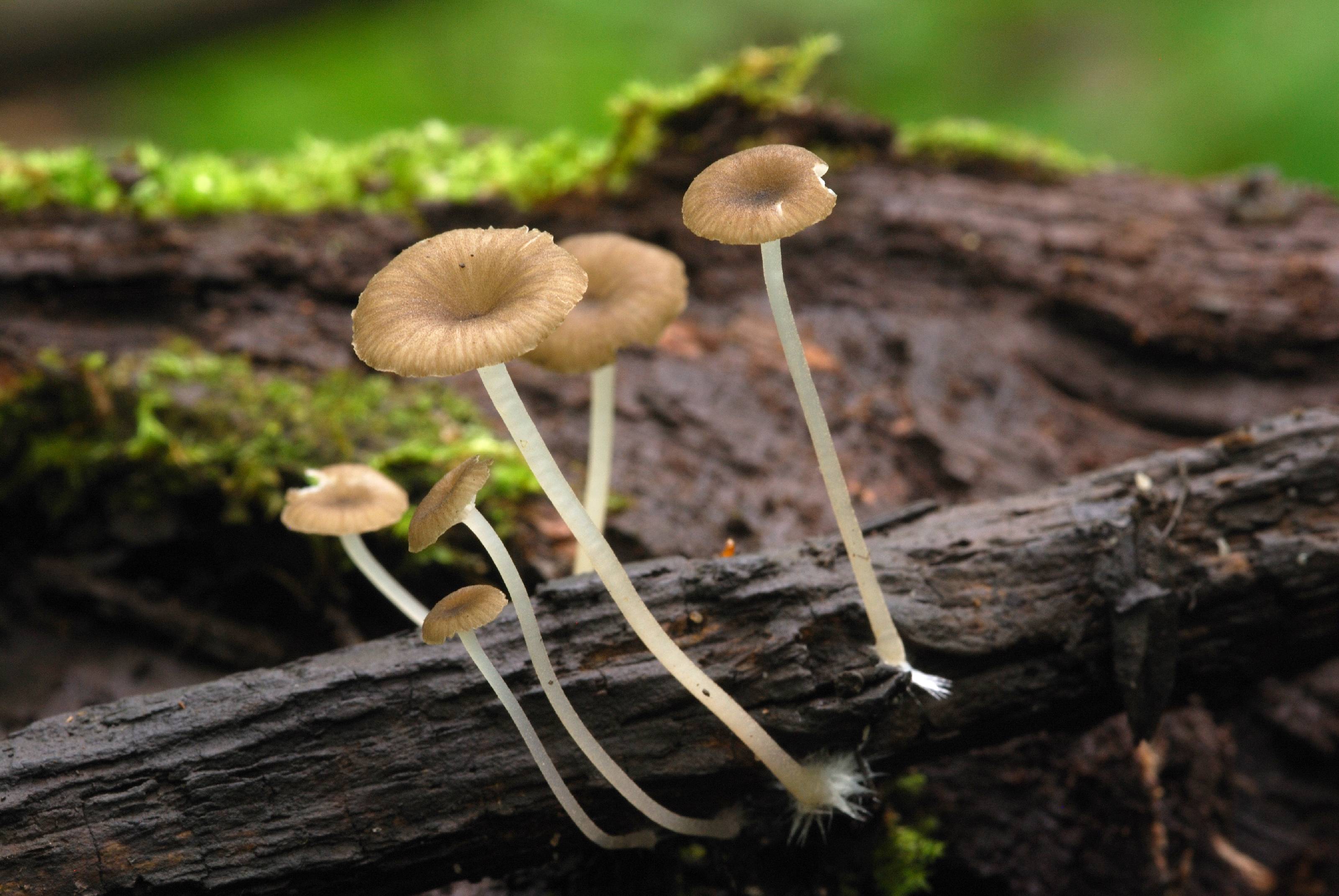
Hydropus is a genus of fungi in the family Porotheleaceae. The widespread genus contains about 100 species, especially in tropical areas, but is not well represented in temperate regions. About 15 taxa are found in Europe; H. floccipus has the widest distribution in western Europe. Hydropus was circumscribed by Rolf Singer in 1948. Species in the genus have fruit bodies with caps that are mycenoid, collybioid, or omphaloid in form. Most species occur in tropical and subtropical regions, where they grow as saprobes on rotting wood, forest litter, and mosses. Generally, most Hydropus specie

Campanella
genus of fungi
Pleurocybella
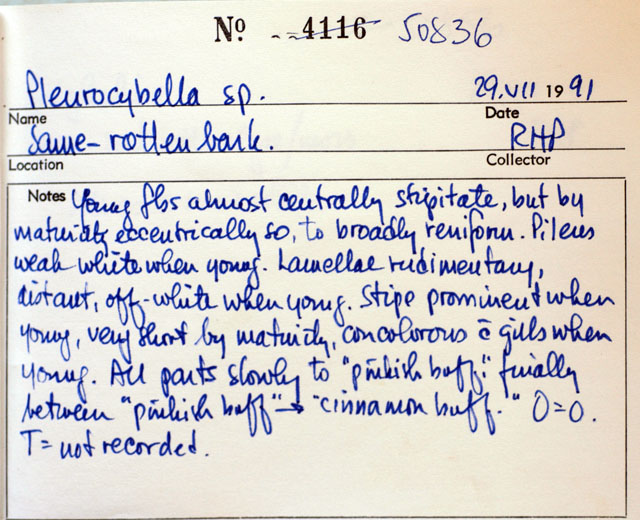
Pleurocybella is a genus of fungi in the family Phyllotopsidaceae.

Rhizomarasmius
Rhizomarasmius is a genus of fungi in the family Physalacriaceae, containing about five species.
Tephrocybe
Tephrocybe is a genus of about 40 species of mushroom, with a widespread distribution in temperate areas. The genus was circumscribed by Dutch mycologist Marinus Anton Donk in 1962.
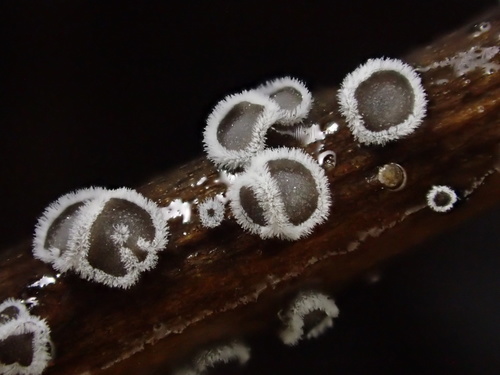
Lachnella
Lachnella is a genus of cyphelloid fungi in the Niaceae family. The genus has a widespread distribution and contains six species.
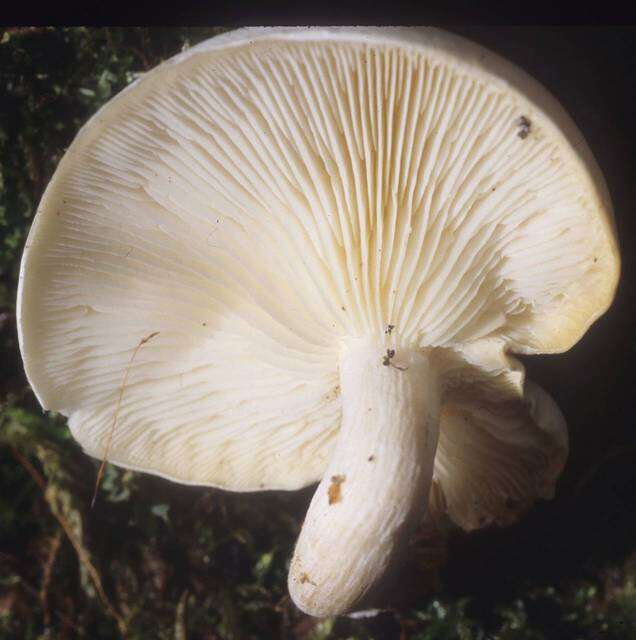
Ossicaulis
Ossicaulis is a genus of mushroom-forming fungi in the family Lyophyllaceae.
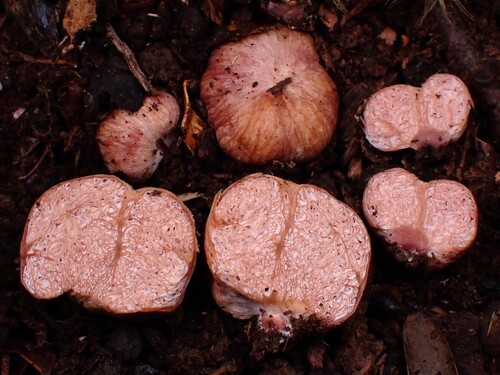
Hydnangium
Hydnangium is a genus of truffle-like fungi in the family Hydnangiaceae. All species in this genus are known to form ectomycorrhizal associations with trees.
Homophron
Homophron is a genus of fungi belonging to the family Psathyrellaceae.
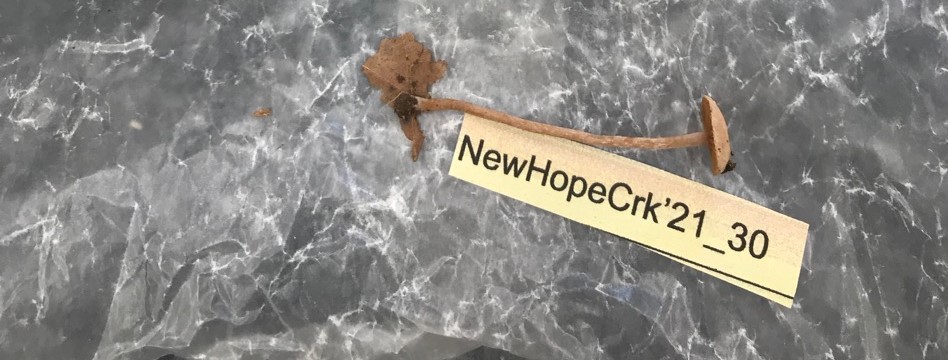
Pholiotina
Pholiotina is a genus of small agaric fungi. It was circumscribed by Swiss mycologist Victor Fayod in 1889 for Conocybe-like species with partial veils. The genus has since been expanded to include species lacking partial veils.
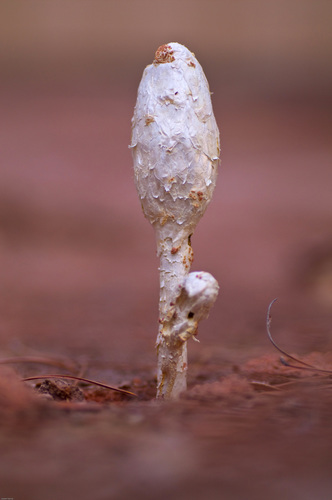
Podaxis
Podaxis is a genus of secotioid fungi in the family Agaricaceae. Species, which have the appearance of a "stalked-puffball", have a worldwide distribution, and tend to be found growing solitary or scattered on sandy soils, especially in arid regions. Although close to 50 species have been described, it has been argued that many of them may represent extremes in the natural range of variations found in Podaxis pistillaris.
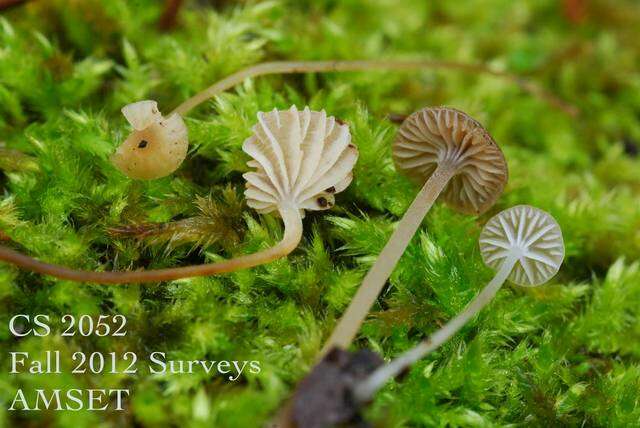
Fayodia
Fayodia is a genus of fungi in the family Tricholomataceae. It was first described by Robert Kühner in Bull. Bi-Mens. Soc. Linn. Lyon Vol.9 on page 68 in 1930, and the specific epithet honors the Swiss mycologist Victor Fayod (1860–1900). The widespread genus contains 10 species, mostly in the northern temperate regions.
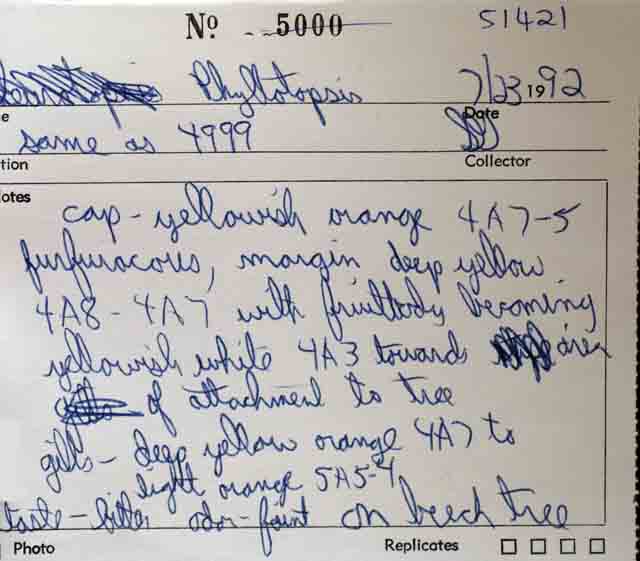
Phyllotopsis
Phyllotopsis is a genus of fungi in the family Phyllotopsidaceae. The widespread genus contain five species that occur predominantly in temperate regions.
Verrucospora
Verrucospora is a genus of fungi in the family Agaricaceae.
Rectipilus
Rectipilus is a genus of cyphelloid fungi in the family Marasmiaceae. The widespread genus contains nine species. It was circumscribed by Reinhard Agerer in 1973.
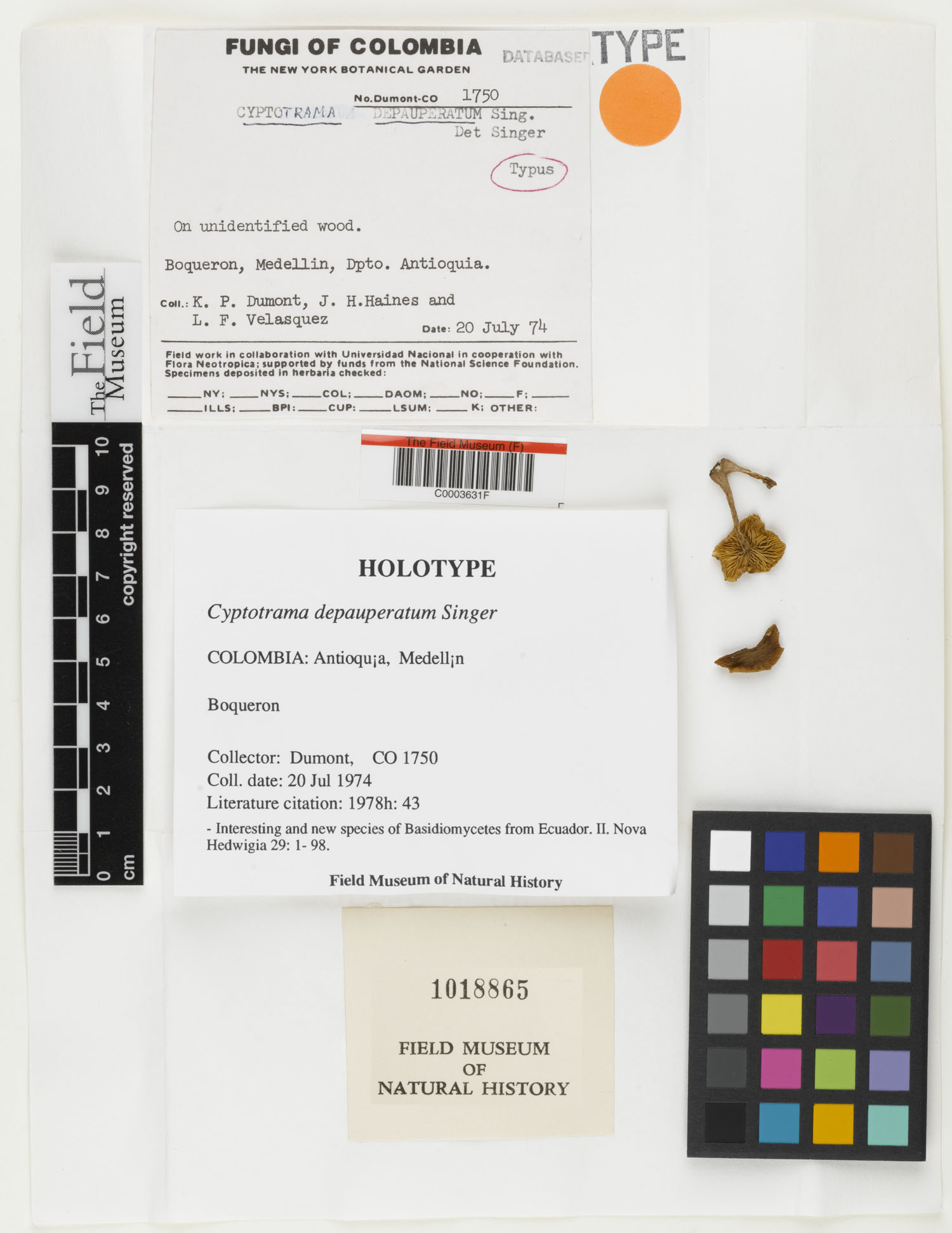
Cyptotrama
Cyptotrama is a genus of mushrooms in the family Physalacriaceae.

Flagelloscypha
Flagelloscypha is a genus of cyphelloid fungi in the family Niaceae. The genus has a widespread distribution and contains an estimated 25 species.
Haasiella
Haasiella is a fungal genus in the family Hygrophoraceae. It is a monotypic genus that contains only the species Haasiella venustissima. Haasiella splendidissima, formerly considered to be a distinct species based on its 4-spored basidia, was found by a DNA study to be synonymous with Haasiella venustissima. Haasiella venustissima is only known from Europe and is saprotrophic on wood. Haasiella was described as a new genus in 1966 by Czech mycologists František Kotlaba and Zdeněk Pouzar. It is most closely related to the genus Hygrophorus.
Tectella
Tectella is a genus of fungi in the family Mycenaceae. The genus is widely distributed in northern temperate regions, and contains three species.
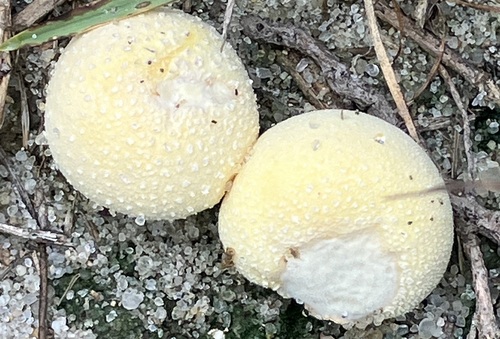
Arachnion
Arachnion is a genus of gasteroid fungi in the family Agaricaceae.
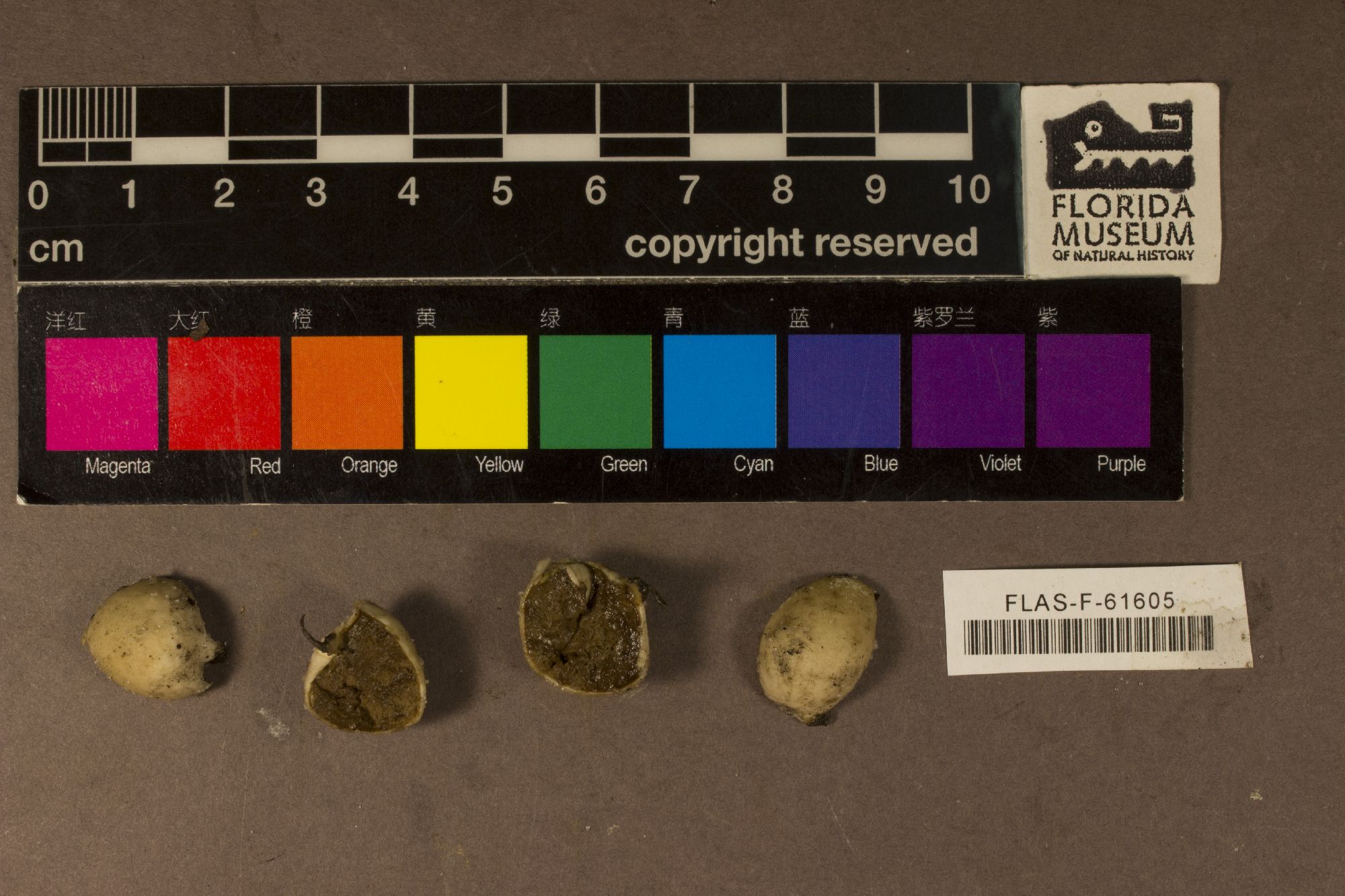
Holocotylon
Holocotylon is a genus of fungi in the family Agaricaceae. It was circumscribed by American mycologist Curtis Gates Lloyd in 1906 with H. brandegeeanum as the type species.

Gyrophragmium
Gyrophragmium is a genus of fungi in the family Agaricaceae. The genus was circumscribed by French botanist Camille Montagne in 1843.
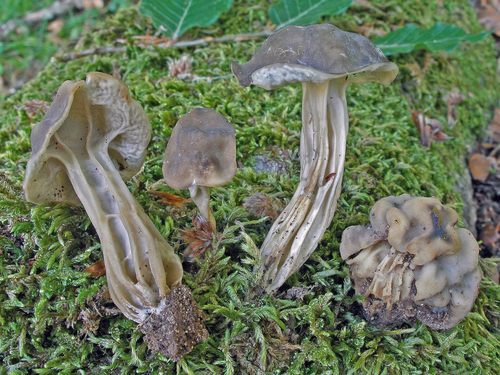
Queletia
Queletia is a genus of fungi in the family Agaricaceae. The genus was circumscribed by Elias Magnus Fries in 1872. Fruit bodies of Queletia species are sequestrate with a thin outer skin (peridium) and a harder inner skin that breaks into small pieces with age. The genus is named after French mycologist Lucien Quélet (1832–1899).

Pseudoarmillariella
Pseudoarmillariella is a genus of fungi in the family Hygrophoraceae. The genus contains three species found in Central America, North America, and Asia. Pseudoarmillariella was described by mycologist Rolf Singer in 1956.
Radulomyces
Radulomyces is a genus of crust fungi in the family Radulomycetaceae. The genus has a widespread distribution and contains 11 species. It was circumscribed by Danish botanist Mads Peter Christiansen in 1960, with Radulomyces confluens as the type species. This genus was formally considered to be part of the Pterulaceae family.
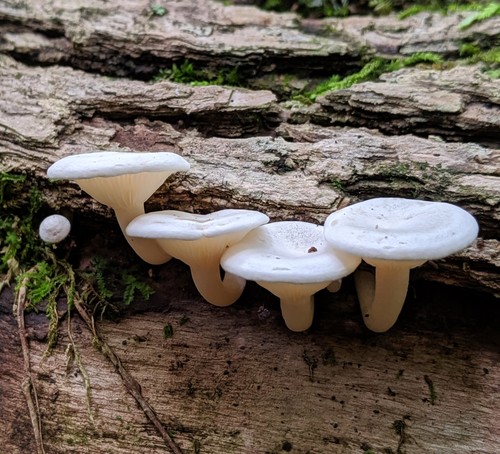
Nothopanus
thumb | 220x124px | right
Nothopanus is a genus of fungus in the family Marasmiaceae. The genus was circumscribed by American mycologist Rolf Singer in 1944.

Arthromyces
Arthromyces is a genus of fungi in the Lyophyllaceae family. The genus contain two species found in Central America.
Coronicium
Coronicium is a genus of fungi in the Pterulaceae family. The genus has a widespread distribution in north temperate areas, and contains five species: C. alboglaucum, C. gemmiferum, C. molokaiense, C. proximum, C. thymicola.
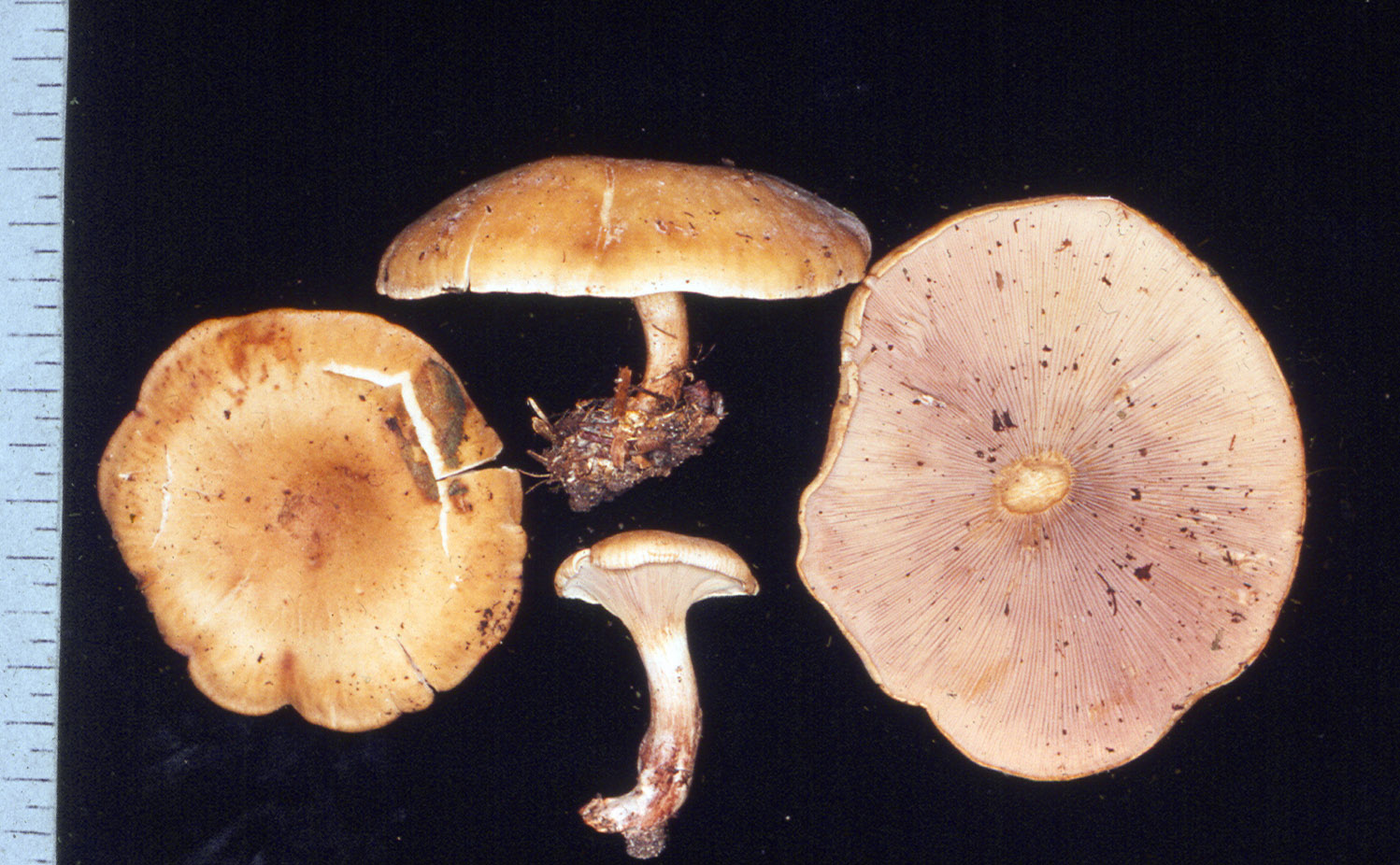
Ripartites
Ripartites is a genus of fungi in the family Tricholomataceae. The genus has a widespread distribution and originally contained five species. Species in Ripartites have small, round to subglobose spores, which are yellowish-brown and ornamented. Macroscopically, they resemble Clitocybe. Ripartites was circumscribed by Petter Karsten in 1879.

Panaeolina
Panaeolina is a small genus of small mushrooms, containing only about four species. They are a subgroup of Panaeolus which have dark brown spores. The type species is Panaeolina foenisecii, a common lawn mushroom. Members of Panaeolina are broadly distributed throughout the world.
Rhodotus
Rhodotus is a genus in the fungus family Physalacriaceae. There are two species in the genus with the best known, Rhodotus palmatus, called the netted rhodotus, the rosy veincap, or the wrinkled peach. The unique characteristics of R. palmatus have made it difficult for taxonomists to agree on how it should be classified, resulting in an elaborate taxonomical history and an extensive synonymy. First named Agaricus palmatus by Bulliard in 1785, it was reclassified into several different genera before becoming Rhodotus in 1926. The familial placement of the genus Rhodotus within the order A
Lulesia
Lulesia is a genus of fungi in the family Tricholomataceae. The genus contains several species found in tropical regions.
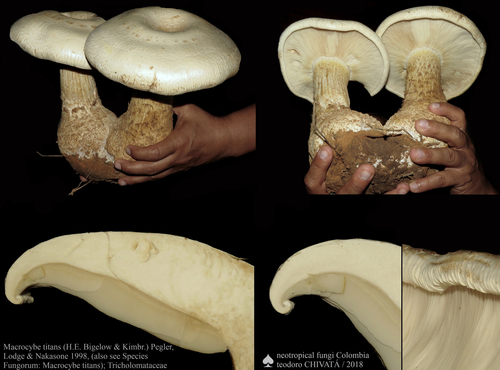
Macrocybe
Macrocybe is a genus of fungi in the family Callistosporiaceae. Basidiocarps (fruit bodies) are agarics (gilled mushrooms) and were previously referred to Tricholoma, but are all large, whitish, and saprotrophic (Tricholoma species are ectomycorrhizal). Recent molecular research, based on cladistic analysis of DNA sequences, has shown that the genus is a natural, monophyletic grouping, though the status of several species is uncertain. Macrocybe species have a tropical to subtropical distribution.
Incrustocalyptella
Incrustocalyptella is a genus of fungi in the Cyphellaceae family. The genus contains three species collectively distributed in Colombia, Papua New Guinea, the Hawaiian Islands, and Thailand.
Paralepista
Paralepista is a genus of mushrooms in family Tricholomataceae. Until 2012, its member species were generally assigned either to Lepista or to Clitocybe.
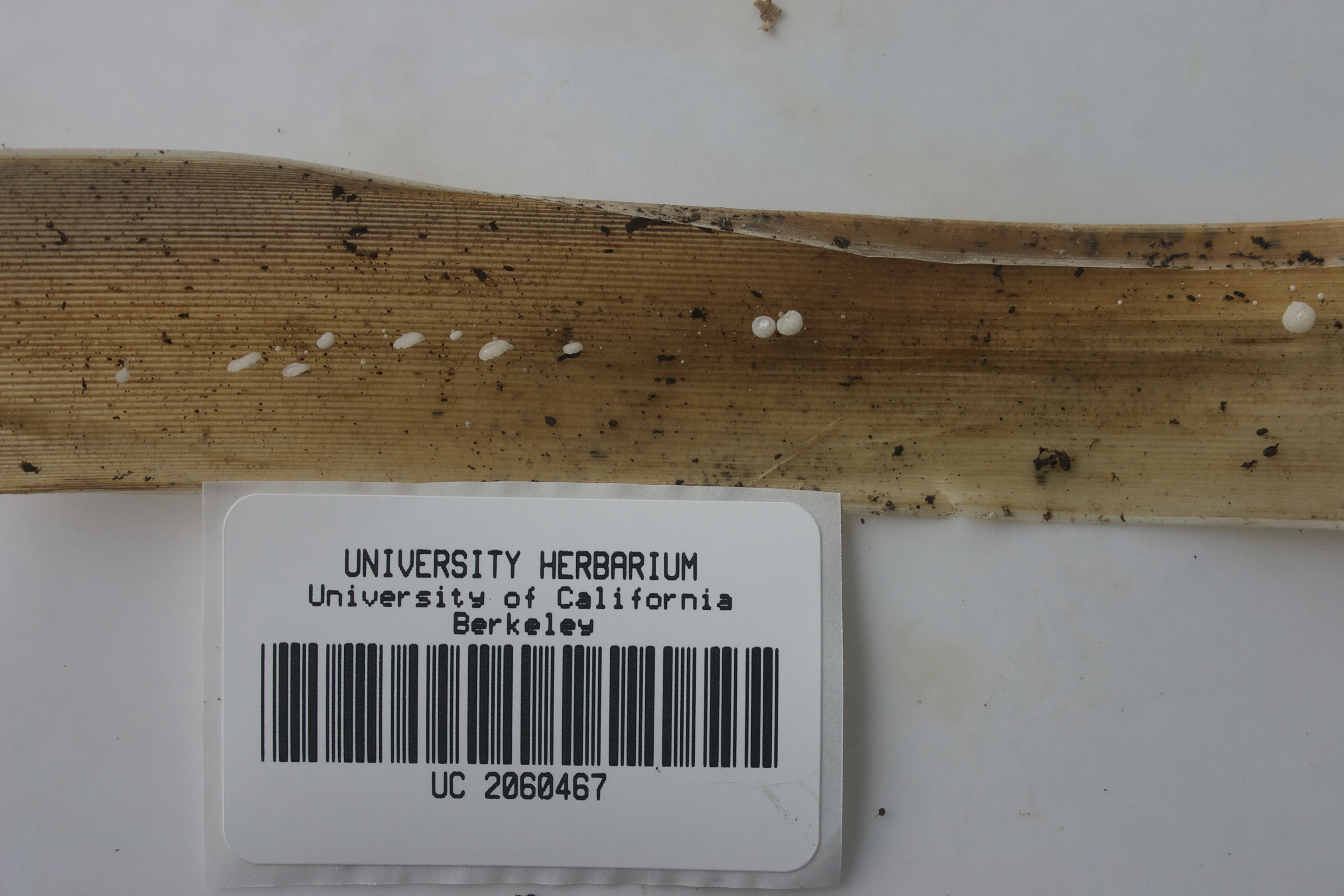
Resinomycena
Resinomycena is a genus of fungi in the mushroom family Mycenaceae. The genus contains at least eight species found in North America, Europe (including the United Kingdom and the Canary Islands) and eastern Asia (including Japan). This genus of small white to tan colored agarics is saprophytic and colonizes leaf litter, bark, small twigs and decaying monocot vegetation. The fruitbodies are small and resemble Mycena or Marasmius or Hemimycena and are distinguished by amyloid spores, poorly dextrinoid tissues, and the abundant oily, resinous cystidia on the pileus, lamellae edges and stipes. One
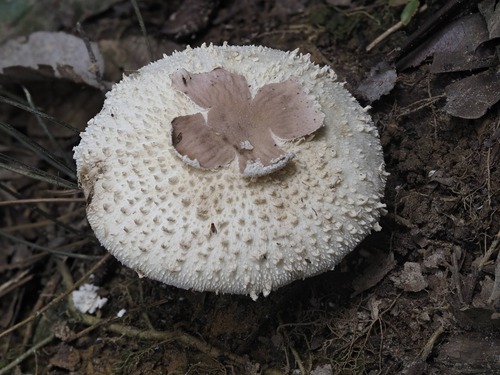
Clarkeinda
Clarkeinda is a genus of fungi in the family Agaricaceae. According to the Dictionary of the Fungi, the widespread genus contains five species. Species in this genus, especially Clarkeinda trachodes, are only distributed in south Asia and southeast Asia.
Flammulaster
Flammulaster is a genus of agaricoid fungi in the family Tubariaceae. It was formerly thought to belong in the family Inocybaceae. The genus has a widespread distribution, and contains 20 species. Flammulaster was circumscribed by American mycologist Franklin Sumner Earle in 1909.
Cantharocybe
Cantharocybe is a genus of mushroom-forming fungi in the family Hygrophoraceae. The genus was described by American mycologists Howard E. Bigelow and Alexander H. Smith in 1973. Cantharocybe contains three species: the type C. gruberi, and C. brunneovelutina from Belize, reported as new to science in 2011, and C. virosa, transferred from "Megacollybia", and found in Bangladesh and India.
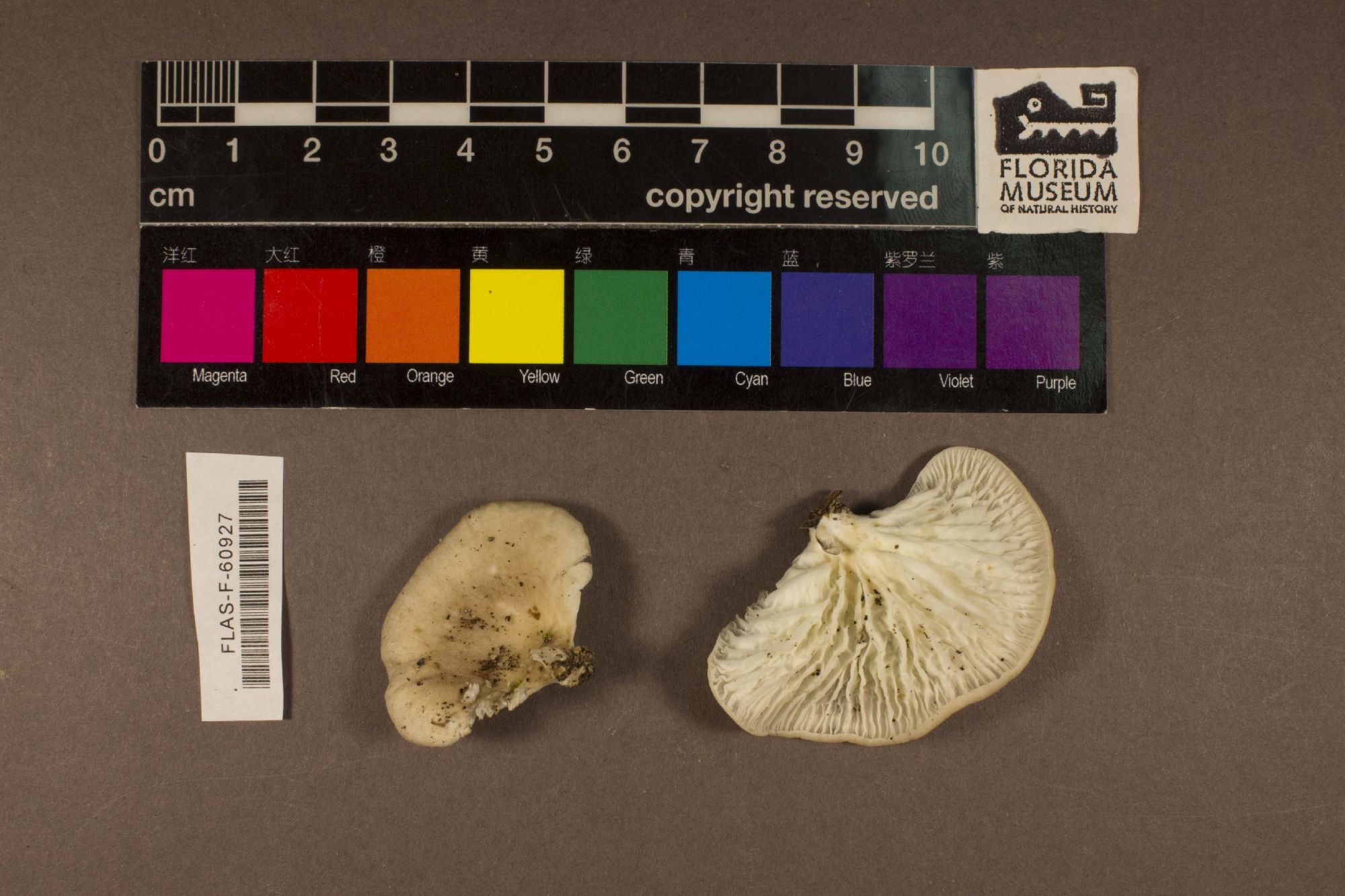
Neonothopanus
Neonothopanus is a genus of three species of fungi in the agaric family Omphalotaceae. The genus was circumscribed in 1999. The type species N. nambi is found in Australia, South America, Central America, and Malaysia, while N. gardneri is found in South America. Both of these species are bioluminescent. N. hygrophanus, found in central Africa, was added to the genus in 2011.
Nidula
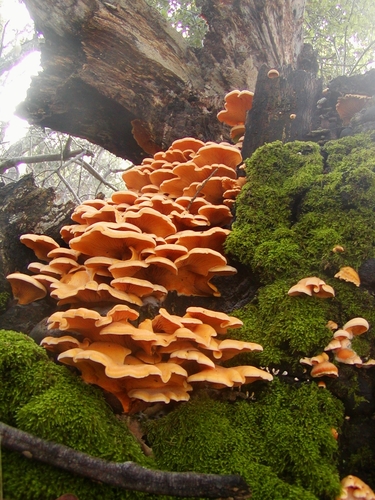
Nidula is a genus of fungi in the family Agaricaceae. Their fruit bodies resemble tiny egg-filled birds' nests, from which they derive their common name "bird's nest fungi". Originally described in 1902, the genus differs from the related genera Cyathus and Crucibulum by the absence of a cord that attaches the eggs to the inside of the fruit body. The life cycle of this genus allows it to reproduce both sexually, with meiosis, and asexually via spores.
Humidicutis
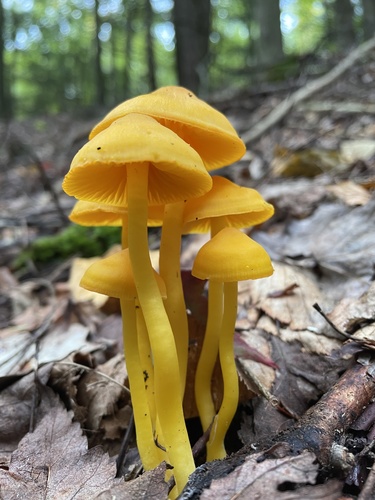
Humidicutis is a small genus of brightly coloured agarics, the majority of which are found in Eastern Australia. They were previously described as members of Hygrocybe. The genus Porpolomopsis is closely related, and the species in it were once placed in Humidicutis. The genus was described by mycologist Rolf Singer in 1959.
Panaeolopsis
Panaeolopsis is a genus of fungi in the family Agaricaceae. The genus has a widespread distribution and contains four species. Panaeolopsis was circumscribed by Rolf Singer in 1969 with P. sanmartiniana as the type species.