Category
page 2Agaricomycetes genera
Resinicium
Resinicium is a genus of crust fungi of uncertain placement in the class Agaricomycetes. The genus was circumscribed by Estonian mycologist Erast Parmasto in 1968.
Sebacina
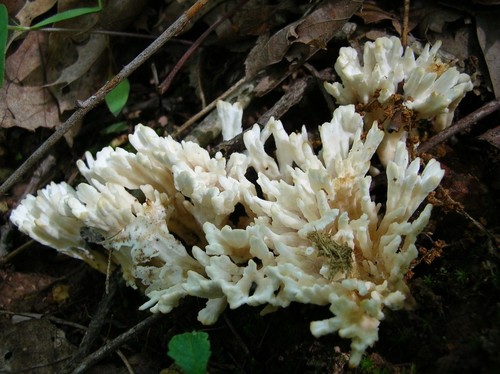
Sebacina is a genus of fungi in the family Sebacinaceae. Its species are mycorrhizal, forming a range of associations with trees and other plants. Basidiocarps (fruit bodies) are produced on soil and litter, sometimes partly encrusting stems of living plants. The fruit bodies are cartilaginous to rubbery-gelatinous and variously effused (corticioid) to coral-shaped (clavarioid). The genus has a cosmopolitan distribution.
Leptosporomyces
Leptosporomyces is a genus of resupinate (crust-like) fungi in the family Amylocorticiaceae. The genus is widespread in the Northern Hemisphere and contains 11 species.
Veluticeps
thumb | right | Veluticeps abietina from Commanster, Belgium
Veluticeps is a small genus of wood-rot fungi characterized by the production of resupinate to bracket shaped, perennial, tough, brown fruitbodies, that blacken when KOH solution is applied, and with a smooth to warted or cracked fertile undersurface. They cause a brown rot of wood. Cystidia in the hymenium are characteristically mostly in fascicles. The genus may be monotypic if Columnocystis is excluded. Phylogenetically, the type species, V. berkeleyi, groups with several other brown rot genera such as Neolentinus, Heliocybe, and
Cotylidia
Cotylidia is a fungal genus characterized by small to moderately sized, white to palely yet brightly colored, stalked, fan-shaped to funnel-shaped fruit bodies [https://web.archive.org/web/20070821184454/http://www.fungaljungal.org/family_pages/Cotylidia.htm with a smooth to wrinkled hymenium, tissues composed of monomitic hyphae, basidia producing smooth, nonamyloid spores, the absence of clamp connections, and bearing projecting cylindrical, thin-walled, hymenial cystidia. The genus is classified in the Hymenochaetales, however the type species, C. undulata has not yet been sequenced. P
Botryobasidium
Botryobasidium is a genus of corticioid fungi belonging to the order Cantharellales. Basidiocarps (fruit bodies) are ephemeral and typically form thin, web-like, white to cream, effused patches on the underside of fallen branches, logs, and leaf litter. Several species form anamorphs producing chlamydospores. All species are wood- or litter-rotting saprotrophs and the genus has a worldwide distribution.
Ceratobasidium
Ceratobasidium is a genus of fungi in the order Cantharellales. Basidiocarps (fruit bodies) are effused and the genus is sometimes grouped among the corticioid fungi, though species also retain features of the heterobasidiomycetes. Ceratobasidium species, excluding the type, are also now considered synonymous with Rhizoctonia, following the transfer of all published names as of 2025 to Rhizoctonia. Species are saprotrophic, but several are also facultative plant pathogens, causing a number of commercially important crop diseases. Some are also endomycorrhizal associates of orchids.
Phaeoclavulina
The genus Phaeoclavulina comprises over 60 species of coral fungi.
Clavariachaete
Clavariachaete is a genus of fungi in the family Hymenochaetaceae.
Stereopsis
genus of fungi
Hysterangium
Hysterangium is a genus of truffle-like fungi in the family Hysterangiaceae. The genus is widespread, especially in temperate regions, and contains more than 60 species. Hysterangium was circumscribed by Italian mycologist Carlo Vittadini in 1831.
Cantharellopsis
Cantharellopsis is a tan- to whitish-colored bryophilous monotypic genus in the Hymenochaetales. The fruit bodies of the single species Cantharellopsis prescotii has a form intermediate between an Omphalina and a chanterelle (Cantharellus) because of its forked, fold-like gills. It inhabits moss on calcareous soils in temperate regions of Europe. Phylogenetically related agarics are in the genera Contumyces, Gyroflexus, Loreleia, Rickenella and Blasiphalia, as well as the stipitate-stereoid genera Muscinupta and Cotylidia and the clavarioid genus, Alloclavaria.
Cytidia
Cytidia is a genus of fungi in the family Vuilleminiaceae. The genus contains five widely distributed species. Cytidia was circumscribed by French mycologist Lucien Quélet in 1888.
Erythricium
Erythricium is a genus of fungi in the family Corticiaceae. Basidiocarps (fruit bodies) are effused, corticioid, and grow on wood or are lichenicolous. Erythricium salmonicolor is a widespread and commercially significant plant pathogen causing "pink disease" of Citrus and other trees.
Peniophorella
Peniophorella is a genus of fungus belonging to the Agaricomycetes class; it has not been assigned to an order or a family. It contains 27 species. The genus was documented in 1889 by Finnish mycologist Petter Adolf Karsten.
Boreostereum
Boreostereum is a genus of corticioid fungi. The genus was circumscribed in 1968 by Erast Parmasto to contain the type species, which was formerly known as Stereum radiatum. Boreostereum has four species that are widely distributed in northern temperate areas. Species in the genus have a dimitic hyphal system, and the hyphae have with brown encrustations that turn greenish when potassium hydroxide is applied. Boreosterum vibrans produces vibralactones, chemical metabolites that inhibit various enzymes. Recent phylogenetic research indicates that Boreostereum is a sister group to the rest of th
Eichleriella
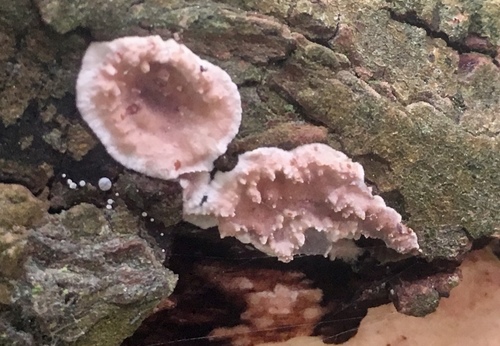
Eichleriella is a genus of fungi in the order Auriculariales. Species produce effused or cupulate, waxy to leathery basidiocarps (fruit bodies) on wood, with a smooth to spiny surface. The genus currently contains more than 15 species.
Fibricium
Fibricium is a genus of fungi belonging to the family Repetobasidiaceae.
Turbinellus
Turbinellus is a genus of five species of fungi in the family Gomphaceae.
Laternea
Laternea is a genus of fungus in the family Phallaceae. The genus was first described by French botanist Pierre Jean François Turpin in 1822. It contains two species found in tropical regions of the Americas.
Podoserpula
Podoserpula is a genus of fungi in the family Amylocorticiaceae. The genus contains six species including the type species, P. pusio, commonly known as the pagoda fungus. Species of the genus Podoserpula produce fruit bodies consisting of up to a dozen caps arranged in overlapping shelves, attached to a central axis. Its unique shape is not known to exist in any other fungi. The genus is known to occur in Australia and New Zealand, Venezuela, Madagascar, and New Caledonia.
Colus
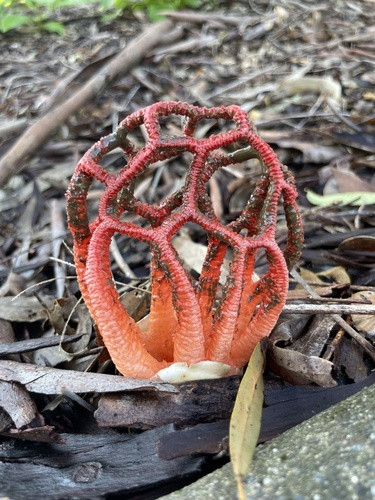
genus of fungi
Tropicoporus
Tropicoporus is a genus of fungi in the family Hymenochaetaceae. It was circumscribed in 2015 with Tropicoporus excentrodendri as the type species, and six additional species transferred from Inonotus.
Laetisaria
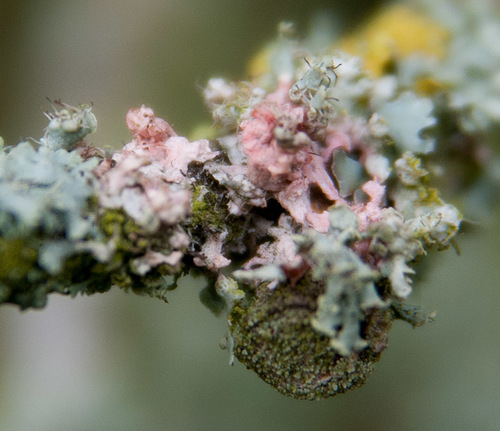
Laetisaria is a genus of fungi in the family Corticiaceae. Basidiocarps (fruit bodies) are effused, corticioid, smooth, and grow as plant pathogens on grasses or agave leaves, or as lichenicolous fungi on lichens, or on dead wood. Laetisaria fuciformis is of economic importance as the cause of "red thread disease" in turfgrass.
Punctularia
Punctularia is a genus of fungi in the family Punctulariaceae. The genus contains two widely distributed species.
Fibrodontia
Fibrodontia is a genus of fungi in the Hydnodontaceae family. The widely distributed genus was circumscribed by Erast Parmasto in 1968. According to Index Fungorum, the type species Fibrodontia gossypina is currently known as Hyphodontia gossypina (Parmasto) Hjortstam.
Myxarium
Myxarium is a genus of fungi in the family Hyaloriaceae. Basidiocarps (fruit bodies) are gelatinous and effused or pustular. The genus is cosmopolitan. All species grow on dead wood or dead herbaceous stems.
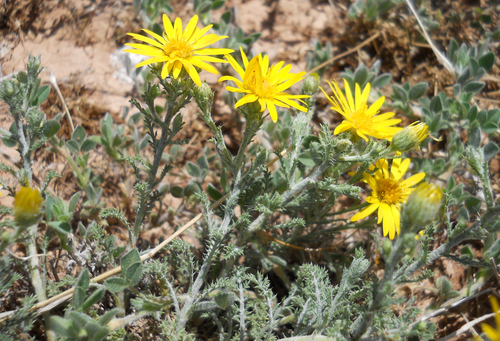
Sidera
genus of fungi
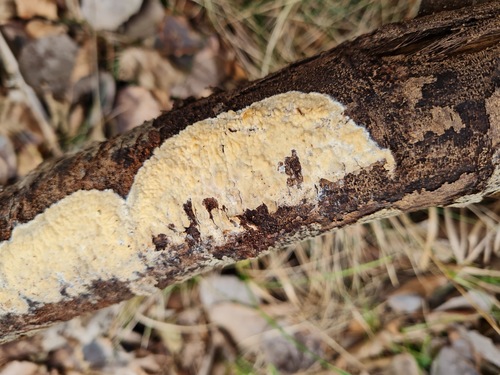
Mutatoderma
Mutatoderma is a genus of fungi in the family Corticiaceae. The widespread genus contains four species.
Basidiodendron
Basidiodendron is a genus of fungi in the order Auriculariales. Basidiocarps (fruit bodies) are corticioid, thin, effused and are typically found on fallen wood. The genus is widespread in both temperate and tropical regions and contains over 30 species.
Gomphus crassipes
species of fungus
Hydnochaete
Hydnochaete is a genus of hydnoid fungi in the family Hymenochaetaceae, order Hymenochaetales. All species are wood-rotting and produce brown to gray effused fruiting bodies. The genus is very close to Hymenochaete and can be considered its hydnoid counterpart.
Paullicorticium
Paullicorticium is a genus of resupinate fungi in the Hydnaceae family. The genus contains five species found in North America and Europe.
Marchandiomyces
Marchandiomyces is a genus of fungi in the family Corticiaceae.
Atheloderma
Atheloderma is a genus of fungi belonging to the family Rickenellaceae.
Chondrogaster
Chondrogaster is a genus of truffle-like fungi in the Mesophelliaceae family. The genus, described by French mycologist René Maire in 1926, contains two species, the type Chondrogaster pachysporus, and Chondrogaster angustisporus, described in 2000. Collectively, Chondrogaster is found in Mauritania, Brazil, and Europe.
Dichochaete
Dichochaete is a genus of fungi in the family Hymenochaetaceae. The genus was circumscribed in 2000 by Estonia mycologist Erast Parmasto.
Endoperplexa
Endoperplexa is a genus of fungi of uncertain familial placement (incertae sedis) in the order Auriculariales. The Dictionary of the Fungi (10th edition, 2008) report four species, but an additional two species have since been described or transferred into the genus.
Heterorepetobasidium
Heterorepetobasidium is a genus of fungi of uncertain familial placement (incertae sedis) in the order Auriculariales. The genus is widespread, especially in tropical regions, and contains two Taiwanese species, H. ellipsoideum and H. subglobosum.
Kobayasia
Kobayasia is a genus of fungi in the family Phallaceae. It contains the species Kobayasia nipponica and Kobayasia kunmingica .
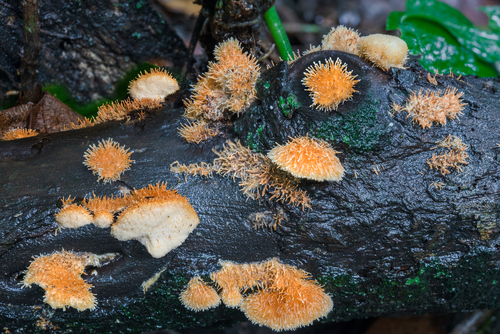
Echinoporia
Echinoporia is a genus of polypore, wood-inhabiting fungi comprising three accepted species in the family Schizoporaceae. Hairs on the pileus possessing asexual thick-walled spores, chlamydospores, is a defining trait of the genus. In 1980, Ryvarden established the genus for the type species, Echinoporia hydnophora (Berk. & Broome) Ryvarden (1980). In 1984, Ryvarden added another species. In 2008, Coelho described the third species of the genus.
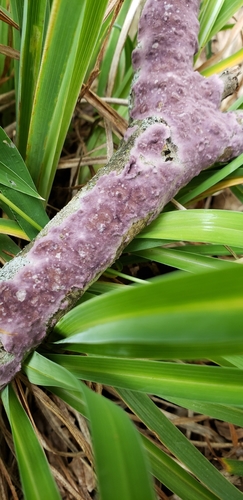
Dendrocorticium
Dendrocorticium is a genus of fungi in the family Punctulariaceae. According to the Dictionary of the Fungi (10th edition, 2008), the widespread genus contains seven species.
Pterygellus
Pterygellus is a genus of fungi in the family Cantharellaceae. It was circumscribed by the British mycologist E.J.H. Corner in 1966. According to the Dictionary of the Fungi (10th edition, 2008), the genus contains five species found in tropical Asia.
Repetobasidium
Repetobasidium is a genus of fungi in the Hymenochaetales. It was circumscribed by Swedish mycologist John Eriksson in 1958.
Protubera
Protubera is a genus of fungi in the family Phallogastraceae. The genus has a widespread distribution in tropical and subtropical areas, and contains 13 species.
Gloeomucro
Gloeomucro is a genus of fungi in the Hydnaceae family. The widespread genus contains nine species.
Gloeocantharellus
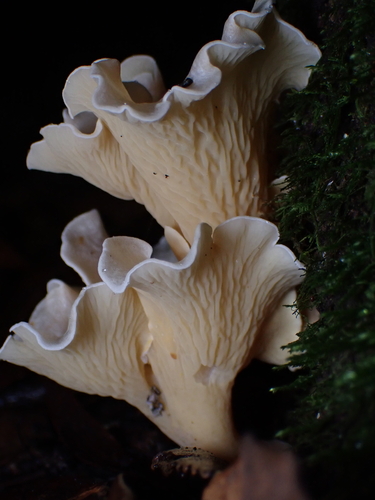
Gloeocantharellus is a genus of fungi in the family Gomphaceae. It contains 12 species that are found in mainly tropical and subtropical regions.
Phellinopsis
Phellinopsis is a genus of four species of fungi in the family Hymenochaetaceae. It was newly circumscribed in 2010, containing P. occidentalis and the type species P. conchata. P. junipericola and P. resupinata were added in 2012, and P. asetosa in 2015.
Sclerogaster
The Sclerogastraceae are a family of fungi in the order Geastrales. The family contains the single genus Sclerogaster, which contains 10 species found in Europe and America. The genus was circumscribed by botanist Rudolf Hesse in 1891.
Galzinia
Galzinia is a genus of fungi in the class Agaricomycetes. Basidiocarps (fruit bodies) are thin, effused, corticioid, and typically occur on rotten, fallen wood. Molecular research, based on cladistic analysis of DNA sequences, suggests the genus may be polyphyletic. The type species has not yet been sequenced, but Galzinia longibasidia belongs in the Polyporales.
Trappea
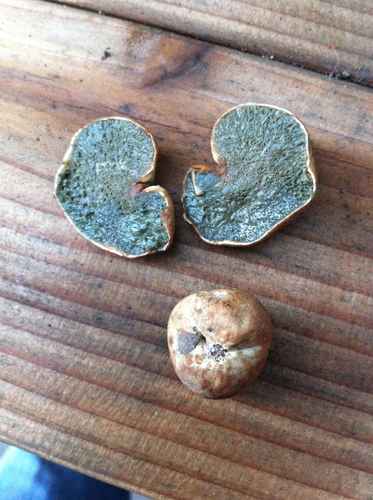
Trappea is a genus of truffle-like fungi in the family Trappeaceae. Species of Trappea have been found in China, Europe, and North America.
Waitea
Waitea is a genus of fungi in the family Corticiaceae. Basidiocarps (fruit bodies) are corticioid, thin, effused, and web-like, but species are more frequently encountered in their similar but sterile anamorphic states. Several species are plant pathogens, causing commercially significant damage to cereal crops and amenity turf grass.
Odonticium
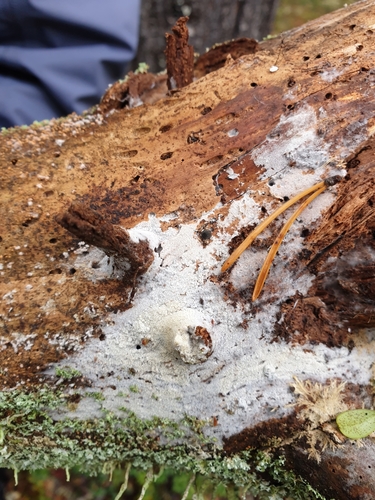
Odonticium is a genus of fungi belonging to the family Rickenellaceae.
Ceratosebacina
Ceratosebacina is a genus of fungi in the order Auriculariales. The genus, which includes three species found in Europe, was circumscribed in 1993.
Protomerulius
Protomerulius is a genus of fungi in the order Auriculariales. Basidiocarps (fruit bodies) are formed on dead wood and have an effused, smooth, spiny, or poroid hymenium. The genus is cosmopolitan.
Piloderma
Piloderma is a genus of fungi in the family Atheliaceae. The distinguishing characteristics of Piloderma are the thick-walled (roughly 0.25 μm) basidiospores, the club-shaped basidia with stalk-like bases, and the clampless-septate hyphae. The widespread genus contains six species.
Heterochaete
Heterochaete is a genus of fungi in the order Auriculariales. Species produce effused, gelatinous, waxy, or leathery basidiocarps (fruit bodies) on wood, partly or wholly covered in small sterile spines or pegs. The presence of these sterile spines distinguishes the genus from Exidiopsis, species of which are microscopically similar but have smooth basidiocarps.
Tretopileus
Tretopileus is a genus of fungi in the family Corticiaceae. The genus contains three species found in the US and Africa.
Protogautieria
Protogautieria is a genus of fungi in the family Gomphaceae. The genus contains two species found in North America.
Gummiglobus
Gummiglobus is a genus of truffle-like fungi in the Mesophelliaceae family. The genus contains two Australian species described as new to science in 1996. The species, G. agglutinosporus and G. joyceae, "have columellae with wedge-shaped to digitate or strand-like projections that extend to the endocutis of the peridium and are embedded in a remarkable gummy tissue".