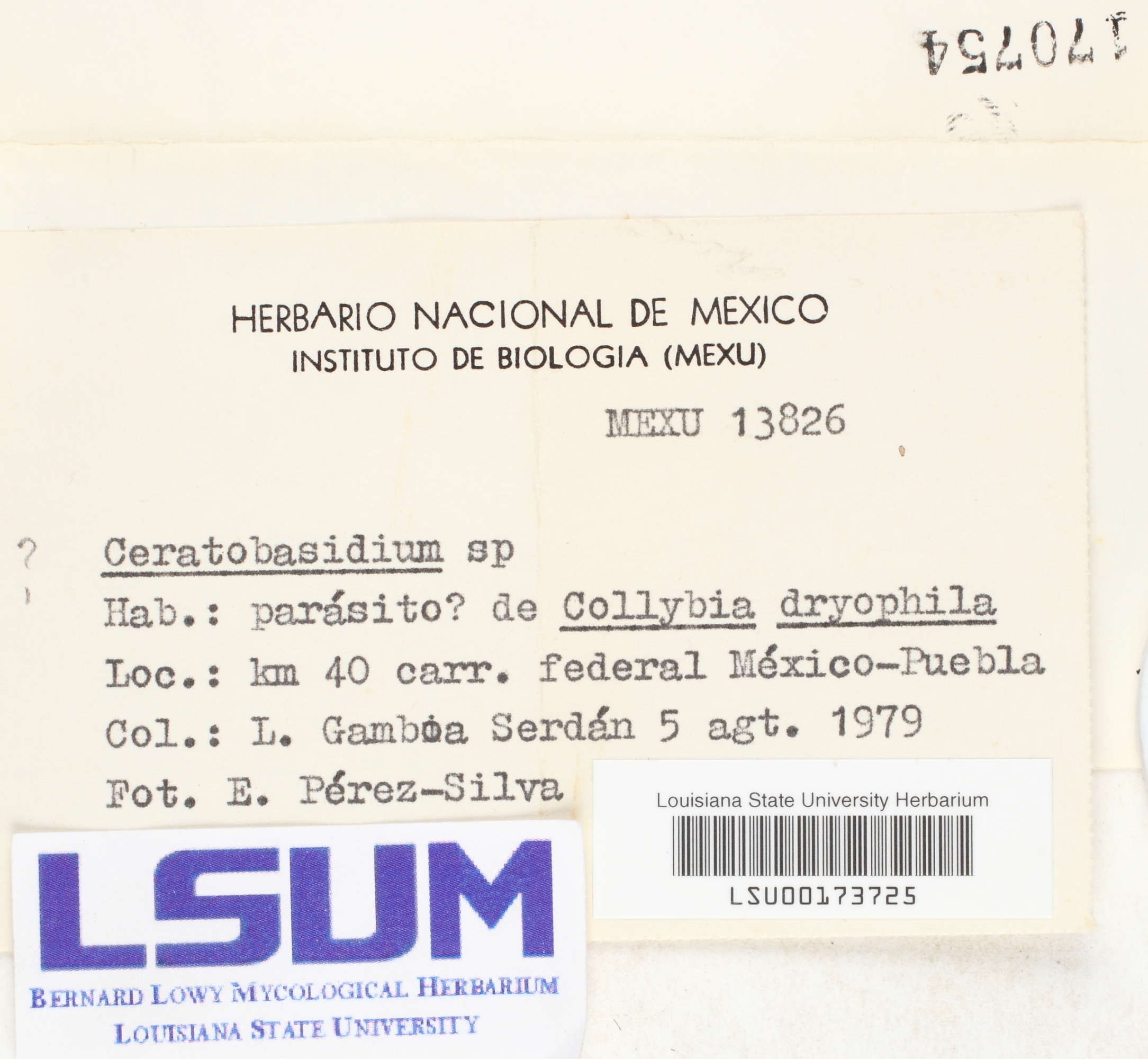
Specimen image via iDigBio · BY-NC-SA
Ceratobasidium
Sign in to saveCeratobasidium is a genus of fungi in the order Cantharellales. Basidiocarps (fruit bodies) are effused and the genus is sometimes grouped among the corticioid fungi, though species also retain features of the heterobasidiomycetes. Ceratobasidium species, excluding the type, are also now considered synonymous with Rhizoctonia, following the transfer of all published names as of 2025 to Rhizoctonia. Species are saprotrophic, but several are also facultative plant pathogens, causing a number of commercially important crop diseases. Some are also endomycorrhizal associates of orchids.
Species
GENUS
- KingdomFungi
- PhylumBasidiomycota
- ClassAgaricomycetes
- OrderCantharellales
- FamilyCeratobasidiaceae
via GBIF
Museum specimens
- Specimen records
- 54
- With media
- 15
- Family
- Ceratobasidiaceae
- Collections
- US, FH, LSUM, TENN-F, OSC, MICH
- Recorded in
- United States, Mexico, French Polynesia, India, Trinidad And Tobago, Australia, Argentina, Brasil
Wikidata facts
- Instance of
- taxon
- Parent taxon
- Ceratobasidiaceae
Show 5 more facts
- taxon rank
- genus
- Commons category
- Ceratobasidium
- taxon name
- Ceratobasidium
- taxonomic type
- Ceratobasidium calosporum
- taxon author citation
- D.P.Rogers
Sources (2)
via Wikidata · CC0
~7 min read
Encyclopedic overview
8 sectionsContents
- Taxonomy
- Current status
- Species now placed within ''Rhizoctonia''
- Redisposition of former species
- Description
- Habitat and distribution
- Economic importance
- References
Ceratobasidium is a genus of fungi in the order Cantharellales. Basidiocarps (fruit bodies) are effused and the genus is sometimes grouped among the corticioid fungi, though species also retain features of the heterobasidiomycetes. Ceratobasidium species, excluding the type, are also now considered synonymous with Rhizoctonia, following the transfer of all published names as of 2025 to Rhizoctonia. Species are saprotrophic, but several are also facultative plant pathogens, causing a number of commercially important crop diseases. Some are also endomycorrhizal associates of orchids.
==Taxonomy== The name Ceratobasidium was introduced in 1935 by American mycologist D.P. Rogers to accommodate species of the old form genus Corticium that showed affinities with the heterobasidiomycetes. These affinities were the possession of large sterigmata ("cerato basidium" means "horned basidium") and the production of basidiospores that produce secondary spores. Four species were originally placed in the genus, with subsequent authors adding a further 35 species. The genus Ceratorhiza was introduced for anamorphs of Ceratobasidium by R.T. Moore in 1987, distinguishing them from anamorphs of Thanatephorus which were retained in Rhizoctonia.
Excerpted from Wikipedia’s “Ceratobasidium” article, available under the CC BY-SA 4.0 licence.