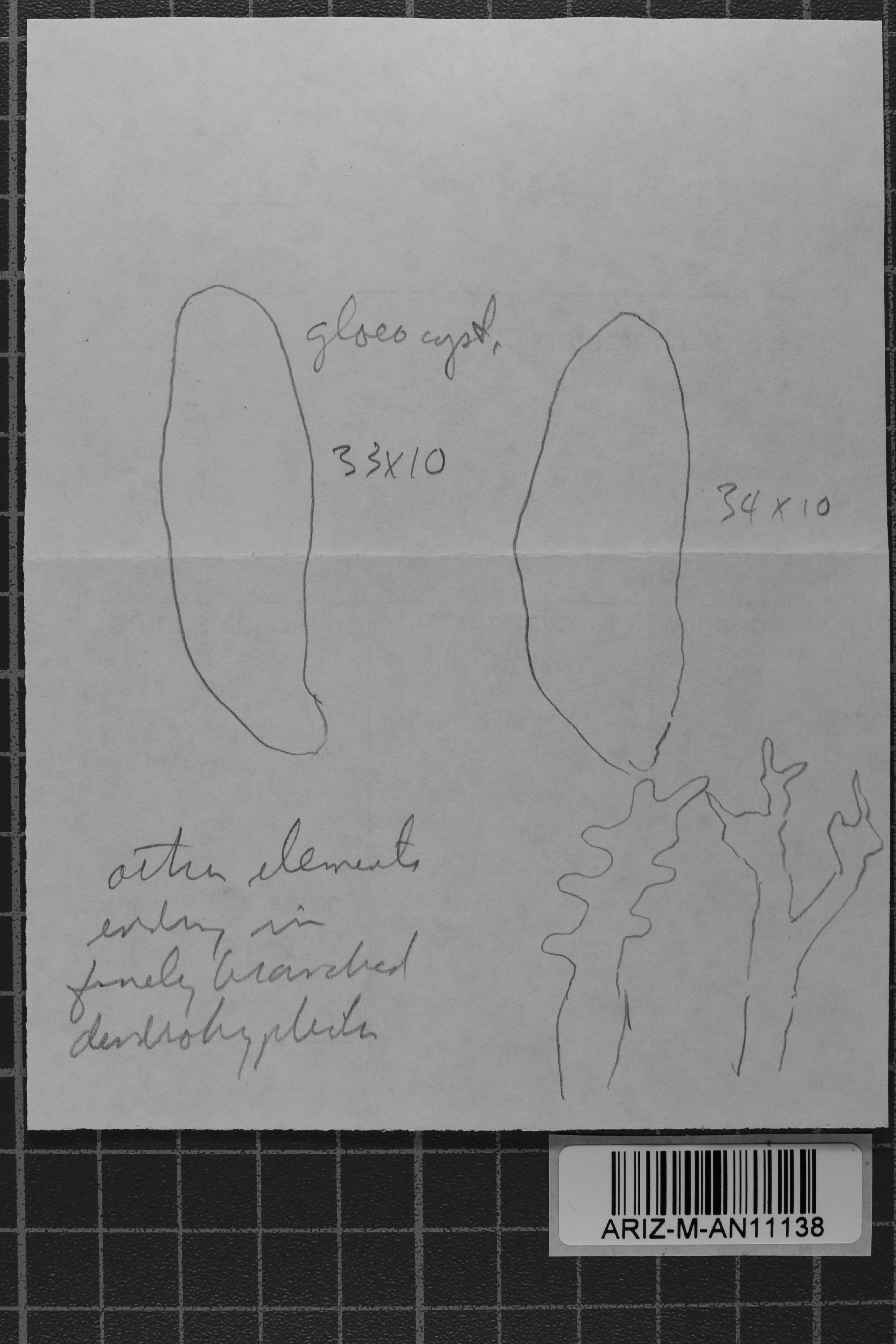
Specimen image via iDigBio · BY-NC-SA
Heterochaete
Sign in to saveHeterochaete is a genus of fungi in the order Auriculariales. Species produce effused, gelatinous, waxy, or leathery basidiocarps (fruit bodies) on wood, partly or wholly covered in small sterile spines or pegs. The presence of these sterile spines distinguishes the genus from Exidiopsis, species of which are microscopically similar but have smooth basidiocarps.
Species
GENUS
- KingdomFungi
- PhylumBasidiomycota
- ClassAgaricomycetes
- OrderAuriculariales
- FamilyAuriculariaceae
via GBIF
Museum specimens
- Specimen records
- 338
- With media
- 170
- Family
- Auriculariaceae
- Collections
- LSUM, NY, UFPE, US, INSTITUTO NACIONAL DE PESQUISAS DA AMAZÔNIA (INPA), UFRGS
- Recorded in
- Brazil, United States, Ecuador, Brasil, French Polynesia, Colombia, Argentina, Venezuela
Wikidata facts
- Instance of
- taxon
- Parent taxon
- Auriculariaceae
Show 3 more facts
- taxon name
- Heterochaete
- taxon rank
- genus
- taxon author citation
- Pat.
Sources (2)
via Wikidata · CC0
~1 min read
Encyclopedic overview
2 sectionsContents
- References
- External links
Heterochaete is a genus of fungi in the order Auriculariales. Species produce effused, gelatinous, waxy, or leathery basidiocarps (fruit bodies) on wood, partly or wholly covered in small sterile spines or pegs. The presence of these sterile spines distinguishes the genus from Exidiopsis, species of which are microscopically similar but have smooth basidiocarps.
Heterochaete was monographed by Bodman in 1952 who accepted some 29 species worldwide, most of them from the tropics and subtropics. On the basis of morphological differences, Bodman considered the genus to be heterogeneous and this has been confirmed by molecular research, based on cladistic analysis of DNA sequences. As a result, several species previously placed in Heterochaete have now been referred to the genera Crystallodon, Eichleriella, Heteroradulum, Hirneolina, Metulochaete, and Tremellochaete.
Excerpted from Wikipedia’s “Heterochaete” article, available under the CC BY-SA 4.0 licence.