Category
page 1Aging-associated diseases
cancer
Cancer is a group of diseases involving uncontrolled cell growth typically resulting in tumors with the potential to invade or spread to other parts of the body. These malignant tumors contrast with benign tumors, which do not spread. Over 100 types of cancers affect humans.

Alzheimer's disease
progressive, neurodegenerative disease characterized by memory loss

myocardial infarction
interruption of blood supply to a part of the heart

Parkinson's disease
long-term degenerative neurological disorder

dementia
Dementia is a syndrome, often associated with neurodegenerative diseases such as Alzheimer's, and characterized by a general decline in cognitive abilities that affects a person's ability to perform everyday activities. This typically involves problems with memory, thinking, behavior, and motor control. Aside from memory impairment and a disruption in thought patterns, the most common symptoms of dementia include emotional problems, difficulties with language, and decreased motivation. The symptoms may be described as occurring in a continuum over several stages. Dementia is an incurable, prog
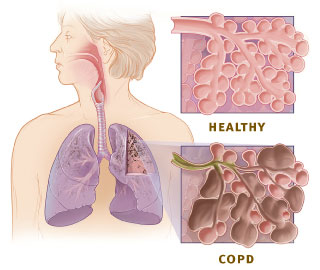
chronic obstructive pulmonary disease
lung disease involving long-term poor airflow
%20PHIL%204284%20lores.jpg)
cataract
A cataract is a cloudy area in the lens of the eye that impairs vision. Cataracts often develop slowly and can affect one or both eyes. Symptoms may include faded colours, blurry or double vision, halos around light, trouble with bright lights, and difficulty seeing at night. This may result in difficulty driving, reading and recognizing faces. Poor vision caused by cataracts may also result in an increased risk of falling and depression. In 2020 Cataracts caused 39.6% of all cases of blindness and 28.3% of visual impairment worldwide. Cataracts remain the single most common cause of global bl

arthritis
Arthritis is a general medical term used to describe a disorder in which the smooth cartilagenous layer that lines a joint is lost, resulting in bone grinding on bone during joint movement. Symptoms generally include joint pain and stiffness. Other symptoms may include redness, warmth, swelling, and decreased range of motion of the affected joints. In certain types of arthritis, other organs, such as the skin, are also affected. Onset can be gradual or sudden.

heart failure
failure of the heart to provide sufficient blood flow

osteoporosis

cardiovascular disease
class of diseases that involve the heart or blood vessels

coronary artery disease
disease characterized by plaque building up in the arteries of the heart

type 2 diabetes
type of diabetes mellitus with high blood sugar and insulin resistance

chronic thyroiditis
autoimmune disease

glioblastoma

urinary incontinence
uncontrolled leakage of urine

chronic lymphocytic leukemia
lymphoblastic leukemia characterized by over production of B-cells and their accumulation in bone marrow and blood
dementia with Lewy bodies
type of progressive dementia
sarcopenia
Sarcopenia (ICD-10-CM code M62.84) is a type of muscle loss that occurs with aging and/or immobility. It is characterized by the degenerative loss of skeletal muscle mass, quality, and strength. The rate of muscle loss is dependent on exercise level, co-morbidities, nutrition and other factors. The muscle loss is related to changes in muscle synthesis signalling pathways. It is distinct from cachexia, in which muscle is degraded through cytokine-mediated degradation, although the two conditions may coexist. Sarcopenia is considered a component of frailty syndrome. Sarcopenia can lead to reduce

osteopenia
thumb|Osteopenia exists on a spectrum of normal to dangerously low bone density (osteoporosis).
atrophic gastritis
human disease
aging-associated disease
disease developed by aging
Dopamine dysregulation syndrome
dysfunction of the reward system observed in some individuals taking dopaminergic medications for an extended length of timeDDS
posterior cortical atrophy
form of dementia
progeroid syndrome
range of genetic disorders which cause a person to appear to grow older faster
Validation therapy
therapy developed by Naomi Feil for older people with cognitive impairments and dementia
Camptocormia
thumb|A clinical photograph showing a patient with the flexed posture. It can be abated when lying down.
Camptocormia, also known as bent spine syndrome (BSS), is a symptom of a multitude of diseases that is most commonly seen in the elderly. It is identified by an abnormal thoracolumbar spinal flexion, which is a forward bending of the lower joints of the spine, occurring in a standing position. In order to be classified as BSS, the anterior flexion (the lower back bending) must be of 45 degrees anteriorly. This classification differentiates it from a similar syndrome known as kyphosis. Altho
pseudodementia
Pseudodementia (otherwise known as depression-related cognitive dysfunction or depressive cognitive disorder) is a condition that leads to cognitive and functional impairment imitating dementia that is secondary to psychiatric disorders, especially clinical depression. Pseudodementia can develop in a wide range of neuropsychiatric disease such as depression, schizophrenia and other psychoses, mania, dissociative disorders, and conversion disorders. The presentations of pseudodementia may mimic organic dementia, but are essentially reversible on treatment and doesn't lead to actual brain degene
Postmenopausal confusion
medical condition
myocardial infarction complication
medical problems resulting from heart attacks