Category
page 1Algebra

algebra
Algebra is a branch of mathematics that deals with abstract systems, known as algebraic structures, and the manipulation of expressions within those systems. It is a generalization of arithmetic that introduces variables and algebraic operations other than the standard arithmetic operations, such as addition and multiplication.

variable
value that can change, usually with a context of an equation or operation

polynomial
In mathematics, a polynomial is a mathematical expression consisting of indeterminates (also called variables) and coefficients, that involves only the operations of addition, subtraction, multiplication and exponentiation to nonnegative integer powers, and has a finite number of terms. An example of a polynomial of a single indeterminate x is x^2 - 4x + 7. An example with three indeterminates is x^3 + 2xyz^2 - yz + 1.
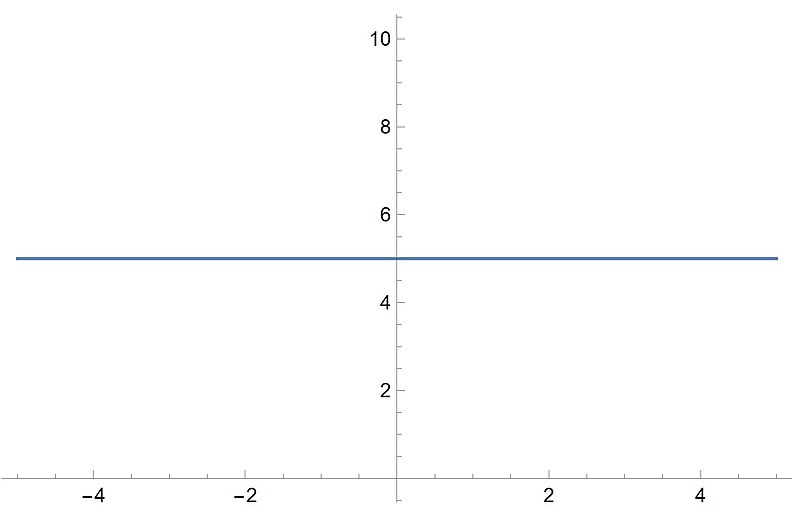
constant
mathematical concept; value which cannot be changed or does not change during a process

ratio
thumb|The ratio of width to height of standard-definition television
coefficient
In mathematics, a coefficient is a multiplicative factor involved in some term of a polynomial, a series, or any other type of expression. It may be a number without units, in which case it is known as a numerical factor. It may also be a constant with units of measurement, in which it is known as a constant multiplier. In general, coefficients may be any expression (including variables such as , and ). When the combination of variables and constants is not necessarily involved in a product, it may be called a parameter.
For example, the polynomial 2x^2-x+3 has coefficients 2, −1, and 3, and

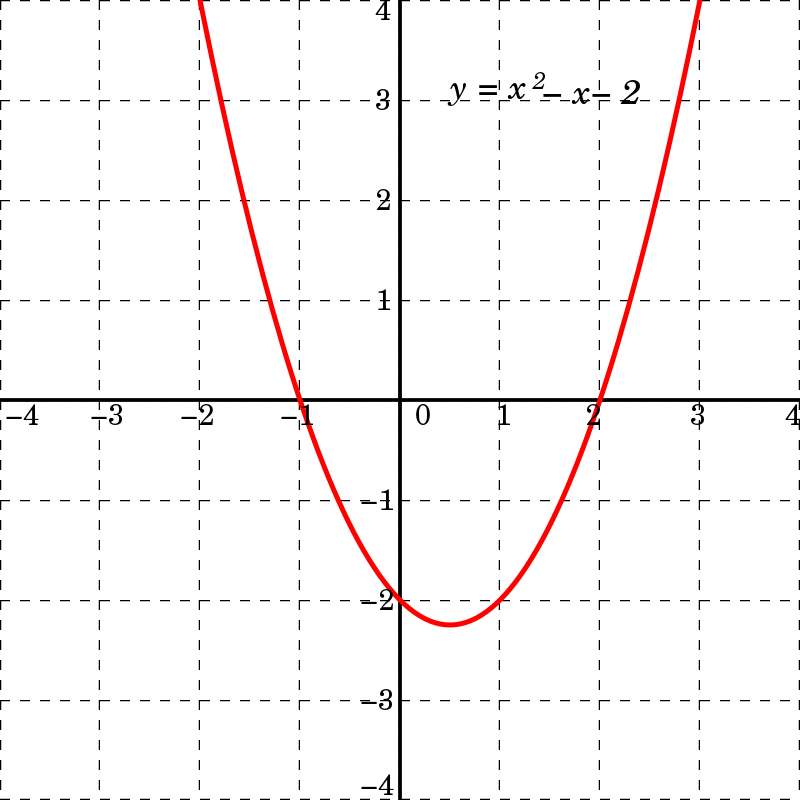
square
result of multiplying a number, or other expression, by itself
elementary algebra
basic concepts of algebra of the real and complex numbers
monomial
In mathematics, a monomial is, roughly speaking, a polynomial which has only one term. Two definitions of a monomial may be encountered:
A monomial, also called a power product or primitive monomial, is a product of powers of variables with nonnegative integer exponents, or, in other words, a product of variables, possibly with repetitions. For example,x^2yz^3=xxyzzz is a monomial. The constant 1 is a primitive monomial, being equal to the empty product and to x^0 any variable x. If only a single variable x is considered, this means that a monomial is either 1 or a power x^n of x, with n a po

order of operations
performing order of mathematical operations
operand
In mathematics, an operand is the object of a mathematical operation, i.e., it is the object or quantity that is operated on.
Euler's totient function
function which gives the number of integers relatively prime to and not greater than its input
inverse element
element with an inverse with respect to a given mathematical operation; element that can 'undo' the effect of another given element
recurrence relation
sequence or array in which each further term is defined as a function of the preceding terms
operator
mapping from one vector space or module to another in mathematics
kernel
algebraic concept
partial fraction decomposition
Decomposition or partial fraction expansion of a mathematical function
equivalence class
mathematical concept
irreducible polynomial
irreducible element in the ring of polynomials; a non-constant polynomial that is not the product of two non-constant polynomials
closed-form expression
mathematical formula built with arithmetic operations and other previously defined functions
Cole Prize
one of two prizes awarded by the American Mathematical Society
canonical form
standard (often unique) way of presenting an object as a mathematical expression
cyclotomic polynomial
irreducible polynomial of integer coefficients whose roots are nth roots of unity
nested radical
radical expression that contains (nests) another radical expression
digital root
repeated digital sum
series expansion
concept in mathematics
permanent
polynomial of the elements of a matrix
casus irreducibilis
one case when solving a cubic equation
history of algebra
history of the study of mathematical symbols and the rules for manipulating these symbols
solution in radicals
closed form expression of addition, subtraction, multiplication, division, powers and roots
generalized arithmetic progression
a sequence of integers constructed as an arithmetic progression
AWM–Microsoft Research Prize in Algebra and Number Theory
research honor for women

Laws of Form
1969 non-fiction book by G. Spencer-Brown

primitive part and content
Wikipedia article covering multiple topics
system of polynomial equations
root-finding algorithms for common roots of several multivariate polynomials