Category
page 1Algonquian ethnonyms

Eskimo
Eskimo () is a controversial exonym that refers to two closely related Indigenous peoples: Inuit (including the Alaska Native Iñupiat, the Canadian Inuit, and the Greenlandic Inuit) and the Yupik (or Yuit) of eastern Siberia and Alaska. A related third group, Aleuts, who inhabit the Aleutian Islands, are generally excluded from the definition of Eskimo. The three groups share a relatively recent common ancestor, and speak related languages belonging to the family of Eskaleut languages. These circumpolar peoples have traditionally inhabited the Arctic and subarctic regions from eastern Siberia

Ojibwe
thumb|Ojibwe fishermen in the St. Marys Rapids, 1901

Lenape
thumb|Two Delaware Nation citizens, Jennie Bobb and her daughter Nellie Longhat, in [[Oklahoma, in 1915]]
The Lenape (, , ; ), also called the Lenni Lenape and Delaware people, are an Indigenous people of the Northeastern Woodlands, who live in the United States and Canada.

Shawnee
thumb|right|A collage of Shawnee people
The Shawnee ( ) are a Native American people of the Northeastern Woodlands. Their language, Shawnee, is an Algonquian language.

Abenaki people
The Abenaki (Abenaki: ) are an Indigenous people of the Northeastern Woodlands of Canada and the United States. They are an Algonquian-speaking people and part of the Wabanaki Confederacy. The Eastern Abenaki language was predominantly spoken in Maine, while the Western Abenaki language was spoken in Quebec, Vermont, and New Hampshire.
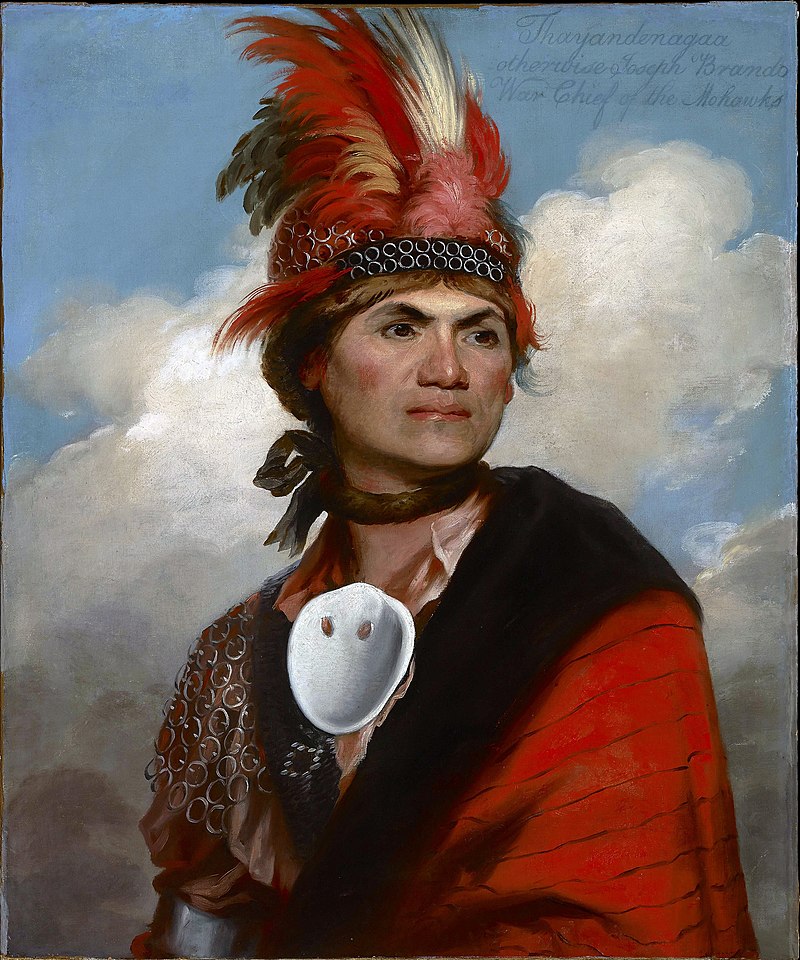
Mohawk
indigenous people of North America

Mahican
The Mohicans or Mahicans ( or ) are an Eastern Algonquian Native American tribe that historically spoke an Algonquian language. As part of the Eastern Algonquian family of tribes, they are related to the neighboring Lenape, whose indigenous territory was to the south as far as the Atlantic coast. The Mohicans lived in the upper tidal Hudson River Valley, including the confluence of the Mohawk River (where present-day Albany, New York, developed) and into western New England centered on the upper Housatonic River watershed. After 1680, due to conflicts with the powerful Mohawk to the west durin

Mi’kmaw
The '''Mi'kmaq ( , ; singular: Mi'kmaw, also L'nuk and formerly Micmac''') are an Indigenous group of people of the Northeastern Woodlands, native to the areas of Canada's Atlantic Provinces, primarily Nova Scotia, New Brunswick, Prince Edward Island, and Newfoundland, and the Gaspé Peninsula of Quebec as well as Native Americans in the northeastern region of Maine. The traditional national territory of the Mi'kmaq is named Mi'kma'ki (or Mi'gma'gi); it is one of the five confederated Wabanaki (or Dawnland) countries.
Algonquin people
Indigenous people in Eastern Canada

Odawa
The Odawa (also Ottawa or Odaawaa ) are an Indigenous North American people who primarily inhabit land in the Eastern Woodlands region, now in jurisdictions of the northeastern United States and southeastern Canada. Their territory long preceded the creation of the current border between the two countries in the 18th and 19th centuries.

Potawatomi
The Potawatomi (), also spelled Pottawatomi and Pottawatomie (among many variations), are an Indigenous North American tribe of the Great Plains, upper Mississippi River, and western Great Lakes region. They traditionally speak the Potawatomi language, a member of the Algonquian family. They are additionally First Nations in Canada. The Potawatomi call themselves Neshnabé, a cognate of the word Anishinaabe. The Potawatomi are part of a long-term alliance, called the Council of Three Fires, with the Ojibwe and Odawa (Ottawa). In the Council of Three Fires, the Potawatomi are considered the "you

Wampanoag people
thumbnail|right|300px|Adriaen Block|Adriaen Block's map of his 1614 voyage, with the first appearance of the term "[[New Netherland"]]
The Wampanoag, also rendered Wôpanâak, are a Native American people of the Northeastern Woodlands currently based in southeastern Massachusetts and formerly parts of eastern Rhode Island. Their historical territory includes the islands of Martha's Vineyard and Nantucket.

Powhatan
thumb| Powhatan (Native American leader)|Powhatan in a [[longhouse at Werowocomoco (detail of John Smith map, 1612)]]

Innu people
The Innut ('People') -- singular: Innu/Ilnu ('man, person') -- formerly called Montagnais (; French for 'mountain people'), are the Indigenous Canadians who inhabit northeastern Labrador in present-day Newfoundland and Labrador and some portions of Quebec. They refer to their traditional homeland as Nitassinan ('Our Land', ᓂᑕᔅᓯᓇᓐ) or Innu-assi ('Innu Land').
.png)
Assiniboine people
The Assiniboine ( ) are an Indigenous people of the Northern Plains. They are a First Nations in Canada, where they primarily live in Saskatchewan, with some living in Alberta and southwestern Manitoba, and they are a Native American people in the United States, where they primarily live in northern Montana, with some living in western North Dakota.

Kickapoo

Meskwaki
thumb|"Kee-shes-wa, A Fox Chief", from History of the Indian Tribes of North America (1836–1844, three volumes)
thumb|Chief Wapello (chief)|Wapello; "Wa-pel-la the Prince, Musquakee Chief", from [[History of the Indian Tribes of North America]]
The Meskwaki (sometimes spelled Mesquaki), also known by the European exonyms Fox Indians or the Fox, are a Native American people. They have been closely linked to the Sauk (Sac) people of the same language family. In the Fox language, the Meskwaki call themselves '''', which means "the Red-Earths", related to their creation story.
Miami people
Native American nation originally found in what is now Indiana, Michigan, and Ohio
Mohegan
The Mohegan are an Indigenous people originally based in what is now southeastern Connecticut in the United States. They are part of the Eastern Algonquian linguistic and cultural family and historically shared close ties with the neighboring Pequot, from whom they separated in the early 17th century. The Mohegan refer to themselves as the "Wolf People".

Atikamekw people
thumb|right|Constant Awashish is the Chief of the Atikamekw Nation since 2014.
The Atikamekw are an Indigenous people in Canada. Their historic territory, ('Our Land'), is in the upper Saint-Maurice River valley of Quebec (about north of Montreal). One of the main communities is Manawan, about northeast of Montreal.

Chipewyan people
The Chipewyan ( , also called the Dënesųłı̨né ), are a Dene group of Indigenous Canadian people belonging to the Athabaskan language family, whose ancestors are identified with the Taltheilei Shale archaeological tradition. They are part of the Northern Athabascan group of peoples, and hail from what is now Western Canada.
Narragansett people
Native American tribe from Rhode Island, US
Sauk people
North American ethnic group

Pequot
The Pequot ( ) are a Native American people of Connecticut. The modern Pequot are members of the federally recognized Mashantucket Pequot Tribe, four other state-recognized groups in Connecticut including the Eastern Pequot Tribal Nation, or the Brothertown Indians of Wisconsin. They historically spoke Pequot, a dialect of the Mohegan-Pequot language, which became extinct by the early 20th century. Some tribal members are undertaking revival efforts.

Menominee
alt=The Menominee Nation had claims extended north to the Upper Peninsula, south to Milwaukee, and east to the Yellow River, including Green Bay and Sheboygan.|thumb|376x376px|Claims of the Menominee Nation as described in the Treaty of Washington, with Menominee (1831)|Treaty of Washington of 1831. The map's title text, Omaeqnomenew-ahkew, means "Land of the Wild Rice People" in the Menominee language.
The Menominee ( ; meaning "Menominee People", also spelled Menomini, derived from the Ojibwe language word for "Wild Rice People"; known as Mamaceqtaw, "the people", in the Menominee language)

Massachusett people
The Massachusett were a Native American tribe from the region in and around present-day Greater Boston in the Commonwealth of Massachusetts. The name comes from the Massachusett language term for "At the Great Hill," referring to the Blue Hills overlooking Boston Harbor from the south.
.jpg)
Susquehannock
The Susquehannock, also known as the Conestoga, Minquas, and Andaste, were an Iroquoian people who lived in the lower Susquehanna River watershed in what is now Pennsylvania. Their name means “people of the muddy river.”

Passamaquoddy Tribe
The Passamaquoddy (Passamaquoddy: Peskotomuhkati, Plural: Peskotomuhkatiyik) are a Native American/First Nations people who live in northeastern North America. Their traditional homeland, Peskotomuhkatikuk, straddles the Canadian province of New Brunswick and the U.S. state of Maine in a region called Dawnland. They are one of the constituent nations of the Wabanaki Confederacy.

Wappinger
The Wappinger ( ) were an Eastern Algonquian Munsee-speaking Native American people from what is now southern New York and western Connecticut.

Missouria
The Missouria or Missouri (in their own language, Nutachi, also spelled Niutachi) are a Native American tribe that originated in the Great Lakes region of what is now the United States before European contact. The tribe belongs to the Chiwere division of the Siouan language family, together with the Ho-Chunk, Iowa, and Otoe.
Nipmuc
The Nipmuc or Nipmuck people are an Indigenous people of the Northeastern Woodlands, who historically spoke an Eastern Algonquian language, probably the Loup language. Their historic territory Nippenet, meaning 'the freshwater pond place', is in central Massachusetts and nearby parts of Connecticut and Rhode Island.

Wolastoqiyik
The Wolastoqiyik (), also known as the Maliseet or Malecite (), are an Algonquian-speaking First Nation of the Wabanaki Confederacy. They are the Indigenous people of the Wolastoq (Saint John River) valley and its tributaries. Their territory extends across the current borders of New Brunswick and Quebec in Canada, and parts of Maine in the United States.

Kaskaskia
thumb|Illinois Indian of the Kaskaskia Tribe, engraving based on drawing by General Georges-Henri-Victor Collot, 1796
The Kaskaskia (Miami–Illinois: Kaaskaaskia) were a historical Indigenous people of the Northeastern Woodlands. They were one of about a dozen cognate tribes that made up the Illiniwek Confederation, also called the Illinois Confederation. Their longstanding homeland was in the Great Lakes region. Their first contact with Europeans reportedly occurred near present-day Green Bay, Wisconsin, in 1667 at a Jesuit mission station.

Pennacook
The Pennacook, also known by the names Penacook and Pennacock, were Algonquian Indigenous people who lived in what is now Massachusetts, New Hampshire, and southern Maine. They were not a united tribe but a network of politically and culturally allied communities. Penacook was also the name of a specific Native village in what is now Concord, New Hampshire.
.jpg)
Mingo
thumb|upright|Statue of Chief Logan, a notable Mingo leader, in [[Logan, West Virginia]]
Nauset
The Nauset people, sometimes referred to as the Cape Cod Indians, were a Native American tribe who lived in Cape Cod, Massachusetts. They lived east of Bass River and lands occupied by their closely related neighbors, the Wampanoag.

Naskapi
The Naskapi (Nascapi, Naskapee, Nascapee) are an Indigenous people of the Subarctic native to the historical region St'aschinuw (ᒋᑦ ᐊᔅᒋᓄᐤ, meaning 'our [inclusive] land'), which was located in present day northern Quebec, neighbouring Nunavik. They are closely related to Innu People, who call their homeland Nitassinan.
Mascouten
The Mascouten (also Mascoutin, Mathkoutench, Muscoden, or Musketoon) were a tribe of Algonquian-speaking Native Americans located in the Midwest. They are believed to have dwelt on both sides of the Mississippi River, adjacent to the present-day Wisconsin-Illinois border, after being driven out of Michigan by the Odawa.
Nanticoke
Indigenous American Indian

Penobscot Nation
The Penobscot (Abenaki: Pαnawάhpskewi) are an Indigenous people in North America from the Northeastern Woodlands region. They are organized as a federally recognized tribe in Maine.
%20Reservation%20Locator%20Map.svg)
Mattaponi
thumb|Location of the Mattaponi Indian Reservation
The Mattaponi () tribe is one of only two Virginia Indian tribes in the Commonwealth of Virginia that owns reservation land, which it has held since the colonial era. The larger Mattaponi Indian Tribe lives in King William County on the reservation, which stretches along the borders of the Mattaponi River, near West Point, Virginia.
Pocomtuc
The Pocomtuc (also Pocomtuck, Pocumtuc, Pocumtuck, or Deerfield Indians) were a Native American tribe historically inhabiting western areas of Massachusetts.

Missisauga
thumb|250px|Range of Anishinaabe-Anishinini around 1800, including the Mississauga in dark blue
Quinnipiac
The Quinnipiac were a historical Indigenous people of the Northeastern Woodlands. They lived in present-day New Haven County, Connecticut, along the Quinnipiac River. Their primary village, also called Quinnipiac, was where New Haven, Connecticut is today.
%20(14596806478).jpg)
Pamunkey
The Pamunkey Indian Tribe is a federally recognized tribe of Pamunkey people in Virginia. They control the Pamunkey Indian Reservation in King William County, Virginia. Historically, they spoke the Pamunkey language.

Chowanoke
The Chowanoc, also Chowanoke, were an Algonquian-speaking Native American tribe who historically lived near the Chowan River in North Carolina. At the time of the first English contact in 1580s, they were a large and influential tribe and remained so through the mid-17th century. In 1677, after the Chowanoc War, English colonists set aside a reservation for the tribe near Bennett Creek.
Peoria Tribe
federally recognized Native American Nation
Shinnecock Nation
federally recognized Native tribe on Long Island
Chickahominy people
ethnic group
Niantic people
tribe of Native Americans

Norridgewock
Norridgewock (Abenaki: Nanrantsouak) was the name of both an Indigenous village and a band of the Abenaki ("People of the Dawn") Native Americans/First Nations, an Eastern Algonquian tribe of the United States and Canada. The French of New France called the village Kennebec. The tribe occupied an area in the interior of Maine. During colonial times, this area was territory disputed between British and French colonists, and was set along the claimed western border of Acadia, the western bank of the Kennebec River.

Wea
The Wea (Miami–Illinois: Waayaahtanwa) were a Miami–Illinois-speaking Native American tribe originally located in western Indiana. Historically, they were described as being either closely related to the Miami tribe or a sub-tribe of Miami.

Pamlico
The Pamlico (also Pampticough, Pomouik, Pomeiok) were Native Americans of North Carolina. They spoke an Algonquian language also known as Pamlico or Carolina Algonquian.
Cahokia
Native American tribe
Piankeshaw
The Piankeshaw, Piankashaw or Pianguichia were members of the Miami tribe who lived apart from the rest of the Miami nation, therefore they were known as Peeyankihšiaki ("splitting off" from the others, Sing.: Peeyankihšia - "Piankeshaw Person"). When European settlers arrived in the region in the 1600s, the Piankeshaw lived in an area along the south central Wabash River that now includes western Indiana and Illinois. Their territory was to the north of Kickapoo (around Vincennes) and the south of the Wea (centered on Ouiatenon). They were closely allied with the Wea, another group of Miamis.
Nakota
Nakota (or Nakoda or Nakona) is the endonym used by those Native peoples of North America who usually go by the name of Assiniboine (or Hohe), in the United States, and of Stoney, in Canada.
Machapunga
The Machapunga were a small Algonquian language–speaking Native American tribe from coastal northeastern North Carolina. They were part of the Secotan people. They were a group from the Powhatan Confederacy who migrated from present-day Virginia.
Croatan
The Croatan were a small Native American ethnic group living in the coastal areas of what is now North Carolina. They might have been a branch of the larger Roanoke people or allied with them. The Croatan lived in current Dare County, an area encompassing the Alligator River, Croatan Sound, Roanoke Island, Ocracoke Island, and parts of the Outer Banks, including Hatteras Island.
Montaukett
The Montaukett ("Metoac"), more commonly known as Montauk, are an Algonquian-speaking Native American people from the eastern and central sections of Long Island, New York, United States.
Choptank people
Native American people