Category
page 1Ancient child monarchs

TutanKhamun
Tutankhamun or Tutankhamen (; ), was the thirteenth pharaoh of the Eighteenth Dynasty of ancient Egypt, who ruled . Born Tutankhaten, he instituted the restoration of the traditional polytheistic form of ancient Egyptian religion, undoing a previous shift to the religion known as Atenism. Tutankhamun's reign is considered one of the greatest restoration periods in ancient Egyptian history, and his tomb door proclaims his dedication to illustrative constructions of the ancient Egyptian gods.
.png)
Elagabalus
Marcus Aurelius Antoninus (born Sextus Varius Avitus Bassianus, 204 – 13 March 222), better known by his posthumous nicknames Elagabalus ( ) and Heliogabalus ( ), was Roman emperor from 218 to 222, while he was still a teenager. His short reign was notorious for religious controversy and alleged sexual debauchery. A close relative to the Severan dynasty, he came from a prominent Syrian Arab family in Emesa (Homs), Syria, where he served as the head priest of the sun god Elagabal from a young age. After the death of his cousin, the emperor Caracalla, Elagabalus was raised to the Principate at 1

Romulus Augustus
last emperor of the Western Roman Empire (475–476)
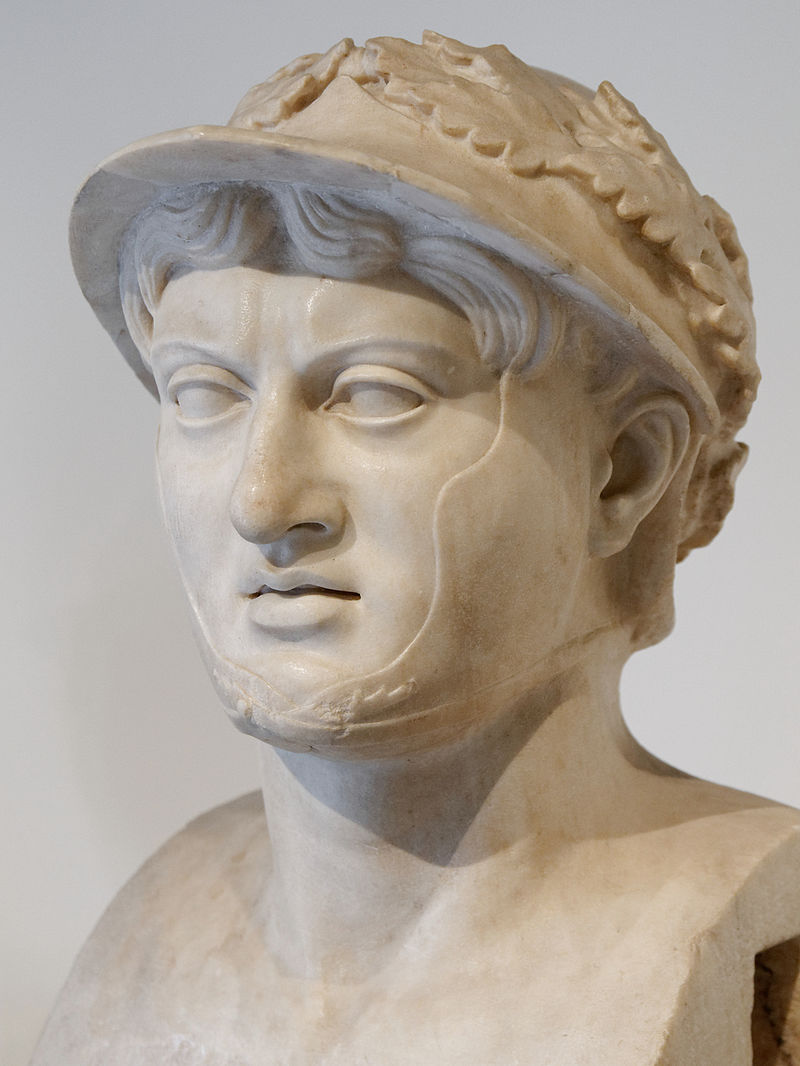
Pyrrhus
king of Epirus from 307 to 302 and 297 to 272 BC

Severus Alexander
Roman Emperor (208-235)

Thutmose III
sixth Egyptian Pharaoh of the Eighteenth Dynasty

Honorius
Honorius (; 9 September 384 – 15 August 423) was Roman emperor from 393 to 423. He was the younger son of emperor Theodosius I and his first wife Aelia Flaccilla. After the death of Theodosius in 395, Honorius, under the regency of Stilicho, ruled the western half of the empire while his brother Arcadius ruled the eastern half. His reign over the Western Roman Empire was precarious and chaotic. In 410, Rome was sacked for the first time since the Battle of the Allia almost 800 years prior.

Theodosius II
Byzantine Emperor (401–450)

Gordian III
Roman emperor (225-244)

Valentinian III
emperor of the Western Roman Empire (419-455)

Mithridates VI of Pontus
ruler of the Kingdom of Pontus from 120 to 63 BC

Amenhotep III
ninth Pharaoh of the Eighteenth dynasty of Egypt

Chlothar I
King of the Franks

Shapur II
The tenth Sasanian emperor (309–379)
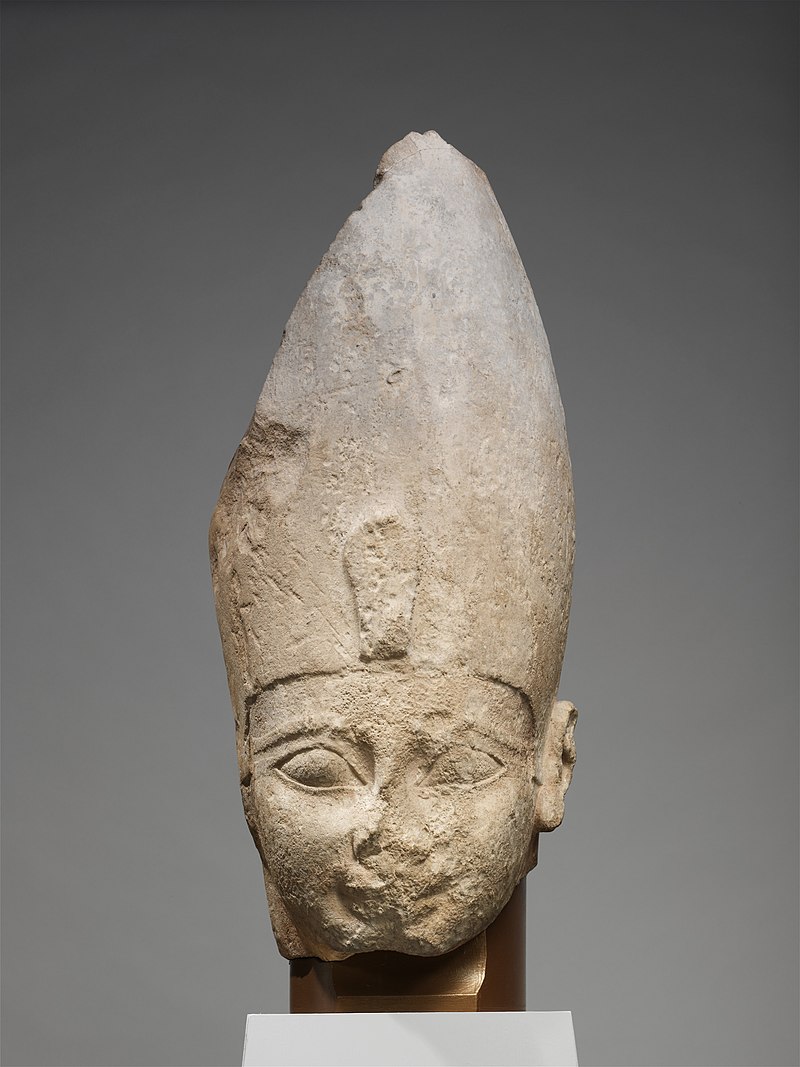
Ahmose I
Pharaoh of Ancient Egypt

Diadumenian
Diadumenian ( ; ; 14September 208 – June 218) was the son of the Roman emperor Macrinus and served as his co-ruler for a brief time in 218. His mother, Macrinus' wife, is called Nonia Celsa in the unreliable , though this name may have been fictional. Diadumenian became in May 217, shortly after his father's accession to the imperial throne. Elagabalus, a relative of the recently deceased Caracalla, revolted in May of the following year, and Diadumenian was elevated to co-emperor. After Macrinus was defeated in the Battle of Antioch on 8 June 218, Diadumenian was sent to the court of Artabanus

Josiah
Josiah (; ) or Yoshiyahu () was the 16th king of Judah (–609 BCE). Described as "one of Judah’s most important kings," his reign likely marked a turning point in the development of Yahwism.

Ptolemy V Epiphanes
fifth ruler of the Ptolemaic dynasty in Egypt (209–179 B.C.)

Amenhotep I
second Pharaoh of the Eighteenth dynasty of Egypt

Valentinian II
Roman emperor from 375 to 392

Leo II
Byzantine emperor (467-474)

Alexandros IV of Macedon
King of Macedonia from 323/2 to 309 BC

Den
Horus name of an early Egyptian king
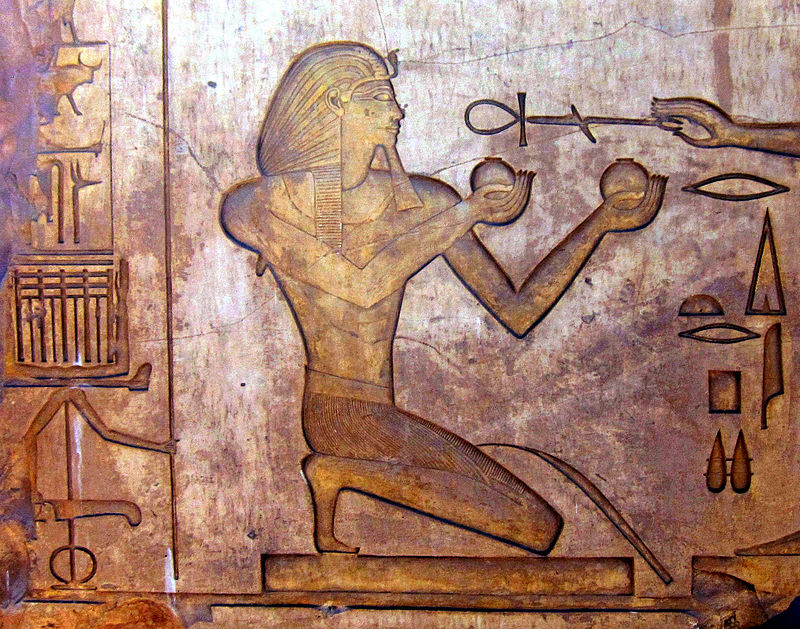
Thutmose II
Fourth Egyptian Pharaoh of the 18th Dynasty (c. 1493/1482 – 1479 BC)

Pepi II
Egyptian pharaoh of the Sixth dynasty for the Old Kingdom

Ptolemy XIII Theos Philopator
Pharaoh of Egypt from 51 to 47 BC

Ptolemy VI
Egyptian pharaoh

Alaric II
King of the Visigoths Balti dynasty

Amaziah
Ninth Ruler of Judah or Eight King of Judah
%2C%20King%20of%20Judah%20and%20the%20Babylonian%20captivity.%20From%20Babylon%2C%20Iraq.%20C.%20580%20BCE.%20Vorderasiatisches%20Museum%2C%20Berlin.jpg)
Jeconiah
Jeconiah ( meaning "Yahweh has established"; ; ), also known as Coniah and as Jehoiachin ( Yəhōyāḵin ; ), was the nineteenth and penultimate king of Judah who was dethroned by the King of Babylon, Nebuchadnezzar II in the 6th century BCE and was taken into captivity. He was the son and successor of King Jehoiakim, and the grandson of King Josiah. Most of what is known about Jeconiah is found in the Hebrew Bible. Records of Jeconiah's existence have been found in Iraq, such as the Jehoiachin's Rations Tablets. These tablets were excavated near the Ishtar Gate in Babylon and dated to c. 592 BCE.

Manasseh
King of Judah (Second Book of Chronicles)

Ptolemy XIV of Egypt
Egyptian puppet pharao as the husband of Cleopatra VII
Ptolemy VIII Physcon
an Egyptian king from the second century BC
Athalaric
Athalaric (; 5162 October 534) was the king of the Ostrogoths in Italy between 526 and 534. He was a son of Eutharic and Amalasuintha, the youngest daughter of Theodoric the Great, whom Athalaric succeeded as king in 526. Athalaric was described to live a hedonistic lifestyle by Procopius of Caesarea. His mother managed the kingdom during his reign, and he died as a teenager.

Uzziah
thumb|King Uzziah of Judah, from the Stained glass windows of Chartres Cathedral#Rose|north rose window of Chartres Cathedral
thumb|Uzziah, Jotham, and [[Ahaz, from the Sistine Chapel ceiling.]]
thumb|Jehoram of Judah|Jehoram, Uzziah, and [[Jotham, by Lucas van Leyden]]
Uzziah (; ‘Uzzīyyāhū, meaning "my strength is Yah"; ; ), also known as Azariah (; ‘Ăzaryā; ; ), was the tenth king of the ancient Kingdom of Judah, and one of Amaziah's sons. () Uzziah was 16 when he became king of Judah and reigned for 52 years. The first 24 years of his reign were as a co-regent with his father, Amaziah.

Jehoash
King after Queen Athaliah, Seventh King of Judah or Eight Ruler of Judah

Theudebald
thumbnail|The Frankish Empire in 555, the year of Theudebald's death
Theudebald (in modern English, Theobald; in French, Thibaut or Théodebald; in German, Theudowald) (534 – 555), son of Theudebert I and Deuteria, was the king of Metz, Rheims, or Austrasia—as it is variously called—from 548 to 555.

Antiochus V
ruler of Seleucid Empire from 164 to 161 BC

Siptah
thumb|230x230px|Goblet for an Apis died under the early reign of Siptah, 19th dynasty, New Kingdom. Found in the Serapeum of Saqqara, now in the Louvre Museum (n. 442).

Antiochus VI Dionysus
Seleucid ruler

Philippus II
consul of the Roman Empire (237-249)

Adad-nirari III
King of Assyria

Amyntas IV of Macedon
King of Macedonia (c.365 BC-335 BC)

Perdiccas III of Macedon
king of Macedonia from 365 BC to 360 BC
Pleistarchus
Pleistarchus ( ; died 458 BC) was the Agiad King of Sparta from 480 to 458 BC.

Labashi-Marduk
Labashi-Marduk ( or , meaning "O Marduk, may I not come to shame") was the fifth and penultimate king of the Neo-Babylonian Empire, ruling in 556 BC. He was the son and successor of Neriglissar. Though classical authors such as Berossus wrote that Labashi-Marduk was just a child when he became king, Babylonian documents indicate that he had been in charge of his own affairs before his rise to the throne, suggesting he was an adult, though possibly still relatively young.
Mithridates II of Pontus
king of Pontos
Agesipolis I
4th-century BC Agiad Spartan king

Vaballathus
Septimius Vaballathus (; ; – ) was emperor of the Palmyrene Empire centred at Palmyra in the region of Syria.
Eudamidas III
king of Sparta from 241 to 228 BC
Ziaelas of Bithynia
King of Bithynia
Rabbel II Soter
King of the Nabataean Kingdom (ruled AD 70-106)
Cersobleptes
Cersobleptes (, also found in the form Cersebleptes, Kersebleptēs) was the son of Cotys I, king of the Odrysians in Thrace, on whose death in September 360 BC he inherited the throne.
==Early troubles==
From the beginning of his reign, however, Cersobleptes was beset by problems. He inherited a conflict with the Athenians and with the rebel former royal treasurer Miltokythes from his father, and then there appeared two rivals for the throne, Berisades and Amadocus II. Despite the continued able service of Cersobleptes' brother-in-law, the Euboean adventurer Charidemus, Cersobleptes was f
Pelops of Sparta
King of Sparta
Laconicus
Laconicus ( ; fl. 192 BC) was a Spartan of royal descent who appears as king of Sparta for a brief moment in the aftermath of the assassination of Nabis in 192 BC. Little is known about him; even his name may not be correct.
Mithridates Chrestus
prince and co-ruler of the Kingdom of Pontus