Category
page 1Ancient Mesopotamia

Mesopotamia
Mesopotamia is a historical region of West Asia situated within the Tigris–Euphrates river system, in the northern part of the Fertile Crescent. It corresponds roughly to the territory of modern Iraq. Just beyond it lies southwestern Iran, where the region transitions into the Persian plateau, marking the shift from the Arab world to Iran.

Silk Road
trade routes through Asia connecting China to the Mediterranean Sea

Assyrian Empire
Assyria was a major ancient Mesopotamian civilization that existed as a city-state from the 21st century BC to the 14th century BC and eventually expanded into an empire from the 14th century BC to the 7th century BC.

Sasanian Empire
last pre-Islamic Iranian empire (224–651 AD)
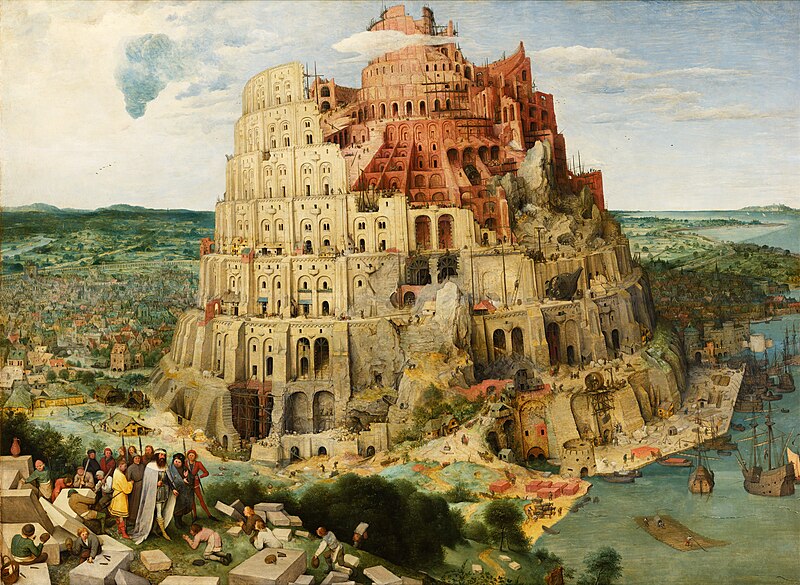
Tower of Babel
biblical pericope about hubris and the origin of languages

Akkadian Empire
ancient empire in the Mesopotamia (2334–2154 BC)

Nineveh
Nineveh was an ancient Near Eastern city of Upper Mesopotamia, located in the modern-day city of Mosul in northern Iraq. It is located on the eastern bank of the Tigris River and was the capital and largest city of the Neo-Assyrian Empire, and potentially the wealthiest city in the ancient world. Today, it is a common name for the half of Mosul that lies on the eastern bank of the Tigris, and the country's Nineveh Governorate takes its name from it.

Ctesiphon
Ctesiphon ( ; , Tyspwn or Tysfwn; ; , ; ) was an ancient city in modern Iraq, on the eastern bank of the Tigris, about 35 kilometres (22 mi) southeast of Baghdad. Ctesiphon served as a royal capital of the Iranian empires for over eight hundred years, in the Parthian and Sasanian periods. Ctesiphon was the administrative capital of the Sasanian Empire from 226 to 637 (when it was conquered by the Arabs), or until the conclusion of the Muslim conquest of Persia in 651 AD.
Uruk
Uruk, the archeological site known today as Warka, was an ancient city in the Near East or West Asia, located east of the current bed of the Euphrates River, on an ancient, now-dried channel of the river in Muthanna Governorate, Iraq. The site lies 93 kilometers (58 miles) northwest of ancient Ur, 108 kilometers (67 miles) southeast of ancient Nippur, and 24 kilometers (15 miles) northwest of ancient Larsa.
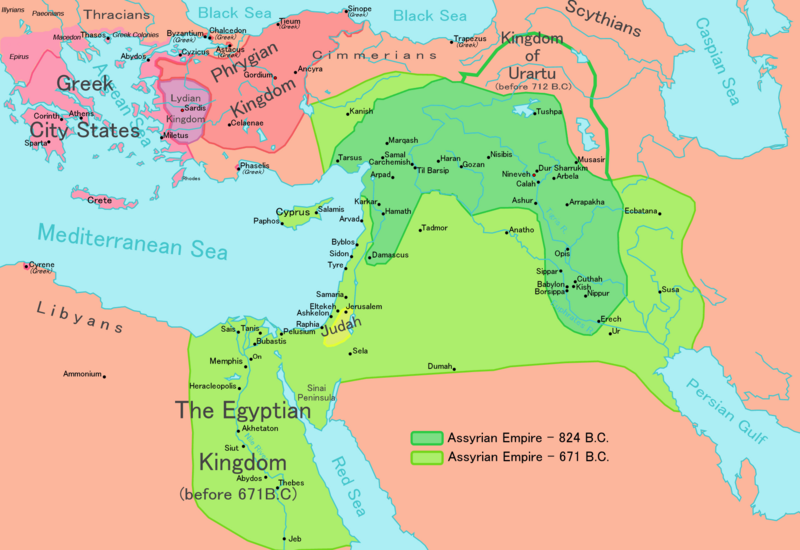
Neo-Assyrian Empire
historical state in Mesopotamia

Chaldea
thumb|350px|The Chaldean tribes in Babylonia during the 1st millennium BC.

Neo-Babylonian Empire
former empire

Ubaid period
archaeological culture

Gutian people
The Guti (), also known by the derived exonyms Gutians or Guteans, were a people of the ancient Near East who both appeared and disappeared during the Bronze Age. Their homeland was known as Gutium (Sumerian: , GutūmKI or , GutiumKI).
Conflict between people from Gutium and the Akkadian Empire has been linked to the collapse of the empire, towards the end of the although economic factors, climate change and internal strife also played a part. The Guti subsequently overran southern Mesopotamia and formed the short-lived Gutian dynasty of Sumer, overseeing a period of economic and cultural decli
.jpg)
Dilmun
Dilmun, or Telmun, (Sumerian: 15px, later , = ; ) was an ancient East Semitic–speaking civilization in Eastern Arabia mentioned from the 3rd millennium BC onwards, covering the transition from Prehistoric Arabia into the historic period. Based on contextual evidence, it was located in the Persian Gulf, on a trade route between Mesopotamia and the Indus Valley Civilisation, close to the sea and to artesian springs. Dilmun encompassed Bahrain, Kuwait, and eastern Saudi Arabia.
Roman–Parthian Wars
series of conflicts between the Parthian Empire and the Roman Republic and Roman Empire
art of Mesopotamia
Jemdet Nasr period
archaeological culture of Mesopotamia
Early Dynastic period
archaeological culture of Mesopotamia
Middle Assyrian Empire
period in the history of Assyria after the fall of the Old Assyrian Empire in the 1300s BC

Characene
Characene (Ancient Greek: Χαρακηνή), also known as Mesene (Μεσσήνη) or Meshan, was a kingdom founded by the Iranian Hyspaosines located at the head of the Persian Gulf mostly within modern day Iraq. Its capital, Charax Spasinou (Χάραξ Σπασινού), was an important port for trade between Mesopotamia and India, and also provided port facilities for the city of Susa further up the Karun River. The kingdom was frequently a vassal of the Parthian Empire. Characene was mainly populated by Arabs, who spoke Aramaic as their cultural language. All rulers of the principality had Iranian names. Members of
Kassite
language
Aram
historical region including several Aramean kingdoms covering much of the present-day Syria, southeastern Turkey, and parts of Lebanon and Iraq.
Battle of Ctesiphon
363 battle
King of the Universe
ancient Mesopotamian title
Gutian dynasty of Sumer
Gutian Dynasty of Sumer
Aram-Naharaim
Aram-Naharaim ( ʾĂram Nahărayim, literally "Aram of the two rivers") is the biblical term for an ancient land along the great bend of the Euphrates River.

Turukkaeans
The Turukkaeans were a Bronze and Iron Age people of Zagros Mountains. Their endonym has sometimes been reconstructed as Tukri.
Bit Adini
former country
Kingdom of Ḫana
Bronze age country in the middle Euphrates
Median Wall
wall built to the north of Babylon
King of the Four Corners
title from ancient Mesopotamia
Old-Assyrian period
period of the Assyrian civilization in Mesopotamia and Anatolia (ca 1950–1750 BCE)

Hyspaosines
Hyspaosines (also spelled Aspasine) was the founder of Characene, a kingdom situated in southern Mesopotamia. He was originally a Seleucid satrap installed by king Antiochus IV Epiphanes (), but declared independence in 141 BC after the collapse and subsequent transfer of Seleucid authority in Iran and Babylonia to the Parthians. Hyspaosines briefly occupied the Parthian city of Babylon in 127 BC, where he is recorded in records as king (šarru). In 124 BC, however, he was forced to acknowledge Parthian suzerainty. He died in the same year, and was succeeded by his juvenile son A
King of Sumer and Akkad
Royal title in Ancient Mesopotamia
Paddan Aram
early Aramean kingdom in Mesopotamia
Kingdom of Araba
2nd-century Arab kingdom
Simurrum
Simurrum (: Si-mu-ur-ri-im) was an important city state of the Mesopotamian area from around 2000 BCE to 1500 BCE, during the period of the Akkadian Empire down to Ur III. The Simurrum Kingdom disappears from records after the Old Babylonian period. It has been
proposed that in Old Babylonian times its name was Zabban, a notable cult center of Adad. It was neighbor and sometimes ally with the Lullubi kingdom. Zabban is noted as a
cult center of Adad into the Neo-Babylonian period.
music of Mesopotamia
musical history of the Tigris-Euphrates basin
Lion of Mari
copper statue of a lion, 2nd millennium BCE, found in Mari at the Temple of Lions
Assyrians
ancient Mesopotamian people of Assyria
Kurda
thumb|Map of Mesopotamia in 1770 BCEKurda was a small ancient city-state and a Middle Bronze petty kingdom located in the region of the Sinjar Plain in Northern Mesopotamia which eventually became subsumed into Assyria. It is mentioned along with the Amorite states of Andarig and Apum.
Early Assyrian period
history of Assyrian civilization of Mesopotamia between 2500 BCE and 2025 BCE
Kish civilization
Proposed Mesopotamia civilization
beveled rim bowl
clay bowls most common in the 4th millennium B.C
Neo-Sumerian period
Historical period of Mesopotamia
Arbayistan Satrapy
Arbāyistān ( [ʾrb]ystn; Middle Persian: Arbāyistān, Arāwastān, Arwāstān; Armenian: Arvastan) or Beth Arabaye (Syriac: Bēṯ ʿArbāyē) was a Sasanian province in Late Antiquity. Due to its situation and its road systems, the province was a source of income from commercial traffic, as well as a constant area of contention during the Roman–Persian Wars.
Khvarvaran
Khvārvarān was a military quarter of the Sasanian Empire. Intensive irrigation agriculture of the lower Tigris and Euphrates and of tributaries such as the Diyala and the Karun formed the empire's main resource base.
King of the Lands
ancient Mesopotamian title
Adam and Eve cylinder seal
ancient cylinder seal