Category
page 1Ancient Near Eastern cosmology

Marduk
Marduk (; cuneiform: dAMAR.UTU; Sumerian: "calf of the sun; solar calf"; ) was a god from ancient Mesopotamia, patron deity of Babylon.
First sparsely attested in the 3rd millenium BC, Marduk slowly rose to prominence before being enshrined as leader of the Mesopotamian pantheon under Nebuchadnezzar I in the 1st millennium BC. In Babylon, Marduk was worshipped in the Esagila temple.

Enlil
Enlil (Sumerian: dEN-LÍL), later known as Elil and Ellil, is an ancient Mesopotamian god associated with wind, air, earth, and storms. He is first attested as the chief deity of the Sumerian pantheon, but he was later worshipped by the Akkadians, Babylonians, Assyrians, and Hurrians. Enlil's primary center of worship was the Ekur temple in the city of Nippur, which was believed to have been built by Enlil himself and was regarded as the "mooring-rope" of heaven and earth. He is also sometimes referred to in Sumerian texts as Nunamnir. According to one Sumerian hymn, Enlil himself was so holy t
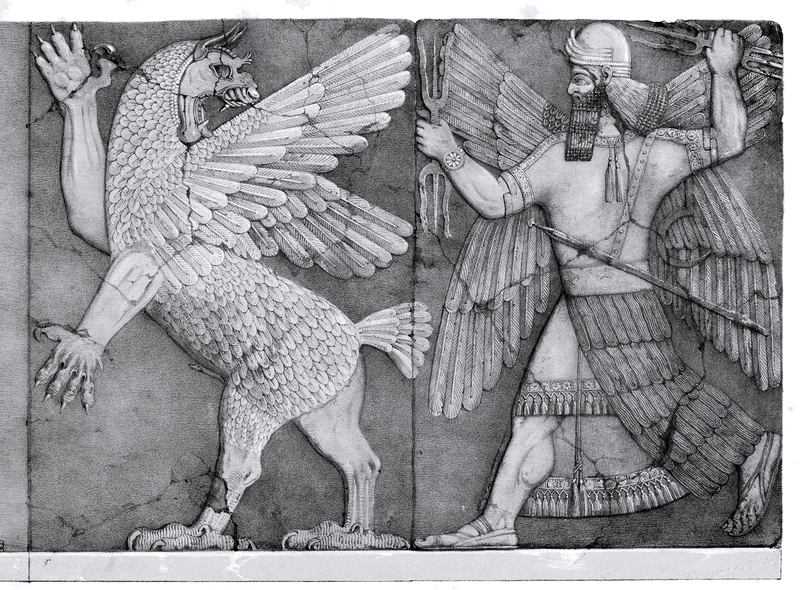
Enûma Eliš
Babylonian creation myth
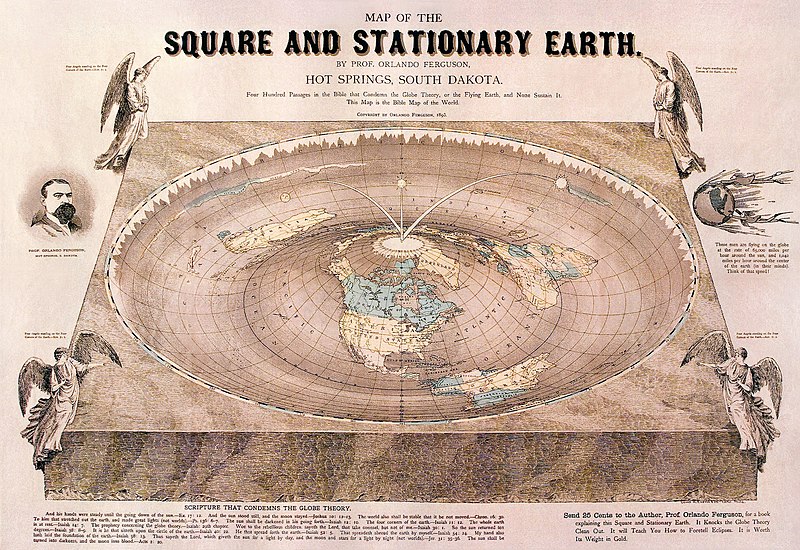
flat Earth
archaic conception of the Earth's shape

Abzu
Abzû or Apsû (, + ) is the name for fresh water from underground aquifers which was given a religious fertilising quality in ancient near eastern cosmology, including Sumerian and Akkadian mythology. It was believed that all lakes, springs, rivers, fountains, rain, and even the Flood, as described in Atrahasis, originated from the Abzû. In Mesopotamian cosmogony, it is referred to as the freshwater primordial ocean below and above the earth; indeed the Earth itself was regarded as a goddess Ninhursag that was conceived from the mating of male Abzu with female saltwater stream Tiamat. In this w

Duat
thumb|513x513px|The 'Weighing of the Heart' from the [[Book of the Dead from the Papyrus of Hunefer, dated to the 19th Dynasty around 1275 BCE. The deceased Hunefer is taken into the judgment hall by the deity Anubis, who weighs a portion of Hunefer's soul, represented by his heart. This ritual is completed with Ammit the Devourer awaiting the result, and Thoth recording. Next, the triumphant Hunefer, having passed the test, is presented by the falcon-headed Horus to Osiris, seated in his shrine with Isis, Nephthys and the four sons of Horus. ]]
The Duat or Tuat (Ancient Egyptian: Hieroglyph:
sea serpent
mythological creature

firmament
thumb|An artist's depiction of the early Hebrew conception of the cosmos. The firmament (raqia), Sheol, and [[Tehom are depicted.]]
Seven Heavens
seven levels or divisions of the Heavens in religious or mythological cosmology
Ancient Mesopotamian underworld
underworld in Sumerian culture
Atra-Hasis
Atra-Hasis () is an 18th-century BC Akkadian epic, recorded in various versions on clay tablets and named for one of its protagonists, the priest Atra-Hasis ('exceedingly wise'). The narrative has four focal points: An organisation of allied upper and lower gods shaping Mesopotamia agriculturally; a political conflict between them, pacified by creating the first human couples; the mass reproduction of these; and a great deluge linked to the intention of the upper gods to destroy their imperfect artificial creatures, as handed down in a remarkably similar manner in various other flood myths of
Tablet of Shamash
Babylonian stone tablet
Mashu
Mashu, as described in the Epic of Gilgamesh of Mesopotamian mythology, is a great cedar mountain with roots that reach the underworld and peaks that reach the heavens, through which the hero-king Gilgamesh passes via a tunnel on his journey to Dilmun after leaving the Cedar Forest, a forest of ten thousand leagues span. Siduri, the alewife, lived on the shore, associated with "the Waters of Death" that Gilgamesh had to cross to reach Utnapishtim in search of the secret of eternal life.
creation of life from clay
miraculous birth theme in multiple mythologies