Category
page 1Angiology
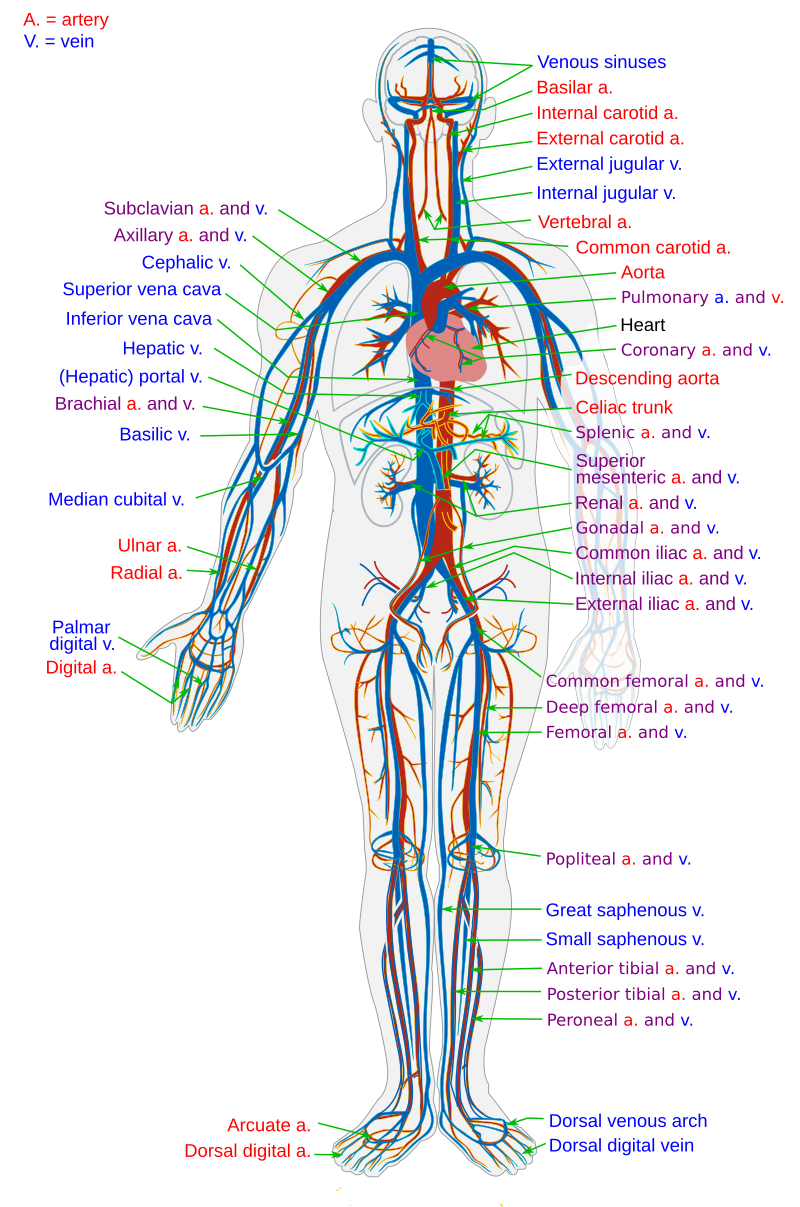
circulatory system
three independent systems that work together: cardiovascular, pulmonary and systemic
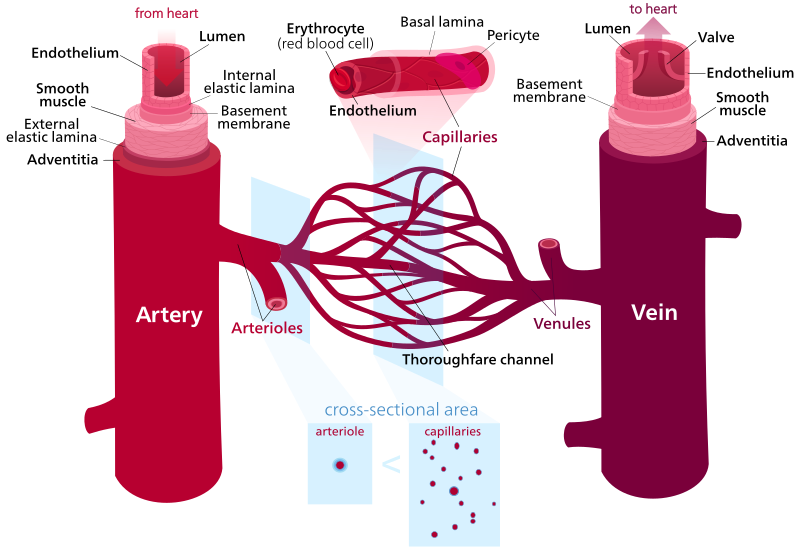
blood vessel
tubular structure which carries blood

artery
An artery () is a blood vessel in humans and most other animals that takes oxygenated blood away from the heart in the systemic circulation to one or more parts of the body. Exceptions that carry deoxygenated blood are the pulmonary arteries in the pulmonary circulation that carry blood to the lungs for oxygenation, and the umbilical arteries in the fetal circulation that carry deoxygenated blood to the placenta. It consists of a multi-layered artery wall wrapped into a tube-shaped channel.
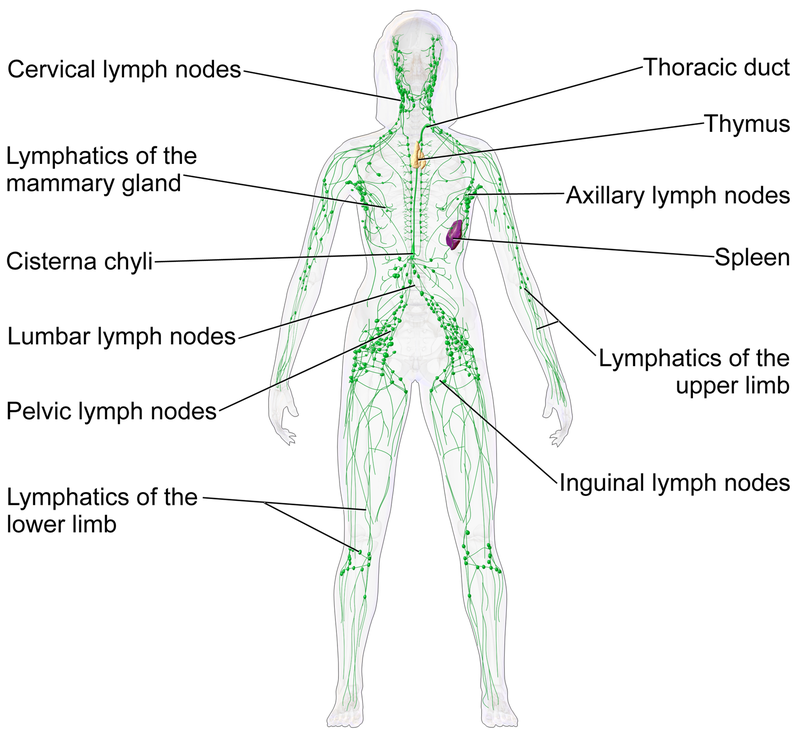
lymphatic system
a part of the defense system (immune system) of vertebrate animals against pathogens

capillary
A capillary is a small blood vessel, from 5 to 10 micrometres in diameter, and is part of the microcirculation system. Capillaries are microvessels and the smallest blood vessels in the body. They are composed of only the tunica intima (the innermost layer of an artery or vein), consisting of a thin wall of simple squamous endothelial cells. They are the site of the exchange of many substances from the surrounding interstitial fluid, and they convey blood from the smallest branches of the arteries (arterioles) to those of the veins (venules). Other substances which cross capillaries include wa

ischemia
Ischemia or ischaemia is a restriction in blood supply to any tissue, muscle group, or organ of the body, causing a shortage of oxygen that is needed for cellular metabolism (to keep tissue alive). Ischemia is generally caused by problems with blood vessels, with resultant damage to or dysfunction of tissue, i.e., hypoxia and microvascular dysfunction. It also implies local hypoxia in a part of a body resulting from constriction (such as vasoconstriction, thrombosis, or embolism).

endothelium
The endothelium (: endothelia) is a single layer of squamous endothelial cells that line the interior surface of blood vessels and lymphatic vessels. The endothelium forms an interface between circulating blood or lymph in the lumen and the rest of the vessel wall.

angiology
Angiology (from Greek , angeīon, "vessel"; and , -logia) is the medical specialty dedicated to studying the circulatory system and of the lymphatic system, i.e., arteries, veins and lymphatic vessels.

arteriole
An arteriole is a small-diameter blood vessel in the microcirculation that extends and branches out from an artery and leads to capillaries.

angiotensins
Angiotensin is a peptide hormone that causes vasoconstriction and an increase in blood pressure. It is part of the renin–angiotensin system, which regulates blood pressure. Angiotensin also stimulates the release of aldosterone from the adrenal cortex to promote sodium retention by the kidneys.
pulmonary circulation
the portion of the cardiovascular system which carries deoxygenated blood away from the heart, to the lungs, and returns oxygenated blood back to the heart

anastomosis
thumb|right|Vein skeleton of a Hydrangea leaf showing anastomoses of veins
basement membrane
thin layer of dense material found in tissues between cells and the adjacent connective tissue
Protein C, inactivator of coagulation factors Va and VIIIa
mammalian protein found in Homo sapiens
enterohepatic circulation
the circulation of substances from the liver to the bile, to the intestine, and back to the liver
external iliac vein
blood vessels connecting the thigh veins to the pelvis
vasa vasorum
network of small blood vessels
internal iliac vein
large blood vessel of the pelvis
common iliac vein
veins draining blood from the pelvis and lower limbs
carotid body
small cluster of chemoreceptors and supporting cells located near the fork (bifurcation) of the carotid artery (which runs along both sides of the throat).
vasospasm
Vasospasm refers to a condition in which an arterial spasm leads to vasoconstriction. This can lead to tissue ischemia (insufficient blood flow) and tissue death (necrosis).
angiogenesis inhibitor
agent and endogenous substance that antagonizes or inhibits the development of new blood vessels
portal venous system
one capillary bed draining into another through veins
lymph capillary
microvessel serving to drain and process extracellular fluid
collateral circulation
alternate blood flow around a blockage

great vessels
large vessels that bring blood to and from the heart
vascular resistance
resistance that must be overcome to push blood through the circulatory system and create flow
Arterial dissections
tear within the wall of a blood vessel
superficial vein thrombosis
Blood clot in a vein near the skin surface
PGF
protein-coding gene in the species Homo sapiens
nitrovasodilator
A nitrovasodilator is a pharmaceutical agent that causes vasodilation (widening of blood vessels) by donation of nitric oxide (NO), and is mostly used for the treatment and prevention of angina pectoris.
Lipase G, endothelial type
mammalian protein found in Homo sapiens
nutrient artery
Nutrient artery in bones
blood–retinal barrier
part of the blood–ocular barrier that prevents certain substances from entering the retina
surgical anastomosis
surgical technique

hypophyseal portal system
system of blood vessels
anti vascular endothelial growth factor therapy
Anti–vascular endothelial growth factor therapy, also known as anti-VEGF () therapy or medication, is the use of medications that block vascular endothelial growth factor. This is done in the treatment of certain cancers and in age-related macular degeneration. They can involve monoclonal antibodies such as bevacizumab, antibody derivatives such as ranibizumab (Lucentis), or orally-available small molecules that inhibit the tyrosine kinases stimulated by VEGF: sunitinib, sorafenib, axitinib, and pazopanib (some of these therapies target VEGF receptors rather than the VEGFs).
high endothelial venules
venules in some lymphatic organs
endothelial cell anergy
defense mechanism of tumors against immunity
polyphenol antioxidant
hypothetical type of antioxidant
Precapillary sphincter
A precapillary sphincter is a band of smooth muscle that adjusts blood flow into capillaries mainly in the mesenteric microcirculation
aortic body
one of several small clusters of peripheral chemoreceptors known as glomus cells, baroreceptors, and supporting cells located along the aortic arch
organ of Zuckerkandl
chromaffin body derived from neural crest located at the bifurcation of the aorta or at the origin of the inferior mesenteric artery
capillary lamina of choroid
part of the eye
engorgement

Claude Franceschi
French physician
vascular smooth muscle
type of smooth muscle cell found in the wall of blood vessels
fenestra
A fenestra (fenestration; : fenestrae or fenestrations) is any small opening or pore, commonly used as a term in the biological sciences. It is the Latin word for "window", and is used in various fields to describe a pore in an anatomical structure.