Category
page 1Animal physiology

urine
thumb|upright=0.5|Sample of human urine

feces
Feces (also faeces or fæces) are the solid or semi-solid remains of food that was not digested in the small intestine, and has been broken down by bacteria in the large intestine. Feces contain a relatively small amount of metabolic waste products such as bacterially-altered bilirubin and dead epithelial cells from the lining of the gut.
.jpg)
sweat
Perspiration, also known as sweat, is the fluid secreted by sweat glands in the skin of mammals.
inflammation
Inflammation (from ) is part of the biological defence response of body tissues. Inflammatory immunovascular responses can be triggered by a broad range of stimuli, including physical trauma, "dead, damaged, malfunctioning or stressed tissues", pathogens, irritants, toxins, overuse, autoimmunity, allergens, and foreign bodies (e.g. silica and asbestos). The five cardinal signs are heat, pain, redness, swelling, and loss of function (Latin calor, dolor, rubor, tumor, and functio laesa).

reflex
In biology, a reflex, or reflex action, is an involuntary, unplanned sequence or action and nearly instantaneous response to a stimulus.
thumb|429x429px|The simplest reflex is initiated by a stimulus, which activates an afferent nerve. The signal is then passed to a response neuron, which generates a response.
Reflexes are found with varying levels of complexity in organisms with a nervous system. A reflex occurs via neural pathways in the nervous system called reflex arcs. A stimulus initiates a neural signal, which is carried to a synapse. The signal is then transferred across the synapse to

thermoregulation
Thermoregulation is the ability of an organism to keep its body temperature within certain boundaries, even when the surrounding temperature is very different. A thermoconforming organism, by contrast, simply adopts the surrounding temperature as its own body temperature, thus avoiding the need for internal thermoregulation. The internal thermoregulation process is one aspect of homeostasis: a state of dynamic stability in an organism's internal conditions, maintained far from thermal equilibrium with its environment (the study of such processes in zoology has been called physiological ecology

blood–brain barrier
semipermable membrane that separates blood and the brain

spermatogenesis
thumb|Normal spermatogenesis, testis biopsy.
thumb|High-power view of a seminiferous tubule with normal spermatogenesis.
Spermatogenesis is the process by which haploid spermatozoa develop from germ cells in the seminiferous tubules of the testicle. This process starts with the mitotic division of the stem cells located close to the basement membrane of the tubules. These cells are called spermatogonial stem cells. The mitotic division of these produces two types of cells. Type A cells replenish the stem cells, and type B cells differentiate into primary spermatocytes. The primary spermatocyte

photoperiodism
Photoperiod is the change of day length over the seasons. Earth's rotation around its axis produces 24-hour changes in light (daytime) and dark (night) cycles on Earth. The length of the light and dark in each phase varies across the seasons due to the axial tilt of Earth. The photoperiod defines the length of the light. For example, in summer the length of light could be 16 hours while the dark is 8 hours, whereas in winter the length of day could be 8 hours, while the dark is 16 hours. Importantly, the axial tilt of the Earth causes the opposing seasons in the Northern and Southern Hemispher

warm-blooded
thumb|Thermographic image: a snake is shown eating a warm-blooded mouse

lactation
Lactation describes the secretion of milk from the mammary glands in addition to the period of time that a parent lactates to feed her young. The process can occur with all sexually mature female mammals, although it may predate mammals. The process of feeding milk in all female creatures is called nursing, and in humans it is also called breastfeeding. Newborn infants often produce some milk from their own breast tissue, known colloquially as witch's milk.
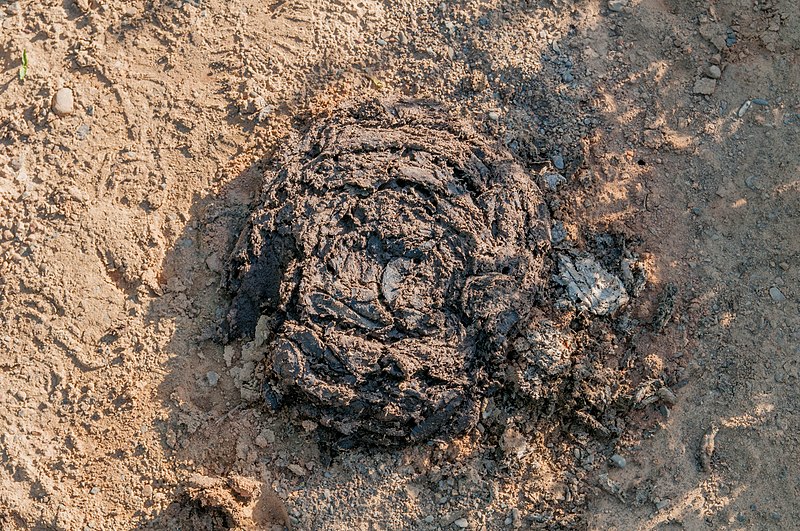
cow dung
waste product from a cow's (or cattle in general) digestive tract

venom
thumb|upright=1.35|Wasp [[stinger with a droplet of venom]]

ossification
thumb|300 px|right|Bone is broken down by osteoclasts, and rebuilt by osteoblasts, both of which communicate through cytokine (TGF-β, IGF) signalling.
Ossification (also called osteogenesis or bone mineralization) in bone remodeling is the process of laying down new bone material by cells named osteoblasts. It is synonymous with bone tissue formation. There are two processes resulting in the formation of normal, healthy bone tissue: Intramembranous ossification is the direct laying down of bone into the primitive connective tissue (mesenchyme), while endochondral ossification involves cartilag

torpor
Torpor is a state of decreased physiological activity in an animal, usually marked by a reduced body temperature and metabolic rate. Torpor enables animals to survive periods of reduced food availability. The term "torpor" can refer to the time a hibernator spends at low body temperature, lasting days to weeks, or it can refer to a period of low body temperature and metabolism lasting less than 24 hours.
copulation
sexual union between male and female, involving the transfer of sperm
ocular adaptation
response of the eye to light and dark
body odor
odor produced by a living animal

poikilotherm
thumb|250 px|right|The common frog is a poikilotherm and is able to function over a wide range of body core temperatures.
A poikilotherm () is an animal (Greek poikilos – 'various', 'spotted', and therme – 'heat') whose internal temperature varies considerably. Poikilotherms have to survive and adapt to environmental stress. One of the most important stressors is outer environment temperature change, which can lead to alterations in membrane lipid order and can cause protein unfolding and denaturation at elevated temperatures. Poikilotherm is the opposite of homeotherm – an animal which mainta
blood–testis barrier
physical barrier between the blood vessels and the seminiferous tubules of the animal testes

fossorial
thumb|230px|Cape ground squirrel

ecophysiology
Ecophysiology (from Greek , oikos, "house(hold)"; , physis, "nature, origin"; and , -logia), environmental physiology or physiological ecology is a biological discipline that studies the response of an organism's physiology to environmental conditions. It is closely related to comparative physiology and evolutionary physiology. Ernst Haeckel's coinage bionomy is sometimes employed as a synonym.

endotherm
An endotherm (from Greek endon "within" and thermē "heat") is an organism that maintains its body at a metabolically favorable temperature, largely by the use of heat released by its internal bodily functions instead of relying almost purely on ambient heat. Such internally generated heat is mainly an incidental product of the animal's routine metabolism, but under conditions of excessive cold or low activity an endotherm might apply special mechanisms adapted specifically to heat production. Examples include special-function muscular exertion such as shivering, and uncoupled oxidative metabol
heterothermy
Heterothermy or heterothermia (from Greek ἕτερος heteros "other" and θέρμη thermē "heat") is a physiological term for animals that vary between self-regulating their body temperature, and allowing the surrounding environment to affect it. In other words, they exhibit characteristics of both poikilothermy and homeothermy.
voluntary action
conscious action performed of one's own free will
physiology of dinosaurs
study of the physiological functions and mechanisms of dinosaurs
bone remodeling
continuous turnover of bone matrix and mineral
5S-HETE
chemical compound. this family of metabolites serve as hormone-like autocrine and paracrine signalling agents that contribute to the up-regulation of acute inflammatory and allergic responses.
winter rest
annual state for some plants and animals
foramen of Panizza
hole in the heart of all animals of the order Crocodilia
bradymetabolism
Bradymetabolism refers to organisms with a high active metabolism and a considerably slower resting metabolism. Bradymetabolic animals can often undergo dramatic changes in metabolic speed, according to food availability and temperature. Many bradymetabolic creatures in deserts and in areas that experience extreme winters are capable of "shutting down" their metabolisms to approach near-death states, until favorable conditions return
(see hibernation and estivation).
Eurytherm
A eurytherm is an organism, often an endotherm, that can function at a wide range of ambient temperatures. To be considered a eurytherm, all stages of an organism's life cycle must be considered, including juvenile and larval stages. These wide ranges of tolerable temperatures are directly derived from the tolerance of a given eurythermal organism's proteins. Extreme examples of eurytherms include Tardigrades (Tardigrada), the desert pupfish (Cyprinodon macularis), and green crabs (Carcinus maenas), however, nearly all mammals, including humans, are considered eurytherms. Eurythermy can be an
enteric fermentation
digestive process in ruminants
non-human blood type
animals and bacteria have cell surface antigens referred to as a blood type
12S-HETE
chemical compound
hepoxilin
Hepoxilins (Hx) are a set of epoxyalcohol metabolites of polyunsaturated fatty acids (PUFA), i.e. they possess both an epoxide and an alcohol (i.e. hydroxyl) residue. HxA3, HxB3, and their non-enzymatically formed isomers are nonclassic eicosanoid derived from acid the (PUFA), arachidonic acid. A second group of less well studied hepoxilins, HxA4, HxB4, and their non-enzymatically formed isomers are nonclassical eicosanoids derived from the PUFA, eicosapentaenoic acid. Recently, 14,15-HxA3 and 14,15-HxB3 have been defined as arachidonic acid derivatives that are produced by a different metabol
kleptothermy
In biology, kleptothermy is any form of thermoregulation by which an animal shares in the metabolic thermogenesis of another animal. It may or may not be reciprocal, and occurs in both endotherms and ectotherms. One of its forms is huddling. However, kleptothermy can happen between different species that share the same habitat, and can also happen in pre-hatching life where embryos are able to detect thermal changes in the environment.
Crenation
200px|thumbnail|right|Diagram of a crenated leaf
Crenation (from modern Latin crenatus meaning "scalloped or notched", from popular Latin crena meaning "notch") in botany and zoology, describes an object's shape, especially a leaf or shell, as being round-toothed or having a scalloped edge.
Animal tooth development
process in which teeth develop and grow into the mouth
dander
thumb | right | alt=Flakes of dead skin cells | Flakes of dead skin cells
Dander is material shed from the body of humans and other animals that have fur, hair, or feathers. The term is similar to dandruff, when an excess of flakes becomes visible. Skin flakes that come off the main body of an animal are dander, while the flakes of skin called dandruff come from the scalp and are composed of epithelial skin cells. The surface layer of mammalian skin is called the stratum corneum, which is shed as part of normal skin replacement.