Category
page 1Animals that use echolocation

Chiroptera
Bats (order Chiroptera ) are winged mammals; the only mammals capable of true and sustained flight. Bats are more agile in flight than most birds, flying with their long spread-out digits covered with a thin membrane or patagium. The smallest bat, and one of the smallest extant mammals, is Kitti's hog-nosed bat, which is in length, across the forearm and in mass. The largest bats are the flying foxes, with the giant golden-crowned flying fox (Acerodon jubatus) reaching a weight of and having a wingspan of .

dolphin
A dolphin is any one of the 40 extant species of aquatic mammal from the cetacean families Delphinidae (the oceanic dolphins), Platanistidae (the Indian river dolphins), Iniidae (the New World river dolphins), Pontoporiidae (the brackish dolphins), and the probably extinct Lipotidae (baiji or Chinese river dolphin). All these families belong to the parvorder Odontoceti, i.e., toothed whales, which also include the closely related families Monodontidae (beluga and narwhal) and Phocoenidae (porpoises), as well as the more distant families Physeteroidea (sperm whales) and Ziphiidae (beaked whales

Orcinus orca
The orca (Orcinus orca), or killer whale, is a toothed whale and the largest member of the oceanic dolphin family. The only extant species in the genus Orcinus, it is recognizable by its distinct pigmentation; being mostly black on top, white on the bottom and having recognizable white eye patches. A cosmopolitan species, it inhabits a wide range of marine environments, from Arctic to Antarctic regions to tropical seas, but is more commonly documented in temperate or cooler coastal waters. Scientists have proposed dividing the global population into races, subspecies, or possibly even species.

sperm whale
largest species of toothed whale

brown rat
species of mammal
.png)
Microchiroptera
Microbats constitute the suborder Microchiroptera within the order Chiroptera (bats). Bats have long been differentiated into Megachiroptera (megabats) and Microchiroptera, based on their size, the use of echolocation by the Microchiroptera and other features; molecular evidence suggests a somewhat different subdivision, as the microbats have been shown to be a paraphyletic group.

porpoise
Porpoises () are small dolphin-like cetaceans classified under the family Phocoenidae. Although similar in appearance to dolphins, they are more closely related to narwhals and belugas. There are eight extant species of porpoise, all among the smallest of the toothed whales. Porpoises are distinguished from dolphins by their flattened, spade-shaped teeth distinct from the conical teeth of dolphins, and lack of a pronounced beak, although some dolphins (e.g. Hector's dolphin) also lack a pronounced beak. Porpoises, and other cetaceans, belong to the clade Cetartiodactyla with even-toed ungulate

Odontoceti
suborder of the order cetaceans (Cetacea)

Oilbird
thumb| Steatornis caripensis – MHNT

tenrecs
thumb |A taxidermy|taxidermy mount of a tenrec in defensive posture, [[Horniman Museum and Gardens, London]]

pilot whale
genus of dolphins in the order Cetacea

Common shrew
species of mammal
Sorex
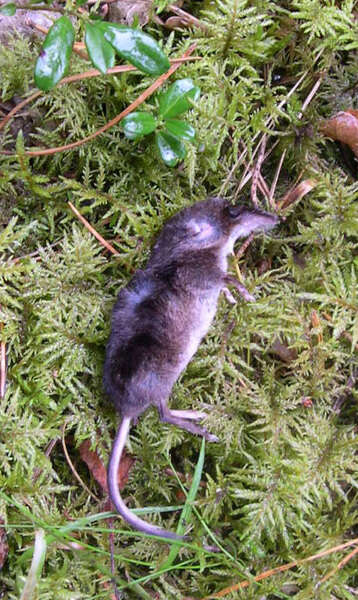
The genus Sorex includes many of the common shrews of Eurasia and North America, and contains at least 142 known species and subspecies. Members of this genus, known as long-tailed shrews, are the only members of the tribe Soricini of the subfamily Soricinae (red-toothed shrews). They have 32 teeth.

La Plata dolphin
species of mammal
river dolphins
Common name concerning different taxa once grouped in a single superfamily but now split into several ones
%20off%20the%20coast%20of%20Calbuco%2C%20Chile%20(380921709).jpg)
Cephalorhynchus
Cephalorhynchus is a genus in the dolphin family Delphinidae.
Lagenorhynchus
Lagenorhynchus is a genus of oceanic dolphins in the infraorder Cetacea, that formerly contained six extant species. However, there was consistent molecular evidence that the genus is polyphyletic and several of the species moved to other genera, leaving only the white-beaked dolphin in this genus among extant species. In addition, the extinct species Lagenorhynchus harmatuki is also classified in this genus.

Kogiidae
Kogiidae is a family comprising at least two extant species of Cetacea, the pygmy (Kogia breviceps) and dwarf (K. sima) sperm whales. As their common names suggest, they somewhat resemble sperm whales, with squared heads and small lower jaws, but are much smaller, with much shorter skulls and more notable dorsal fins than sperm whales. Kogiids are also characterized by a "false gill slit" behind their eyes.

Aerodramus
Aerodramus is a genus of small, dark, cave-nesting birds in the Collocaliini tribe of the swift family. Its members are confined to tropical and subtropical regions in southern Asia, Oceania and northeastern Australia. Many of its members were formerly classified in Collocalia, but were first placed in a separate genus by American ornithologist Harry Church Oberholser in 1906.

American short-tailed shrew
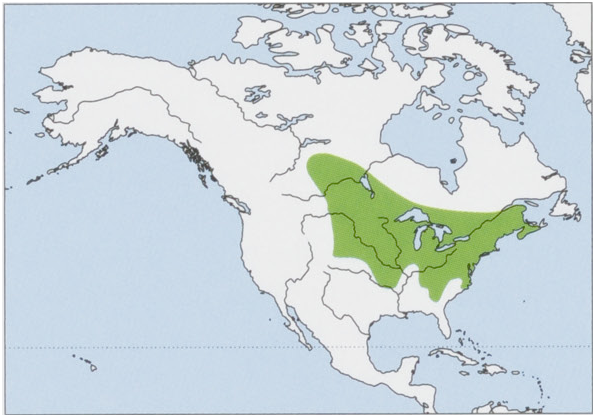
The genus Blarina, commonly called short-tailed shrews, is a genus of relatively large shrews with relatively short tails found in North America.
Blarina brevicauda
species of mammal

vagrant shrew
species of mammal

swiftlet
Swiftlets are birds from the four genera Aerodramus, Collocalia, Hydrochous and Schoutedenapus, which form the tribe Collocaliini within the swift family Apodidae. The group contains around thirty species mostly confined to southern Asia, south Pacific islands, and northeastern Australia, all within the tropical and subtropical regions. They are in many respects typical members of the Apodidae, having narrow wings for fast flight, with a wide gape and small reduced beak surrounded by bristles for catching insects in flight. What distinguishes many but not all species from other swifts and inde