Category
page 1Application layer protocols

XML
Extensible Markup Language (XML) is a markup language and file format for storing, transmitting, and reconstructing data. It defines a set of rules for encoding documents in a format that is both human-readable and machine-readable. The World Wide Web Consortium's XML 1.0 Specification of 1998 and several other related specifications—all of them free open standards—define XML.

HTTP
HTTP (Hypertext Transfer Protocol) is an application layer protocol in the Internet protocol suite for distributed, collaborative, hypermedia information systems. HTTP is the foundation of data communication for the World Wide Web, where hypertext documents include hyperlinks to other resources that the user can easily access, for example by a mouse click or by tapping the screen in a web browser.
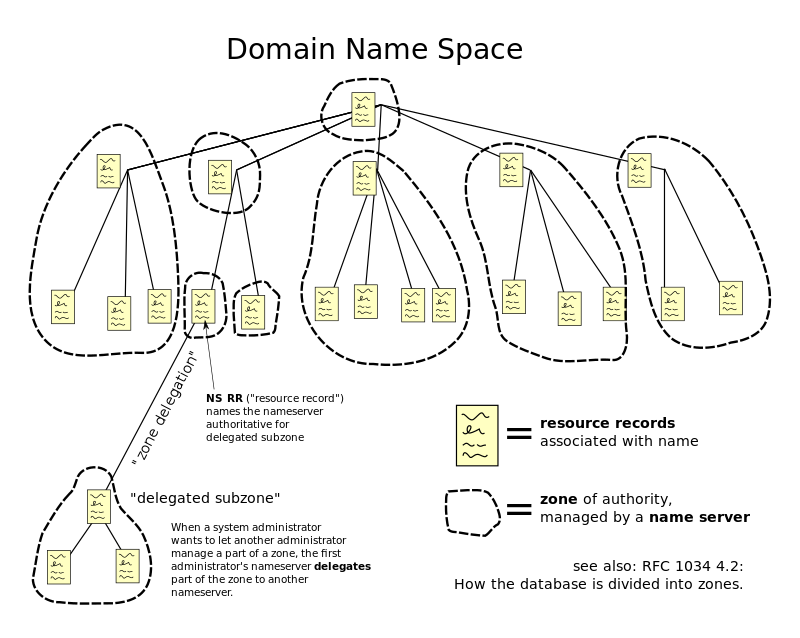
Domain Name Server
system to identify resources on a network

Monero
Monero (; abbreviation: XMR) is a blockchain-based cryptocurrency which is private, untraceable, fungible, and decentralized.

File Transfer Protocol
standard protocol for transferring files over TCP/IP networks

IRC
thumb|upright|The first IRC server, tolsun.oulu.fi, a Sun-3 server on display near the [[University of Oulu computer centre]]

BitTorrent
BitTorrent is a communication protocol for peer-to-peer file sharing (P2P), which enables users to distribute data and electronic files over the Internet in a decentralized manner. The act of downloading and uploading data via BitTorrent is also labeled "torrenting". The protocol is developed and maintained by Rainberry, Inc., and was first released in 2001.

Tor
daemon and utilities for an anonymizing network

Secure Shell
cryptographic network protocol for secure data communication, remote shell services or command execution and other secure network services between two networked computers

Telnet
Telnet (sometimes stylized TELNET) is a client-server application protocol that provides access to virtual terminals of remote systems on local area networks or the Internet. It is a protocol for bidirectional 8-bit communications. Its main goal was to connect terminal devices and terminal-oriented processes.

Dynamic Host Configuration Protocol
computer network protocol
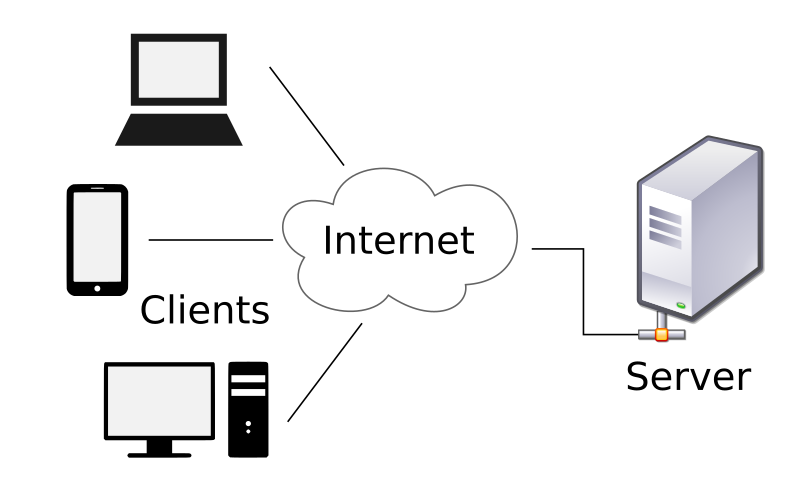
client-server model
distributed application structure in computing

Uniform Resource Identifier
string of characters used to identify a name of a resource on a network such as the internet

XMPP
Extensible Messaging and Presence Protocol (abbreviation XMPP, originally named Jabber) is an open communication protocol designed for instant messaging (IM), presence information, and contact list maintenance. Based on XML (Extensible Markup Language), it enables the near-real-time exchange of structured data between two or more network entities. Designed to be extensible, the protocol offers a multitude of applications beyond traditional IM in the broader realm of message-oriented middleware, including signalling for VoIP, video, file transfer, gaming and other uses.

Session Initiation Protocol
voice-over-IP communications protocol

Simple Network Management Protocol
series of computer network protocols for managing systems connected to a network
Open Shortest Path First
Internet protocol

Lightweight Directory Access Protocol
computer network protocol

SOAP
SOAP (originally an acronym for Simple Object Access Protocol) is a messaging protocol specification for exchanging structured information in the implementation of web services in computer networks. It uses XML Information Set for its message format, and relies on application layer protocols, most often Hypertext Transfer Protocol (HTTP), although some legacy systems communicate over Simple Mail Transfer Protocol (SMTP), for message negotiation and transmission.

Network Time Protocol
standard protocol for synchronizing time across devices

Border Gateway Protocol
protocol for communicating routing information on the Internet
Network News Transfer Protocol
computer network protocol
Real-time Transport Protocol
protocol for delivering audio and video over IP networks
Network File System
specific implementation of a network file system, originally developed by Sun in 1984, later standardised by IETF

RADIUS
Remote Authentication Dial-In User Service (RADIUS) is a networking protocol that provides centralized authentication, authorization, and accounting (AAA) management for users who connect and use a network service. RADIUS was developed by Livingston Enterprises in 1991 as an access server authentication and accounting protocol. It was later brought into IEEE 802 and IETF standards.

I2P
The Invisible Internet Project (I2P) is an anonymous network layer (implemented as a mix network) that allows for censorship-resistant, peer-to-peer communication. Anonymous connections are achieved by encrypting the user's traffic (by using end-to-end encryption), and sending it through a volunteer-run network of roughly 55,000 computers distributed around the world. Given the high number of possible paths the traffic can transit, a third party watching a full connection is unlikely. The software that implements this layer is called an "I2P router", and a computer running I2P is called an "I2

WebSocket
WebSocket is a computer communications protocol, providing a bidirectional communication channel over a single Transmission Control Protocol (TCP) connection. The protocol was standardized by the IETF as in 2011. The current specification allowing web applications to use this protocol is known as WebSockets. It is a living standard maintained by the WHATWG and a successor to The WebSocket API from the W3C.
Server Message Block
network communication protocol for providing shared access to resources
Real Time Streaming Protocol
computer network protocol

Digital Imaging and Communications in Medicine
Digital Imaging and Communications in Medicine (DICOM) is a technical standard for the digital storage and transmission of medical images and related information. It includes information object definitions (i.e. message formats), service definitions, a file format definition, which specifies the structure of a DICOM file, as well as a network communication protocol that uses either TCP/IP or HTTPS to communicate between systems. The primary purpose of the standard is to facilitate communication between the software and hardware entities involved in medical imaging, especially those that are cr
Matrix
networking protocol for real-time communication and data synchronization

Hyphanet
Hyphanet (until mid-2023: Freenet) is a peer-to-peer platform for censorship-resistant, anonymous communication. It uses a decentralized distributed data store to keep and deliver information, and has a suite of free software for publishing and communicating on the Web without fear of censorship. Both Freenet and some of its associated tools were originally designed by Ian Clarke, who defined Freenet's goal as providing freedom of speech on the Internet with strong anonymity protection.

Gnutella
Gnutella is a peer-to-peer network protocol. Founded in 2000, it was the first decentralized peer-to-peer network of its kind, leading to other, later networks adopting the model.

Zcash
Zcash is a privacy-focused cryptocurrency which features an encrypted ledger using zero-knowledge proofs.
decentralized autonomous organization
computer network organization model
InterPlanetary File System
content-addressable, peer-to-peer hypermedia distribution protocol
iSCSI
Internet Small Computer Systems Interface (iSCSI; ) is an Internet Protocol-based storage networking standard for linking data storage facilities. iSCSI provides block-level access to storage devices by carrying SCSI commands over a TCP/IP network. iSCSI facilitates data transfers over intranets and to manage storage over long distances. It can be used to transmit data over local area networks (LANs), wide area networks (WANs), or the Internet and can enable location-independent data storage and retrieval.
HTTP/2
HTTP/2 (originally named HTTP/2.0) is a major revision of the HTTP network protocol used by the World Wide Web. It was derived from the earlier experimental SPDY protocol, originally developed by Google. HTTP/2 was developed by the HTTP Working Group (also called httpbis, where "" means "twice" in Latin) of the Internet Engineering Task Force (IETF). HTTP/2 is the first new version of HTTP since HTTP/1.1, which was standardized in in 1997. The Working Group presented HTTP/2 to the Internet Engineering Steering Group (IESG) for consideration as a Proposed Standard in December 2014, and IESG app
Model Context Protocol
protocol for applications to provide context to LLMs

D-Bus
D-Bus (short for "Desktop Bus"
Remote Desktop Protocol
proprietary protocol that can provide a user with the graphical interface of another, remote, computer
Real-time Transport Control Protocol
sister protocol of the Real-time Transport Protocol that provides control information

MQTT
MQTT is a lightweight, publish–subscribe, machine-to-machine network protocol for message queue/message queuing service. It is designed for connections with remote locations that have devices with resource constraints or limited network bandwidth, such as in the Internet of things (IoT). It must run over a transport protocol that provides ordered, lossless, bi-directional connections—typically, TCP/IP. It is an open OASIS standard and an ISO recommendation (ISO/IEC 20922).

HTTP/3
HTTP/3 is the third major version of the Hypertext Transfer Protocol used to exchange information on the World Wide Web, complementing the widely deployed HTTP/1.1 and HTTP/2. Unlike previous versions which relied on the well-established TCP (published in 1974), HTTP/3 uses QUIC (officially introduced in 2021), a multiplexed transport protocol built on UDP.
Hyper Text Coffee Pot Control Protocol
communications protocol for controlling, monitoring, and diagnosing coffee pots
BitTorrent tracker
server which keeps records of seeds and peers of torrent files
Z39.50
Z39.50 is an international standard client–server, application layer communications protocol for searching and retrieving information from a database over a TCP/IP computer network, developed and maintained by the Library of Congress. It is covered by ANSI/NISO standard Z39.50, and ISO standard 23950.
SPDY
SPDY (pronounced "speedy") is an obsolete open-specification communication protocol developed for transporting web content. SPDY became the basis for HTTP/2 specification. However, HTTP/2 diverged from SPDY and eventually HTTP/2 subsumed all use cases of SPDY. After HTTP/2 was ratified as a standard, major implementers, including Google, Mozilla, and Apple, deprecated SPDY in favor of HTTP/2. Since 2021, no modern browser supports SPDY.
Precision Time Protocol
network time synchronization protocol
DNS over HTTPS
protocol to run DNS queries over HTTPS
Signal Protocol
non-federated cryptographic protocol
Nano
cryptocurrency
ZeroNet
ZeroNet is a decentralized web-like network of peer-to-peer users, created by Tamas Kocsis in 2015. The programming for the network was based in Budapest, Hungary. It is built in Python and fully open source. Instead of having an IP address, sites are identified by a public key (specifically a bitcoin address). The private key allows the owner of a site to sign and publish changes, which propagate through the network. Sites can be accessed through an ordinary web browser when using the ZeroNet application, which acts as a local webhost for such pages. In addition to using bitcoin cryptography,

Peercoin
Peercoin, also known as Peer-to-Peer Coin, PP Coin, or PPC, is a cryptocurrency utilizing both proof-of-stake and proof-of-work systems. It is notable as the first cryptocurrency to implement the proof-of-stake consensus mechanism.
X.400
X.400 is a suite of ITU-T recommendations that define the ITU-T Message Handling System (MHS).
Diameter
computer network protocol
Gemini
internet protocol
Java Naming and Directory Interface
Java API for accessing directory services
DNS over TLS
protocol to encrypt DNS queries using TLS
Advanced Message Queuing Protocol
computer network protocol