Category
page 1Application programming interfaces

application programming interface
An application programming interface (API) is a connection between computers or between computer programs. It is a type of software interface, offering a service to other pieces of software. A document or standard that describes how to build such a connection or interface is called an API specification. A computer system that meets this standard is said to implement or expose an API. The term API may refer either to the specification or to the implementation.

OpenGL
OpenGL (Open Graphics Library) is a cross-language, cross-platform application programming interface (API) for rendering 2D and 3D vector graphics. The API is typically used to interact with a graphics processing unit (GPU), to achieve hardware-accelerated rendering.

DirectX
Microsoft DirectX is a collection of application programming interfaces (APIs) for handling tasks related to multimedia, especially game programming and video, on Microsoft platforms. Originally, the names of these APIs all began with "Direct", such as Direct3D, DirectDraw, DirectMusic, DirectPlay, DirectSound, and so forth. The name DirectX was coined as a shorthand term for all of these APIs (the X standing in for the particular API names) and soon became the name of the collection. When Microsoft later set out to develop a gaming console, the X was used as the basis of the name Xbox to indi

Qt
object-oriented framework for GUI creation

plug-in
software component that adds a specific feature to an existing software application
POSIX
The Portable Operating System Interface (POSIX; ) is a family of standards specified by the IEEE Computer Society for maintaining compatibility between operating systems. In order to define a level of compatibility, POSIX specifies many aspects of functionality that can be classified as application programming interface (API), command-line shell, and shell commands. Originally derived from commonly-found Unix APIs, shells, and commands (partly because Unix was considered manufacturer-neutral), today many systems conform to the standard including branded Unix systems, Unix-like systems, and man

GTK
GTK (formerly GIMP ToolKit and GTK+) is a free open-source widget toolkit for creating graphical user interfaces (GUIs) targeted at Linux and specifically GNOME (though with some use in other desktop environments). It is licensed under the terms of the GNU LGPL, allowing both free and proprietary software to use it.
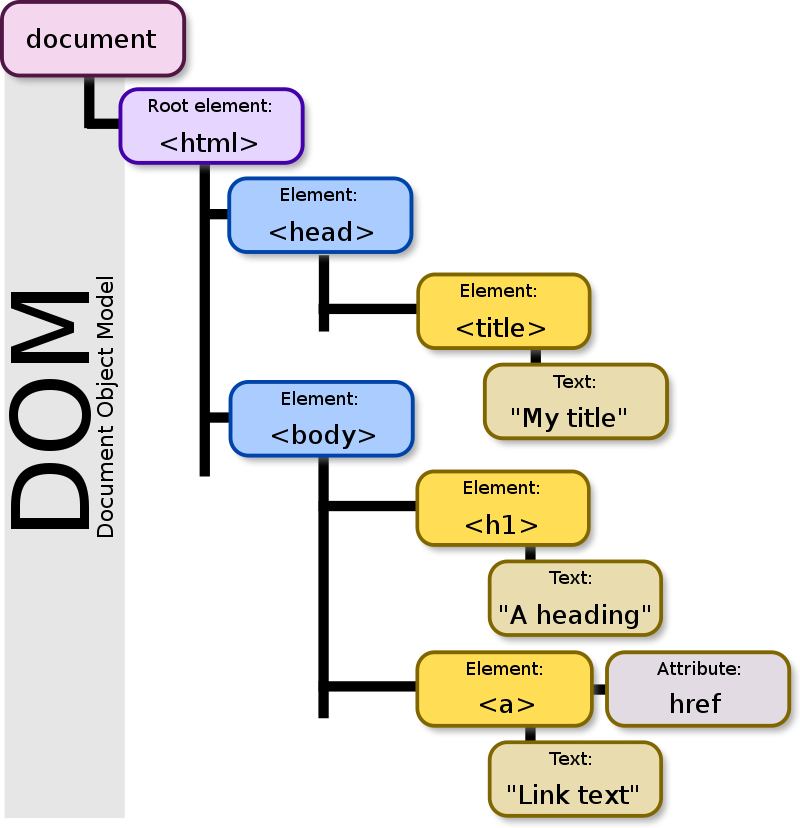
Document Object Model
convention for representing and interacting with objects in HTML, XHTML and XML documents

WebKit
WebKit is a browser engine primarily used in Apple's Safari web browser, as well as all web browsers on iOS and iPadOS. WebKit is also used by the PlayStation consoles starting with the PS3, the Tizen mobile operating systems, the Amazon Kindle e-book reader, Nintendo consoles starting with the 3DS Internet Browser, GNOME Web, and the discontinued BlackBerry Browser.
system call
in computer science, the mechanism used by an application program to request service from the operating system or another application program

Microsoft Silverlight
application framework for writing and running rich Internet applications
Pygame
Pygame is a cross-platform set of Python modules designed for writing video games. It includes computer graphics and sound libraries designed to be used with the Python programming language.

Advanced Configuration and Power Interface
Advanced Configuration and Power Interface (ACPI) is an open standard that operating systems can use to discover and configure computer hardware components, to perform power management (e.g. putting unused hardware components to sleep), auto configuration (e.g. plug and play and hot swapping), and status monitoring. It was first released in December 1996. ACPI aims to replace Advanced Power Management (APM), the MultiProcessor Specification, and the Plug and Play BIOS (PnP) Specification. ACPI brings power management under the control of the operating system, as opposed to the previous BIOS-ce

OpenCL
OpenCL (Open Computing Language) is a framework for writing programs that execute across heterogeneous platforms consisting of central processing units (CPUs), graphics processing units (GPUs), digital signal processors (DSPs), field-programmable gate arrays (FPGAs) and other processors or hardware accelerators. OpenCL specifies a programming language (based on C99) for programming these devices and application programming interfaces (APIs) to control the platform and execute programs on the compute devices. OpenCL provides a standard interface for parallel computing using task- and data-based
Advanced Linux Sound Architecture
software framework

OpenMP
OpenMP is an application programming interface (API) that supports multi-platform shared-memory multiprocessing programming in C, C++, and Fortran, on many platforms, instruction-set architectures and operating systems, including Solaris, AIX, FreeBSD, HP-UX, Linux, macOS, Windows and OpenHarmony. It consists of a set of compiler directives, library routines, and environment variables that influence run-time behavior.
Simple DirectMedia Layer
free software multimedia library
Message Passing Interface
message-passing system for parallel computers
Simple API for XML
parsing algorithm for XML documents
application binary interface
binary interface between compiled program units
OpenAL
OpenAL (Open Audio Library) is a cross-platform audio application programming interface (API). It is designed for efficient rendering of multichannel three-dimensional positional audio. Its API style and conventions deliberately resemble those of OpenGL. OpenAL is an environmental 3D audio library, which can add realism to a game by simulating attenuation (degradation of sound over distance), the Doppler effect (change in frequency as a result of motion), and material densities.
Audio Stream Input/Output
computer sound card driver protocol
JACK Audio Connection Kit
professional sound server daemon

OpenSocial
OpenSocial is a public specification that outlines a set of common application programming interfaces (APIs) for web applications. Initially designed for social network applications, it was developed collaboratively by Google, MySpace and other social networks. It has since evolved into a runtime environment that allows third-party components, regardless of their trust level, to operate within an existing web application.
Adobe AIR
cross-platform run-time system for building Rich Internet applications (RIA)
Google Play Services
proprietary background service and API package for Android devices from Google
Tk
GUI toolkit or framework
Open Sound System
Audio interface for Unix-like operating systems
TWAIN
TWAIN and TWAIN Direct are application programming interfaces (APIs) and communication protocols that regulate communication between software and digital imaging devices, such as image scanners and digital cameras. TWAIN is supported on Microsoft Windows, Linux and Mac OS X.
OLE for Process Control
industrial communication standards
Allegro
software library for video game development
Khronos Group
not-for-profit member-funded industry consortium
Berkeley sockets
Inter-process communication API
OpenAPI
specification language for APIs

LADSPA
The '''Linux Audio Developer's Simple Plugin API (LADSPA''') is an application programming interface (API) standard for handling audio filters and audio signal processing effects, licensed under LGPL-2.1-or-later. Originally designed through consensus on the Linux Audio Developers mailing list, it now works on a variety of platforms. It is used in many free audio software projects, and there is a wide range of LADSPA plug-ins available.
SFML
cross-platform software development library designed to provide a simple application programming interface (API) to various multimedia components in computers
Xlib
thumb|X11-clients use xlib to communicate with the display server.
Glide
free software
KDE Frameworks
libraries and software frameworks
StAX
Streaming API for XML (StAX) is an application programming interface (API) to read and write XML documents, originating from the Java programming language community.
pluggable authentication module
flexible mechanism for authenticating users
International Image Interoperability Framework
application programming interfaces designed to operate with the storage and presentation of digitized objects via a web-based interface
OpenStep
OpenStep is an object-oriented application programming interface (API) specification developed by NeXT. It provides a framework for building graphical user interfaces (GUIs) and developing software applications. OpenStep was designed to be platform-independent, allowing developers to write code that could run on multiple operating systems, including NeXTSTEP, Windows NT, and various Unix-based systems. It has influenced the development of other GUI frameworks, such as Cocoa for macOS, and GNUstep.
closed platform
software system where the service provider restricts access to non-approved applications or content
XPCOM
Cross Platform Component Object Model (XPCOM) is a cross-platform component model from Mozilla. It is similar to Component Object Model (COM), Common Object Request Broker Architecture (CORBA) and system object model (SOM). It features multiple language bindings and interface description language (IDL) descriptions, which allow programmers to plug their custom functions into the framework and connect them with other components.
Swagger
open-source framework to design, build, document, and consume RESTful Web APIs
Windows Runtime
platform-agnostic component and application architecture
Apache Portable Runtime
supporting library for the Apache web server

Google Mobile Services
Google's proprietary software bundle on Android platform

KDE Platform
Collection of software libraries and frameworks
DirectSound
DirectSound is a deprecated software component of the Microsoft DirectX library for the Windows operating system, superseded by XAudio2. It provides a low-latency interface to sound card drivers written for Windows 95 through Windows XP and can handle the mixing and recording of multiple audio streams. DirectSound was originally written for Microsoft by John Miles.
EGL
interface between Khronos rendering APIs and window system
Open Inventor
3D graphics software
Mantle
low-level graphics API by AMD

Threading Building Blocks
C++ programming library

Postman
API development platform
GLFW
GLFW (Graphics Library Framework) is a lightweight utility library for use with OpenGL, OpenGL ES and Vulkan. It provides programmers with the ability to create and manage windows as well as OpenGL and Vulkan contexts, as well as handle joystick, keyboard and mouse input.
OpenXR
OpenXR is an open-source, royalty-free standard for interfacing with virtual reality and augmented reality devices. It is developed by a working group managed by the Khronos Group consortium. OpenXR was announced by the Khronos Group on February 27, 2017, during GDC 2017. A provisional version of the standard was released on March 18, 2019, to enable developers and implementers to provide feedback on it. On July 29, 2019, OpenXR 1.0 was released to the public by Khronos Group at SIGGRAPH 2019 and on April 15, 2024, OpenXR 1.1 was released by Khronos.
Bonobo (GNOME)
component framework for the GNOME free desktop environment
App.net
App.net was an ad-free online social networking service and microblogging service which enabled its users to write messages of up to 256 characters. App.net provided their own web interface to the service, Alpha, which was used by some users. However, they encouraged use and development of third-party applications.