Category
page 1Arcade Archives games

Super Mario Bros.
1985 platform video game
.png)
Pac-Man
Pac-Man, originally titled in Japan, is a 1980 maze video game developed and published by Namco for arcades. It was released in Japan on May 22, 1980 and by Midway Manufacturing in North America in August 1980. The player controls Pac-Man, who must eat all the dots inside an enclosed maze while avoiding four colored ghosts. Eating large flashing dots called "Power Pellets" causes the ghosts to temporarily turn blue and vulnerable, allowing Pac-Man to eat the ghosts for bonus points.
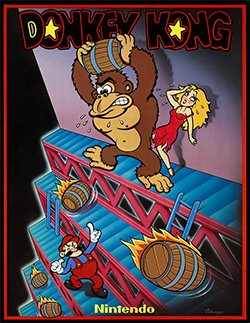
Donkey Kong
1981 arcade game
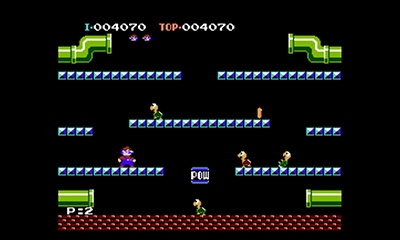
Mario Bros.
1983 arcade game
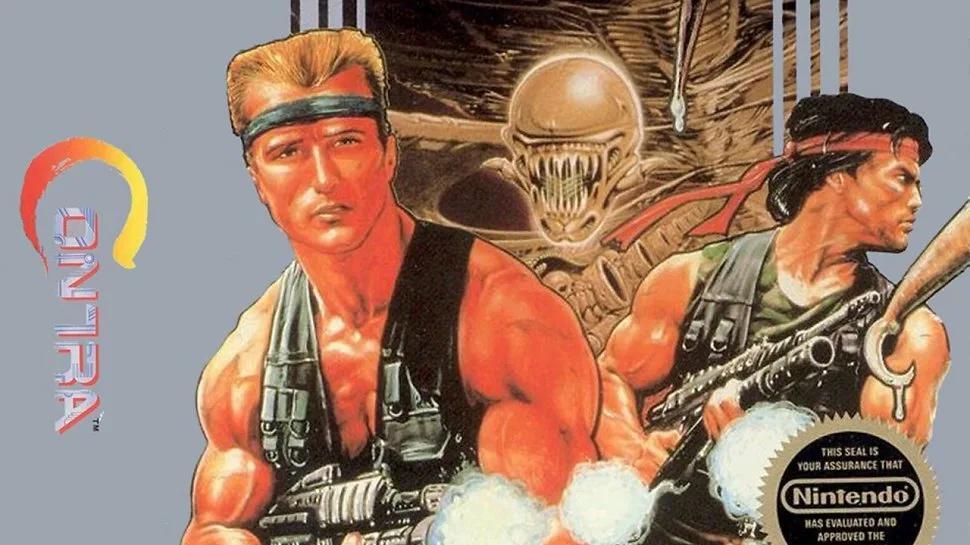
Contra
1987 run and gun action game

Galaga
is a 1981 fixed shooter video game developed and published by Namco for Japanese and European arcades; it was distributed by Midway Manufacturing in North America. It is the sequel to 1979's Galaxian, and the second game in the Galaxian series. Controlling a starship, the player is tasked with destroying the Galaga forces in each stage while avoiding enemies and projectiles. Some enemies can capture a player's ship via a tractor beam, which can be rescued by another ship to give the player a "dual fighter" with additional firepower.

Frogger
is a 1981 action video game developed by Konami and published by Sega for arcades. It was released in North America by Sega/Gremlin. The object of the game is to direct five frogs to their homes by dodging traffic on a busy road, then crossing a river by jumping on floating logs, turtles, and alligators.
Bubble Bobble
1986 video game
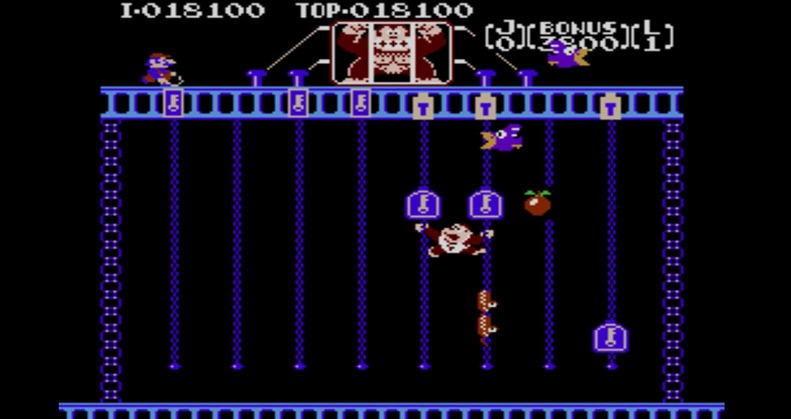
Donkey Kong Jr.
1982 arcade game
%20screenshot.png)
Excitebike
is a 1984 racing video game developed and published by Nintendo for the Nintendo Entertainment System. It was ported to arcades for the Nintendo VS. System later that year and Famicom Disk System in 1988. In North America, it became one of the best-selling games on the console. It was the first game in the Excite series.
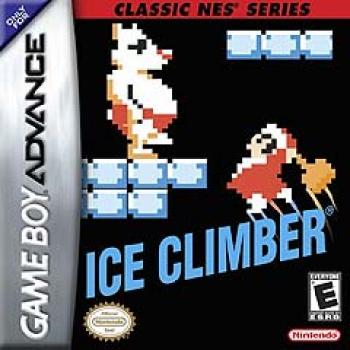
Ice Climber
1985 video game developed by Nintendo

Galaxian
is a 1979 fixed shooter video game developed and published by Namco for arcades. The player assumes control of the Galaxip starfighter in its mission to protect Earth from waves of aliens. Gameplay involves destroying each formation of aliens, who dive down towards the player in an attempt to hit them.
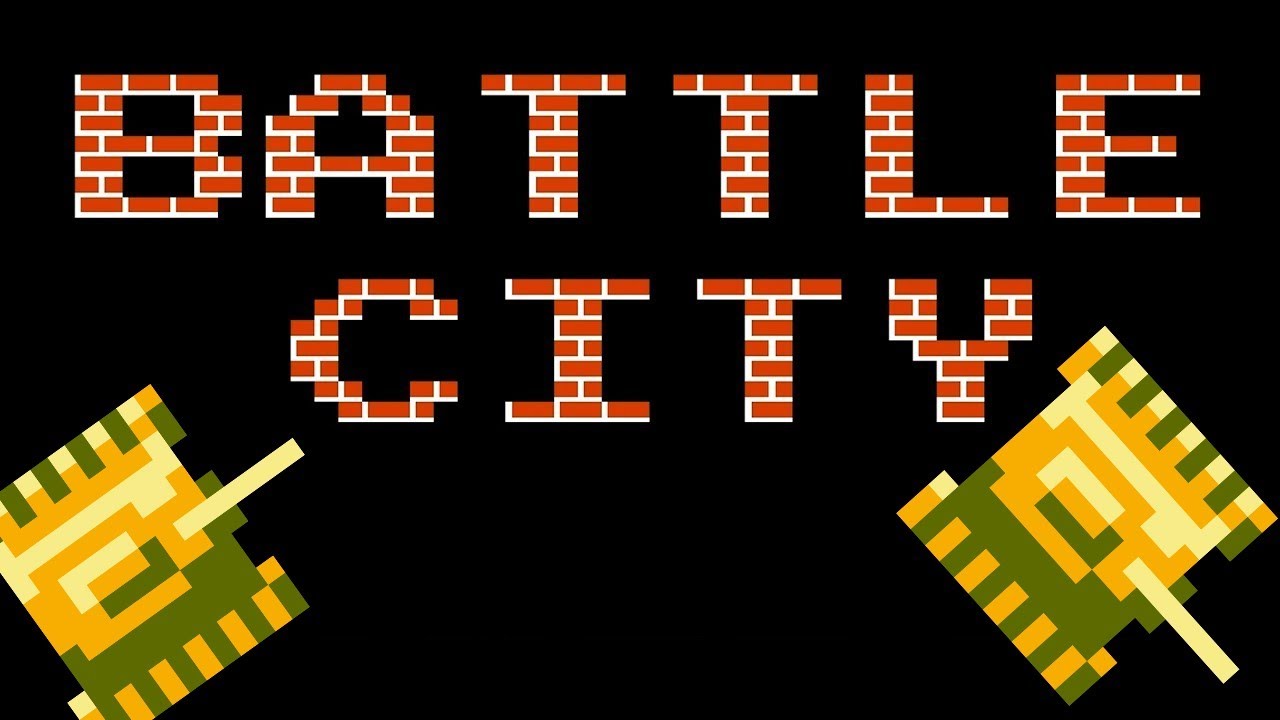
Battle City
1985 video game
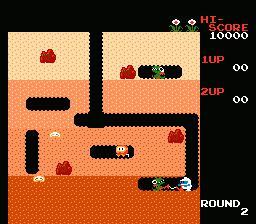
Dig Dug
1982 arcade game created by Namco
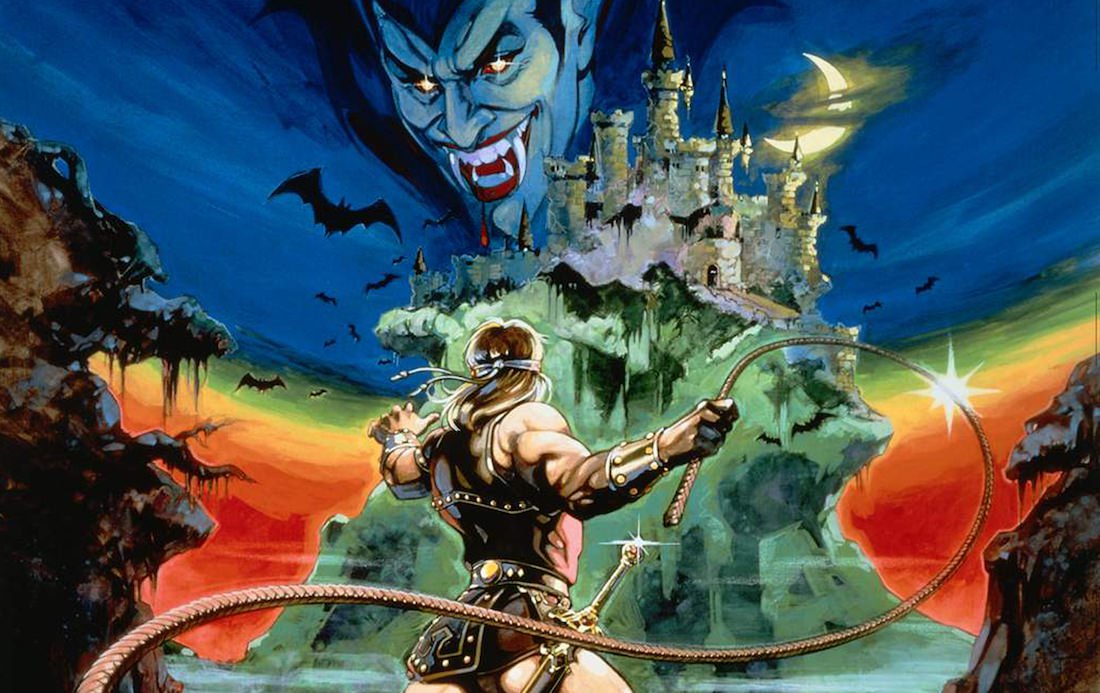
Castlevania
1986 video game
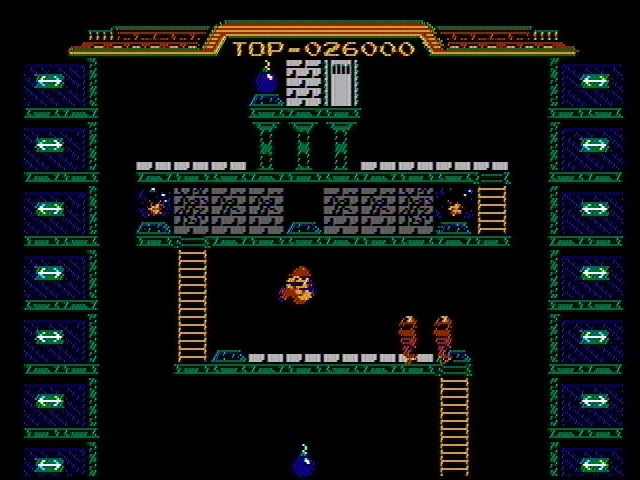
Wrecking Crew
1985 video game
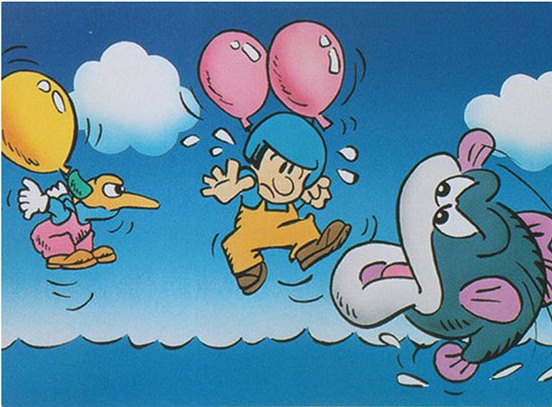
Balloon Fight
1984 video game
Double Dragon
1987 video game
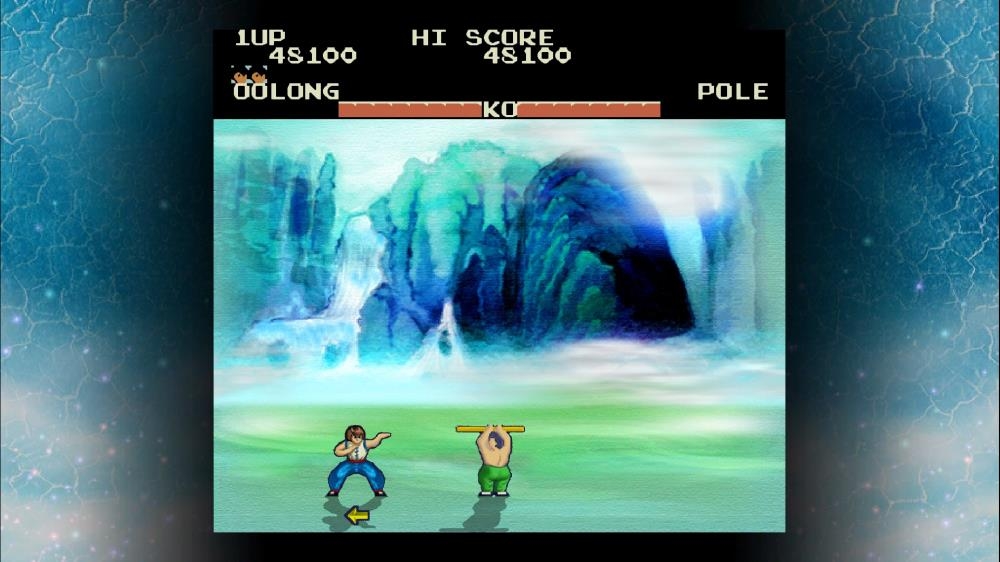
Yie Ar Kung-Fu
1985 video game
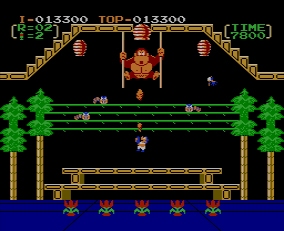
Donkey Kong 3
1983 video game
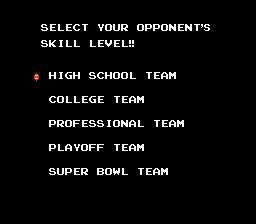
10-Yard Fight
1983 American football video game
Rush'n Attack
1985 arcade game

Xevious
is a 1983 vertically scrolling shooter video game developed and published by Namco for arcades. It was released in Japan and in North America by Atari, Inc. in February 1983. Controlling the Solvalou starship, the player attacks Xevious forces before they destroy all of mankind. The Solvalou has two weapons at its disposal: a zapper to destroy flying craft, and a blaster to bomb ground installations and enemies. It runs on the Namco Galaga arcade system.
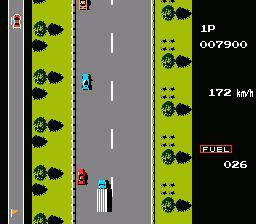
Road Fighter
1984 racing video game
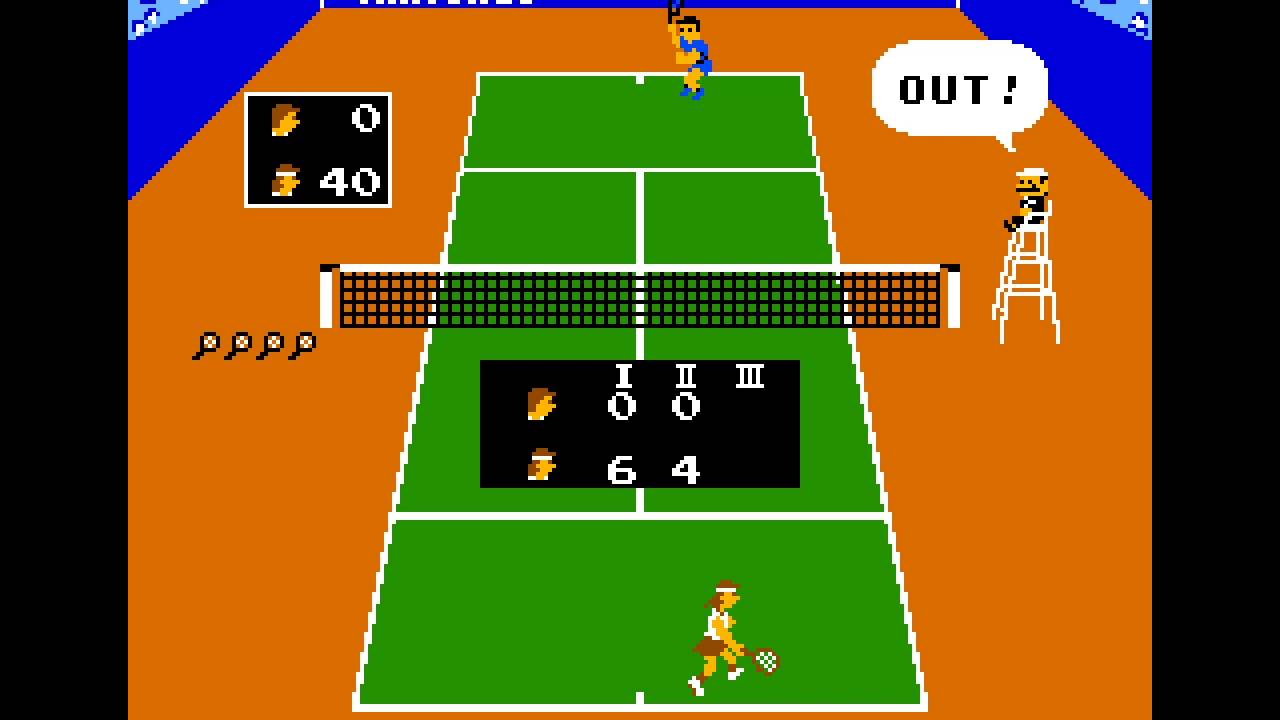
Tennis
1984 sports video game
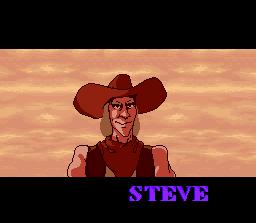
Sunset Riders
1991 arcade video game

Pooyan
is a 1982 fixed shooter video game developed and published by Konami for arcades. It was released in North America by Stern Electronics. The player controls "Mama", a pig whose babies have been kidnapped by a group of wolves. It was later ported to home consoles and personal computers.
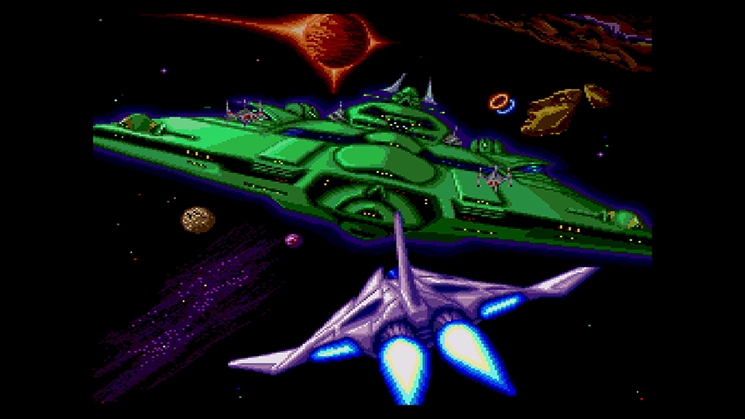
Gradius
1985 arcade game
Pole Position
1982 Formula 1 racing video game
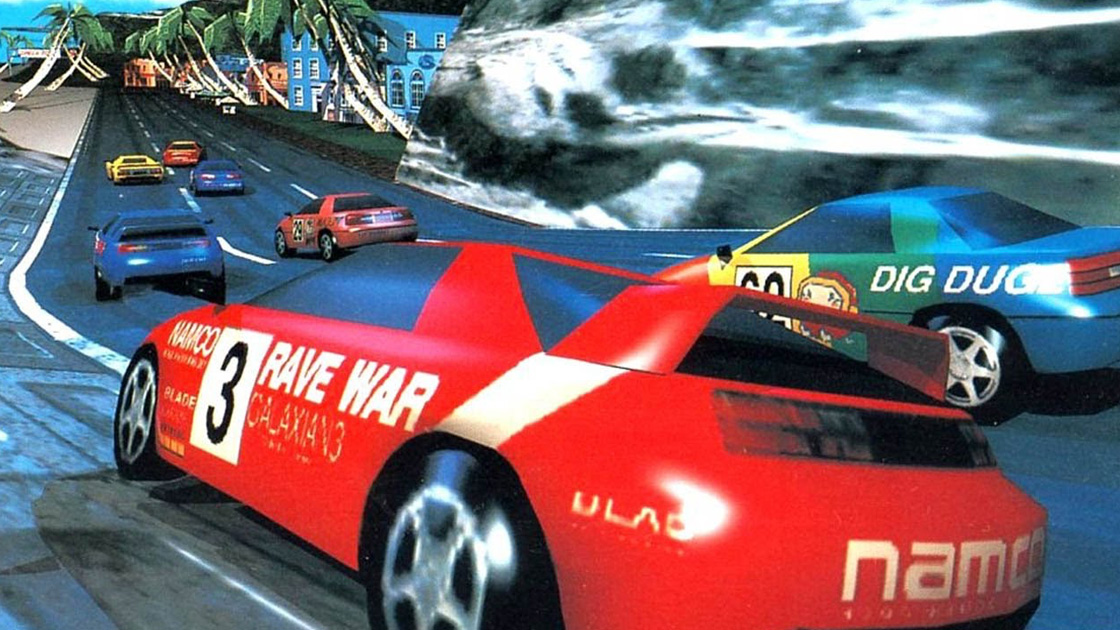
Ridge Racer
1993 racing video game
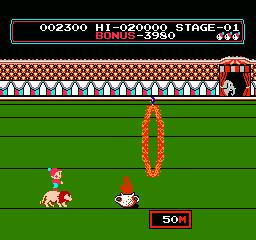
Circus Charlie
1984 computer and video game

Qix
( ) is a 1981 puzzle video game developed and published by Taito for arcades. Designed by husband and wife team Randy and Sandy Pfeiffer, Qix is one of a handful of games made by Taito's American division (another is Zoo Keeper). At the start of each level, the playing field is a large, empty rectangle, containing the Qix, an abstract stick-like entity that performs graceful but unpredictable motions within the confines of the rectangle. The objective is to draw lines that close off parts of the rectangle to fill in a set amount of the playfield.

Mappy
is a 1983 platform video game developed and published by Namco for arcades. It was released in Japan in March 1983 and in North America by Bally Midway in April 1983. It runs on Namco's Super Pac-Man hardware modified to support horizontal scrolling. The name "Mappy" is likely derived from , a slightly pejorative Japanese slang term for policeman. The game has been re-released in several Namco arcade compilations. It spawned a handful of sequels and a 2013 animated web series developed by cartoonists Scott Kurtz and Kris Straub.

Baseball
1983 baseball video game for the NES
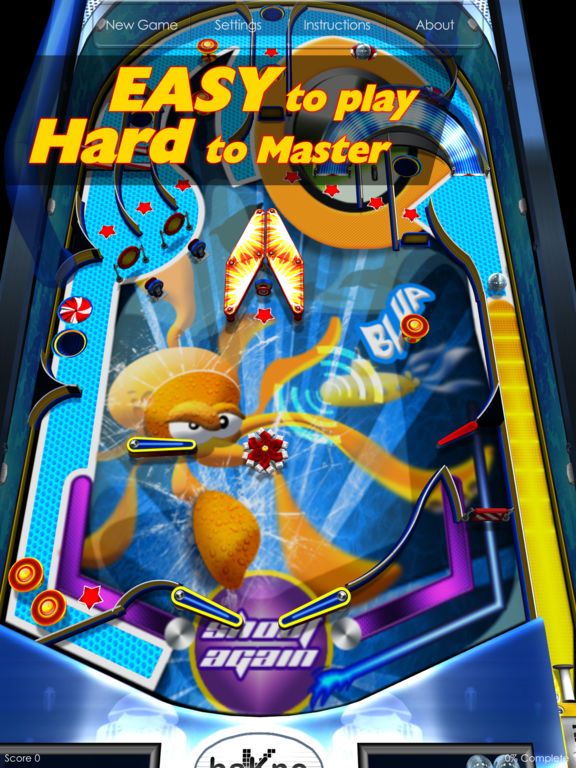
Pinball
1984 video game
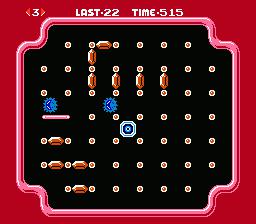
Clu Clu Land
1984 video game
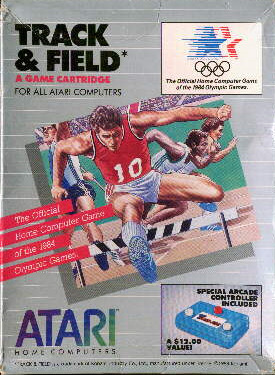
Track & Field
1983 arcade video game

Elevator Action
1983 arcade game
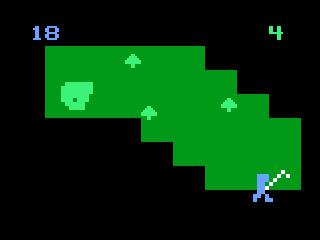
Golf
1984 sports video game

Pac-Land
is a 1984 platform game developed and published by Namco for arcades. It was released in North America by Bally Midway, and in Europe by Atari Games. Controlling Pac-Man, the player must make it to the end of each stage to return a lost fairy back to its home in Fairyland. Pac-Man will need to avoid obstacles, such as falling logs and water-spewing fire hydrants, alongside his enemies, the Ghost Gang. Eating large flashing Power Pellets will cause the ghosts to turn blue, allowing Pac-Man to eat them for points.
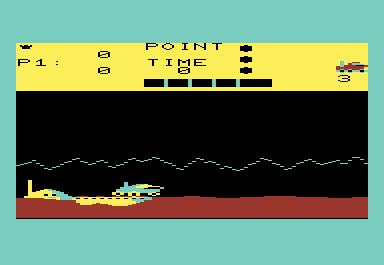
Moon Patrol
1982 video game
Salamander
1986 shoot 'em up video game
Ikari Warriors
1986 video game
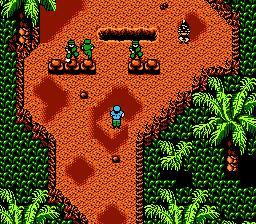
Guerrilla War
1987 video game
Bomb Jack
1984 platform arcade video game
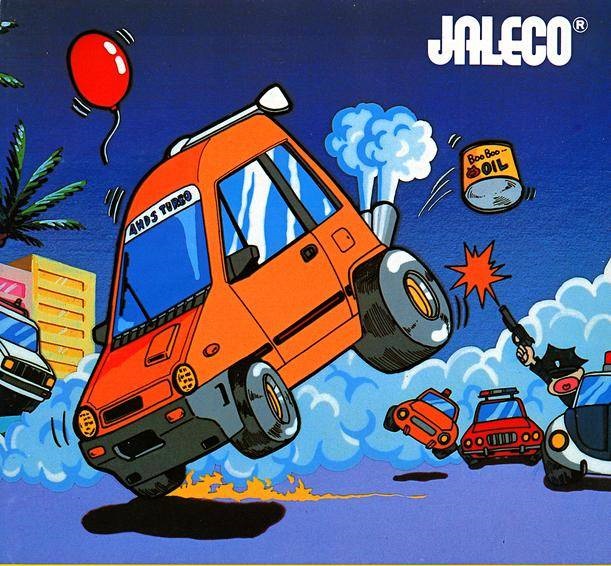
City Connection
1985 video game

Karate Champ
1984 karate video game
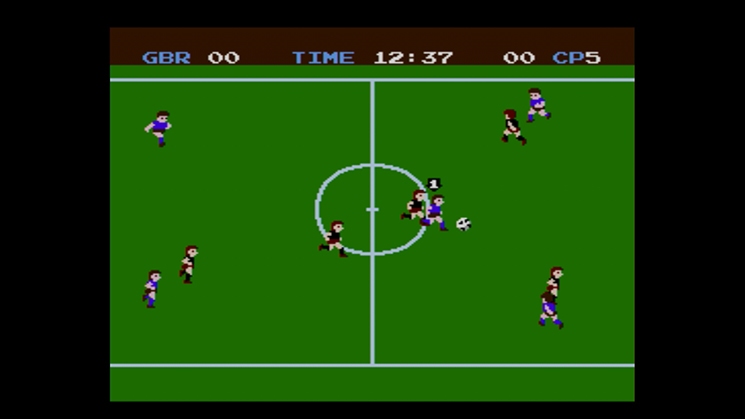
Soccer
1985 video game

BurgerTime
(or in Japan) is an arcade video game by Data East released in 1982. According to a former Data East programmer, the game was designed in-house but the development itself was outsourced to another company.
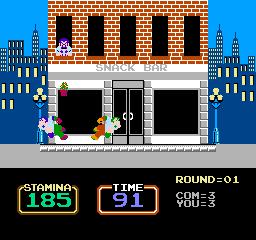
Urban Champion
1984 fighting video game
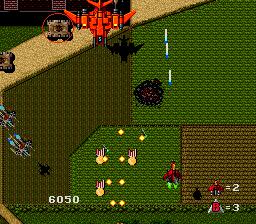
Raiden
1990 scrolling shooter arcade game

Rally-X
is a 1980 maze video game developed and published by Namco for arcades. It was released on October 3, 1980 in Japan, by Midway Manufacturing in North America in February 1981 and by Karateco in Europe in 1981. Players drive a blue Formula One race car through a multidirectional scrolling maze to collect yellow flags. Boulders block some paths and must be avoided. Red enemy cars pursue the player in an attempt to collide with them. Red cars can be temporarily stunned by laying down smoke screens at the cost of fuel. Rally-X is one of the first games with bonus stages and continuously playing ba

Haunted Castle
1987 video game
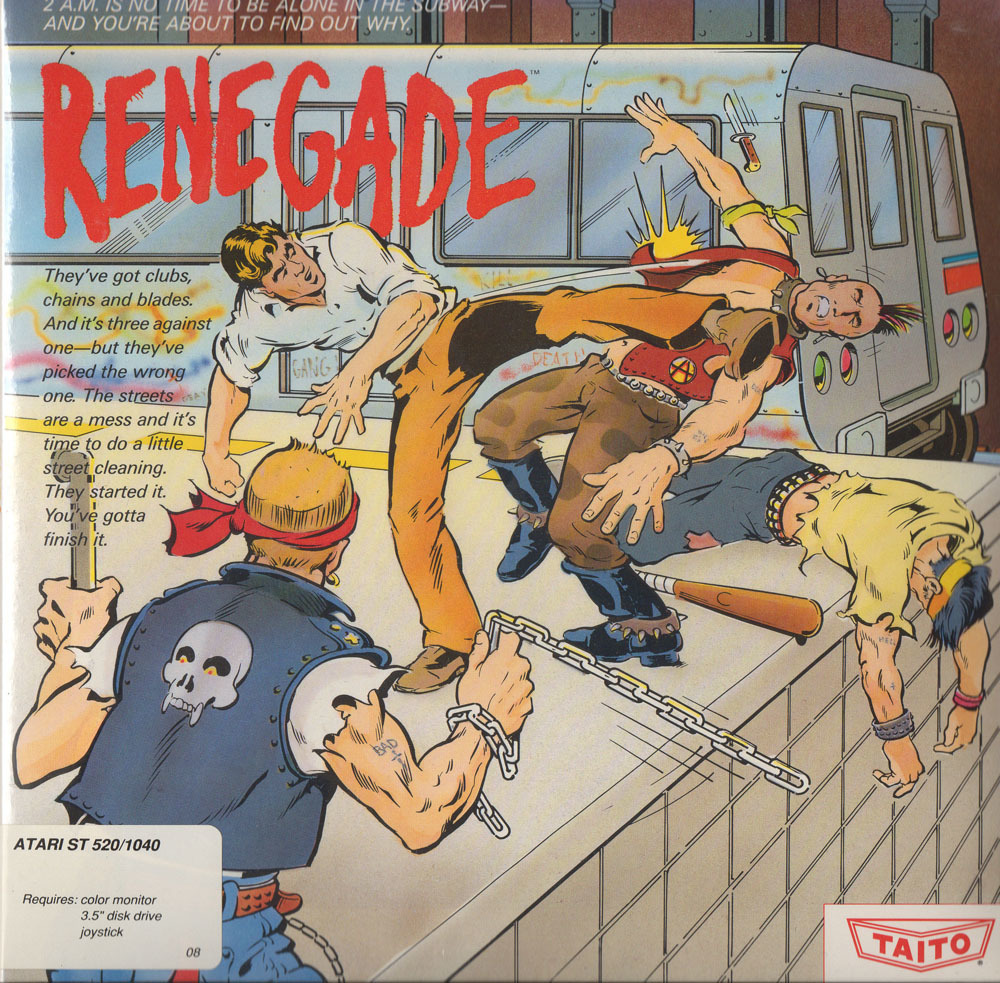
Renegade
1986 video game
The Legend of Kage
1985 video game
Super Pac-Man
1982 video game

TwinBee
is a 1985 vertically scrolling shooter video game developed and published by Konami for arcades. Along with Sega's Fantasy Zone (1986), it is credited as an early archetype of the "cute 'em up" subgenre. It was the first game to run on Konami's Bubble System hardware. TwinBee was ported to the Family Computer and MSX in 1986, and has been included in numerous compilations released in later years. The original arcade game was released outside Japan for the first time as part of the Nintendo DS compilation Konami Classics Series: Arcade Hits. A mobile phone version with edited graphics was relea
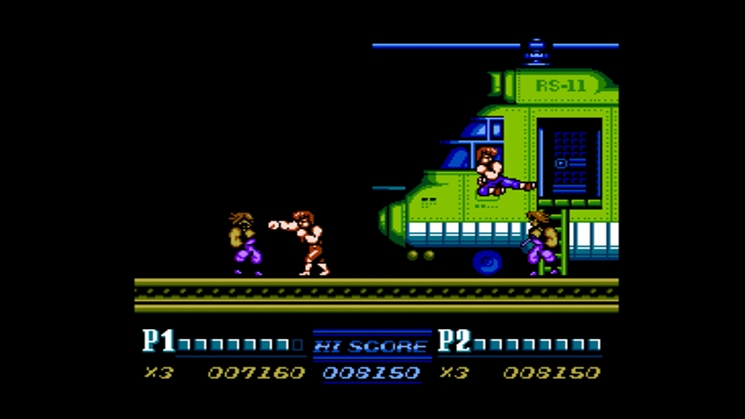
Double Dragon II: The Revenge
1988 arcade game
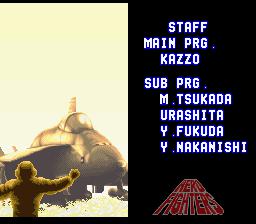
Aero Fighters
1993 video game
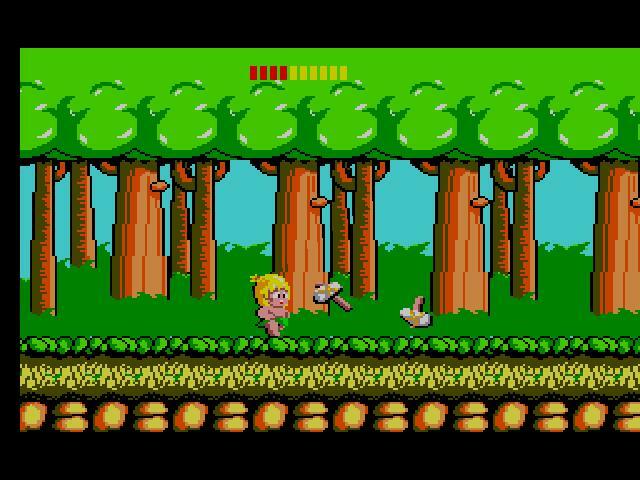
Wonder Boy
1986 video game