Category
page 1Architecture in India
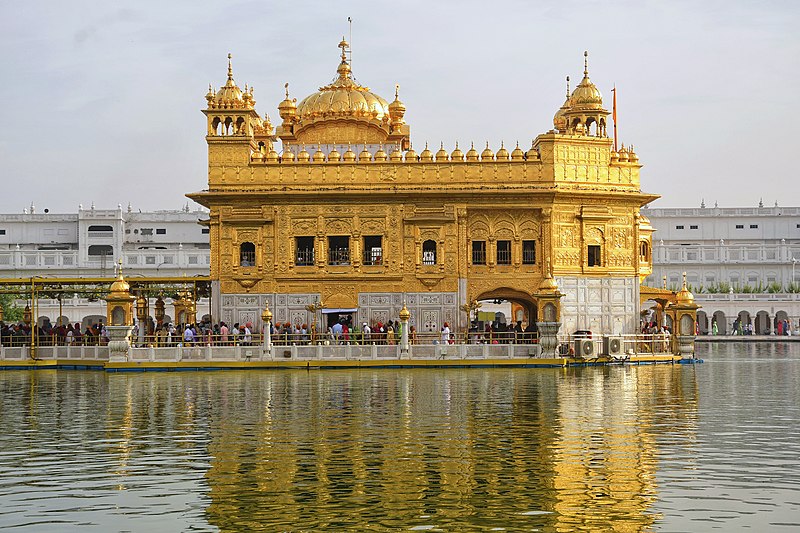
Harmandir Sahib
Sikh religious site in Amritsar, Punjab, India
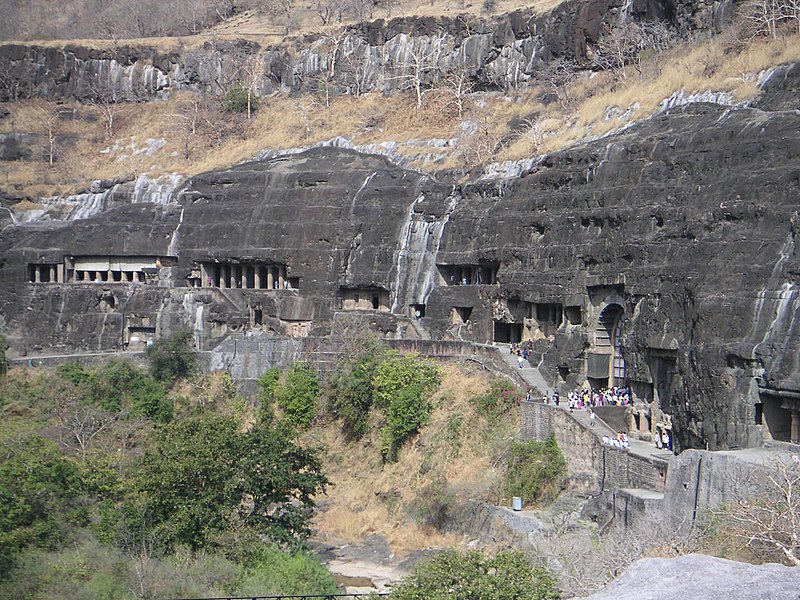
Ajanta Caves
2nd century BCE to 1st century CE Buddhist cave monuments located in Maharashtra, India
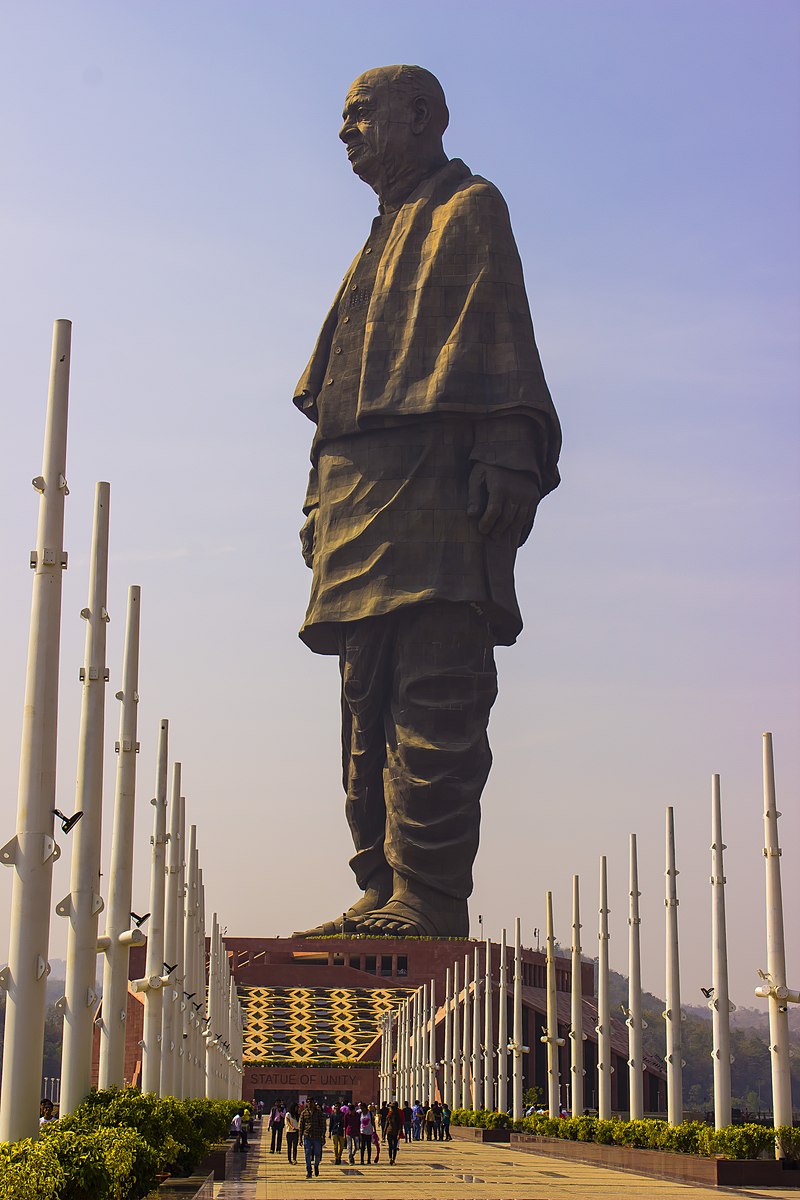
Statue of Unity
statue of Vallabhbhai Patel at the bank of Narmada river, Gujarat, India

Hampi
Hampi or Hampe (), also referred to as the Group of Monuments at Hampi, is a UNESCO World Heritage Site located in the town of Hampi in Vijayanagara district, east-central Karnataka, India. Hampi predates the Vijayanagara Empire; it is mentioned in the Ramayana and the Puranas of Hinduism as Pampa Devi Tirtha Kshetra. Hampi continues as a religious centre, with the Virupaksha Temple, an active Adi Shankara-linked monastery and various monuments belonging to the old city.
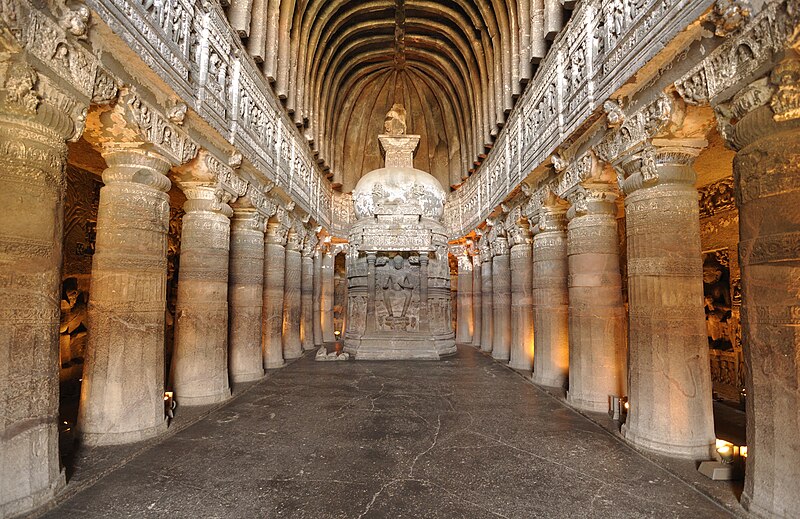
list of World Heritage Sites in India
Wikimedia list article
architecture of India
architectural style of a major geographical region
dzong
kind of fortress
.jpg)
stepwell
thumb|Chand Baori, in the village of [[Abhaneri near Bandikui, Rajasthan is one of the deepest and largest stepwells in India]]
thumb|right|The Rani ki Vav, Patan, Gujarat
thumb|upright|A multi-storey stepwell in Mahimapur Village, Amravati District, Maharashtra
Stepwells (also known as vav or baori) are wells, cisterns or ponds with a long corridor of steps that descend to the water level. Stepwells played a significant role in defining subterranean architecture in western India from the 7th to the 19th century. Some stepwells are multi-storeyed and can be accessed by a Persian wheel which is

chhatri
thumb|270px|Chhatris up close at Bada Bagh, [[Rajasthan]]

torana
A torana (tawr-uh-nuh) is a free-standing ornamental or arched gateway for ceremonial purposes in Hindu, Buddhist and Jain architecture of the Indian subcontinent. Toranas can also be widely seen in East Asia and parts of Southeast Asia. Chinese Shanmen gateways, Japanese torii gateways, Korean Iljumun and Hongsalmun gateways, Vietnamese Tam quan gateways, and Thai Sao Ching Cha may have derived from the Indian torana. They are also referred to as vandanamalikas.
Badami cave temples
6th-8th century Hindu and Jain cave temples in Karnataka, India

Garbhagriha
thumb|right|Devotees offering prayers at the garbhagriha in Chennakeshava Temple, Belur, which houses the icon of the god [[Vishnu.]]
Lodi Gardens
city park in India
Nasik Caves
ancient Buddhist cave complex in Nashik, India
Bedse Caves
cave in India

Lenyadri
Lenyadri, sometimes called Ganesa Lena, Ganesh Pahar Caves, are a series of about 30 rock-cut Buddhist "caves", located about north of Junnar in Pune district in the Indian state of Maharashtra. They are cut into a natural cliff or steep slope. Other caves surrounding the city of Junnar are: Manmodi Caves, Shivneri Caves and Tulja Caves. The Lenyadri caves date between the 1st and 3rd century AD. Some have later been adapted to Hindu use.
Raza Library
a repository of Indo-Islamic cultural heritage and a treasure-house of knowledge

Jharokha
thumb|Jharokha balcony in Jodhpur (Mehrangarh) Jharokha
thumb|upright|A jharokha in Maheshwar Fort, Madhya Pradesh
Jatayu Nature Park
park in Kerala, India
Tomb of Sikandar Lodi
Tomb

Pandal
A pandal is a fabricated structure, either temporary or permanent, that is used at many places such as either outside a building or in an open area such as along a public road or in front of a house in India and other neighbouring countries. This canopy or big tent is often used in a religious or other events that gathers people together, such as a wedding, fair, exhibition or festival.
thumb|250px
Shivneri Caves
caves in Maharashtra, India
Baradari
type of building
Yadavindra Gardens
Garden in Pinjore, Haryana, India
Junagadh Buddhist Cave Groups
cave in India
Saru Maru caves and stupas
Buddhist archaeological site in India
Dhamnar Caves
cave in India
Chhajja
thumb|The tomb of Salim Chishti in [[Fatehpur Sikri (India) exhibiting a deep chhajja following the perimeter of the building supported with elaborate brackets]]
A chhajja is an overhanging eave or roof covering found in Indian architecture. It is characterised with large support brackets with different artistic designs. Variation is also seen in its size depending on the importance of the building on which it features or the choice of the designer.
Bava Pyara caves
Caves in Gujarat, India
Khambhalida Caves
cave in India
Binnayaga caves
Buddhist cave in Rajasthan, India
Tulja Caves
cave in India (Maharashtra)
Thanale Caves
buddhist cave in India(Maharshtra)
Bojjannakonda
thumb|View of the site
thumb|260px|Bojjannakonda is one of the Holy relic sites of Andhra Pradesh
Bojjannakonda and Lingalakonda are two rock-cut caves of Buddhist origin on adjacent hillocks situated near the village of Sankaram, Anakapalle of ancient Kalinga in the Indian state of Andhra Pradesh. The sites are believed to have been established between the 4th and 9th centuries AD, when Buddhism was the majority religion of Sankaram (Sangharam). The original name of Bojjannakonda is Buddina Konda.
Ghatotkacha Cave
ancient Buddhist cave in Maharshtra, India
Council of Architecture
Professional regulatory body for architects in India
Mehmaan khana
literally "guest area" where guests are entertained
Lotus Mahal Pavilion
important secular structure in Hampi, India
Byamokesvara Temple
Hindu Shiva temple in Bhubaneswar
Kadia Dungar caves
cave in India
Bengal roofs
roof form
Hathiagor Buddhist Caves
cave in India
Chabutro
thumb|A breeding chabutro at Sinugra, in the style typical for [[Kutch. It is more than 100 years old and is a relatively large example built by Seth Khora Ramji built in 1910.]]
Deep Jyoti Stambh
architectural structure, usually found in Hindu temples, in the form of a column
Khapra Kodiya Caves
Part of the Junagadh Buddhist Cave Group
Manmodi caves
caves in Maharashtra, India
architecture of Gujarat
Guru Ram Rai Darbar Sahib
sikh place of worship in Dehradun, India
Ambivali Caves
archaeological site in Raigarh district, India
Jaga mohan
thumb|The jagamohana in front of the shikhara, Mukteshvara Temple, [[Bhuvaneswar|260x260px]]
thumb|The jagamohana of the Konarka Sun Temple
Anthapura
The antahpura (), also rendered anthapura, was the women's quarters or the royal harem of an Indian palace. It was the suite of apartments that were generally situated in a secluded portion of the palace, reserved for the women of the royal household. It consisted of the king's queens and concubines and was headed by his first queen, who was accorded the highest status.
choultry
thumb|A 1792 painting of a Hindu temple and choultry (a travelers' rest house)
Choultry is a resting place, an inn or caravansary for travelers, pilgrims or visitors to a site, typically linked to Buddhist, Jain and Hindu temples. They are also referred to as .