Category
page 1Armadillos

nine-banded armadillo
species of mammal

Giant armadillo
species of mammal

Chlamyphorus truncatus
species of mammal

six-banded armadillo
species of mammal

pichi
The pichi (Zaedyus pichiy), dwarf armadillo or pygmy armadillo is an armadillo native to Argentina and Chile. It is the only living member of the genus Zaedyus, and the only armadillo to hibernate. Fossil remains from the Cerro Azul Formation indicate this species had already evolved during the late Miocene epoch.

Brazilian three-banded armadillo
species of mammal

Glyptodon
Glyptodon (; ) is a genus of glyptodont, an extinct group of large, herbivorous armadillos that lived from the Pliocene, around 3.2 million years ago, to the early Holocene, around 11,000 years ago, in South America. It is one of, if not the, best-known genera of glyptodont. Glyptodon has a long and storied past, being the first named extinct cingulate and the type genus of the subfamily Glyptodontinae. Fossils of Glyptodon have been recorded as early as 1814 from Pleistocene aged deposits from Uruguay, though many were incorrectly referred to the ground sloth Megatherium by early paleontologi

Big hairy armadillo
species of mammal

southern three-banded armadillo
species of mammal

screaming hairy armadillo
Species of armadillo

Chaetophractus
Chaetophractus is a small genus of armadillos in the family Chlamyphoridae. It contains the following three species:
{| class="wikitable"
|-
! Image !! Scientific name !! Common name !! Distribution
|-
|120px || Chaetophractus vellerosus || Screaming hairy armadillo|| Central and southern parts of South America
|-
|120px || Chaetophractus villosus || Big hairy armadillo || The Pampas and Patagonia as far south as Santa Cruz, Argentina and Magallanes, Chile
|-
|120px || Chaetophractus nationi || Andean hairy armadillo || Bolivia, in the region of the Puna; the departments of Oruro, La Paz, and

Chacoan naked-tailed armadillo
species of mammal

Northern naked-tailed armadillo
species of mammal

greater fairy armadillo
species of mammal

Cabassous
Cabassous is a genus of South and Central American armadillos. The name is the Latinised form of the Kalini word for "armadillo".
.jpg)
Dasypus
Dasypus is the only extant genus in the family Dasypodidae. Its species are known as long-nosed or naked-tailed armadillos. They are found in South, Central, and North America, as well as on the Caribbean islands of Grenada, Trinidad and Tobago. Members of Dasypus are solitary and primarily nocturnal to avoid temperature extremes and predation. They exist in numerous habitats ranging from brush to grassland areas and are mainly insectivorous. The name is derived from the Ancient Greek words (), meaning "hair", and (''''), meaning "foot".

Andean hairy armadillo
species of mammal

southern naked-tailed armadillo
species of mammal

seven-banded armadillo
species of armadillo found in Paraguay, Argentina, Bolivia, Brazil and Uruguay.

greater long-nosed armadillo
species of mammal
southern long-nosed armadillo
species of mammal

hairy long-nosed armadillo
species of mammal

Tolypeutes
The genus Tolypeutes contains the two species of three-banded armadillos. They are restricted to open and semi-open habitats in South America.

Greater naked-tailed armadillo
species of mammal

Llanos long-nosed armadillo
species of mammal

Yepes's mulita
species of mammal

armadillo
thumb|Armadillo
thumb|Nine-banded armadillo skeleton
thumb|Tolypeutes|Three-banded armadillo skeleton on display at the [[Museum of Osteology]]
Tolypeutinae
Tolypeutinae is a subfamily of armadillos in the family Chlamyphoridae, consisting of the giant, three-banded and naked-tailed armadillos.
Euphractinae
Euphractinae is an armadillo subfamily in the family Chlamyphoridae.
Chlamyphorinae
Chlamyphorinae is a subfamily of South American armadillos in the family Chlamyphoridae. Members of this subfamily, the fairy armadillos, are largely fossorial and have reduced eyes and robust forearms with large claws for digging.
Dasypus bellus
species of mammal (fossil)
Kuntinaru
Kuntinaru is an extinct genus of tolypeutine chlamyphorid armadillo which existed in Bolivia, during the Late Oligocene (Deseadan age). It is known from the holotype MNHN-SAL 1024, skull missing the apex of the rostrum and the paratype MNHN-SAL 3, second skull missing the apex of the rostrum, recovered from the Salla Formation, Salla, Department of La Paz, Bolivia. It was first named by Guillaume Billet, Lionel Hautier, Christian de Muizon and Xavier Valentin in 2011 and the type species is Kuntinaru boliviensis.
Eutatus
Eutatus is an extinct genus of large armadillos of the family Chlamyphoridae. It was endemic to South America from the Early Miocene to Late Pleistocene, living from 17.5 Ma-11,000 years ago, with possible survival into the early Holocene (~ 7,500 BP) and existing for approximately .
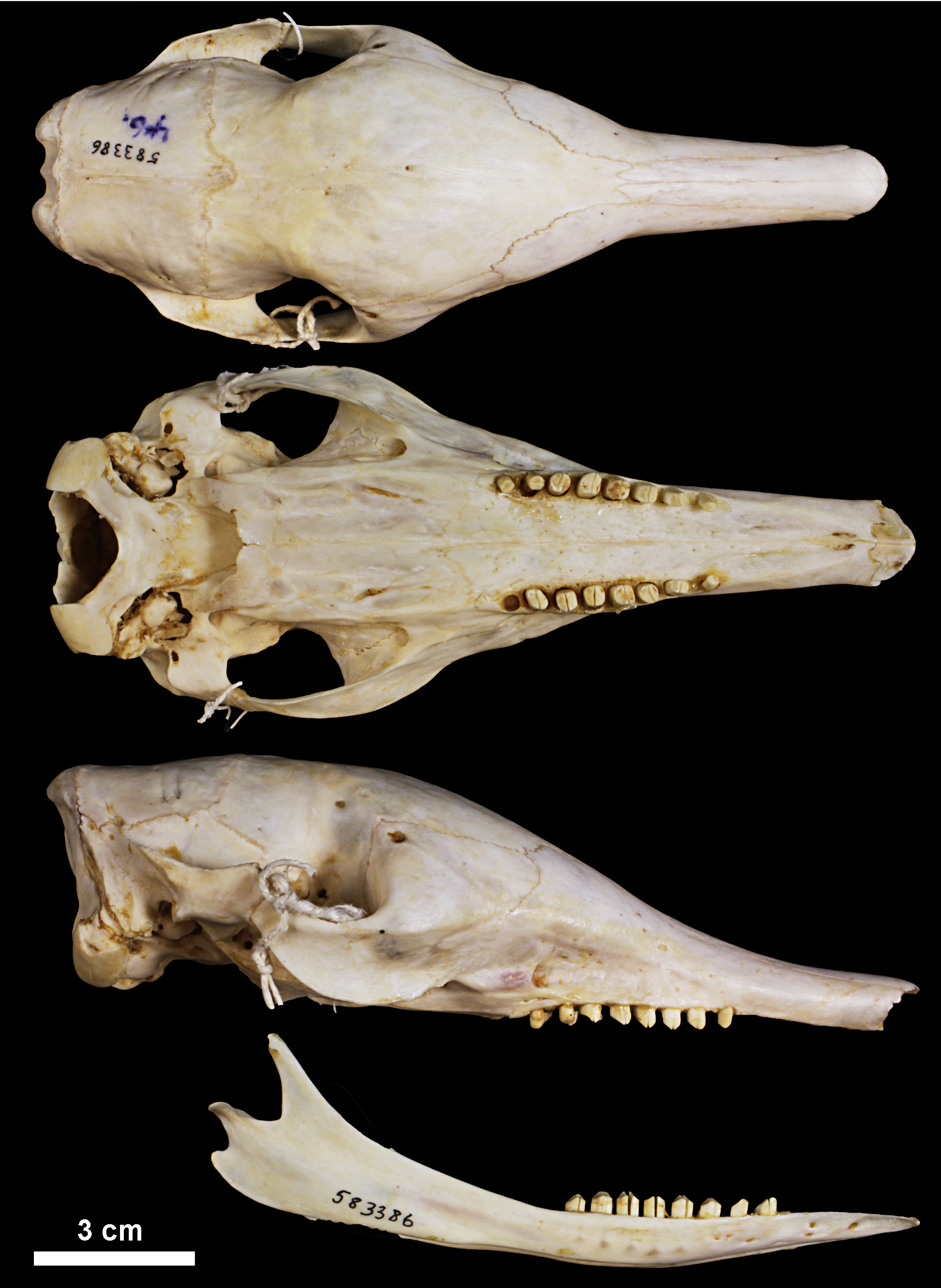
Dasypus beniensis
species of mammal of the family Dasypodidae
Stegotherium
Stegotherium is an extinct genus of long-nosed armadillo, belonging to the Dasypodidae family alongside the nine-banded armadillo. It is currently the only genus recognized as a member of the tribe Stegotheriini. It lived during the Early Miocene of Patagonia and was found in Colhuehuapian rocks from the Sarmiento Formation, Santacrucian rocks from the Santa Cruz Formation, and potentially also in Colloncuran rocks from the Middle Miocene Collón Curá Formation. Its strange, almost toothless and elongated skull indicates a specialization for myrmecophagy, the eating of ants, unique among the or
Palaehoplophorus
Palaehoplophorus (also spelled, historically, Palaeohoplophorus) is an extinct genus of glyptodont. It lived from the Middle to the Late Miocene, and its fossilized remains were discovered in South America.