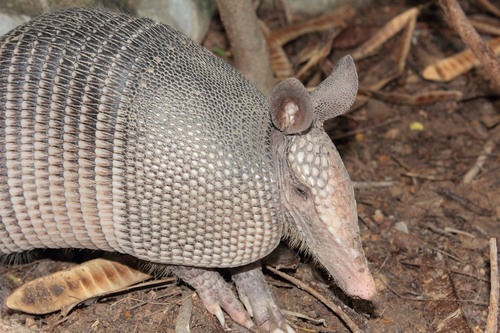
(c) Juan Cruzado Cortés, some rights reserved (CC BY-SA), uploaded by Juan Cruzado Cortés · cc-by-sa
Dasypus
Sign in to saveAlso known as long-nosed armadillo, naked-tailed armadillo
Dasypus is the only extant genus in the family Dasypodidae. Its species are known as long-nosed or naked-tailed armadillos. They are found in South, Central, and North America, as well as on the Caribbean islands of Grenada, Trinidad and Tobago. Members of Dasypus are solitary and primarily nocturnal to avoid temperature extremes and predation. They exist in numerous habitats ranging from brush to grassland areas and are mainly insectivorous. The name is derived from the Ancient Greek words (), meaning "hair", and (''''), meaning "foot".
Species
Mexican Long-nosed Armadillo
GENUS
- KingdomAnimalia
- PhylumChordata
- ClassMammalia
- OrderCingulata
- FamilyDasypodidae
犰狳屬(學名:Dasypus)是犰狳科的一屬,包括以下幾種: 九帶犰狳 Dasypus novemcinctus 七帶犰狳 Dasypus septemcinctus 騾耳犰狳 Dasypus hybridus 沼澤犰狳 Dasypus sabanicola 凱氏犰狳 Dasypus kappleri 多毛犰狳 Dasypus pilosus 外部連結 维基共享资源中相关的多媒体资源:犰狳属 查 论 编 按亞科分類的有甲目犰狳科現存物種 界 = 動物界 門 = 脊索動物門 綱 = 哺乳纲 下綱 = 真獸下綱 總目 = 異關節總目 倭犰狳亞科 Chlamyphorinae圓頭倭犰狳屬 Calyptophractus 圓頭倭犰狳 (C. retusus) 倭犰狳屬 Chlamyphorus 倭犰狳 (C. truncatus) 犰狳亞科 Dasypodinae犰狳属 Dasypus 騾耳犰狳 (D. hybridus) 凱氏犰狳 (D. kappleri) 九帶犰狳 (D. novemcinctus) 多毛犰狳 (D. pilosus) 沼澤犰狳 (D. sabanicola) 七帶犰狳 (D. septemcinctus) 耶佩斯犰狳 (Dasypus yepesi) 六帶犰狳亞科 Euphractinae披毛犰狳屬 Chaetophractus 密毛犰狳 (C. nationi) 長毛犰狳 (C. vellerosus) 披毛犰狳 (C. villosus) 六帶犰狳屬 Euphractus 六帶犰狳 (E. sexcinctus) 小犰狳屬 Zaedyus 小犰狳 (Z. pichiy) 三帶犰狳亞科 Tolypeutinae裸尾犰狳属 Cabassous 北方裸尾犰狳 (C. centralis) 查科裸尾犰狳 (C. chacoensis) 大裸尾犰狳 (C. tatouay) 南方裸尾犰狳 (C. unicinctus) 大犰狳屬 Priodontes 巨犰狳 (P. maximus) 三帶犰狳屬 Tolypeutes 拉河三帶犰狳 (T. matacus) 巴西三帶犰狳 (T. tricinctus) 分類 物種識別信息 維基數據: Q902499 維基物種: Dasypus ADW: Dasypus EoL: 18664 EPPO: 1DSPSG Fossilworks: 43535 GBIF: 2440775 iNaturalist: 47070 IRMNG: 1356569 ITIS: 180102 MSW: 11700004 NCBI: 9360 这是一篇與哺乳动物相關的小作品。你可以通过编辑或修订扩充其内容。 查 论 编 取自“https://zh.wikipedia.org/w/index.php?title=犰狳属&oldid
via GBIF
Museum specimens
- Specimen records
- 253
- With media
- 7
- Family
- Dasypodidae
- Collections
- SEMAHN, MZFC-FC-UNAM, FB-UMSNH
- Recorded in
- Mexico
Wikidata facts
- Instance of
- taxon
- Parent taxon
- Dasypodinae
- Image
- Armadillo at Kennedy Space Center (KSC-07PD-2276).jpg
Show 7 more facts
- taxon name
- Dasypus
- Commons category
- Dasypus
- taxon rank
- genus
- topic's main category
- Category:Dasypus
- Commons gallery
- Dasypus
- described by source
- Brockhaus and Efron Encyclopedic Dictionary
- temporal range start
- Pliocene
Sources (1)
via Wikidata · CC0
~18 min read
Encyclopedic overview
9 sectionsContents
- Description
- Taxonomy and distribution
- Fossils
- Habitat
- Ecology and behavior
- Feeding
- Reproduction
- Leprosy
- References
Dasypus is the only extant genus in the family Dasypodidae. Its species are known as long-nosed or naked-tailed armadillos. They are found in South, Central, and North America, as well as on the Caribbean islands of Grenada, Trinidad and Tobago. Members of Dasypus are solitary and primarily nocturnal to avoid temperature extremes and predation. They exist in numerous habitats ranging from brush to grassland areas and are mainly insectivorous. The name is derived from the Ancient Greek words (), meaning "hair", and (''), meaning "foot".
The most common and widespread of the Dasypus species is the nine-banded armadillo (Dasypus novemcintus), which is commonly used in the study of leprosy due to its unique ability to contract the disease.
Excerpted from Wikipedia’s “Dasypus” article, available under the CC BY-SA 4.0 licence.