Category
page 1Ascomycota

Ascomycota
The Ascomycota are a phylum in the kingdom Fungi that, together with the Basidiomycota, form the subkingdom Dikarya. Members of Ascomycota are commonly known as the sac fungi or ascomycetes. It is the largest phylum of Fungi, with over 64,000 species. The defining feature of this fungal group is the ascus (), a microscopic sexual structure in which nonmotile spores, called ascospores, are formed. However, some species of Ascomycota are asexual and thus do not form asci or ascospores. Familiar examples of sac fungi include morels, truffles, brewers' and bakers' yeast, dead man's fingers, and cu

Schizosaccharomyces pombe
Species of yeast
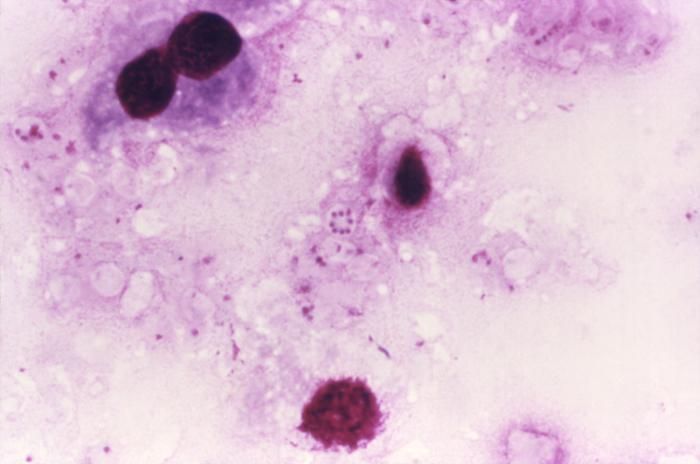
Pneumocystis jirovecii
species of fungus
Taphrinomycotina
The Taphrinomycotina are one of three subdivisions constituting the Ascomycota (fungi that form their spores in a sac-like ascus) and is more or less synonymous with the slightly older invalid name Archiascomycetes (sometimes spelled Archaeascomycetes; archea = ancient). Recent molecular studies suggest that the group is monophyletic and basal to the rest of the Ascomycota.
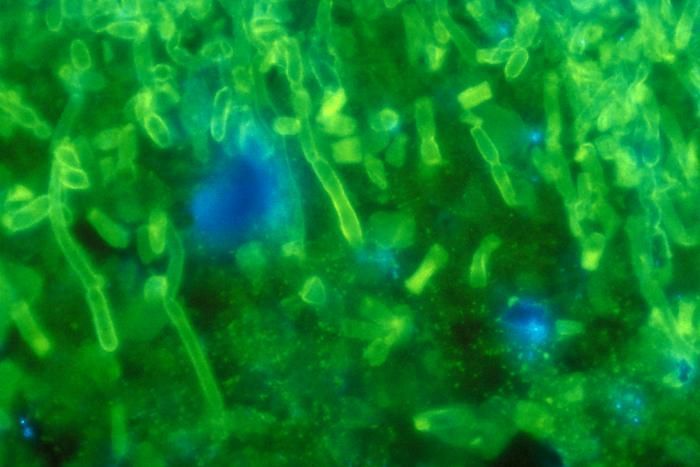
Saccharomycotina
Saccharomycotina is a subdivision (subphylum) of the division (phylum) Ascomycota in the kingdom Fungi. It comprises most of the ascomycete yeasts. The members of Saccharomycotina reproduce by budding and they do not produce ascocarps (fruiting bodies).

ascospore
thumb|right|upright=1.2|alt=Microscope view of a transparent sac (ascus) holding four oval, golden-brown spores. The spores are covered with a raised, net-like pattern that looks like a mosaic of tiny scales.|Four ornamented ascospores of the Oregon white truffle (Tuber oregonense) inside a single ascus. Each [[ellipsoid spore shows the typical honey-gold colour and ornamentation of polygonal pits bordered by low ridges.]]
In fungi, an ascospore is the sexual spore formed inside an ascus, a sac-like cell. Asci define the division Ascomycota, the largest and most diverse division of fungi. Afte
Schizosaccharomyces
Schizosaccharomyces is a genus of fission yeasts. The most well-studied species is S. pombe. At present five Schizosaccharomyces species have been described (S. pombe, S. japonicus, S. octosporus, S. cryophilus and S. osmophilus). Like the distantly related Saccharomyces cerevisiae, S. pombe is a significant model organism in the study of eukaryotic cell biology. It is particularly useful in evolutionary studies because it is thought to have diverged from the Saccharomyces cerevisiae lineage between 300 million and 1 billion years ago, and thus provides an evolutionarily distant comparison.
sooty mold
descriptive term for a variety of fungi

Neolecta
Neolecta is a genus of ascomycetous fungi. The species share the English designation "Earth tongues" along with some better-known fungi (e.g. Geoglossum, Microglossum) with a similar general form, but in fact they are only distantly related.

Archaeorhizomycetes
thumb | right | alt=Black and white scan of fungi with small pea-like nodules and stringy material | Archaeorhizomycetes under electron microscope
Archaeorhizomycetes is a class of fungi in the subdivision Taphrinomycotina of the Ascomycota. So far, the class has only one described order, Archaeorhizomycetales, family, Archaeorhizomycetaceae, and genus, Archaeorhizomyces. The class was first described by a team led by Anna Rosling in 2011. Species in the class are globally distributed, and grow in soil and around roots. Specific known host trees of various Archaeorhizomyces species include he
Pneumocystidomycetes
The Pneumocystidomycetes are a class of ascomycete fungi. It includes the single order Pneumocystidales, which contains the single monotypic family Pneumocystidaceae, which in turn contains the genus Pneumocystis, causative agent of Pneumocystis pneumonia.
Xylonomycetes
The Xylonomycetes are a class of fungi, which holds 2 orders of Symbiotaphrinales , and Xylonales .
Neolectomycetes
REDIRECT Neolecta
Discomycetes
thumb|Photograph of a discomycetes.
Discomycetes is a former taxonomic class of Ascomycete fungi which contains all of the cup, sponge and brain fungi, and some club-like fungi. It includes typical cup fungi like the scarlet elf cup and the orange peel fungus, and fungi with fruiting bodies of more unusual shape, such as morels, truffles and the swamp beacon. New taxonomic and molecular data fail to support the monophyly of the Discomycetes.
Schizosaccharomycetaceae
The Schizosaccharomycetaceae are a family of yeasts in the order Schizosaccharomycetales.

Thelocarpon
Thelocarpon is a genus of lichen-forming fungi in the family Thelocarpaceae. The genus was established in 1853 by the Finnish lichenologist William Nylander, who distinguished it from related genera by its warted thallus structure, many-spored asci, and the distinctive violet-blue staining reaction of its fruiting body gel when treated with iodine. These tiny lichens form small, wart-like bumps on soil, wood, and plant debris, often covered with a distinctive bright yellow powdery coating. The genus includes about 30 species found worldwide, many of which produce unusually large numbers of asc
Lipomyces
Lipomyces is a genus of oleaginous yeast in the family Lipomycetaceae.
Lipomycetaceae
The Lipomycetaceae are a family of yeasts in the order Lipomycetales. According to the 2007 Outline of Ascomycota, the family contains five genera; the placement of the genus Kawasakia is uncertain. Species in the family have a widespread distribution, and grow in the soil or in association with insects.
Ericoid mycorrhiza
species of fungus
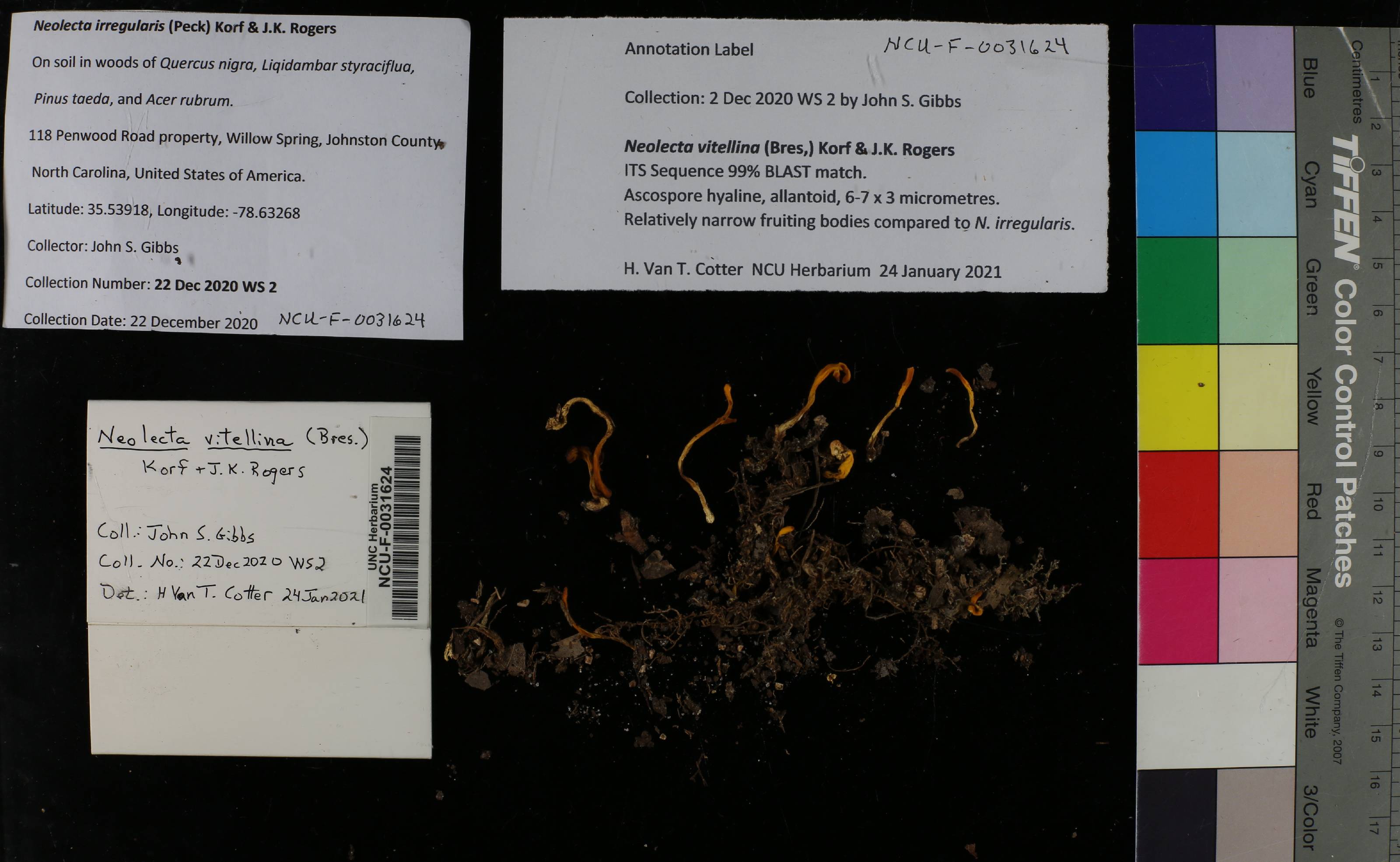
Neolecta vitellina
species of fungus
Thelocarpaceae
Thelocarpaceae is the sole family of lichen-forming fungi in the order Thelocarpales. The family contains two genera, Sarcosagium and Thelocarpon. The family was circumscribed by lichenologist Hugo Zukal in 1893, while the order was proposed by Robert Lücking and H. Thorsten Lumbsch in 2016.
Sporopachydermia
Sporopachydermia is a genus of fungi in the family Sporopachydermiaceae.

Sarea
Sarea is a genus of small, non-lichenized, inoperculate, discomycete fungi in the family Zythiaceae. Sarea species are found growing on the resin of conifers in the Cupressaceae and Pinaceae in the Northern Hemisphere. Two species in the genus are readily distinguishable from each other: apothecia of Sarea difformis are black, while those of Sarea resinae are orange in color.

Strangospora
Strangospora is a genus of lichen-forming fungi. It is the only genus in the family Strangosporaceae, which itself is of uncertain taxonomic placement in the Ascomycota. It contains 10 species.
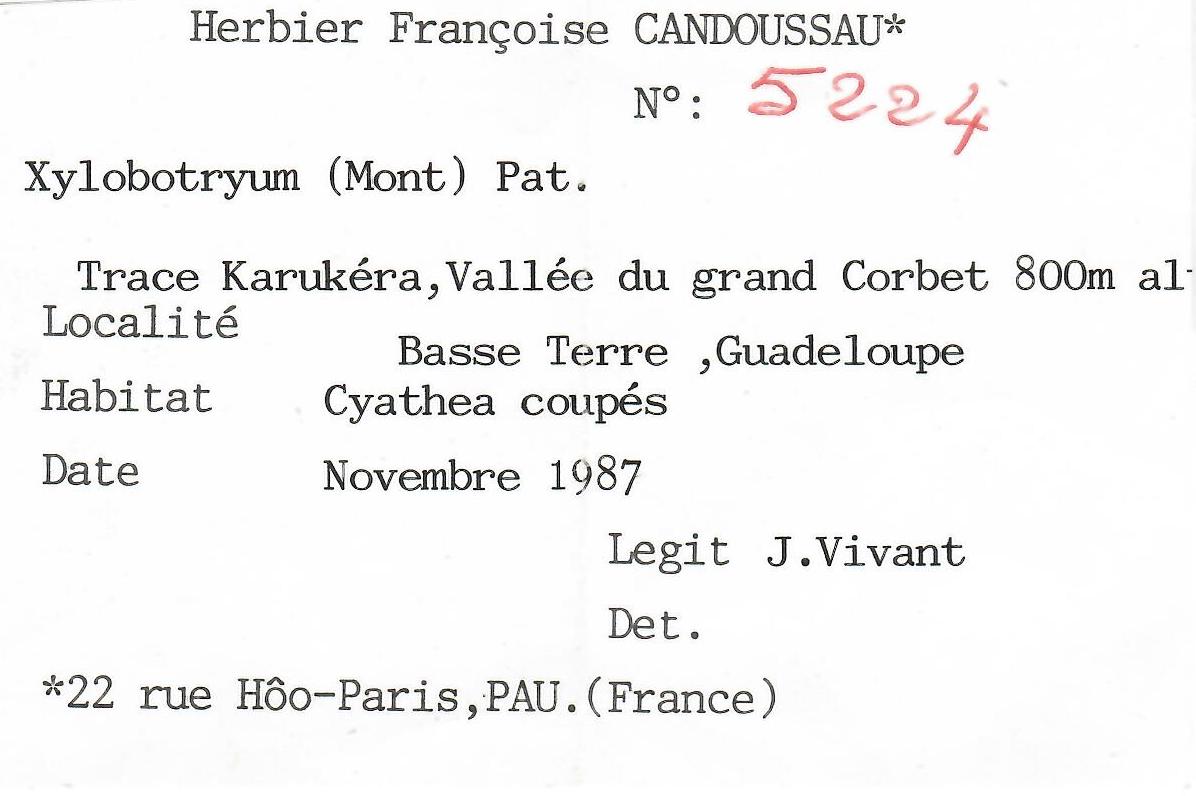
Xylobotryum
Xylobotryum is a genus of fungi in the Ascomycota phylum and in the order of Xylobotryales.
Roesleria subterranea
species of fungus
Schizosaccharomycetales
Schizosaccharomycetales is an order in the kingdom of fungi that contains the family Schizosaccharomycetaceae.
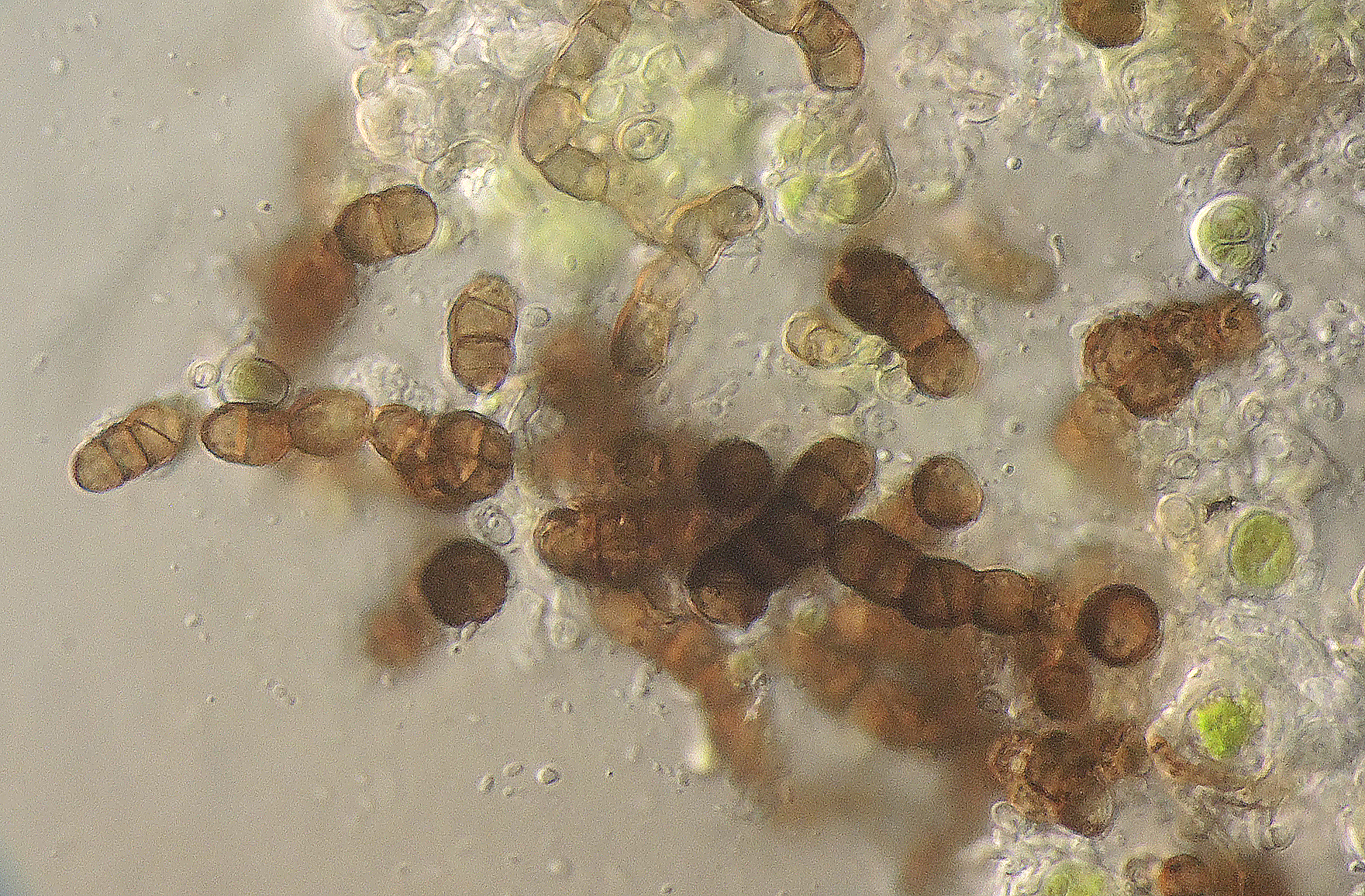
Monodictys castaneae
species of fungus
blue stain fungi
fungi causing blue stain
Intralichen
Intralichen is a genus of lichenicolous fungi of uncertain classification in the class Ascomycota. It has four species. The genus was circumscribed by David Leslie Hawksworth and Mariette S. Cole in 2002, with Intralichen christiansenii as the type species.
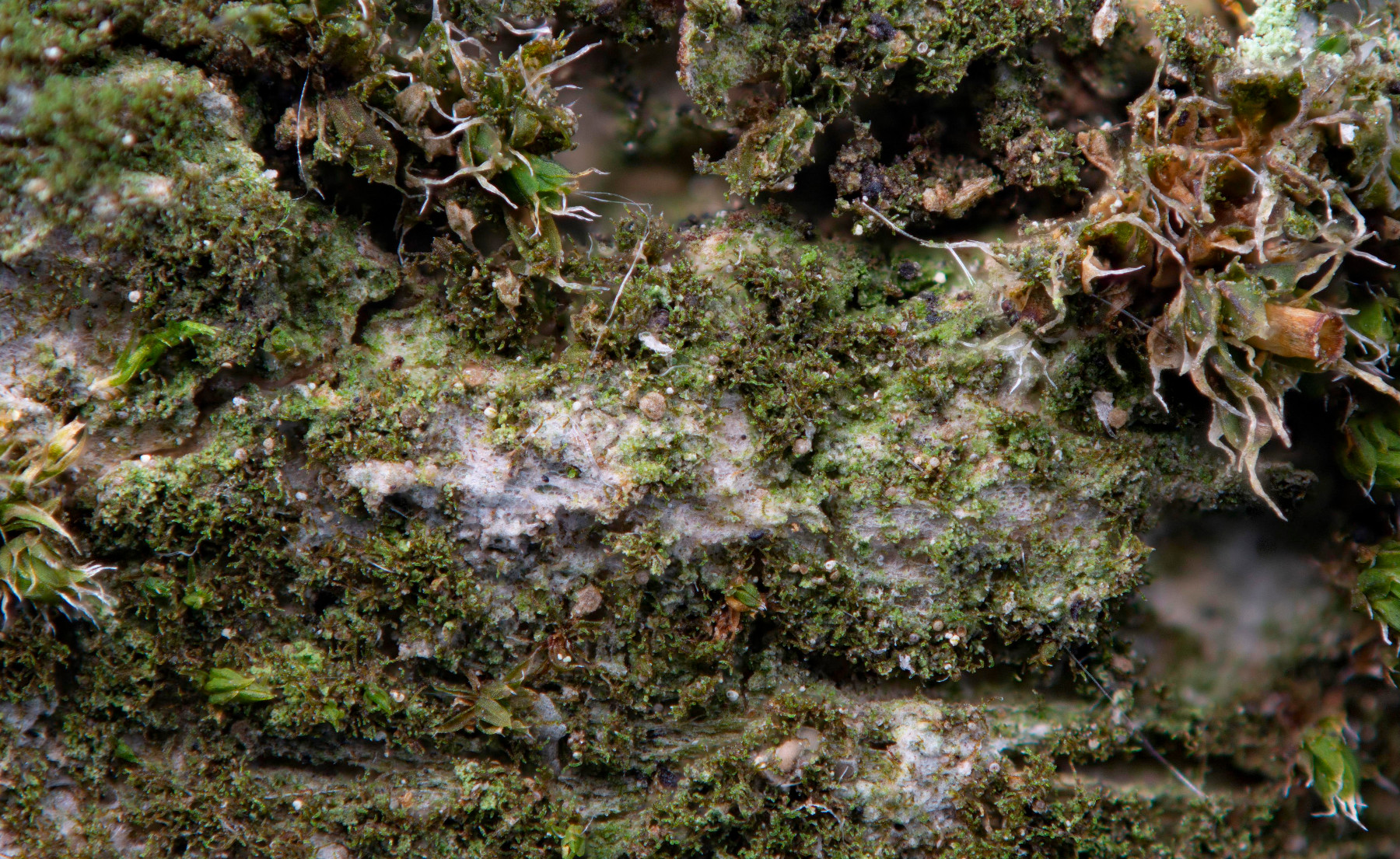
Biatoridium monasteriense
species of fungus

Wadeana
Wadeana is a small genus of lichen-forming fungi in the division Ascomycota. Its to other taxa within the division is unknown (incertae sedis), and it has not yet been placed with certainty into any class, order, or family. The genus was established in 1978 by the British lichenologists Brian Coppins and Peter James, who named it after the veteran naturalist Arthur Edward Wade for his decades of work studying British lichens. These bark-dwelling lichens live almost completely hidden within the outer layers of tree bark and produce distinctive crack-like fruiting bodies with bright red-brown in