Category
page 1Astrometry

astrolabe
alt=Planispheric Astrolabe made of brass, cast, with fretwork rete and surface engraving|thumb|upright=1.2|North African, planispheric astrolabe. Khalili Collections|Khalili Collection.
thumb|upright|A modern astrolabe made in 2013, in Tabriz, Iran.

parallax
thumb|upright=1.4|right|A simplified illustration of the parallax of an object against a distant background due to a perspective shift. When viewed from "Viewpoint A", the object appears to be in front of the blue square. When the viewpoint is changed to "Viewpoint B", the object appears to have moved in front of the red square.
thumb|right|This animation is an example of parallax. As the viewpoint moves side to side, the objects in the distance appear to move more slowly than the objects close to the camera. In this case, the white cube in front appears to move faster than the green cube in t

astrometry
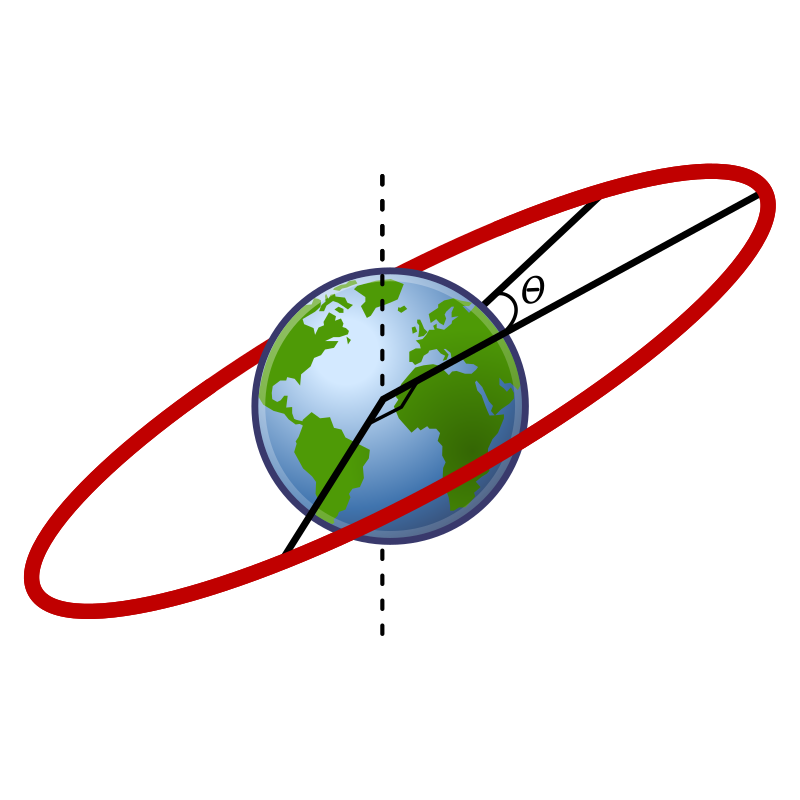
thumb|360x360px|Using optical interferometry to determine precise positions of stars. Courtesy NASA/JPL-Caltech
celestial mechanics
branch of astronomy

Henrietta Swan Leavitt
American astronomer and human calculator (1868–1921)
.png)
ephemeris
In astronomy and celestial navigation, an ephemeris (; ; , ) is a book with tables that gives the trajectory of naturally occurring astronomical objects and artificial satellites in the sky, i.e., the position (and possibly velocity) over time. Historically, positions were given as printed tables of values, given at regular intervals of date and time. The calculation of these tables was one of the first applications of mechanical computers. Modern ephemerides are often provided in electronic form. However, printed ephemerides are still produced, as they are useful when computational devices ar

Cepheid variable
type of variable star

conjunction
phenomenon when two astronomical objects or spacecraft have the same right ascension or ecliptic longitude as observed from Earth

astronomical transit
phenomenon when a celestial body passes directly between a larger body and the observer

opposition
situation where two celestial bodies are on opposite sides of the sky, viewed from a given place (usually Earth)

proper motion
astronomical measure of the observed changes in the apparent places of stars in the sky

nutation
type of motion in astronomy. A component of the rotating motion of a planet under the influence of gravitational pull by moons, other planets or the central star

radial velocity
component of the velocity in radial direction
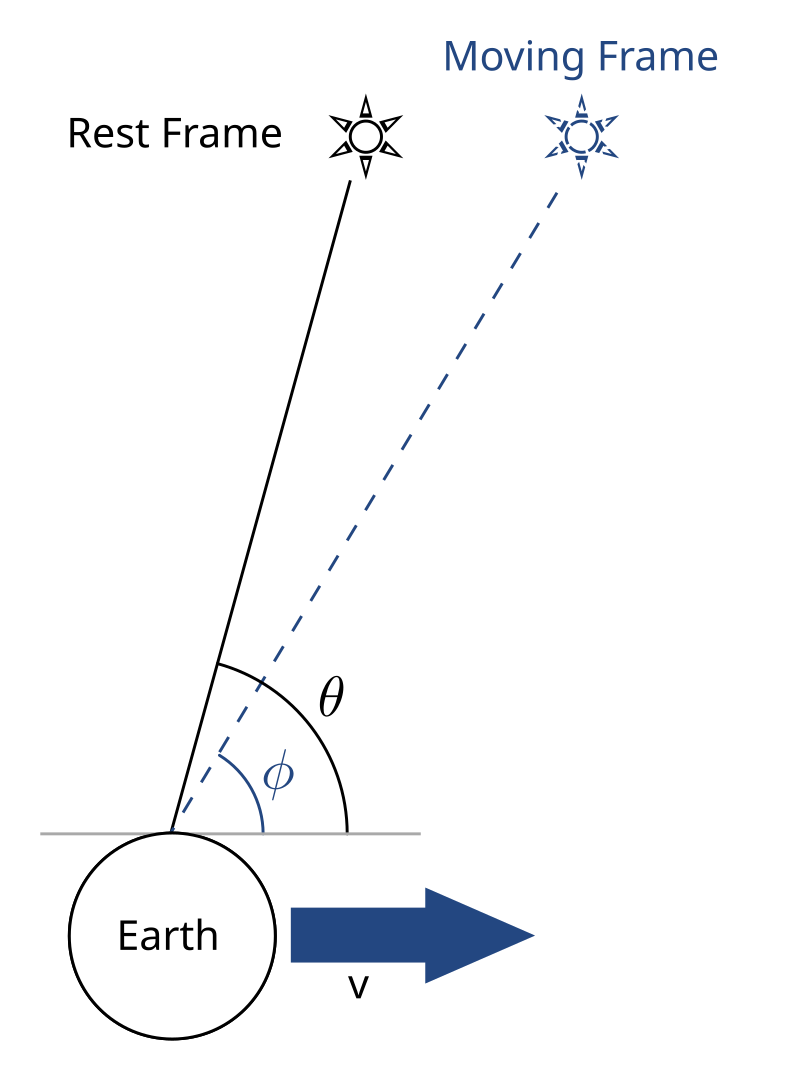
optical aberration
phenomenon in astronomy

angular diameter
angular measurement describing how large a sphere or circle appears from a given point of view

syzygy
straight-line configuration of three celestial bodies in astronomy
spherical astronomy
branch of astronomy about the celestial sphere
star catalogue
astronomical catalogue that lists stars
cosmic distance ladder
succession of methods by which astronomers determine the distances to celestial objects
fixed star
astronomical bodies that appear not to move relative to each other in the night sky
meridian circle
Astronomical instrument for timing of the passage of stars
United States Naval Observatory
scientific agency and observatory in Washington, D.C., United States
great conjunction
conjunction of planets Jupiter and Saturn
angular measure
measure for how wide an angle is
diurnal motion
the apparent motion of celestial objects around Earth due to the planet's rotation

Dioptra
thumb|Graphic reconstruction of the dioptra, by Venturi, in 1814. (An incorrect interpretation of Heron's description)
International Celestial Reference System
celestial reference system using reference celestial sources observed at radio wavelengths
HATNet Project
network of 6 small automated telescopes, aiming to find and explore extrasolar planets and variable stars, maintained by the Harvard-Smithsonian Center for Astrophysics
stellar parallax
apparent shift of position of a nearby star against the background of distant objects during Earth's orbital period
Carte du Ciel
map of the Sky
transit instrument
astronomical instrument
triquetrum
medieval name for an ancient astronomical instrument
marine sandglass
Type of hourglass used at sea
polar motion
motion of Earth's rotational axis relative to its crust
classical Cepheid variable
type of variable star

Appulse
thumb|The Moon and [[Venus in the evening sky on three consecutive days. The centre image shows an appulse between the two objects.]]
Indiana Asteroid Program
Elena Kazimirtchak-Polonskaïa
Soviet astronomer (1902-1992)
Type II Cepheid
type of variable stars
BL Herculis variable
type of variable star
apparent place
position of an object in space as seen by an observer, which may differ from actual position due to geometric and physical effects
Period-luminosity relation
distance measure in astronomy using the period of variable stars to find their absolute brightness
Shanghai Astronomical Observatory
astronomical observatory in Shanghai, China
nutation
thumb|Animation of free (or Euler) nutation of a sphere
thumb|upright=0.6| in obliquity of a planet caused by the Gravity|gravitational forces of other nearby bodies acting upon the planet
zenith camera
astronomic or geodetic instrument which is directed exactly to the zenith
dynamical parallax
iterative technique to find the properties of the stars in a binary pair
Moving cluster method
standard ruler
astronomical object of well-known physical size, used to determine distance via trigonometry
star position
the apparent angular position of any given star in the sky, which seems fixed onto an arbitrary sphere centered on Earth

JPL Horizons On-Line Ephemeris System
interactive facility that computes the position of many solar system objects

Baade-Wesselink method
technique in stellar astrophysics
transit of Venus, 1639
transit of Venus across the Sun visible from Earth in 1639
orbit determination
estimation of orbits of objects
fluctuations in the length of day
short-term changes in the length of the day
Dynamic method
Procedure to determine asteroid masses
planetary coordinate system
Celestial coordinate system
spectroscopic parallax
astronomical method for measuring the distances to stars
cosmolabe
thumb|Fully Assembled Cosmolabe by Jacques Besson, 1566
thumb|right|Cosmolabe, 16th century
thumb|Foot of a Cosmolabe by Jacques Besson, 1566
triple conjunction
astronomical event
vertical circle
optical instrument used to measure angles