Category
page 1Audiology

deafness
hearing
thumb|thumbtime=23|Video showing how sounds make their way from the source to the brain|upright=1.35
Hearing, or auditory perception, is the ability to perceive sounds through an organ, such as an ear, by detecting vibrations as periodic changes in the pressure of a surrounding medium. The academic field concerned with hearing is auditory science.
tinnitus

noise pollution
excessive, displeasing human, animal, or machine-created environmental noise

headphone
thumb|AKG (company)|AKG headphones on a stand
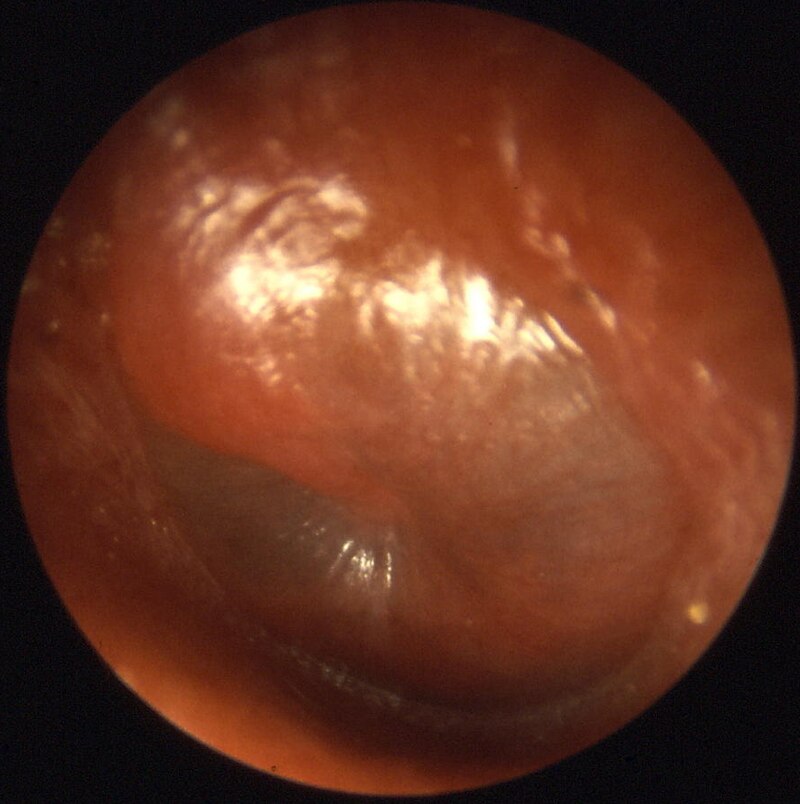
otitis media
otitis, processo that involves inflammation and accumulation of fluid of the middle ear

hearing aid
small sound amplifiers worn in the ear (ITE) to compensate for hearing loss
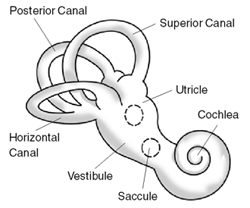
Meniere's disease
disorder of the inner ear, characterized by potentially severe and incapacitating episodes of vertigo, tinnitus, hearing loss, and a feeling of fullness in the ear
cochlea
thumb|3D model of cochlea and semicircular canals
The cochlea is the part of the inner ear involved in hearing. It is a spiral-shaped cavity in the bony labyrinth, in humans making 2.75 turns around its axis, the modiolus. A core component of the cochlea is the organ of Corti, the sensory organ of hearing, which is distributed along the partition separating the fluid chambers in the coiled tapered tube of the cochlea.

middle ear
part of the ear that lies between the eardrum and the oval window

inner ear
innermost part of the vertebrate ear

hearing loss
form of hearing disorder

cochlear implant
prosthesis used for severe and profound hearing loss
auditory system
sensory system used for hearing

audiology
alt=Image showing an audiologist testing the hearing of a patient inside a hearing booth and using an audiometer|thumb|upright=1.3|Audiological exam
organ of Corti
type of mechanoreceptor

otosclerosis
Otosclerosis is a condition of the middle and inner ear where portions of the dense enchondral layer of the bony labyrinth]] remodel into one or more lesions of irregularly-laid spongy bone. As the lesions reach the stapes the bone is resorbed, then hardened (sclerotized), which limits its movement and results in hearing loss, tinnitus, vertigo or a combination of these. The term otosclerosis is something of a misnomer: much of the clinical course is characterized by lucent rather than sclerotic bony changes, so the disease is also known as otospongiosis.
cocktail party effect
ability to pay attention to one conversation among many
Noonan syndrome
congenital, genetically widespread disease considered to be a type of dwarfism affecting boys and girls equally

hyperacusis
Hyperacusis is an increased sensitivity to sound and a low tolerance for environmental noise. Definitions of hyperacusis can vary significantly; it often revolves around damage to or dysfunction of the stapes bone, stapedius muscle or tensor tympani. It is often categorized into four subtypes: loudness, pain (also called noxacusis), annoyance, and fear. It can be a highly debilitating hearing disorder.

earplug
alt=|thumb|upright=1.35|Pre-molded earplugs (left), formable earplugs (center), and roll-down foam earplugs (right)
An earplug is a device that is inserted in the ear canal to protect the user's ears from loud noises, intrusion of water, foreign bodies, dust or excessive wind. Earplugs may be used as well to improve sleep quality or focus in noisy environments. Since they reduce the sound volume, earplugs may prevent hearing loss and tinnitus (ringing of the ears), in some cases.
external ear canal
tube running from the outer ear to the middle ear

audiometer
thumb|New age portable digital audiometer
An audiometer is a machine used for evaluating hearing acuity. They usually consist of an embedded hardware unit connected to a pair of headphones and a test subject feedback button, sometimes controlled by a standard PC. Such systems can also be used with bone vibrators to test conductive hearing mechanisms.
lip reading
technique of understanding speech when sound is not available

audiometry
Audiometry () is a branch of audiology and the science of measuring hearing acuity for variations in sound intensity and pitch and for tonal purity, involving thresholds and differing frequencies. Typically, audiometric tests determine a subject's hearing levels with the help of an audiometer, but may also measure ability to discriminate between different sound intensities, recognize pitch, or distinguish speech from background noise. Acoustic reflex and otoacoustic emissions may also be measured. Results of audiometric tests are used to diagnose hearing loss or diseases of the ear, and often

cholesteatoma
Cholesteatoma is a destructive and expanding growth consisting of keratinizing squamous epithelium in the middle ear and/or mastoid process. Cholesteatomas are not cancerous as the name may suggest, but can cause significant problems because of their erosive and expansile properties. This can result in the destruction of the bones of the middle ear (ossicles), as well as growth through the base of the skull into the brain. They often become infected and can result in chronically draining ears. Treatment almost always consists of surgical removal.

audiogram
thumb|300px|right|Audiogram
presbycusis
Presbycusis (also spelled presbyacusis, from Greek πρέσβυς presbys "old" + ἄκουσις akousis "hearing"), or age-related hearing loss, is the cumulative effect of aging on hearing. It is a progressive and irreversible bilateral symmetrical age-related sensorineural hearing loss resulting from degeneration of the cochlea or associated structures of the inner ear or auditory nerves. The hearing loss is most marked at higher frequencies. Hearing loss that accumulates with age but is caused by factors other than normal aging (nosocusis and sociocusis) is not presbycusis, although differentiating the
ototoxicity
Ototoxicity is the property of being toxic to the ear (oto-), specifically the cochlea or auditory nerve and sometimes the vestibular system, for example, as a side effect of a drug. The effects of ototoxicity can be reversible and temporary, or irreversible and permanent.
It has been recognized since the 19th century.
There are many well-known ototoxic drugs used in clinical situations, and they are prescribed, despite the risk of hearing disorders, for very serious health conditions.
Ototoxic drugs include aminoglycoside antibiotics (such as gentamicin, streptomycin, tobramycin), loop diu

listening
thumb|Listening in conversation.

World Hearing Day
annual campaign by the World Health Organization Office for the Prevention of Deafness
hearing range
range of frequencies that can be heard by humans or other animals
central auditory processing disorder
neurodevelopmental disorder that affects how the brain processes sounds
dichotic listening test
auditory test to assess selective attention
auditory cortex
region of the brain
sensorineural hearing loss
type of hearing loss

tympanometry
Tympanometry is an acoustic evaluation of the condition of the middle ear eardrum (tympanic membrane) and the conduction bones by creating variations of air pressure in the ear canal.
mismatch negativity
component in a sequence of stimuli
noise-induced hearing loss
condition in which a person loses the ability to hear due to exposure to high intensity sound
Weber test
sensory neural hearing loss examination
occupational hearing loss
hearing loss caused by occupational hazards
cochlear nerve
nerve carrying auditory information from the inner ear to the brain
patulous eustachian tube
eustachian tube disorder
hearing protection
protection device for auditory organs
safe listening
practices to avoid hearing damage from intentionally heard sounds

acoustic trauma
injury to the eardrum as a result of a very loud noise
universal neonatal hearing screening
policy of routinely testing the hearing of babies soon after birth
auditory masking
effect that occurs when the perception of one sound is affected by the presence of another sound
auditory brainstem response
process
tympanostomy tube
medical device inserted into the eardrum
stapedius reflex
involuntary contraction of the stapedius muscle in response to high-intensity sounds
spiral ganglion
anatomical structure
tympanic duct
one of the perilymph-filled cavities in the human inner ear
cochlear nuclei
two cranial nerve nuclei of the human brainstem
environmental noise
noise pollution
conductive hearing loss
medical condition
brainstem auditory evoked potential
electrophysiological assessment of auditory system synchrony
evolution of mammalian auditory ossicles
evolutionary event in which bones in the jaw of reptiles were co-opted to form part of the hearing apparatus in mammals
tinnitus retraining therapy
form of habituation therapy
computational audiology
branch of audiology that employs techniques from mathematics and computer science to improve clinical treatments and scientific understanding of the auditory system