Category
page 1Avalokiteśvara

Dalai Lama
Tibetan Buddhist spiritual teacher

Avalokiteśvara
In Buddhism, Avalokiteśvara (meaning "the Lord who looks down", ), also known as Lokeśvara ("Lord of the World") and Chenrezig (in Tibetan), is a Bodhisattva associated with Great Compassion (mahākaruṇā). Avalokiteśvara has a vast number of manifestations (e.g., the 108 forms of Avalokiteśvara) and is depicted in various forms and styles across Buddhist traditions of different cultures. In some texts, he is considered to be the source and divine creator of all Hindu deities (such as Vishnu, Shiva, Brahma, Saraswati, Bhudevi, Varuna, etc.). In Mahayana and Vajrayana Buddhism, Avalokiteśvara is
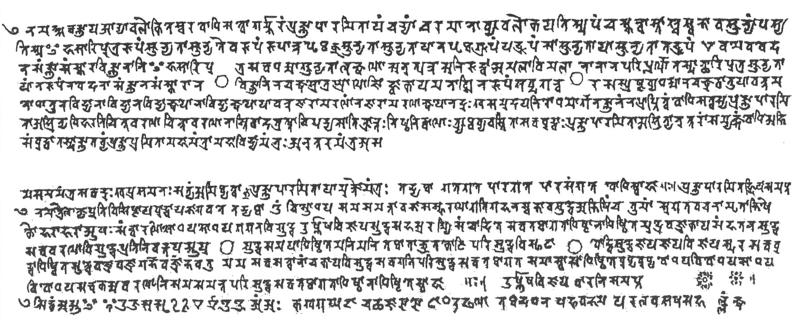
Heart Sutra
short Mahayana sutra, surviving in Sanskrit, Chinese and Tibetan, expounding the Two Truths doctrine that ultimately all phenomena are sunyata

oṃ maṇi padme hūṃ
mantra particularly associated with the four-armed Shadakshari form of Avalokiteśvara

Songtsän Gampo
Tibetan emperor (604-650)
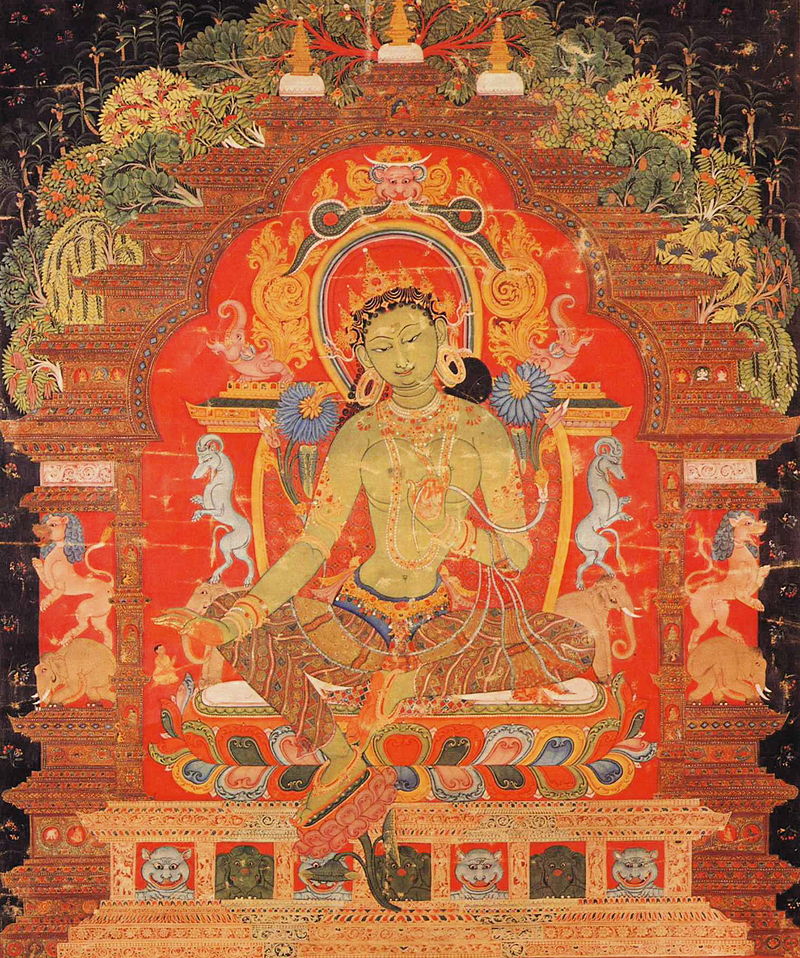
Tārā
female Bodhisattva

Karmapa
right|thumb|Karmapa's flag
Nīlakantha dhāranī
Mahayana Buddhist dhāraṇī associated with the bodhisattva Avalokiteśvara

Mount Potalaka
the mythical dwelling of the Buddhist bodhisattva Avalokiteśvara, said to exist in India

Pha Trelgen Changchup Sempa
living thing group

Parṇa-śāvari
thumb|Goddess Parnashavari
Hayagriva
a Wisdom King of Vajrayana Buddhism, often considered a form of Avalokiteśvara
Cundī
female bodhisattva and manifestation of Avalokiteśvara
Gandavyuha Sutra
thumb|Seven Leaves from a Manuscript of the Gandavyuha-sutra, Eastern India, Pala dynasty (Kamarupa)|Pala period.
Eleven-Faced Avalokiteśvara
In Buddhism, Ekādaśamukha (, , lit. "Eleven-Faced"; Chinese (Traditional): 十一面觀音; Simplified: 十一面观音; pinyin: Shíyīmiàn Guānyīn; Japanese: 十一面観音, Jūichimen Kannon) is a bodhisattva and a manifestation of Avalokiteśvara (known in Chinese as Guanyin), counted as one of six forms of the bodhisattva that represent salvation afforded to beings among the six realms of saṃsāra. Among these incarnations, Ekādaśamukha is believed to save those in the asura realm.

Seto Machindranath Temple
Newa Buddhist temple in Kathmandu
Kāraṇḍavyūhasūtra
sutra in Mahāyāna Buddhism
Cintāmaṇicakra
Cintāmaṇicakra (; Chinese (Traditional): 如意輪觀音; Simplified: 如意轮观音; pinyin: Rúyìlún Guānyīn; Japanese: 如意輪観音, Nyoirin Kannon), also known as Cakravarticintāmaṇi (), is a bodhisattva and a manifestation of Avalokiteśvara (known in Chinese as Guanyin). He is counted as one of six different forms of the bodhisattva that represent salvation afforded to beings among the six realms of saṃsāra. Among these incarnations, Cintāmaṇicakra is believed to save those in the deva realm.
Ulkāmukha Pretarāja
Buddhist deity