Category
page 3Bacteria genera

Merismopedia
Merismopedia (from the Greek merismos [division] and the Greek pedion [plain]) is a genus of cyanobacteria found in fresh and salt water. It is ovoid or spherical in shape and arranged in rows and flats, forming rectangular colonies held together by a mucilaginous matrix. Species in this genus divide in only two directions, creating a characteristic grid-like pattern.
Zoogloea
Zoogloea, also known as zoöglœa or sewage fungus (though it is not a true fungus), is a genus of gram-negative, aerobic, rod-shaped bacterium that plays a role in wastewater treatment, the degradation of organic pollutants, and environmental bioremediation, from the family of Zoogloeaceae in the Rhodocyclales of the class Betaproteobacteria.
Desulfuromonas
Desulfuromonas is a Gram negative bacterial genus from the family Desulfuromonadaceae. Desulfuromonas can reduce elemental sulfur to H2S. Desulfuromonas occur in anoxic sediments and saline lakes.
Sporohalobacter
thumb | right | Staphylococcus epidermidis
Sporohalobacter are a genus of anaerobic bacteria belonging to the family Haloanaerobiaceae. The organisms are spore-forming bacteria that grow in hypersaline environments.
Methylobacterium
Methylobacterium is a genus of bacteria, also designated as Pink-Pigmented Facultative Methylotrophs (PPFMs). Methylobacterium is commonly found in soil, water, and particularly in association with the phyllosphere, the aerial part of plants. Methylobacterium is characterized by its ability to metabolize one-carbon compounds like methanol released by plant leaves. Methylobacterium plays key roles in nutrient cycling and plant-microbe interactions, often promoting plant growth and resilience through hormone production and stress mitigation. Methylobacterium is a model in biotechnology, already
Gemella
Gemella is a genus of Gram-positive bacteria that thrive best at high partial pressure of CO2.
Orientia
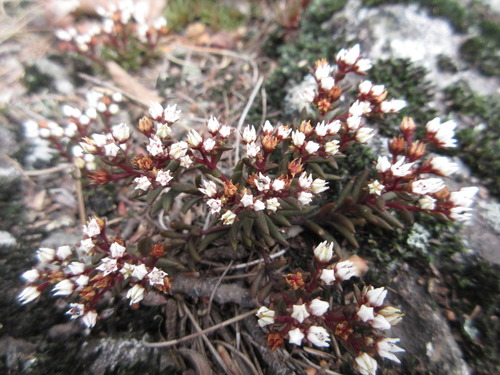
Orientia is a genus of bacteria in family Rickettsiaceae. They are obligate intracellular, gram-negative bacteria found in insects and mammals. They are spread through the bites or feces of infected insects.
Pantoea
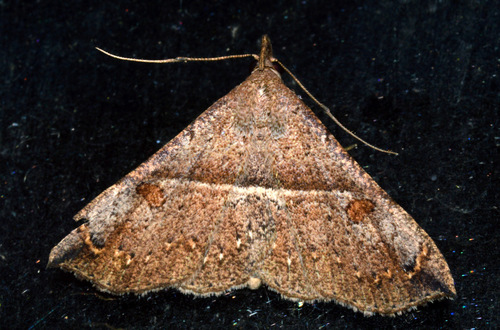
Pantoea is a genus of Gram-negative bacteria of the family Erwiniaceae, recently separated from the genus Enterobacter. This genus includes at least 20 species. Pantoea bacteria are yellow pigmented, ferment lactose, are motile, and form mucoid colonies. Some species show quorum sensing ability that could drive different gene expression, hence controlling certain physiological activities. Levan polysaccharide produced by Pantoea agglomerans ZMR7 was reported to decrease the viability of rhabdomyosarcoma (RD) and breast cancer (MDA) cells compared with untreated cancer cells. In addition, it ha
Stenotrophomonas
Stenotrophomonas is a genus of Gram-negative bacteria, comprising at least twenty-six species. The main reservoirs of Stenotrophomonas are soil and plants. Stenotrophomonas species range from common soil organisms (S. nitritireducens) to opportunistic human pathogens (S. maltophilia); the taxonomy of the genus is still somewhat unclear.
Caldisericum
Caldisericum exile is a species of bacteria sufficiently distinct from other bacteria to be placed in its own family, order, class and phylum. It is the first member of the thermophilic candidate phylum OP5 to be cultured and described.

Synechocystis
Synechocystis is a genus of unicellular, freshwater cyanobacteria in the family Merismopediaceae. It includes a strain, Synechocystis sp. PCC 6803, which is a well studied model organism.
Aliivibrio
Aliivibrio is a genus in the phylum Pseudomonadota (Bacteria).

Leptothrix
genus of bacteria
Gluconobacter
Gluconobacter is a genus of bacteria in the acetic acid bacteria family. They prefer sugar-rich environments, so are sometimes found as a spoilage organism in beer. They are not known to be pathogenic but can cause rot in apples and pears. They are used alone or with acetobacter for microbial degradation of ethanol

Actinobacillus
Actinobacillus is a genus of Gram-negative, nonmotile and non-spore-forming, oval to rod-shaped bacteria occurring as parasites or pathogens in mammals, birds, and reptiles. It is a member of the family Pasteurellaceae. The bacteria are facultatively anaerobic or aerobic, capable of fermenting carbohydrates (without production of gas), and of reducing nitrates. The genomic DNA contains between 40 and 47 mol % guanine plus cytosine.
Magnetospirillum
Magnetospirillum is a Gram-negative, microaerophilic genus of magnetotactic bacteria, first isolated from pond water by the microbiologist R. P. Blakemore in 1975. They have a spiral (helical) shape and are propelled by a polar flagellum at each end of their cells. The three main species identified are M. magnetotacticum strain MS-1, M. griphiswaldense strain MSR-1, and M. magneticum strain AMB-1.
Azomonas
Azomonas species are typically motile, oval to spherical, and secrete large quantities of capsular slime. They are distinguished from Azotobacter by their inability to form cysts, but like Azotobacter, they can biologically fix nitrogen under aerobic conditions (diazotrophs).
Alcanivorax
Alcanivorax is a genus of alkane-degrading marine bacteria.

Gordonia
genus of bacteria
Rubrobacter
Rubrobacter is a genus of Actinomycetota. It is radiotolerant and may rival Deinococcus radiodurans in this regard.
Clostridioides
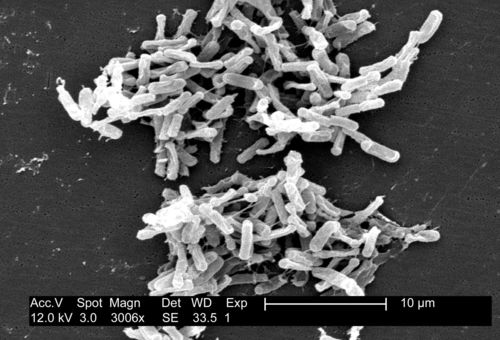
Clostridioides is a genus of Gram-positive bacteria, which includes Clostridioides difficile, a human pathogen causing an infectious diarrhea.
Microbacterium
Microbacterium is a genus of bacteria in the family Microbacteriaceae. Microbacteria are common contaminants of laboratory reagents, which can lead to their being misrepresented in microbiome data.
Raoultella
The genus Raoultella is composed of Gram-negative, oxidase-negative, aerobic, nonmotile, capsulated, facultatively anaerobic rods (formerly designated Klebsiella) in the family Enterobacteriaceae. It is named after the French bacteriologist Didier Raoult. Further research has suggested that the members of the genus Raoultella should be placed back into Klebsiella.
Eggerthella
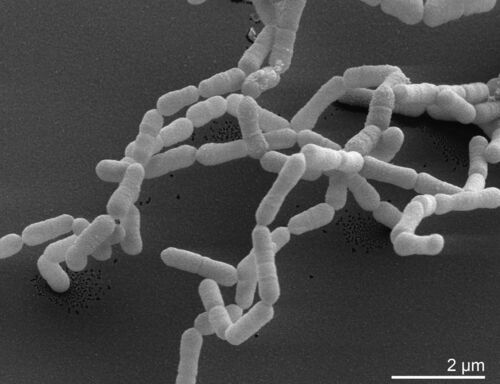
Eggerthella is a bacterial genus of Actinomycetota, in the family Coriobacteriaceae. Members of this genus are anaerobic, non-sporulating, non-motile, Gram-positive bacilli that grow singly, as pairs, or in short chains. They are found in the human colon and feces and have been implicated as a cause of ulcerative colitis, liver and anal abscesses and systemic bacteremia.
Alteromonas
Alteromonas is a genus of Pseudomonadota found in sea water, either in the open ocean or in the coast. It is Gram-negative. Its cells are curved rods with a single polar flagellum.
Photorhabdus
Photorhabdus is a genus of bioluminescent, gram-negative bacilli which lives symbiotically within entomopathogenic nematodes, hence the name photo (which means light producing) and rhabdus (rod shape). Photorhabdus is known to be pathogenic to a wide range of insects and has been used as biopesticide in agriculture.
Aerococcus
Aerococcus, from Ancient Greek ἀήρ (aḗr), meaning "air", and κόκκος (kókkos), meaning "grain", is a genus of bacterium in the phylum Bacillota (Bacteria). The genus was first identified in 1953 from samples of air and dust as a catalase-negative, gram-positive coccus that grew in small clusters. They were subsequently found in hospital environments and meat-curing brines. It has been difficult to identify as it resembles alpha-hemolytic Streptococcus on blood agar plates and is difficult to identify by biochemical means. Sequencing of 16S rRNA has become the gold standard for identification, b
Desulfotomaculum
Desulfotomaculum is a genus of Gram-positive, obligately anaerobic soil bacteria. A type of sulfate-reducing bacteria, Desulfotomaculum can cause food spoilage in poorly processed canned foods. Their presence can be identified by the release of hydrogen sulfide gas with its rotten egg smell when the can is first opened. They are endospore-forming bacteria.
Herminiimonas
Herminiimonas is a genus of bacteria in the Oxalobacteraceae family. It contains Betaproteobacteria that have been isolated from spring and mineral waters. The type species, H. fonticola, was first recovered from the borehole of bottled mineral water in eastern Portugal.
Acholeplasma
Acholeplasma are wall-less bacteria in the Mollicutes class. They include saprotrophic or pathogenic species. There are 15 recognised species. The G+C content is low, ranging from 26 – 36% (mol%). The genomes of Acholeplasma species range in size from 1.5 to 1.65 Mbp. Cholesterol is not required for growth. The species are found on animals, and some plants and insects. The optimum growth temperature is 30 to 37 degrees Celsius.
Wolinella
The genus Wolinella is a member of the Campylobacterales order of Bacteria. The order Campylobacterales includes human pathogens such as Helicobacter pylori and Campylobacter jejuni.
Erysipelothrix
Erysipelothrix is a genus of bacteria containing four described species: Erysipelothrix rhusiopathiae, Erysipelothrix tonsillarum, Erysipelothrix inopinata and Erysipelothrix larvae. Additional species have been proposed based on DNA-DNA hybridization studies. "The hallmark of Erysipelothrix is the presence of a type B cell wall, in which the peptide bridge is formed between amino acids at positions 2 and 4 of adjacent peptide side-chains and not, as in the vast majority of bacteria, between amino acids at positions 3 and 4."
Chryseobacterium
Chryseobacterium is a genus of Gram-negative bacteria. Chryseobacterium species are chemoorganotrophic, rod shape gram-negative bacteria. Chryseobacterium form typical yellow-orange color colonies due to flexirubin-type pigment. The genus contains more than 100 described species from diverse habitats, including freshwater sources, soil, marine fish, and human hosts.
Weissella
Weissella is a genus of gram-positive bacteria placed within the family Lactobacillaceae, formerly considered species of the Leuconostoc paramesenteroides group. The morphology of Weissella species varies from spherical or lenticular cells to irregular rods. Several strains of Weissella cibaria and Weissella confusa have shown probiotic potential. In particular, the cell-free culture supernatant of Weissella confusa shows a number of beneficial characteristics, such as antibacterial potential and anti-inflammatory efficiency. However, several strains of W. confusa are opportunistic bacteria. A
Derxia
Derxia is a genus of Gram-negative, nitrogen-fixing bacteria from the family of Alcaligenaceae.
Pectobacterium
Pectobacterium is a bacterial genus of the family Pectobacteriaceae; it used to be a member of the genus Erwinia, which was split into three genera: Erwinia, Pectobacterium, and Brenneria.
Pedomicrobium
Pedomicrobium is a ubiquitous bacterium dominant in biofilms of man-made aquatic environments such as water distribution systems and bioreactors. Due to their abilities to oxidise manganese (Mn), they are found to be the main culprits of Mn related “dirty water” (Sly et al., 1988a).
Nitrosococcus
Nitrosococcus is a genus of Gram-negative bacteria. It is an ammonia-oxidizing bacterium which oxidizes ammonia into nitrite. Nitrosococcus can be found in marine environments and salt lakes.
Cytophaga
Cytophaga is a genus of Gram-negative, gliding, rod-shaped bacteria. This bacterium is commonly found in soil, and rapidly digests crystalline cellulose. C. hutchinsonii is able to use its gliding motility to move quickly over surfaces. Although the mechanism for this is not known, there is a belief that the flagellum is not used.
Coprococcus
Coprococcus is a genus of obligately anaerobic, nonmotile, Gram-positive cocci that are part of the human and animal gut microbiota.
Ideonella
Ideonella is a genus of bacteria in the family Comamonadaceae.
Buttiauxella
Buttiauxella is a Gram-negative, aerobic, facultative anaerobic and motile genus of bacteria within the family Enterobacteriaceae.
Lysinibacillus
Lysinibacillus is a genus of bacteria from the family of Bacillaceae. Members of this genus, in contrast to the type species of the genus Bacillus, contains peptidoglycan with lysine, aspartic acid, alanine and glutamic acid.
Desulfobacter
Desulfobacter is a genus of bacteria from the family Desulfobacteraceae. Desulfobacter has the ability to oxidize acetate to .
Variovorax
thumb|Variovorax paradoxus EPS swarming time-lapse video, swarming on FW-succinate-NH4Cl medium, taken 18 h after inoculation, 2 h time lapse, 3 m between frames
Massilia
genus of bacteria
Xenorhabdus
Xenorhabdus is a genus of motile, gram-negative bacteria from the family of the Morganellaceae. All the species of the genus are only known to live in symbiosis with soil entomopathogenic nematodes from the genus Steinernema.

Thiothrix
Thiothrix is a genus of filamentous sulfur-oxidizing bacteria, related to the genera Beggiatoa and Thioploca. They are usually Gram-negative (but can be Gram-variable) and rod-shaped (0.7–1.5 μm in width by 1.2–2.5 μm in length). They form ensheathed multicellular filaments that are attached at the base, and form gonidia at their free end. The apical gonidia have gliding motility. Rosettes of the filaments are not always formed but are typical. Sulfur is deposited in invaginations within the cell membrane.
Thermithiobacillus
Thermithiobacillus is a genus of nonsporeforming, rod-shaped, Gram-negative bacteria. The name derives from the Latin thermae, for warm baths, and the Classical Greek θείος, theios for sulfur. The type species of this genus was previously assigned to the genus Thiobacillus, but it was reclassified on the basis of 16S rRNA analysis in 2000, creating this genus.
list of bacteria genera
Wikimedia list article
Herbaspirillum
Herbaspirillum is a genus of bacteria, including the nitrogen-fixing Herbaspirillum lusitanum.
Duganella
Duganella is a genus of bacteria in the family Oxalobacteraceae.
Thermoanaerobacter
Thermoanaerobacter is a genus in the phylum Bacillota (Bacteria). Members of this genus are thermophilic and anaerobic, several of them were previously described as Clostridium species and members of the now obsolete genera Acetogenium and Thermobacteroides
Akkermansia
Akkermansia is a genus in the phylum Verrucomicrobiota (Bacteria). The genus was first proposed by Derrien et al. (2004), with the type species Akkermansia muciniphila (gen. nov., sp. nov).
Elizabethkingia
Elizabethkingia is a genus of bacterium in the order of Flavobacteriales. It was established in 2005 from a branch in of the genus Chryseobacterium, and named after Elizabeth O. King, the discoverer of the type species. Elizabethkingia has been found in soil, rivers, and reservoirs worldwide. The genus contains several pathogenic species, such as E. meningoseptica and E. anophelis.
Carnobacterium
Carnobacterium is a genus of Gram-positive bacteria within the family Carnobacteriaceae. C. divergens and C. maltaromaticum are found in the wild and in food products and can grow anaerobically. These species are not known to be pathogenic in humans, but may cause disease in fish.

Planococcus
genus of bacteria
Amycolatopsis
Amycolatopsis is a genus of high GC-content bacteria within the family Pseudonocardiaceae.
The genus is known for producing many types of antibiotics, including
Epoxyquinomicin, related to Amycolatopsis sulphurea, are a class of weak antibiotic and anti-inflammatory agent.
Vancomycin, obtained from Amycolatopsis orientalis, is being used for infections resistant to other antibiotics.
Ristocetin, made by Amycolatopsis lurida, was an antibiotic but ceased to apply due to adverse effects of platelet agglutination. Now it is used to assay von Willebrand disease.
Aquabacterium

Megasphaera
Megasphaera is a genus of Bacillota bacteria classified within the class Negativicutes.