Category
page 1Bird families
.jpg)
Columbidae
Columbidae is a bird family consisting of doves and pigeons. It is the only family in the order Columbiformes. These are stout-bodied birds with small heads, relatively short necks and slender bills that in some species feature fleshy ceres. They feed largely on plant matter, feeding on seeds (granivory), fruit (frugivory), and foliage (folivory).

Anatidae
The Anatidae are the biological family of water birds that includes ducks, geese, and swans. The family has a cosmopolitan distribution, occurring on all the world's continents except Antarctica. These birds are adapted for swimming, floating on the water surface, and, in some cases, diving in at least shallow water. The family contains around 174 species in 43 genera (the magpie goose is no longer considered to be part of the Anatidae and is now placed in its own family, Anseranatidae).

Laridae
Laridae is a family of seabirds in the order Charadriiformes that includes the gulls, terns (including white terns), noddies, and skimmers. It includes 105 species arranged into 23 genera. They are an adaptable group of mostly aerial birds found worldwide.
Trochilidae
Hummingbirds are birds native to the Americas and comprise the biological family Trochilidae. With approximately 375 species and 113 genera, they occur from Alaska to Tierra del Fuego, but most species are found in Central and South America. As of 2026, 21 hummingbird species are listed as endangered or critically endangered, with about 255 species declining in population.

Corvidae
Corvidae is a cosmopolitan family of oscine passerine birds that contains the crows, ravens, rooks, magpies, jackdaws, jays, treepies, choughs, and nutcrackers. In colloquial terms, the crow family is made up of corvids; currently 135 species are included. The genus Corvus containing 47 species makes up over a third of the entire family. The raven is the largest passerine bird.

Accipitridae
The Accipitridae () is one of the four families within the order Accipitriformes, and is a family of small to large birds of prey with strongly hooked bills and variable morphology based on diet. They feed on a range of prey items from insects to medium-sized mammals, with a number feeding on carrion and a few feeding on fruit. The Accipitridae have a cosmopolitan distribution, being found on all the world's continents (except Antarctica) and a number of oceanic island groups. Some species are migratory. The family contains 256 species which are divided into 12 subfamilies and 75 genera.

Phasianidae
Phasianidae is a family of heavy, ground-living birds, which includes pheasants, grouse, partridges, junglefowl, chickens, turkeys, Old World quail, and peafowl. The family includes many of the most popular gamebirds. The family includes 185 species divided into 54 genera. It was formerly broken up into two subfamilies, the Phasianinae and the Perdicinae. However, this treatment is now known to be paraphyletic and polyphyletic, respectively, and more recent evidence supports breaking it up into two subfamilies: Rollulinae and Phasianinae, with the latter containing multiple tribes within two c

Falconidae
The falcons and caracaras are around 65 species of diurnal birds of prey that make up the family Falconidae (representing all extant species in the order Falconiformes). The family likely originated in South America during the Paleocene and is divided into three subfamilies: Herpetotherinae, which includes the laughing falcon and forest falcons; Polyborinae, which includes the spot-winged falconet and the caracaras; and Falconinae, the falcons and kestrels (Falco) and falconets (Microhierax).
.jpg)
Motacillidae
The wagtails, longclaws, and pipits are a family, Motacillidae, of small passerine birds with medium to long tails. Around 70 species occur in five genera. The longclaws are entirely restricted to the Afrotropics, and the wagtails are predominantly found in Europe, Africa, and Asia, with two species migrating and breeding in Alaska. The pipits have the most cosmopolitan distribution, being found mostly in the Old World, but occurring also in the Americas and oceanic islands such as New Zealand and the Falklands. Two African species, the yellow-breasted pipit and Sharpe's longclaw, are sometime

Ibises and Spoonbills
The family Threskiornithidae includes 35 extant species of large wading birds, and one more that became extinct in historical times. The family has been traditionally classified into two subfamilies, the ibises and the spoonbills; however, recent genetic studies have cast doubt on this arrangement, and have found the spoonbills to be nested within the Old World ibises, and the New World ibises as an early offshoot. These studies found two major clades within the family, a widespread clade that includes the type genus Threskiornis and seven other genera (including the spoonbills) occurring in b

Charadriidae
The bird family Charadriidae includes the plovers, dotterels, and lapwings. The family contains 69 species that are divided into 12 genera.
%20(16475688389).jpg)
Coraciidae
Coraciidae () is a family of Old World birds, which are known as rollers because of the aerial acrobatics some of these birds perform during courtship or territorial flights. The family contains 13 species and is divided into two genera. Rollers resemble crows in size and build, and share the colourful appearance of kingfishers and bee-eaters, blues and pinkish or cinnamon browns predominating. The two inner front toes are connected, but not the outer one.

Sylviidae
Sylviidae is a family of passerine birds that includes the typical warblers Sylvia, and the closely related genus Curruca, formerly included in Sylvia. They are found in Eurasia and Africa, with the greatest diversity in the Mediterranean region.

Ploceidae
Ploceidae is a family of small passerine birds, many of which are called weavers, weaverbirds, weaver finches, or bishops. These names come from the nests of intricately woven vegetation created by birds in this family. In most recent classifications, the Ploceidae are a clade that excludes some birds that have historically been placed in the family, such as some of the sparrows, but which includes the monotypic subfamily Amblyospizinae. The family is believed to have originated in the mid-Miocene. All birds of the Ploceidae are native to the Old World, most in Africa south of the Sahara, thou

Emberizidae
REDIRECT Emberiza
%20on%20Santa%20Cruz%2C%20Gal%C3%A1pagos%20Islands.JPG)
Sulidae
The bird family Sulidae comprises the gannets and boobies. Collectively called sulids, they are medium-large coastal seabirds that plunge-dive for fish and similar prey. The 10 species in this family are often considered congeneric in older sources, placing all in the genus Sula. However, Sula (true boobies) and Morus (gannets) can be distinguished via morphological, behavioral, and DNA sequence characters. Abbott's booby (Papasula) is given its own genus, as it stands apart from both in these respects. It appears to be a distinct and ancient lineage, maybe closer to the gannets than to the tr

Procellariidae
The family Procellariidae is a group of seabirds that comprises the fulmarine petrels, the gadfly petrels, the diving petrels, the prions, and the shearwaters. This family is part of the bird order Procellariiformes (or tubenoses), which also includes the albatrosses and the storm petrels.

Aegithalidae
The bushtits or long-tailed tits are small passerine birds from the family Aegithalidae, containing 13 species in three genera, all but one of which (Psaltriparus) are found in Eurasia. Bushtits are active birds with long tails compared to their size, moving almost constantly while they forage for insects in shrubs and trees. During non-breeding season, birds live in flocks of up to 50 individuals. Several bushtit species display cooperative breeding behavior, also called helpers at the nest.

Anhingidae
redirect Darter
%20(Aepypodius%20bruijnii).jpg)
Cracidae
The chachalacas, guans, and curassows are birds in the family Cracidae. These are species of tropical and subtropical Central and South America. The range of one species, the plain chachalaca, just reaches southernmost parts of Texas in the United States. Two species, the Trinidad piping guan and the rufous-vented chachalaca occur on the islands of Trinidad and Tobago respectively.

Recurvirostridae
The Recurvirostridae are a family of birds in the wader suborder Charadrii. It contains two distinct groups of birds, the avocets (one genus) and the stilts (two genera).
.jpg)
Broadbill
The Eurylaimidae are a family of suboscine passerine birds that occur from the eastern Himalayas to Indonesia and the Philippines.
The family previously included the sapayoa from the Neotropics, the asities from Madagascar, and the Calyptomenidae from Africa and Asia, but these are now separated into distinct families.

Acrocephalidae
The Acrocephalidae (the reed warblers, marsh- and tree-warblers, or acrocephalid warblers) are a family of oscine passerine birds, in the superfamily Sylvioidea.

Jacanidae
The jacanas (sometimes referred to as Jesus birds or lily trotters) are a group of tropical waders in the family Jacanidae. They are found in the tropical regions around the world. They are noted for their elongated toes and toenails that allow them to spread out their weight while foraging on floating or semi-emergent aquatic vegetation. They are also among the somewhat rare groups of birds in which females are larger, and several species maintain harems of males in the breeding season with males solely responsible for incubating eggs and taking care of the chicks.

Estrildidae
Estrildidae, or estrildid finches, is a family of small seed-eating passerine birds of the Old World tropics and Australasia. They comprise species commonly known as munias, mannikins, firefinches, parrotfinches and waxbills.

Glareolidae
Glareolidae is a family of birds in the wader suborder Lari. It contains two distinct groups, the pratincoles and the coursers. The atypical Egyptian plover (Pluvianus aegyptius), traditionally placed in this family, is now known to be only distantly related (basal of clade Charadrii).

Cardinalidae
Cardinalidae (sometimes referred to as "cardinal-grosbeaks" or simply "cardinals") is a family of New World-endemic passerine birds that consists of cardinals, grosbeaks, and buntings. It also includes several other genera such as the tanager-like Piranga and the warbler-like Granatellus. Membership of this family is not easily defined by a single or even a set of physical characteristics, but instead by molecular work. Among songbirds, they range from average-sized to relatively large and have stout features. Some species have large, heavy bills.

Struthionidae
Struthionidae (; ) is a family of flightless birds, containing the extant ostriches and their extinct relatives. The two extant species of ostrich are the common ostrich and Somali ostrich, both in the genus Struthio, which also contains several species known from Holocene fossils such as the Asian ostrich. The common ostrich is the more widespread of the two living species, and is the largest living bird species. The extinct genus Pachystruthio from the Late Pliocene-Early Pleistocene of Eurasia is one of the largest birds ever.
.jpg)
Formicariidae
Formicariidae is a family of smallish suboscine passerine birds of subtropical and tropical Central and South America known as antthrushes. They are between in length, and are most closely related to the ovenbirds in the family Furnariidae, and the tapaculos in the family Rhinocryptidae. The family Formicariidae contains 12 species in two genera.
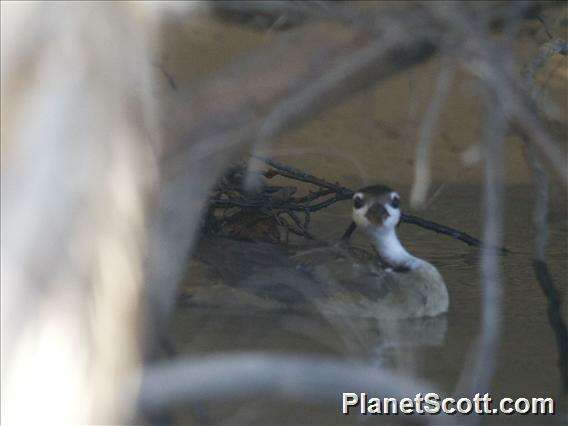
Heliornithidae
The Heliornithidae are a small family of tropical birds with webbed lobes on their feet like those of grebes and coots. The family overall are known as finfoots, although one species is known as a sungrebe. The family is composed of three species in three genera.

Cisticolidae
The family Cisticolidae is a group of about 160 warblers, small passerine birds found mainly in warmer southern regions of the Old World. They were formerly included within the Old World warbler family Sylviidae.

Lybiidae
Lybiidae is a family of birds also known as the African barbets. There are 44 species ranging from the type genus Lybius of forest interior to the tinkerbirds (Pogoniulus) of forest and scrubland. They are found throughout sub-Saharan Africa, with the exception of the far south-west of South Africa.

Callaeidae
Callaeidae (sometimes Callaeatidae) is a family of passerine birds endemic to New Zealand. It contains three genera, with five species in the family. One species, the huia, became extinct early in the 20th century, while the South Island kokako is critically endangered and may be extinct.
%202.jpg)
Megalaimidae
Megalaimidae, the Asian barbets, are a family of birds, comprising two genera with 35 species native to the forests of the Indomalayan realm from Tibet to Indonesia. They were once clubbed with all barbets in the family Capitonidae but the Old World species have been found to be distinctive and are considered, along with the Lybiidae and Ramphastidae, as sister groups.

Leiothrichidae
The laughingthrushes are a family, Leiothrichidae, of Old World passerine birds. The family contains 143 species and is divided into 17 genera. The species are diverse in size and coloration. These are birds of tropical areas, with the greatest variety in Southeast Asia and the Indian subcontinent. The entire family used to be included in the Old World babbler family Timaliidae.

Artamidae
Artamidae is a family of passerine birds found in Australia, the Indo-Pacific region, and Southern Asia. It includes 24 extant species in six genera and three subfamilies: Peltopsinae (with one genus, Peltops), Artaminae (with one genus containing the woodswallows) and Cracticinae (currawongs and butcherbirds, including the Australian magpie). Artamids used to be monotypic, containing only the woodswallows, but it was expanded to include the family Cracticidae in 1994. Some authors, however, still treat the two as separate families. Some species in this family are known for their beautiful son

Capitonidae
family of birds

Locustellidae
Locustellidae is a recently recognised family of small insectivorous songbirds ("warblers"), formerly placed in the Old World warbler "wastebin" family. It contains the grasshopper warblers, grassbirds, and the Bradypterus "bush warblers". These birds occur mainly in Eurasia, Africa, and the Australian region. The family name is sometimes given as Megaluridae, but Locustellidae has priority.

Casuariidae
The bird family Casuariidae has four surviving members: the three species of cassowary and the emu.
%20breeding%20male.jpg)
Viduidae
The indigobirds, whydahs and cuckoo-finch make up the family Viduidae; they are small passerine birds native to Africa.

Tityridae
Tityridae is family of suboscine passerine birds found in forest and woodland in the Neotropics. The 45 species in this family were formerly spread over the families Tyrannidae, Pipridae and Cotingidae (see Taxonomy). As yet, no widely accepted common name exists for the family, although tityras and allies and tityras, mourners and allies have been used. They are small to medium-sized birds. Under current classification, the family ranges in size from the buff-throated purpletuft, at and , to the masked tityra, at up to and . Most have relatively short tails and large heads.

Pachycephalidae
The Pachycephalidae (from Ancient Greek παχύς (pakhús), meaning "thick", and κεφαλή (kephalḗ), meaning "head") are a family of bird species that includes the whistlers, shrikethrushes, and three of the pitohuis, and is part of the ancient Australo-Papuan radiation of songbirds. The family includes 69 species that are separated into five genera. Its members range from small to medium in size, and occupy most of Australasia. Australia and New Guinea are the centre of their diversity and, in the case of the whistlers, the South Pacific islands as far as Tonga and Samoa and parts of Asia as far as

Phaethontidae
REDIRECT Tropicbird
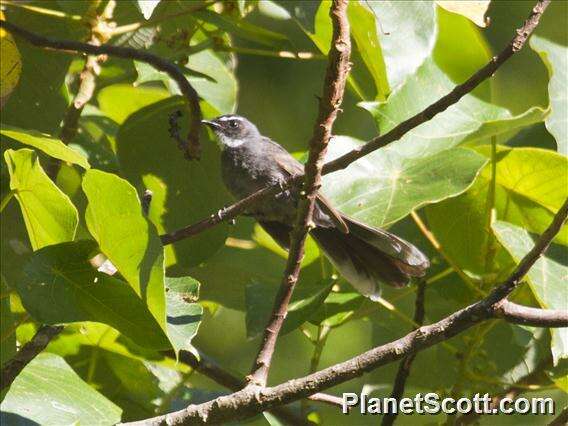
Rhipiduridae
The family Rhipiduridae are small insectivorous birds of Australasia, Southeast Asia and the Indian subcontinent that includes the fantails and silktails.
Prunellidae
REDIRECT Accentor

Cettiidae
Cettiidae is a newly validated family of small insectivorous songbirds ("warblers"), formerly placed in the Old World warbler "wastebin" assemblage. It contains the typical bush warblers (Cettia) and their relatives. As a common name, cettiid warblers is usually used.
Pellorneidae
The ground babblers are a family, Pellorneidae, of mostly Old World passerine birds belonging to the superfamily Sylvioidea. They are quite diverse in size and coloration, and usually characterised by soft, fluffy plumage and a tail on average the length of their body, or longer. These birds are found in tropical zones, with the greatest biodiversity in Southeast Asia and the Indian subcontinent.

Calcariidae
Calcariidae is a small family of passerine birds. It includes longspurs and snow buntings. There are six species in three genera worldwide, found mainly in North America and Eurasia. They are migratory and can live in a variety of habitats including grasslands, prairies, tundra, mountains, and beaches.
.jpg)
Melanocharitidae
The Melanocharitidae, the berrypeckers and longbills, is a small bird family restricted to the forests of New Guinea. The family contains eleven species in four (sometimes three) genera. They are small songbirds with generally dull plumage but a range of body shapes.
Acanthizidae
Acanthizidae—sometimes called Australian warblers—are a family of passerine birds which includes gerygones, thornbills Acanthiza, and scrubwrens Sericornis. The family Acanthizidae consists of small to medium passerine birds, with a total length varying between . They have short rounded wings, slender bills, long legs, and a short tail. Most species have olive, grey, or brown plumage, although some have patches of a brighter yellow. The weebill is the smallest species of acanthizid, and the smallest Australian passerine; the largest is the pilotbird.

Bernieridae
The tetrakas, also known as the Malagasy warblers, are a recently validated family of songbirds. They were formally named Bernieridae in 2010. The family currently consists of eleven species (in eight genera) of small forest birds. These birds are all endemic to Madagascar.
%20-%20(26592958760).jpg)
Opisthocomidae
Opisthocomidae is a family of birds, the only named family within the order Opisthocomiformes. The only living representative is the hoatzin (Opisthocomus hoazin) which lives in the Amazon and the Orinoco delta in South America. Several fossil species have been identified, including one from Africa and one from Europe.

Macrosphenidae
The African warblers are a newly erected family Macrosphenidae, of African songbirds. Most of the species were formerly placed in the Old World warbler family Sylviidae, although one species, the rockrunner, was placed in the babbler family, Timaliidae. A series of molecular studies of the Old World warblers and other bird families in the superfamily Sylvioidea (which includes the larks, swallows and tits) found that the African warblers were not part of Sylviidae but were instead an early (basal) offshoot of the entire clade Sylvioidea. Some taxonomic authorities place the entire family Hylii

Cinclosomatidae
Cinclosomatidae is a family of passerine birds native to Australia and New Guinea. It has a complicated taxonomic history and different authors vary in which birds they include in the family. It includes the quail-thrushes and jewel-babblers.
Psophodidae
Psophodidae is a family of passerine birds native to Australia and nearby areas. It has a complicated taxonomic history and different authors vary in which birds they include in the family. In the strictest sense, it includes only the five or six species of whipbirds and wedgebills (Psophodes and Androphobus), but some authors also include the quail-thrushes (Cinclosoma), eight species of ground-dwelling birds found in Australia and New Guinea, and the jewel-babblers (Ptilorrhoa), three or four species found in rainforest in New Guinea. Others place them in their own family, the Cinclosomatida
pelicans
The Pelecanidae is a family of pelecaniform birds within the Pelecani that contains three genera: the extinct Eopelecanus and Miopelecanus and the extant Pelecanus.
Balaenicipitidae
Balaenicipitidae is a family of birds in the order Pelecaniformes, although it was traditionally placed in Ciconiiformes. The shoebill is the sole extant species and its closest relative is the hamerkop (Scopus umbretta), which belongs to another family. Species from the Ciconiiformes and Balaenicipitidae family have been found in Kenya, Uganda, Tanzania, and parts of East Africa.

Mitrospingidae
The Mitrospingidae is a family of passerine birds. It consists of three genera and four species. The family is found in South America and southern Central America. The family was identified in 2013, and consists of birds that have been traditionally placed in the family Thraupidae. The family was adopted by the American Ornithological Society in their 58th supplement of their checklist in 2017 and in the online list of birds maintained by Frank Gill, Pamela Rasmussen and David Donsker on behalf of the International Ornithological Committee (IOC).
Cinclidae
REDIRECT dipper
%20(8082776636).jpg)
Phaenicophilidae
Phaenicophilidae are a family of passerine birds endemic to the island of Hispaniola (split between the Dominican Republic and Haiti) and adjacent islands. The family contains four species in three genera. These species were historically classified within the families Thraupidae (tanagers) and Parulidae (New World warblers), but genetic studies have confirmed they form a distinct clade.