Category
page 5Bird genera

Calandrella
Calandrella is a genus of larks in the family Alaudidae.

Zonotrichia
Zonotrichia is a genus of five extant American sparrows of the family Passerellidae. Four of the species are North American, but the rufous-collared sparrow breeds in highlands from the extreme southeast of Mexico to Tierra del Fuego, and on Hispaniola.
Sturnella
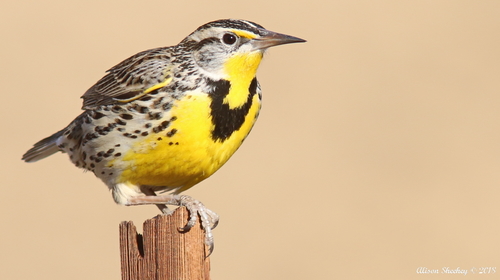
The genus Sturnella are North American grassland passerine birds called meadowlarks. The genus was previously lumped with the South American meadowlarks now placed in the genus Leistes.

Geositta
Geositta is a genus of passerine birds in the ovenbird family, Furnariidae. They are known as miners (not to be confused with the unrelated miners, Manorina, of Australia) due to the tunnels they dig for nesting. There are 11 species including the campo miner (Geositta poeciloptera) which was formerly classified in a genus of its own, Geobates. They inhabit open country in South America, particularly the Andean and Patagonian regions. They are ground-dwelling birds, somewhat resembling the larks and wheatears of other continents. They are mostly drab brown in coloration and often have a fairly
Pitohui
genus of birds in the family Oriolidae
Crypsirina
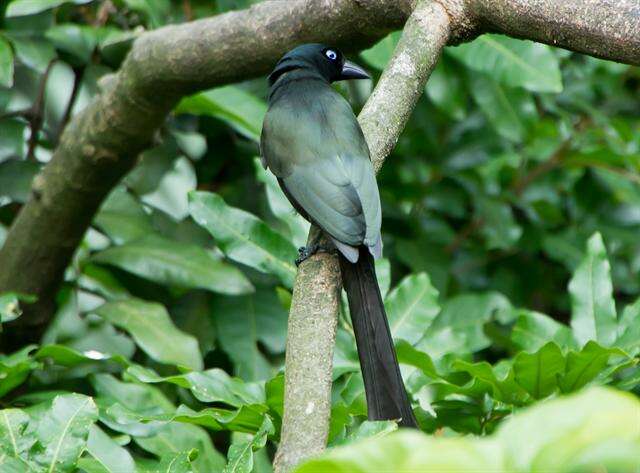
Crypsirina is a small genus of long-tailed passerine birds in the crow and jay family, Corvidae. The two species are highly arboreal and rarely come to the ground to feed. The generic name is derived from the Greek words kruptō, meaning "to conceal," and rhis or rhinos, meaning "nostrils".

Picoides
Picoides is a genus of woodpeckers (family Picidae) that are native to Eurasia and North America, commonly known as three-toed woodpeckers.

Ammoperdix
Ammoperdix is a small genus in the pheasant family Phasianidae of the order Galliformes.
==Species==
It contains two similar species:
Eutoxeres
Eutoxeres is a genus of hummingbird in the family Trochilidae.

Phorusrhacos
Phorusrhacos ( ) is an extinct genus of giant flightless terror birds that inhabited South America during the Miocene epoch. Phorusrhacos was one of the dominant land predators in South America at the time it existed. It is thought to have lived in woodlands and grasslands.
.jpg)
Agelaius
Agelaius is a genus of blackbirds in the New World family Icteridae. Established by Louis Pierre Vieillot in 1816, it contains five species:
{| class="wikitable"
|-
! Image !! Scientific name !! Common name !! Distribution
|-
|120px || Agelaius phoeniceus|| Red-winged blackbird || North and much of Central America
|-
|120px || Agelaius assimilis|| Red-shouldered blackbird || Cuba
|-
|120px || Agelaius tricolor|| Tricolored blackbird || Pacific coast of North America, from Northern California in the U.S. (with occasional strays into Oregon), to upper Baja California in Mexico.
|-
|120px || Age

Melanocorypha
' Melanocorypha''' is a small genus of birds in the lark family. The current genus name, Melanocorypha is from Ancient Greek melas, "black", and koruphos a term used by ancient writer for a now unknown bird, but here confused with korudos'', "lark".
Rhynchotus
Rhynchotus is a genus of birds in the tinamou family. This genus comprises two members of this South American family.
Spindalis
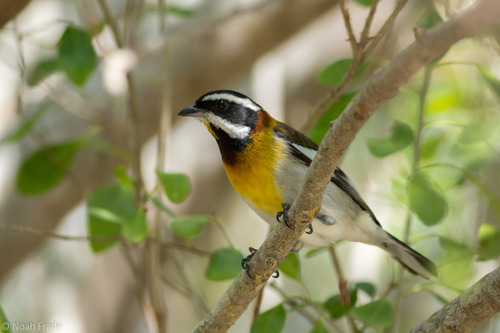
Spindalis is a genus consisting of four non-migratory species of bird. It is the only genus in the family Spindalidae. The species are mostly endemic to the West Indies; exceptions include populations of western spindalises on Cozumel Island, off the Yucatán Peninsula's east coast, and in extreme southeastern Florida. The species were traditionally considered aberrant members of the tanager family Thraupidae. Taxonomic studies recover them as a sister group to the Puerto Rican tanager (family Nesospingidae), and some group Spindalidae and Nesospingidae within the Phaenicophilidae.

Spizaetus
Spizaetus is the typical hawk-eagle birds of prey genus found in the tropics of the Americas. It was however used to indicate a group of tropical eagles that included species occurring in southern and southeastern Asia and one representative of this genus in the rainforests of West Africa. The Old World species have been separated into the genus Nisaetus. Several species have a prominent head crest. These are medium to large-sized raptors, most being between long, and tend to be long-tailed and slender.

Theristicus
Theristicus is a genus of birds in the family Threskiornithidae. They are found in open, grassy habitats in South America. All have a long, decurved dark bill, relatively short reddish legs that do not extend beyond the tail in flight (unlike e.g. Eudocimus and Plegadis), and at least the back is grey.

Amazilia
Amazilia is a hummingbird genus in the subfamily Trochilinae. It is found in tropical Central and South America.

Turdoides
Turdoides is a genus of passerine birds in the laughingthrush family Leiothrichidae. The species are distributed across Africa and southern Asia and are typically fairly large, long-tailed birds which forage in noisy groups. The majority of species have drab brown or grey-brown plumage. Several species that were included in Turdoides in the past have been reassigned to Argya following a 2018 study that found multiple clades.

Vini
genus of birds

Psophia
Psophia is a genus of birds restricted to the humid forests of the Amazon and Guiana Shield in South America. It is the only genus in the family Psophiidae. Birds in the genus are commonly known as trumpeters, due to the trumpeting or cackling threat call of the males. The three species resemble slightly taller, longer-legged chickens in size and appearance; they measure long and weigh . They are rotund birds with long, flexible necks and legs, downward-curving bills and a “hunched” appearance. Their heads are small, but their eyes are relatively large, making them look inquisitive and "good-n

Spinus
genus of birds in the finch family

Junco
thumb|A pink-sided dark-eyed junco in Elizabeth, Colorado

Pauxi
The genus Pauxi consists of the three species of helmeted curassows, terrestrial black fowl with ornamental casque on their heads. All are found in South America.
Chlamydotis
Chlamydotis is a genus of large birds in the bustard family. The genus name is from Ancient Greek khlamus, a horseman's cloak with weights sewn into the corners, and otis, bustard.
%20(8598133565).jpg)
Colaptes
Colaptes is a genus of birds in the woodpecker family Picidae. The 14 extant species are found across the Americas.

Niltava
Niltava (from niltau, Nepali for the rufous-bellied niltava) is a genus of passerine birds in the Old World flycatcher family Muscicapidae. They are found in found in South and Southeast Asia as well as in China. The seven species in the genus are sexually dimorphic. The males have blue upperparts and all except the large niltava have orange-rufous underparts. The females are less brightly coloured and have brown upperparts and buffish underparts.
Onychoprion
Onychoprion is a genus of four species of terns in the family Laridae. The genus name is from Ancient Greek , "claw" or "nail", and , "saw". As a group, they have been variously called "brown-winged terns" or "brown-backed terns", though only one species is actually brown; the other three are dark grey or black.
%20in%20Hyderabad%20W%20IMG%208738.jpg)
Prinia
thumb|190px|Ashy prinia (Prinia socialis) in [[Hyderabad, India]]
thumb|190px|Plain prinia (Prinia inornata) in [[Kolkata, West Bengal, India]]
thumb|190px|Grey-breasted prinia (Prinia hodgsonii) in [[Shamirpet, Rangareddy district, Andhra Pradesh, India]]

Penelope
genus of birds
.jpg)
Pnoepyga
Pnoepyga is a genus of passerines endemic to southern and southeastern Asia. Its members are known as cupwings or wren-babblers. The genus contains four species. The genus has long been placed in the babbler family Timaliidae. A 2009 study of the DNA of the families Timaliidae and the Old World warblers (Sylviidae) found no support for the placement of the genus in either family, prompting the authors to erect a new monogeneric family, the Pnoepygidae.

Toxostoma
Toxostoma is a genus of birds in the family Mimidae. This genus contains most of the birds called thrashers, and accordingly members of this genus are sometimes referred to as the "typical thrashers". They are found in the United States and Mexico.
%20female%20(21492912679)%20(2).jpg)
Dinopium
Dinopium is a genus of birds in the woodpecker family Picidae. The species are found in South and Southeast Asia.

Alaemon
Alaemon is a genus of birds in the family Alaudidae, commonly called hoopoe larks.

Linaria
genus of birds

Megaceryle
Megaceryle is a genus of very large kingfishers. They have a wide distribution in the Americas, Africa, and Southeast Asia.

Campephilus
Campephilus is a genus of large American woodpeckers in the family Picidae.

Troglodytes
genus of birds

Ammodramus
Ammodramus is a genus of birds in the family Passerellidae, in the group known as American sparrows. Birds of this genus are known commonly as grassland sparrows. The name Ammodramus is from the Greek for "sand runner".

Eremopterix
Eremopterix is the genus of sparrow-larks, songbirds in the family Alaudidae. The sparrow-larks are found from Africa to the Indian subcontinent.

Perdicula
Perdicula is a small genus of quail in the family Phasianidae, containing four species that are collectively known as the bush quails.

Pitta
genus of birds

Selenidera
Selenidera is a bird genus containing six species of dichromatic toucanets in the toucan family Ramphastidae. They are found in lowland rainforest (below ) in tropical South America with one species in Central America.

Chalcophaps
Chalcophaps is a genus of small doves, commonly called emerald doves, that are found in Indomalaya and Australasia.

Lophophanes
Lophophanes is a small genus of birds in the tit family Paridae.

Paroaria
thumb|left|P. coronata showing typical color pattern of genus
Paroaria, the red-headed cardinals or cardinal-tanagers (as they are not close to the Cardinalidae), are a genus of tanagers. They were until recently placed in the family Emberizidae.

Bostrychia
Bostrychia is a genus of ibises in the family Threskiornithidae. Member species are found in many countries throughout Africa.
==Species==
It contains the following five species:
{| class="wikitable"
|-
! Image !! Scientific name !! Common name !! Distribution
|-
|120px || Bostrychia carunculata || Wattled ibis||Ethiopia
|-
|120px || Bostrychia hagedash || Hadada ibis||Sudan, Burundi, Ethiopia, Senegal, Uganda, Tanzania, Gabon, Democratic Republic of Congo, Cameroon, Gambia, Kenya, Somalia, Lesotho, Eswatini, Botswana, Mozambique, Zimbabwe and South Africa.
|-
|120px || Bostrychia olivacea ||
%3B%20Iranduba%2C%20Amazonas%2C%20Brazil%2002.jpg)
Sporophila
Sporophila is a genus of Neotropical birds in the tanager family Thraupidae. The genus now includes the six seed finches that were previously placed in the genus Oryzoborus.

Upupa
REDIRECT Hoopoe
Cypsiurus
Cypsiurus is a genus of birds in the swift family Apodidae. It includes three species, which were formerly considered to be conspecific due to their similarity.

Actophilornis
Actophilornis is a genus of jacana. It contains two species restricted to Africa and its surrounding islands.

Catharus
The genus Catharus is an evolutionary clade of forest-dwelling passerine birds in the family Turdidae (thrushes), commonly known as nightingale-thrushes. The extant species are widely distributed across the Americas and are descended from a common ancestor that lived 4–6 million years ago. Most of the species are shy of humans, seldom leaving the cover of dense forest vegetation, where their activities are hidden from view. Thus, many fundamental aspects of their biology and life histories are poorly known.

Podilymbus
Podilymbus is a genus of birds in the Grebe family, the genus name is derived from Latin Podilymbus, a contraction of podicipes ("feet at the buttocks", from podici-, "rump-" + pes, "foot")—the origin of the name of the grebe order—and Ancient Greek kolymbos, "diver".
%20photograph%20by%20Shantanu%20Kuveskar.jpg)
Pseudibis
The bird genus Pseudibis consists of three South-East Asian species in the ibis subfamily, Threskiornithinae.

Charmosyna
Charmosyna is a genus of parrots in the family Psittaculidae. The four currently recognized species inhabit moist forests on the island of New Guinea.

Ocyceros
Ocyceros is a genus of birds in the family Bucerotidae. Established by Allan Octavian Hume in 1873, it contains several species that are limited to the Indian subcontinent.

Mimus
Mimus is a genus of passerine birds in the family Mimidae. It contains the typical mockingbirds.
.jpg)
Mirafra
Mirafra is a genus of lark in the family Alaudidae. Some Mirafra species are called "larks", while others are called "bush larks". They are all found in Africa except for the singing bush lark that is found through South Asia to Australia.

Buteogallus
Buteogallus is a genus of birds of prey in the family Accipitridae. All members of this genus are essentially neotropical, but the distribution of a single species extends slightly into the extreme southwestern United States. Many of the species are fond of large crustaceans and even patrol long stretches of shore or riverbank on foot where such prey abounds, but some have a rather different lifestyle. Unlike many other genera of raptor, some members are referred to as "hawks", and others as "eagles".
Turacoena
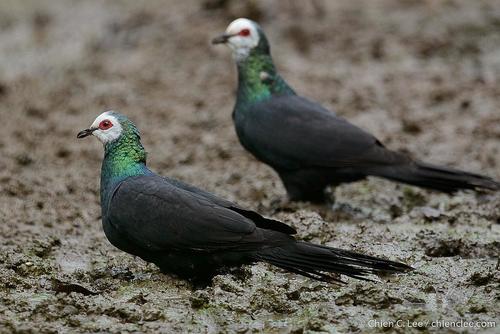
Turacoena is a small genus of doves in the family Columbidae that are found in Indonesia.
.jpg)
Chlorophonia
' Chlorophonia ' is a genus of finches in the family Fringillidae. The chlorophonias are endemic to the Neotropics. They are small, mostly bright green birds that inhabit humid forests and nearby habitats, especially in highlands.