Category
page 6Bird genera

Tigrisoma
Tigrisoma is a genus of herons in the family Ardeidae.
.jpg)
Mirafra
Mirafra is a genus of lark in the family Alaudidae. Some Mirafra species are called "larks", while others are called "bush larks". They are all found in Africa except for the singing bush lark that is found through South Asia to Australia.
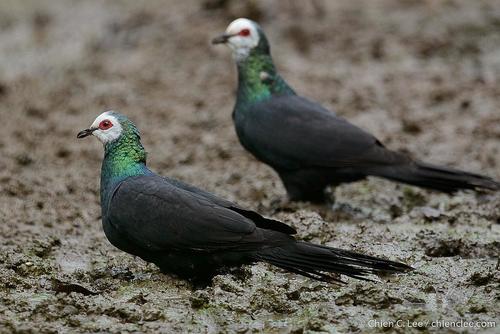
Turacoena
Turacoena is a small genus of doves in the family Columbidae that are found in Indonesia.
.jpg)
Chlorophonia
' Chlorophonia ' is a genus of finches in the family Fringillidae. The chlorophonias are endemic to the Neotropics. They are small, mostly bright green birds that inhabit humid forests and nearby habitats, especially in highlands.
.jpg)
Nisaetus
Nisaetus, the crested hawk-eagles, is a genus of raptor in the subfamily Aquilinae, found mainly in tropical Asia. They were earlier placed within the genus Spizaetus but molecular studies show that the Old World representatives of that genus are closer to the genus Ictinaetus than to the New World Spizaetus (in the stricter sense). They are slender-bodied, medium-sized hawk-eagles with rounded wings, long feathered legs, barred wings, crests and usually adapted to forest habitats.
Basilornis
Basilornis is a genus of mynas in the family Sturnidae. Established by Charles Lucien Bonaparte in 1850, it contains the following species:
Sulawesi myna (Basilornis celebensis)
Long-crested myna (Basilornis corythaix)
Helmeted myna (Basilornis galeatus)
The Apo myna was formerly included in this genus, but has since been transferred to the monotypic genus Goodfellowia.
%3B%20Iranduba%2C%20Amazonas%2C%20Brazil%2002.jpg)
Sporophila
Sporophila is a genus of Neotropical birds in the tanager family Thraupidae. The genus now includes the six seed finches that were previously placed in the genus Oryzoborus.
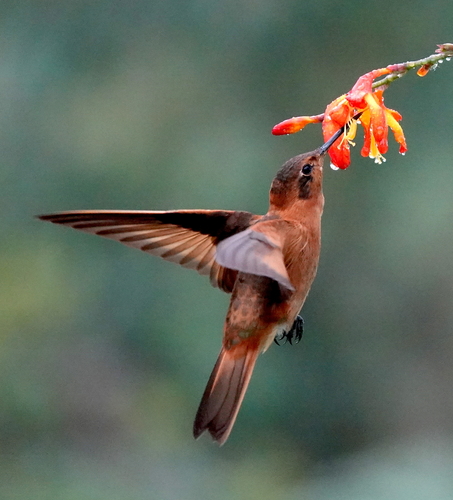
Aglaeactis
Aglaeactis is a genus of hummingbirds in the family Trochilidae.

Calonectris
Calonectris is a genus of seabirds. The genus name comes from Ancient Greek kalos, "good" and nectris, "swimmer".

Ephippiorhynchus
Ephippiorhynchus is a small genus of storks. It contains two living species only, very large birds more than 140 cm tall with a 230–270 cm wingspan. Both are mainly black and white, with huge bills. The sexes of these species are similarly plumaged, but the eyes are dark brown in males and yellow in females. The members of this genus are sometimes called "jabirus", but this properly refers to a close relative from Latin America.

Buteogallus
Buteogallus is a genus of birds of prey in the family Accipitridae. All members of this genus are essentially neotropical, but the distribution of a single species extends slightly into the extreme southwestern United States. Many of the species are fond of large crustaceans and even patrol long stretches of shore or riverbank on foot where such prey abounds, but some have a rather different lifestyle. Unlike many other genera of raptor, some members are referred to as "hawks", and others as "eagles".

Minivet
The minivets are passerine birds belonging to the genus Pericrocotus in the cuckooshrike family Campephagidae. There are about 15 species, occurring mainly in forests in southern and eastern Asia. They are fairly small, slender birds with long tails and an erect posture. Most species have bright red or yellow markings. All species show sexual dichromatism with the male usually having more brightly coloured plumage. They feed mainly on insects, foraging in groups in the tree canopy.

Plectrophenax
Plectrophenax is a small genus of passerine birds of the longspur family Calcariidae.

Bycanistes
Bycanistes is a genus of medium to large, primarily frugivorous hornbills (family Bucerotidae) found in the forests and woodlands of Sub-Saharan Africa. They have often been included in the genus Ceratogymna, but today most authorities consider them separate. All species in this genus have black and white plumage. The plumage of the sexes is similar, but the casque of the male is larger than that of the female.

Bulweria
Bulweria is a genus of seabirds in the family Procellariidae named after English naturalist James Bulwer. The genus has two extant species, Bulwer's petrel and Jouanin's petrel. A third species, the Olson's petrel, became extinct in the early 16th century; it is known only from skeletal remains. Bulwer's petrel ranges in the Atlantic, Indian and Pacific Oceans, whereas Joaunin's petrel is confined to the northwestern Indian Ocean. Olson's petrel is known from the Atlantic.
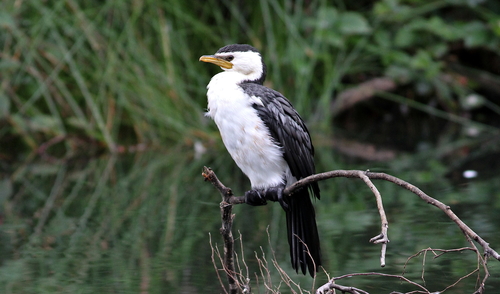
Microcarbo
Microcarbo is a genus of fish-eating birds, known as cormorants, of the family Phalacrocoracidae. The genus was formerly subsumed within Phalacrocorax.

Nesoenas
Nesoenas is a bird genus in the pigeon and dove family, Columbidae. It is often included with the typical turtle-doves in Streptopelia or the typical pigeons (Columba). By those who accepted it, it was usually treated as monotypic, containing only the pink pigeon (N. mayeri) of Mauritius.
%2C%20crop.jpg)
Apalis
The apalises are small passerine birds belonging to the genus Apalis, in the family Cisticolidae. They are found in forest, woodlands and scrub across most parts of sub-Saharan Africa. They are slender birds with long tails and have a slender bill for catching insects. They are typically brown, grey or green above and several species have brightly coloured underparts. Males and females are usually similar in appearance but the males are sometimes brighter.

Chlorostilbon
Chlorostilbon is a genus of hummingbird in the family Trochilidae, known as emeralds (as are some hummingbirds in the genera Amazilia and Elvira). A single species, the blue-chinned sapphire is variously placed in the monotypic genus Chlorestes or in Chlorostilbon. The taxonomy of the C. mellisugus superspecies is highly complex and, depending on view, includes 1-8 species. All species in this genus have straight black or black-and-red bills. The males are overall iridescent green, golden-green or bluish-green, and in some species the tail and/or throat is blue. The females have whitish-grey u

Surniculus
Surniculus is a small genus of birds in the cuckoo family. Its four members are found in tropical Asia and the Philippines. They are:
{| class="wikitable"
|-
! Image !! Scientific name !! Common name !! Distribution
|-
|120px || Surniculus lugubris || Square-tailed drongo-cuckoo || Sri Lanka and Southeast Asia and is a summer visitor to the Himalayas from Kashmir to eastern Bangladesh
|-
|120px || Surniculus dicruroides || Fork-tailed drongo-cuckoo || peninsular India in hill forests although some specimens are known from the Himalayan foothills
|-
| || Surniculus musschenbroeki || Moluccan dr

Galloperdix
Galloperdix is a genus of three species of bird in the pheasant family, Phasianidae. These terrestrial birds are restricted to the Indian subcontinent, with the red spurfowl and painted spurfowl in forest and scrub in India, and the Sri Lanka spurfowl in forests of Sri Lanka. They share the common name "spurfowl" with the members of the genus Pternistis which are widely distributed in Africa.
thumb|Egg, Collection Museum Wiesbaden

Hyliota
The hyliotas are a genus, Hyliota, of passerine bird from Africa. The taxonomic position of the genus has been a longstanding mystery. They have been formerly regarded as Old World warblers in the family Sylviidae, or related to the batises and wattle-eyes in the family Platysteiridae, bush-shrikes in the family Malaconotidae, or even Old-World flycatchers in the family Muscicapidae. An analysis of the mitochondrial DNA of the genus and possible relatives found they have no close relatives and are basal in the clade Passerida. They are now often regarded as a family in their own right, Hylioti

Mimus
Mimus is a genus of passerine birds in the family Mimidae. It contains the typical mockingbirds.

Procellaria
Procellaria is a genus of Southern Ocean long-winged seabirds related to prions, and the type genus of the order Procellariiformes. The black petrel (Procellaria parkinsoni) ranges in the Pacific Ocean, and as far north as Central America. The spectacled petrel (Procellaria conspicillata) is confined to the Atlantic Ocean, and the Westland petrel (Procellaria westlandica) to the Pacific Ocean. The white-chinned (Procellaria aequinoctialis) and grey petrel (Procellaria cinerea) range throughout the higher latitudes of the Southern Ocean.
%20(17849716130).jpg)
Vidua
Vidua is a genus of passerine birds in the family Viduidae.
.jpg)
Chamaepetes
Chamaepetes is a genus of bird in the family Cracidae. It contains the following species:
{| class="wikitable"
|-
! Image !! Scientific name !! Common name !! Distribution
|-
|120px || Chamaepetes goudotii || Sickle-winged guan || Bolivia, Colombia, Ecuador, and Peru
|-
|120px || Chamaepetes unicolor || Black guan ||Costa Rica and Panama
|-
|}
.jpg)
Phaethornis
Phaethornis is a genus of hummingbirds in the hermit subfamily, Phaethornithinae. They occur from southern Mexico, through Central America, to South America as far south as northern Argentina.

Cyanopica
Cyanopica is a small genus of magpies in the family Corvidae. They belong to a common lineage with the genus Perisoreus.
.jpg)
Dacnis
Dacnis is a genus of Neotropical birds in the tanager family Thraupidae.

Anthochaera
Anthochaera is a genus of birds in the honeyeater family. The species are endemic to Australia and include the little wattlebird, the red wattlebird, the western wattlebird, and the yellow wattlebird. A molecular phylogenetic study has shown that the regent honeyeater also belongs in this genus.
Bangsia
Bangsia is a genus of Neotropical birds in the tanager family Thraupidae. They are native to humid forests in Colombia, Ecuador, Panama and Costa Rica.

Quiscalus
The avian genus Quiscalus contains seven of the 11 species of grackles, gregarious passerine birds in the icterid family. They are native to North and South America.

Synthliboramphus
Synthliboramphus is a small genus of seabirds in the auk family from the North Pacific. The genus name Synthliboramphus is from Ancient Greek sunthlibo, "to compress", and rhamphos, "bill". The English name "Murrelet" is a diminutive of "murre", a word of uncertain origins, but which may imitate the call of the common guillemot.

Colius
Colius is a genus of mousebirds in the family Coliidae. The four species are widely distributed in Africa. Two other African mousebirds are placed in the genus Urocolius.
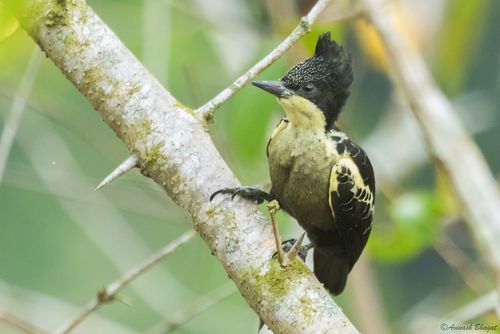
Hemicircus
Hemicircus is a genus of birds in the woodpecker family Picidae. Members of the genus are found in India and Southeast Asia.
Batis
genus of birds
Calyptophilus
Calyptophilus is a genus of birds that are endemic to the Caribbean island of Hispaniola.

Trogon
genus of birds

Penelopides
Penelopides is a genus of relatively small, primarily frugivorous hornbills restricted to forested areas of the Philippines. Their common name, tarictic hornbills, is an onomatopoetic reference to the main call of several of them. They have a ridged plate-like structure on the base of their mandible. All are sexually dimorphic: males of all species are whitish-buff and black, while females of all species except the Mindoro hornbill are primarily black.

Schiffornis
Schiffornis is a genus of South American bird in the family Tityridae. It has traditionally been placed in the manakin family, but evidence strongly suggest it is better placed in Tityridae, where now placed by SACC. In addition to schiffornis, they are sometimes referred to as mourners; a name shared with members of the genera Laniocera, Laniisoma and Rhytipterna.
Onychognathus
Onychognathus is a genus of starlings native to the Afrotropical realm. All the species are quite similar, and characterised by rufous primary wing feathers, very obvious in flight. The males are typically mainly glossy black, and the females have dull (sometimes dark, depending on species) grey heads.

Eupodotis
Eupodotis is a genus of bird in the bustard family Otididae. It contains two species, all restricted to Africa. Species in the genera Afrotis and Lophotis are sometimes included in this genus; however some authorities separate the Karoo korhaan, Rüpell's Korhaan and little brown bustard as a separate genus Heterotetrax.
thumb|Egg, Collection Museum Wiesbaden

Ramphocelus
Ramphocelus is a Neotropical genus of birds of the tanager family. They have enlarged shiny whitish or bluish-grey lower mandibles, which are pointed upwards in display. However, this is greatly reduced in the females of most species. Males are black and red, orange or yellow, while females resemble a duller version of the males, or are brownish or greyish combined with dull red, orange or yellowish.

Scytalopus
Scytalopus is a genus of small suboscine passerine birds belonging to the tapaculo family Rhinocryptidae. They are found in South and Central America from Tierra del Fuego to Costa Rica, but are absent from the Amazon Basin. They inhabit dense vegetation at or near ground-level and are mainly found in mountainous regions, particularly the Andes. They can be very difficult to see as they run through the undergrowth in a mouse-like fashion.

Geokichla
Geokichla, from Ancient Greek γεω- (geō-), meaning "ground", and κιχλη (kikhlē), meaning "thrush", are a genus of medium-sized thrushes who are mostly insectivorous or omnivorous in the thrush family, Turdidae. They were traditionally listed in the Zoothera, but molecular phylogenetic studies published in 2008 led to their placement in a separate genus.

Caracara
genus of birds
Selasphorus
Selasphorus is a genus of hummingbirds from Middle and North America.

Geophaps
Geophaps is a small genus of doves. Established by George Robert Gray, it contains three extant species. The plumage and distribution suggests that all species within the genus have formed from a common ancestor and that through adaptive radiation they have varied greatly in size, shape and ecology.

Neotis
Neotis is a bird genus in the family Otididae. It contains the following species:
{| class="wikitable"
|-
! Image !! Scientific name !! Common name!! Distribution
|-
|120px || Neotis heuglinii|| Heuglin's bustard|| Djibouti, Eritrea, Ethiopia, Kenya, and Somalia
|-
|120px || Neotis ludwigii|| Ludwig's bustard|| Angola, Botswana, Lesotho, Namibia, and South Africa
|-
| || Neotis nuba|| Nubian bustard||Burkina Faso, Cameroon, Chad, Mali, Mauritania, Niger, Nigeria, and Sudan
|-
|120px || Neotis denhami|| Denham's bustard|| Sub-Saharan Africa
|-
|}
Cursorius
Cursorius is a genus of coursers, a group of birds in the pratincole family Glareolidae, in the order Charadriiformes. The genus name derive from Latin cursor meaning "runner".
.jpg)
Smithornis
Smithornis is a genus of birds in the family Calyptomenidae, the broadbills. The genus comprises three species native to Africa.

Camarhynchus
Camarhynchus is a genus of birds in the tanager family Thraupidae. All species of Camarhynchus are endemic to the Galápagos Islands, and together with related genera, they are collectively known as Darwin's finches. Formerly classified in the bunting and American sparrow family Emberizidae, more recent molecular genetic studies have shown it to belong in the tanager family.
.jpg)
Ailuroedus
Ailuroedus is a genus of birds in the bowerbird family, Ptilonorhynchidae, native to forests in Australia and New Guinea. The common name, catbird, refers to these species' "wailing cat-like calls". The scientific name Ailuroedus is derived from the Greek 'ailouros', meaning cat, and 'eidos', referring to form (or perhaps from oaidos, singer).

Cinclodes
Cinclodes is a genus of passerine birds belonging to the ovenbird family Furnariidae. There are about a dozen species distributed across the southern and Andean regions of South America. They are terrestrial birds of open habitats, typically found near water such as mountain streams or the seashore where they forage for small invertebrates. They are stocky birds with strong legs and feet and pointed, slightly downcurved bills. The plumage is inconspicuous and mainly brown, often with a pale wingbar, stripe over the eye and corners to the tail. They have loud, trilling songs and often raise the

Tarsiger
Tarsiger is a genus of eight species of birds in the family Muscicapidae. They are small, mostly brightly coloured insectivorous birds native to Asia and (one species) northeastern Europe; four of the six species are confined to the Sino-Himalayan mountain system. The genus has sometimes been included within the related genus Luscinia, but the species have been found to form a distinct monophyletic group.
.jpg)
Basileuterus
Basileuterus is a genus of New World warblers, best represented in Central and South America. This is one of only two warbler genera that are well represented in the latter continent. Some species formerly considered in this genus are now placed in the genus Myiothlypis. It is likely that the ancestors of this genus colonised South America from the family's heartland in northern Central America even before the two continents were linked, and subsequent speciation provided most of the resident warbler species of that region.
%20male.jpg)
Piculus
Piculus is a genus of birds in the woodpecker family Picidae that are found in Central and South America.

Vireo
genus of birds
%20(cropped).jpg)
Sternula
Sternula is a genus of small white terns, with a global distribution along sheltered sandy coasts and large rivers.
Semnornis
The toucan-barbets are small birds in the genus Semnornis. The genus was often included in the paraphyletic barbets, but recently is usually classified into a distinct family, Semnornithidae; alternatively, all barbets might be moved to the toucan family Ramphastidae as a subfamily, Semnornithinae. Toucan-barbets comprise only two species: the toucan barbet (S. ramphastinus) and the prong-billed barbet (S. frantzii).