Category
page 1Birds of Europe
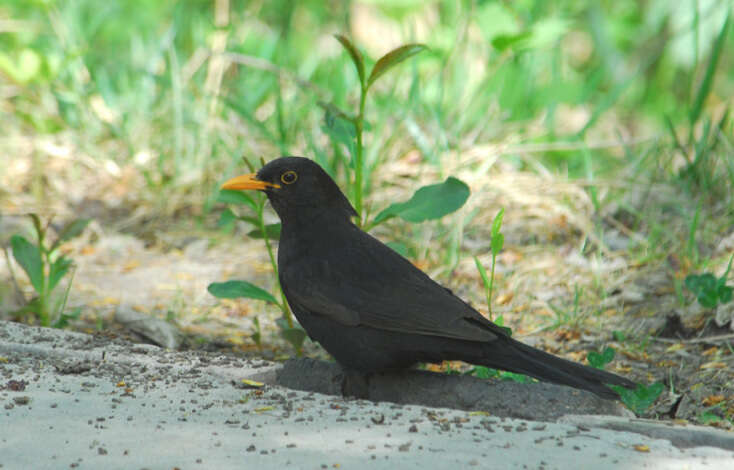
Common Blackbird
species of thrush

European Robin
species of bird
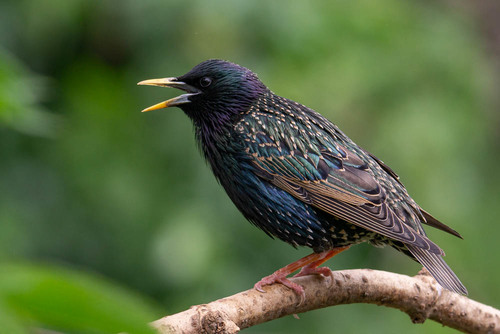
Common Starling
species of bird

Golden Eagle
species of bird of prey

White Stork
species of bird

Western Jackdaw
species of bird

European Goldfinch
species of bird

Northern Lapwing
species of bird

Common Nightingale
species of bird

Hooded Crow
species of bird

Cyanistes caeruleus
species of bird

Mute Swan
species of swan

Eurasian Chaffinch
species of small passerine bird

Western Capercaillie
species of bird

bearded vulture
species of bird

Archaeopteryx
Archaeopteryx (; ), sometimes referred to by its German name, "''''''" () is a genus of bird-like dinosaurs. The genus name derives from the Ancient Greek (), meaning 'ancient', and (), meaning 'feather, wing'. Between the late 19th century and the early 21st century, Archaeopteryx was generally accepted by palaeontologists and popular reference books as the oldest known bird (member of the group Avialae). Older potential avialans have since been identified, including Anchiornis, Xiaotingia, Aurornis, and Baminornis.

Common Wood Pigeon
species of bird

Grey Partridge
species of bird

Western Cattle Egret
species of birds

Motacilla flava
species of bird

European Turtle Dove
species of bird

Common Shelduck
species of bird
Yellowhammer
thumb|Emberiza citrinella
The yellowhammer (Emberiza citrinella) is a passerine bird in the bunting family that is native to Eurasia and has been introduced to New Zealand and Australia. Most European birds remain in the breeding range year-round, but the eastern subspecies is partially migratory, with much of the population wintering further south. The male yellowhammer has a bright yellow head, streaked brown back, chestnut rump, and yellow under parts. Other plumages are duller versions of the same pattern. The yellowhammer is common in open areas with some shrubs or trees, and forms small

Common Linnet
species of bird

Greater Flamingo
species of bird

Short-toed Snake Eagle
species of bird

Common House Martin
species of bird

European Greenfinch
species of bird

Song Thrush
species of bird

European Herring Gull
species of bird

Fieldfare
The fieldfare (Turdus pilaris) is a member of the thrush family Turdidae. It breeds in woodland and scrub in northern Europe and across the Palearctic. It is strongly migratory, with many northern birds moving south during the winter. It is a very rare breeder in the British Isles, but winters in large numbers in the United Kingdom, Southern Europe, North Africa and the Middle East. It is omnivorous, eating a wide range of molluscs, insects and earthworms in the summer, and berries, grain and seeds in the winter.

European Green Woodpecker
species of bird

Little Bustard
species of bird

Cinclus cinclus
species of bird

Common Redstart
species of bird

Atlantic Puffin
species of seabird

European Roller
species of bird

Eurasian Oystercatcher
species of bird

Brown-cheeked rail
species of wetland bird

Long-tailed Tit
species of bird

Red-footed Falcon
species of bird

Hazel Grouse
species of bird

Mistle Thrush
species of bird

Little Bittern
species of bird

Stock Dove
species of bird

Red-breasted Merganser
species of bird

Sylvia atricapilla
species of bird

Larus fuscus
species of bird
Dunnock
thumb|Prunella modularis

Common Chiffchaff
species of bird

Common Ringed Plover
species of bird
Brambling
Brambling's bird song|song|thumb
thumb|Brambling in Pahalgam, Anantnag, Jammu and Kashmir
The brambling (Fringilla montifringilla) is a small passerine bird in the finch family Fringillidae. It has also been called the '''cock o' the north and the mountain finch'''. It is widespread and migratory, often seen in very large flocks.

Spotted Flycatcher
species of bird

Sylvia borin
species of bird

Ring Ouzel
species of bird

Northern Gannet
species of Least Concern bird

Red-crested Pochard
species of bird

Barnacle goose
species of bird

Alpine Chough
species of bird
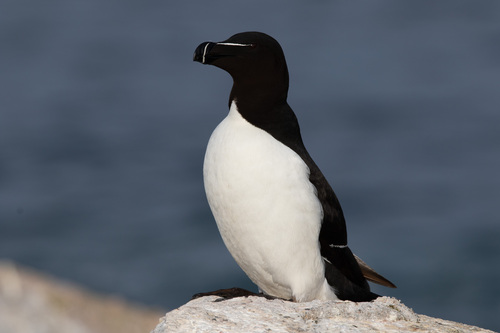
Razorbill
The razorbill (Alca torda) is a North Atlantic colonial seabird and the only extant member of the genus Alca of the family Alcidae, the auks. It is the closest living relative of the extinct great auk (Pinguinus impennis). Historically, it has also been known as "auk", "razor-billed auk" and "lesser auk".