Category
page 1Book of Judges locations

Acre
city in Israel

Sidon
Sidon ( ), or Saida ( ; ), is the third-largest city in Lebanon. It is located on the Mediterranean coast in the South Governorate, of which it is the capital. Tyre, to the south, and the Lebanese capital of Beirut, to the north, are each about away. Sidon has a population of about 80,000 within the city limits, while its metropolitan area has more than a quarter-million inhabitants.

Safed
Safed ( ; ), also known as Tzfat and officially as Zefat (), is a city in the Northern District of Israel. Located at an elevation of up to , Safed is the highest city in the Galilee and in Israel. In 2022, 93.2% of the population was Jewish and 6.8% was counted as other.

Mount Tabor
mountain in northern Israel traditionally believed to be the scene of the Transfiguration of Jesus

Moab
Moab () was an ancient Levantine kingdom whose territory is today located in southern Jordan. The land is mountainous and lies alongside much of the eastern shore of the Dead Sea. The existence of the Kingdom of Moab is attested to by numerous archaeological findings, most notably the Mesha Stele, which describes the Moabite victory over an unnamed son of King Omri of Israel, an episode also noted in 2 Kings 3. The Moabite capital was Dibon. According to the Hebrew Bible, Moab was often in conflict with its Israelite neighbours to the west.

Beit Shemesh
city in Israel

Tel Megiddo
site of an ancient city in northern Israel's Jezreel valley

Bethel
thumb|The ruins of Beitin, the site of ancient Bethel, during the 19th century

Mount Gerizim
mountain in Judea and Samaria Area, Palestine

Tel Hazor
Archeological site in Israel
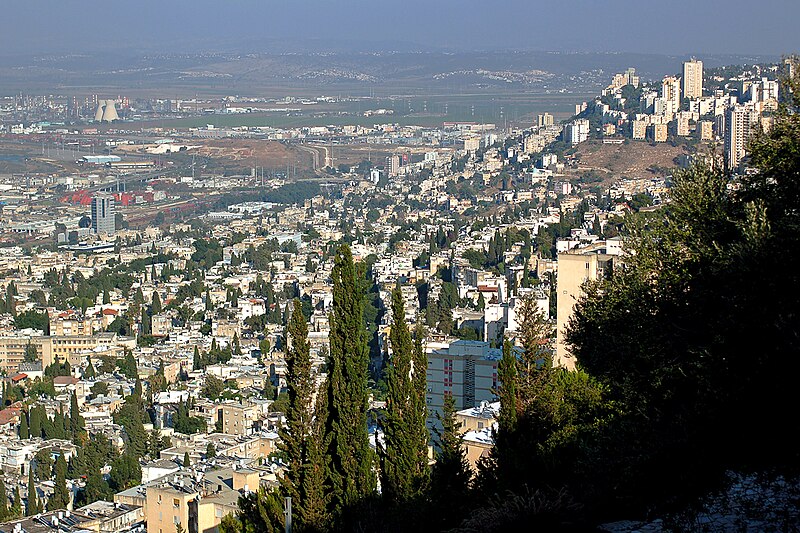
Jezreel Valley
valley in Israel
.jpg)
Shechem
Shechem ( ; , ; ), also spelled Sichem ( ; in the Septuagint, ) and other variants, was an ancient city in the Southern Levant. Described in ancient Egyptian inscriptions from the 19th century BC as a part of Retjenu, it is also recorded as a Canaanite city in the 14th century BCE Amarna letters.

Shiloh
Biblical city

Gilead
Gilead or Gilad (, ; Gilʿāḏ, , Jalʻād) is the ancient, historic, biblical name of the mountainous northern part of the region of Transjordan, present-day Jordan. The region is bounded in the west by the Jordan River, in the north by the deep ravine of the river Yarmouk and the region of Bashan, and in the southwest by what were known during antiquity as the "plains of Moab", with no definite boundary to the east. In some cases, "Gilead" is used in the Bible to refer to all the region east of the Jordan River. Gilead is situated in modern-day Jordan, corresponding roughly to the Irbid, Ajloun,

Tubas
Palestinian city

Shephelah
The Shephelah () or Shfela (), or the Judaean Foothills (), is a transitional region of soft-sloping rolling hills in south-central Israel stretching over between the Judaean Mountains and the Coastal Plain. The different use of the term "Judean Plain", as either defining just the Coastal Plain segment stretching along the Judaean Mountains, or also including, or only referring to, the Shfela, often creates grave confusion.
Dan
ancient city in northern Israel
Kishon River
river in northern Israel

Gibeah
thumb|Royal Palace, Tell el-Ful|Tell el-Ful in northern Jerusalem is usually identified with Gibeah of BenjaminGibeah (; Gīḇəʿā; Gīḇəʿaṯ) is the name of three places mentioned in the Hebrew Bible, in the tribes of Benjamin, Judah, and Ephraim respectively.

Nahalal
Nahalal () is a moshav in northern Israel. Covering , it falls under the jurisdiction of the Jezreel Valley Regional Council. In it had a population of .

Bashan
thumb|View from Mount Bental/Tal Al-Gharam|Mount BentalBashan (; ; or Basanitis) is the ancient, biblical name used for the northernmost region of Transjordan during the Iron Age. It is situated in modern-day Jordan and Syria. Its western part, nowadays known as the Golan Heights, is occupied by Israel during the 1967 Six Day War.

Akhziv National Park
Achziv ( ʾAḵzīḇ) or Az-Zeeb () is an ancient site on the Mediterranean coast of northern Israel, between the border with Lebanon and the city of Acre. It is located north of Acre on the coast of the Mediterranean Sea, within the municipal area of Nahariya. Today it is an Israeli national park.

Penuel
200px|right|thumb|Depiction of Jacob wrestling with the angel at Penuel by [[Eugène Delacroix]]
Penuel () is a place described in the Hebrew Bible as being not far from Sukkot on the east of the Jordan River, south of the Zarqa in Jordan.
Nahal Sorek
river in Israel
Dora
archaeological site
Givat HaMoreh
mountain in Israel
Baal-berith
God(s) worshipped in ancient Canaan
Ayalon Valley
valley in Israel
Aram-Naharaim
Aram-Naharaim ( ʾĂram Nahărayim, literally "Aram of the two rivers") is the biblical term for an ancient land along the great bend of the Euphrates River.
Kadesh
Placename in the Hebrew Bible

Kedesh
Kedesh (alternate spellings: Qedesh, Cadesh, Cydessa) was an ancient Canaanite and later Israelite settlement in Upper Galilee, mentioned several times in the Hebrew Bible. Its remains are located in Tel Kedesh, northeast of the modern Kibbutz Malkiya in Israel on the Israeli-Lebanese border.
Sukkot
name which appears in a number of places in the Hebrew Bible as a location

Timnah
Timnath or Timnah was a Philistine city in Canaan that is mentioned in the Hebrew Bible in and in connection with Samson. Modern archaeologists identify the ancient site with a tell lying on a flat, alluvial plain, located in the Sorek Valley ca. north-west of Beit Shemesh, near moshav Tal Shahar in Israel, known in Hebrew as Tel Batash (תל בטש) or Teluliot Batashi (plural), and in Arabic as Tell Butashi or Teleilat Batashi (plural). The site is not to be confused with either the as yet unidentified Timna from the hill country of Judah (), nor with the southern copper-smelting site of Timna in
.png)
Ascalon
Ascalon or Ashkelon was an ancient Near East port city on the Mediterranean coast of the southern Levant of high historical and archaeological significance. Its remains are located in the archaeological site of Tel Ashkelon, within the city limits of the modern Israeli city of Ashkelon. Traces of settlement exist from the 3rd millennium BCE, with evidence of city fortifications emerging in the Middle Bronze Age. During the Late Bronze Age, it was integrated into the Egyptian Empire, before becoming one of the five cities of the Philistine pentapolis following the migration of the Sea Peoples.

Jabesh-Gilead
Jabesh-Gilead ( Yāḇēš Gilʿāḏ), sometimes shortened to Jabesh, was an ancient Israelite town in Gilead, in northwest Jordan. Jabesh is mentioned several times in the Hebrew Bible primarily in connection with King Saul's battles against the Ammonites and Philistines.
Debir
city in southern Canaan mentioned in the Hebrew Bible
Abel-meholah
thumb|Jordan Valley around Wadi al-Malih. Abel-meholah is believed to have been located in that area
Abel-meholah (, Avel Mehola) was an ancient city frequently mentioned in the Hebrew Bible (Old Testament of Christianity). It is best known for being the birthplace and residence of the prophet Elisha. It is traditionally located near the Jordan River, south of Beit-She'an.
Tob
Tob was the name of a place in Transjordan, mentioned in the Hebrew Bible.
Hormah
thumb|right
Hormah, also known by its Canaanite name Zephath (Tsfat צפת), is an unidentified city mentioned in the Hebrew Bible in relation to several conflicts between the migrant Israelite people seeking to enter the Promised Land and the Amalekites and the Canaanites who dwelt at that time in southern Canaan.
Lebonah
Lebonah was a town near Shiloh, on the north side of Bethel, mentioned in the Hebrew Bible (). It has been identified with Al-Lubban ash-Sharqiya, to the south of Nablus.
Luz
name of two places in the Bible
Abel-cheramim
Abel-cheramim (אָבֵל כְּרָמִים 'ʾāḇēl kǝrāmīm' ) was a village of the Ammonites, east of Jordan. Jephthah, the judge, victoriously pursued the Ammonites as far as this village. Also referred to as Abel-keramin. The only reference to this location in the Hebrew Bible is Judges 11:33. The name means "meadow of the vineyards" or "plain of the vineyards".
Rock of Etam
hiding place of Samson
Harosheth Haggoyim
Fortress described in the Book of Judges
Meroz
Meroz ( Mêrōz; ) is a city mentioned in the Book of Judges.
Aram Rehob
Aramaean kingdom
Zorah
Zorah () or Tzorah (), was a biblical town in the Judaean Foothills. It has been identified with the former village of Sar'a, now often referred to as Tel Tzora.
Transjordan (Bible)
Biblical area of land in the Southern Levant lying east of the Jordan River valley