Category
page 1Buddhism in China
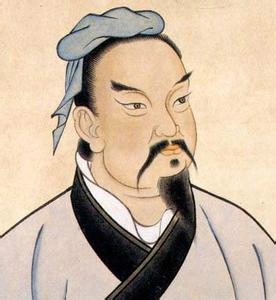
Sun Tzu
6th century BCE Chinese general and military strategist

Xuanzang
Xuanzang (; ; 6 April 6025 February 664), born Chen Hui or Chen Yi (), also known by his Sanskrit Dharma name Mokṣadeva, was a 7th-century Chinese Buddhist monk, scholar, traveller, and translator. He is known for the epoch-making contributions to Chinese Buddhism, the travelogue of his journey to the Indian subcontinent in 629–645, his efforts to bring at least 657 Indian texts to China, and his translations of some of these texts. He was only able to translate 75 distinct sections of a total of 1,335 chapters, but his translations included some of the most important Mahayana scriptures.
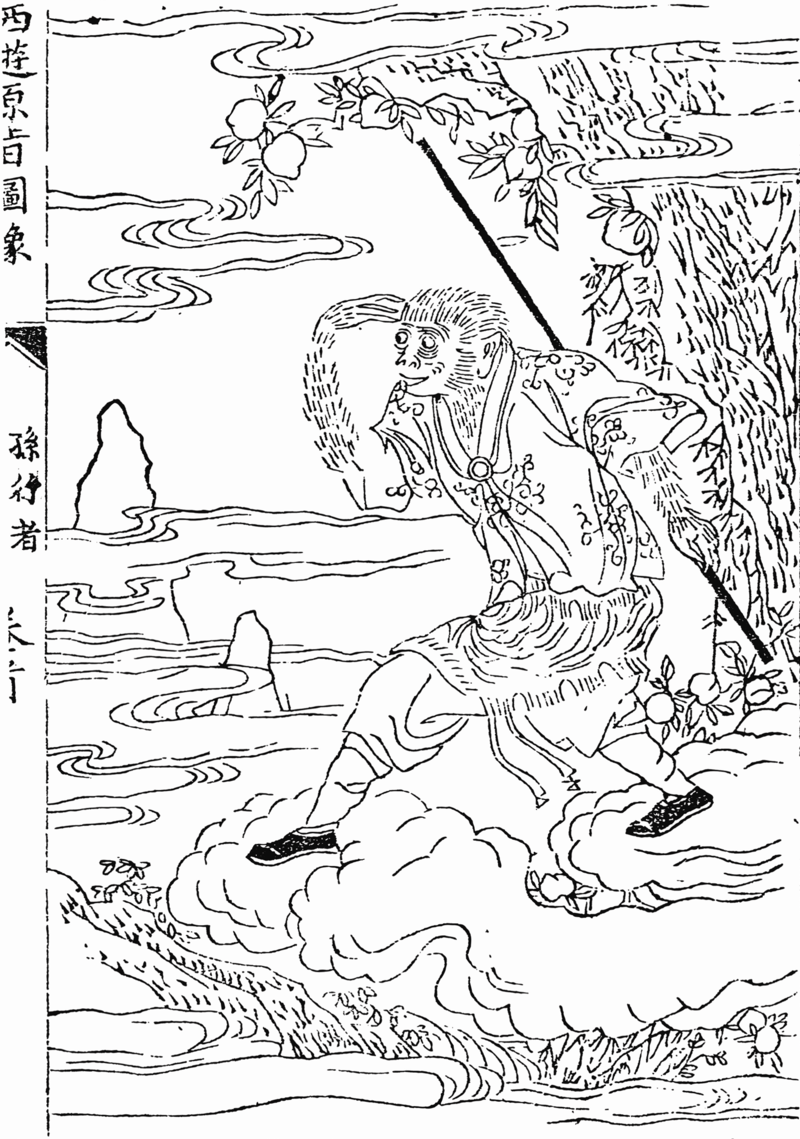
Sun Wukong
mythical character from Journey to the West

Pure Land Buddhism
branch of Mahāyāna Buddhism focused on achieving rebirth in a Pure Land
.jpg)
Guan Yin
Guanyin () is a common Chinese name of the Bodhisattva associated with compassion known as Avalokiteśvara (). Guanyin is short for Guanshiyin, which means "[The One Who] Perceives the Sounds of the World". Originally regarded as male in Indian Buddhism, Guanyin has been more commonly depicted as female in China and most of East Asia since about the 12th century. Due to sociogeographical factors, Guanyin may also be historically depicted as genderless or androgynous. On the 19th day of the sixth lunar month, Guanyin's attainment of Buddhahood is celebrated. Guanyin has been incorporated in othe

Budai
Budai is a nickname given to the historical Chinese monk Qieci () in the Later Liang Dynasty, who is often identified with and venerated as the future Buddha Maitreya in Chan Buddhism and Buddhist scripture. With the spread of Chan Buddhism, he also came to be venerated in Vietnam, Korea, and Japan.

Buddha's birthday
birthday of the Prince Siddhartha Gautama

Mazu
Mazu or Matsu is a sea goddess in Chinese folk religion, Chinese Buddhism, Confucianism, and Taoism. She is also known by several other names and titles. Mazu is the deified form of Lin Moniang (), a shamaness from Fujian who is said to have lived in the late 10th century. After her death, she became revered as a tutelary deity of Chinese seafarers, including fishermen and sailors.
.jpg)
Kṣitigarbha
Kṣitigarbha (, , Wylie: sa yi snying po) is a bodhisattva primarily revered in East Asian Buddhism and usually depicted as a Buddhist monk. His name may be translated as "Earth Treasury", "Earth Store", "Earth Matrix", or "Earth Womb". Kṣitigarbha is known for his vow to take responsibility for the instruction of all beings in the six worlds between the death of Gautama Buddha and the rise of Maitreya, as well as his vow not to achieve Buddhahood until all hells are emptied. He is therefore often regarded as the bodhisattva of hell-beings, as well as the guardian of children and patron deity o
Ulambana
traditional Buddhist and Taoist festival

Tiantai
thumb|300px|Mount Tiantai by Wu Bin, 1605, Honolulu Museum of Art
Loulan Kingdom
ancient kingdom in modern China
.jpg)
Zhiyi
Zhiyi (; 538–597 CE) also called Tiantai Dashi () and Zhizhe (, "Wise One"), was a Chinese Buddhist monk, philosopher, meditation teacher, and exegete. He is considered to be the founder of the Tiantai Buddhist tradition, as well as its fourth patriarch. Śramaṇa Zhiyi is widely regarded as one of the most influential figures in the development of East Asian Buddhist thought and practice. As the first major Chinese Buddhist thinker to construct a comprehensive religious system based primarily on Chinese interpretations, Zhiyi played a crucial role in synthesizing various strands of Mahayana Bud
Four Heavenly Kings
Buddhist gods
Chan Buddhism
Chinese school of Mahāyāna Buddhism

Huayan school
The Huayan school of Buddhism (, Wade–Giles: Hua-Yen, "Flower Garland," from the Sanskrit "Avataṃsaka") is a Mahayana Buddhist tradition that developed in China during the Tang dynasty (618–907). The Huayan worldview is based primarily on the Buddhāvataṃsaka Sūtra (, Flower Garland Sūtra) as well as on the works of Huayan patriarchs, like Zhiyan (602–668), Fazang (643–712), Chengguan (738–839), Zongmi (780–841) and Li Tongxuan (635–730).

Amoghavajra
thumb|Portrait of Amoghavajra. Japan, Kamakura Period (14th century)
thumb|right|The Diamond Realm|Vajradhātu maṇḍala used in Amoghavajra's teachings from the ''''.

Dharmaguptaka
thumb|right|250px|Central Asian bhikkhu|Buddhist monk teaching a Chinese monk. [[Bezeklik Caves, 9th–10th century; although Albert von Le Coq (1913) assumed the blue-eyed, red-haired monk was a Tocharian, modern scholarship has identified similar Caucasoid figures of the same cave temple (No. 9) as ethnic Sogdians, an Eastern Iranian people who inhabited Turfan as an ethnic minority community during the phases of Tang Chinese (7th–8th century) and Uyghur rule (9th–13th century).]]
de
concept in Chinese philosophy
Mārīcī
Buddhist god
Sacred Mountains of China
The sacred mountains of China
Yanluo Wang
Chinese deity of death
Buddhism in China
overview role of Buddhism in China
Nio
two wrathful and muscular guardians of the Buddha standing at the entrance of Buddhist temples in East Asian Buddhism
Buddhist cuisine
East Asian cuisine informed by Buddhism
Wisdom King
type of Buddhist deity

mushin
thumb|Chinese calligraphy|Calligraphy of 無心
hungry ghost
Chinese conception of the preta of Buddhist mythology
Legend of Jigong
Chan Buddhist monk who lived in the Southern Song
East Asian Mādhyamaka
Buddhist tradition in East Asia which represents the Indian Madhyamaka
Mahavibhasa
encyclopedic work on Abhidharma
Awakening of Faith in the Mahayana
Mahayana text, attributed to Aśvaghoṣa, but actually a Chinese composition; harmonizes Buddha-nature and Yogacara into a synthetic vision based on the One Mind in Two Aspects concept

Bianwen
[[File:Pelliot chinois 4524-06.jpg|thumb|upright=1.5|The Magical Combat (Jiang Mo Bian Wen) (降魔變文)]]
Huahujing
The Huahujing (also romanized as Hua Hu Ching) is a Taoist work, traditionally attributed to Laozi. No extant versions exist today apart from quotations in a partial manuscript discovered in the Mogao Caves, Dunhuang, in China.
Hung Hei-gun
Chinese martial artist
Mantra of Light
Mantra in Japanese Buddhism
Cundī
female bodhisattva and manifestation of Avalokiteśvara
Śūraṅgama Mantra
Buddhist mantra
Chinese Esoteric Buddhism
Traditions of Vajrayana Buddhism
Hall of Four Heavenly Kings
the first hall inside shanmen in Chinese Buddhist temples, which enshrines Four Heavenly Kings, Maitreya Buddha, Skanda
.jpg)
Longnü
thumb|right|Avalokiteśvara with Longnü (left) and Sudhana (right).
Zhu Hong
Chinese Buddhist monk
Mahavira Hall
main hall of a buddhist temple in China, Korea or Vietnam
Maheśvara
figure in Buddhist Mythology
Sudhana
thumb|right|Avalokiteśvara with Longnü (left) and Sudhana (right).
Sudhanakumāra (), mainly known as Sudhana and Shancai or Shancai Tongzi in Chinese, and translated as Child of Wealth, along with Longnü "Dragon Girl" are considered acolytes of the bodhisattva Guanyin (Avalokiteśvara) in Chinese Buddhism. He and Longnü being depicted with Guanyin was most likely influenced by Yunü (Jade Maiden) and Jintong (Golden Youth) who both appear in the iconography of the Jade Emperor.
Sutra of Forty-two Chapters
early Chinese Buddhist text consisting of passages extracted from canonical sūtras
Chinese Buddhist sculpture

Su Bai
Chinese archeologist
tennin
thumb|right|A depiction of a Tennin.
thumb|A man with an irezumi tattoo of a Tennyo.
Huiwen
thumb|upright=0.5|Huìwén (慧文)
Huiwen (慧 文) is considered to be the first patriarch of the Chinese Buddhist School Tiantai. He derived from the Gao (高) family in the current Bohai region of Shandong, under the Northern Qi Dynasty, which ruled northeast China between 550 and 577. Huiwen´s doctrine on the 'simultaneity of the mind in the three wisdoms' (一心 三 智 yīxīn sānzhì) was later developed by his disciple Huìsī in 'simultaneity of the minds in the three consciousnesses'.
Zhengao
The Zhengao (真誥, Declarations of the Perfected) written in 499 CE is the Shangqing Daoist patriarch Tao Hongjing's comprehensive collection of poetry and prose from the original "Shangqing revelations", which were supposedly given to the mystic Yang Xi by a group of Daoist zhenren Perfected Ones from 364 to 370. This classic text has long been famous both as a foundational text of religious Daoism and as a brilliant exemplar of medieval Chinese poetry.
Hanshan Deqing
Buddhist monk (1546–1623)

Tattvasiddhi
Indian Abhidharma Buddhist text by Harivarman
Buddhābhiseka
Buddhābhiseka (; ) refers to a broad range of Buddhist rituals used to consecrate images of the Buddha and other Buddhist figures, such as bodhisattvas.
Humanistic Buddhism
new religious movement
White Dragon Horse
character in the Chinese novel Journey to the West
Sutra of Filial Piety
sutra, attributed to a translation by Kumārajīva but actually composed in China, that synthesizes Confucianism and Buddhist teachings and refutes the criticism that monasticism undermines filial piety
Shanmen
The Gate of Shanmen or Hall of the Shanmen or simply Shanmen (), is the entrance gate of a Buddhist temple. In ancient times, nearly all Buddhist temples had a single Shanmen gate leading into a large hall for the temple. Today, it is observed that most of the surviving Chinese Buddhist temples follow the hall style but have three main gates incorporated into their construction. After successive wars and cultural discontinuity, most Chan Buddhist temples have changed the middle gate into a hall entrance, called "Hall of Shanmen". The Shanmen is the most important gate of a Chan Buddhist temple
ancestor veneration in China
traditional veneration of ancestors in Chinese culture
State Religious Affairs Bureau Order No. 5
Chinese regulation