Category
page 1Cactoideae

Kroenleinia grusonii
species of plant in the family Cactaceae

Copiapoa
Copiapoa is a genus of flowering plants in the cactus family Cactaceae, from the dry coastal deserts, particularly the Atacama Desert, of northern Chile.

Aztekium
The genus Aztekium contains two species of small globular cactus. Discovered in 1929 by F. Ritter, in Rayones, Nuevo León, Mexico, this genus was thought to be monotypic (with Aztekium ritteri) until a second species (Aztekium hintonii) was discovered by George S. Hinton, in Galeana, Nuevo León in 1991. A further possible species, Aztekium valdezii, was described in 2011, but is considered to be a synonym of A. ritteri.
Cactoideae
The Cactoideae are the largest subfamily of the cactus family, Cactaceae, and are widely distributed throughout the Americas. Cactaceae is the 5th most endangered plant or animal family evaluated globally by the International Union for Conservation of Nature. Around 80% of cactus species belong to this subfamily. The genera of the Cactoideae are characterized by microscopic foliage leaves. All photosynthesis occurs in shoot cortex cells covered by a persistent epidermis and stomata. Another important characteristic of this subfamily is ribbed stems, which enable the inner cortex to expand radi

Leptocereus
Leptocereus is a genus of cacti that are native to the Greater Antilles. It has been placed in the tribe Leptocereeae or in a broadly defined Echinocereeae.

Epithelantha
Epithelantha (button cactus) is a genus of cactus that is native to north-eastern Mexico, and the south-western United States from western Texas to Arizona. There are eight species recognised in the genus Epithelantha. The name Epithelantha refers to the flower position near the apex of the tubercles.

Acharagma
Acharagma is a genus of cactus from northern Mexico, comprising three species.

Austrocactus
Austrocactus is a genus of cacti with ten species endemic of southern South America, in Argentina and Chile.

Neoraimondia
Neoraimondia is a genus of medium to large cacti from Peru. The genus is named after the Italian-born Peruvian explorer, naturalist, and scientist, Antonio Raimondi.
==Description==
The plants of the genus Neoraimondia are shrubby to tree-like, candelabra-like columnar cactus are branched from the base and reach a height of up to 15 meters. The upright, usually gray-green stems reach a diameter of up to 40 centimeters. Their 4 to 8 ribs are widely spaced. The large, round to elongated areoles are cone-like short shoots. These short shoots, viewed as condensed inflorescences, are among the lon

Neolloydia
Neolloydia is a genus of cacti.
==Description==
These small, low-growing cacti are usually solitary or form loose cushions. They have spherical to cylindrical shoots that are typically yellowish-green with whitish, woolly tips. The plants measure 3 to 6 centimeters in diameter and 5 to 24 centimeters in height. They have weakly developed or absent ribs. Distinctive conical warts, 3 to 10 millimeters long and 6 to 10 millimeters wide, are prominent on the surface. The areoles are dimorphic, about 3 to 5 millimeters in diameter, spaced 8 to 12 millimeters apart, with a furrow. Central spines, w

Stenocactus
Stenocactus is a genus of cacti in the Cactaceae family.
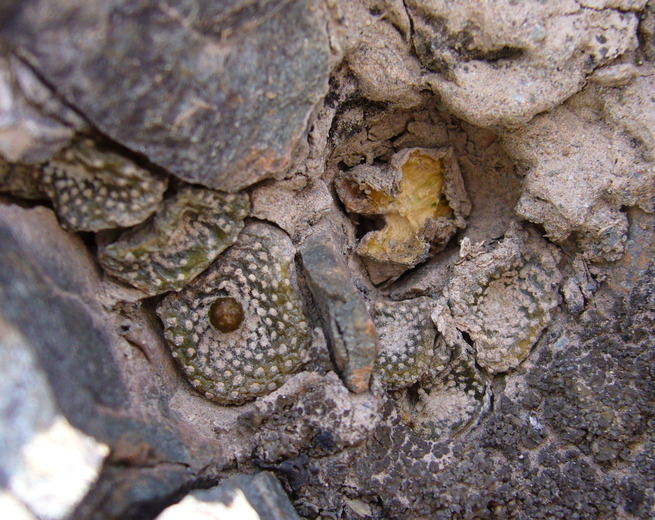
Blossfeldia liliputana
species of plant
Blossfeldia
Blossfeldia is a genus of cacti (family Cactaceae) containing only one species, Blossfeldia liliputana, native to South America in northwestern Argentina (Jujuy, Salta, Tucumán, Catamarca and Mendoza Provinces) and southern Bolivia (Santa Cruz and Potosí Departments). It grows at 1,200–3,500 m altitude in the Andes, typically growing in rock crevices, and often close to waterfalls.
==Description==
It is the smallest cactus species in the world, with a mature size around 10–12 mm diameter, solitary or with many dark-green stems forming colonies in the fissures of the rocks; it does no
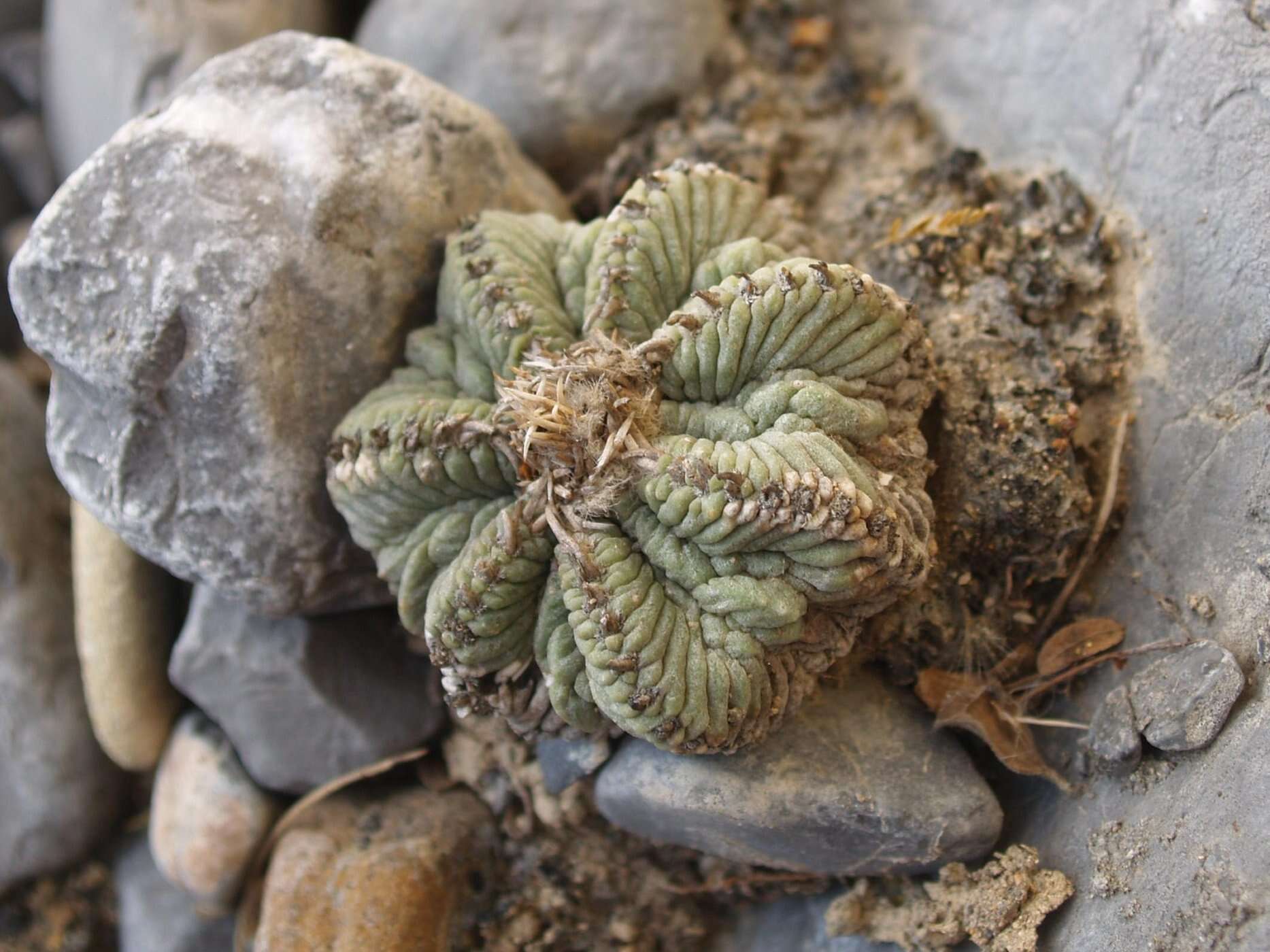
Aztekium ritteri
species of plant

Aztekium hintonii
species of plant

Cacteae
Cacteae is a tribe of plants of the family Cactaceae found mainly in North America especially Mexico. , the internal classification of the family Cactaceae remained uncertain and subject to change. A classification incorporating many of the insights from the molecular studies was produced by Nyffeler and Eggli in 2010. The main threats to cactus species are poaching, farming, mining developments, and climate change.

Echinomastus
Echinomastus (meaning "spiny breast") was a formerly recognized genus of cacti. , it is accepted as a synonym of Sclerocactus. Species formerly placed in the genus are native to the southwestern United States and Mexico.
thumb|Sclerocactus johnsonii, formerly Echinomastus johnsonii
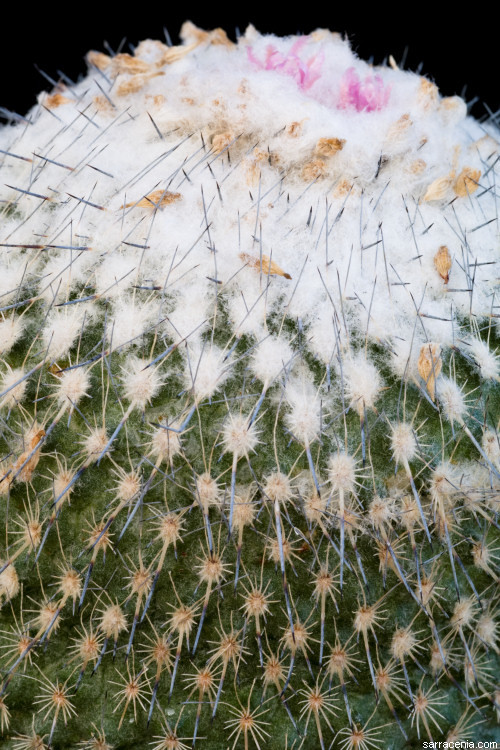
Epithelantha micromeris
species of plant

Copiapoa cinerea
species of plant
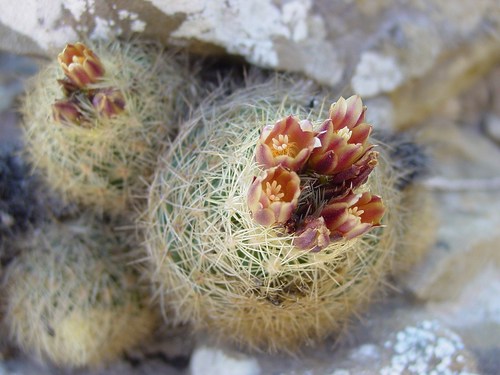
Acharagma roseanum
epecies of plant
Acharagma aguirreanum
species of plant

Homalocephala polycephala
species of cactus

Cereus mirabella
species of plant
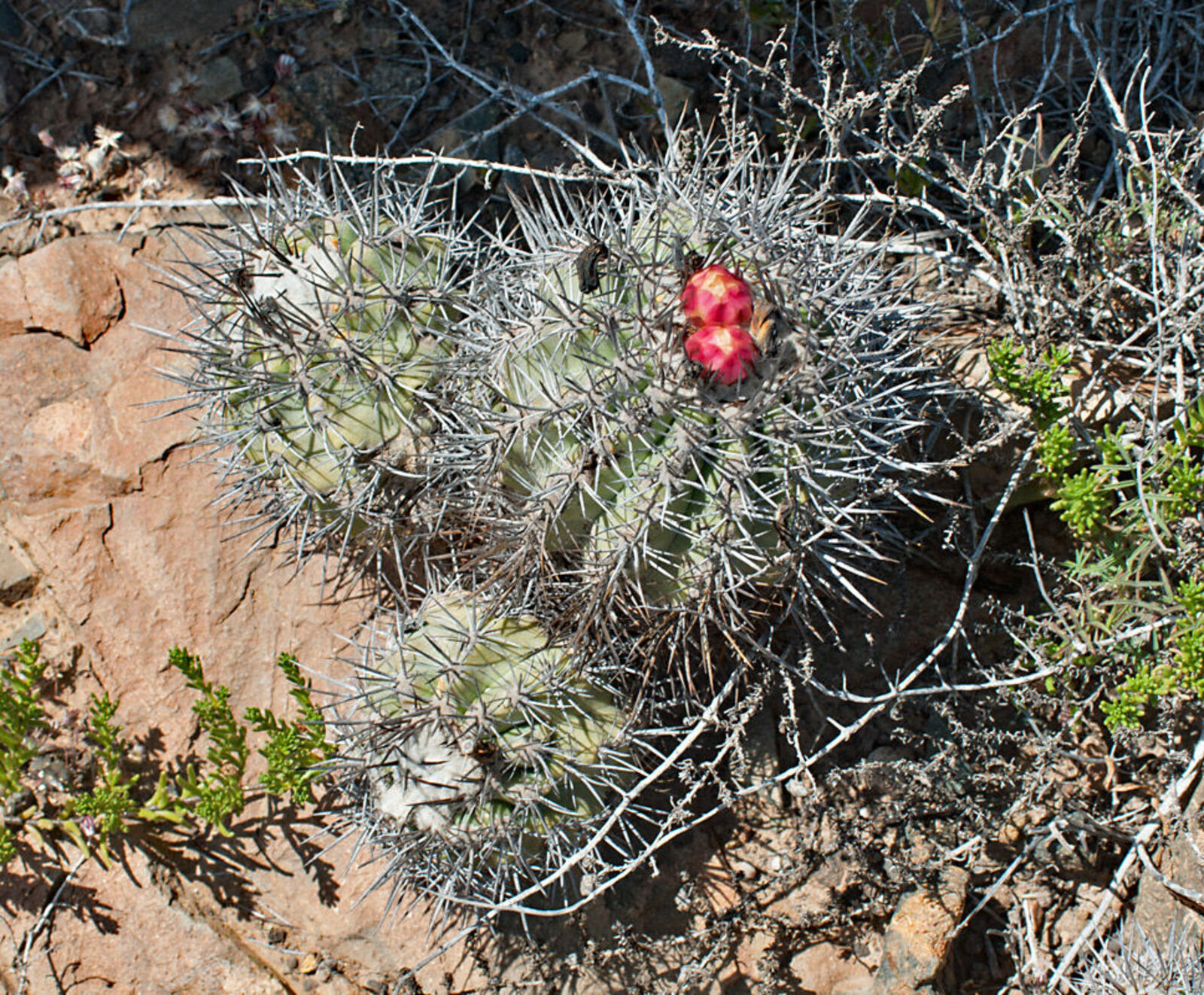
Copiapoa coquimbana
species of plant

Homalocephala texensis
species of plant in the family Cactaceae
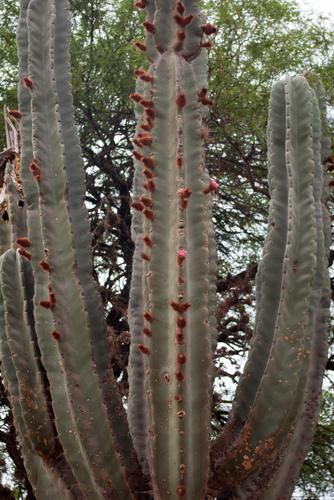
Neoraimondia herzogiana
species of plant
Rapicactus mandragora
species of plant in the subfamily Cactoideae

Stenocactus multicostatus
species of plant
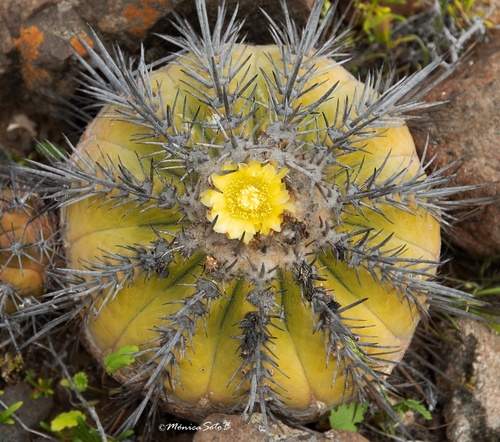
Copiapoa echinoides
species of plant
.jpg)
Jasminocereus
Jasminocereus (meaning "jasmine-like cereus", referring to the flowers) is a genus of cacti with only one species, Jasminocereus thouarsii, endemic to the Galápagos Islands, territorially a part of Ecuador. In English it is often called the candelabra cactus (a name used for other cacti with a similar appearance). At maturity it has a branched, treelike habit, and may be up to tall. The stems are made up of individual sections with constrictions between them. Its creamy white to greenish flowers open at night and are followed by greenish to reddish fruits.

Strombocactus
Strombocactus disciformis is a rare species of cacti and the only species of the genus Strombocactus. The plant originates from Central and Northeast Mexico.
Kadenicarpus pseudomacrochele
species of cactus

Epithelantha bokei
species of plant
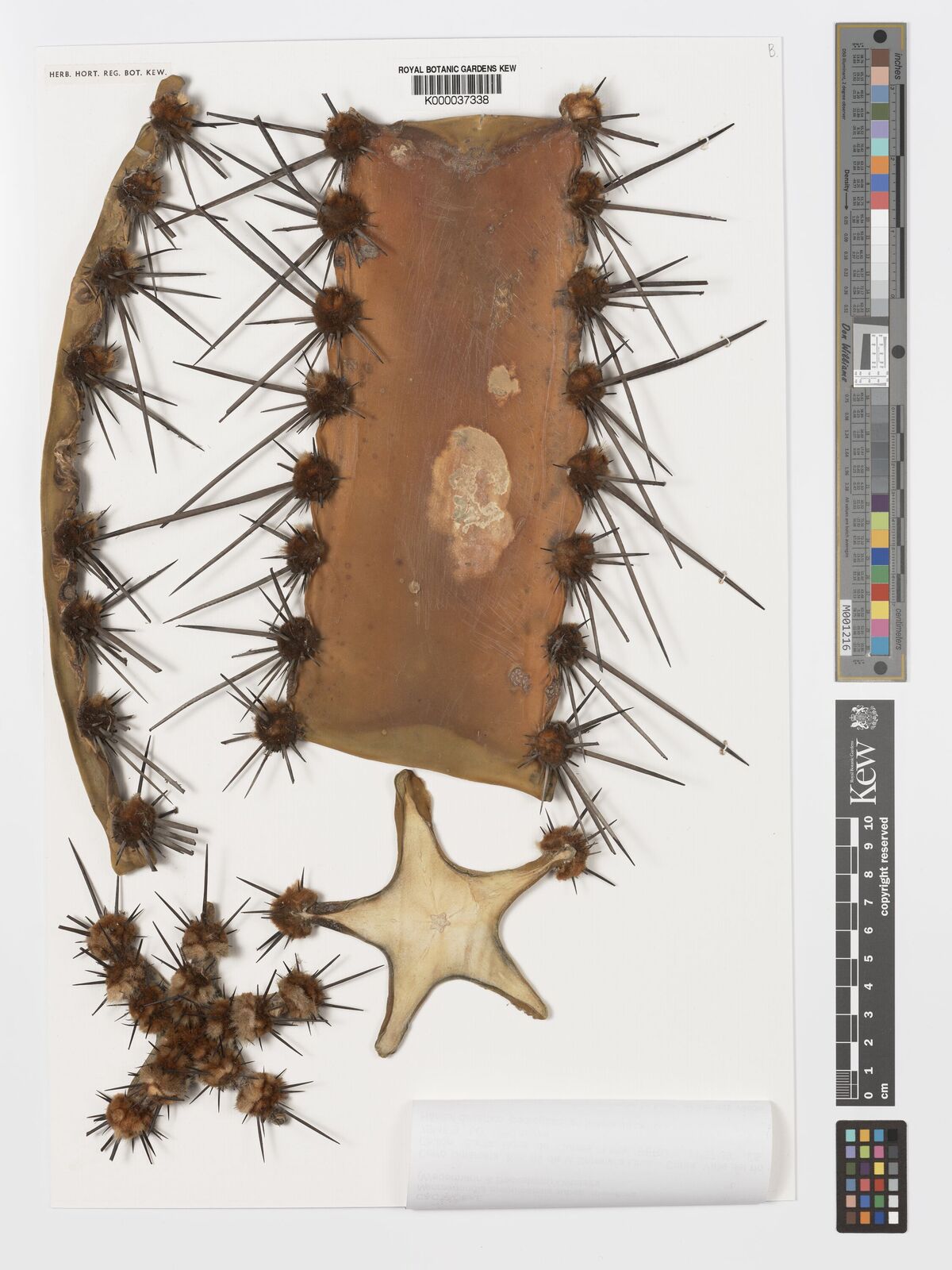
Neoraimondia arequipensis
species of plant

Copiapoa marginata
species of plant

Lemaireocereus hollianus
species of plant

Copiapoa hypogaea
species of plant
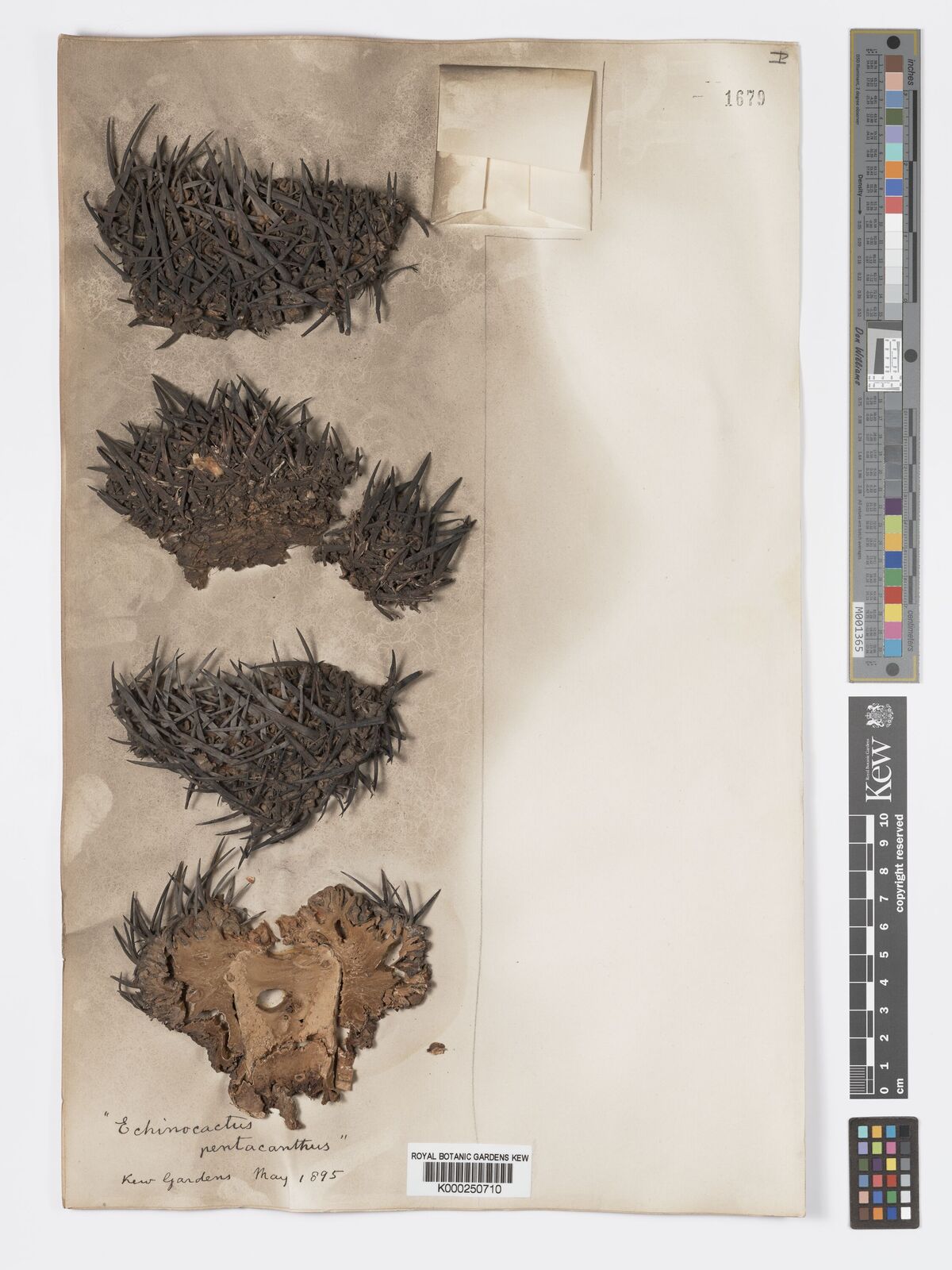
Stenocactus obvallatus
species of plant
Rapicactus beguinii
species of plant
Kadenicarpus horripilus
species of cactus

Neolloydia matehualensis
species of plant
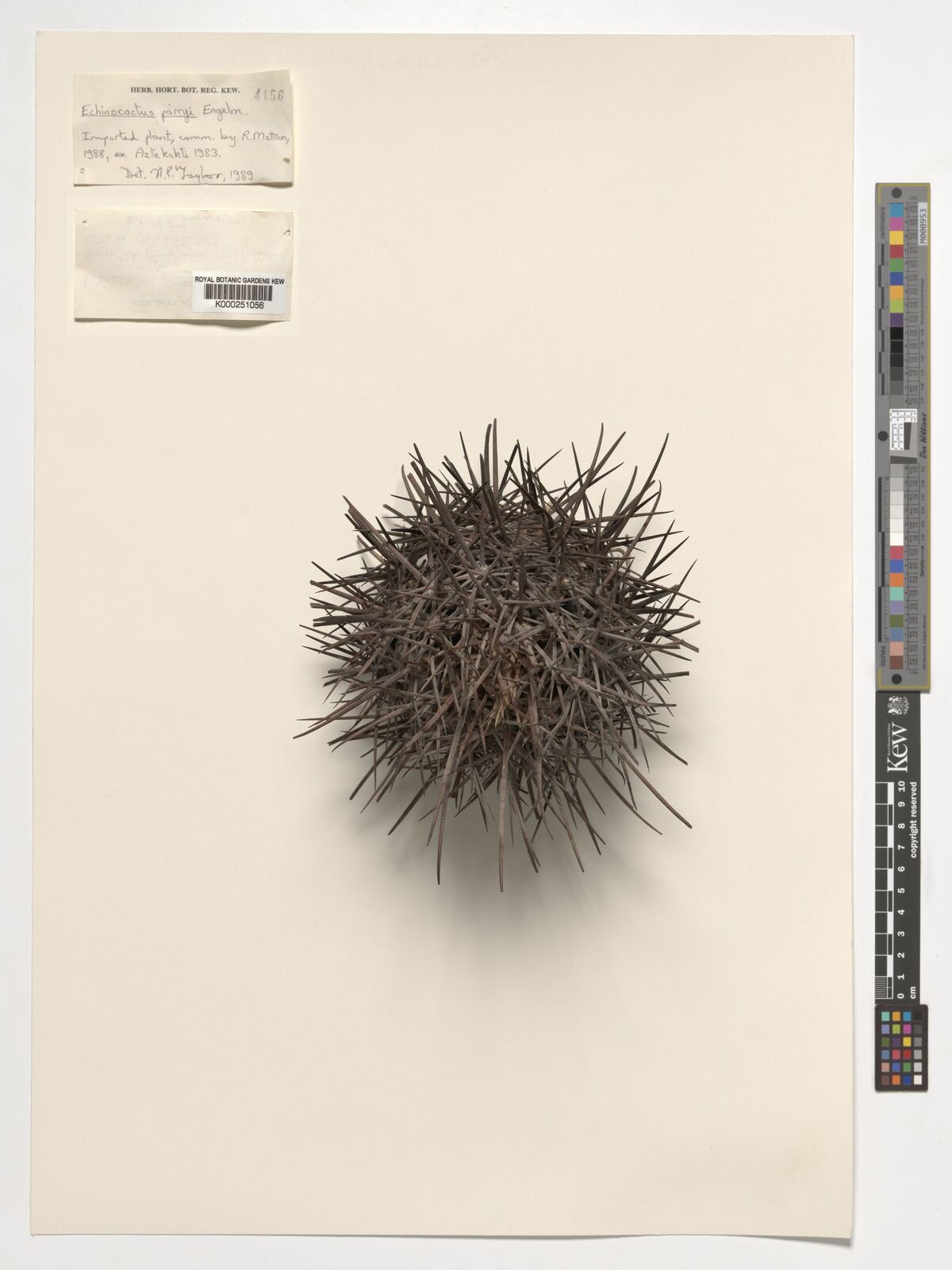
Homalocephala parryi
species of cactus
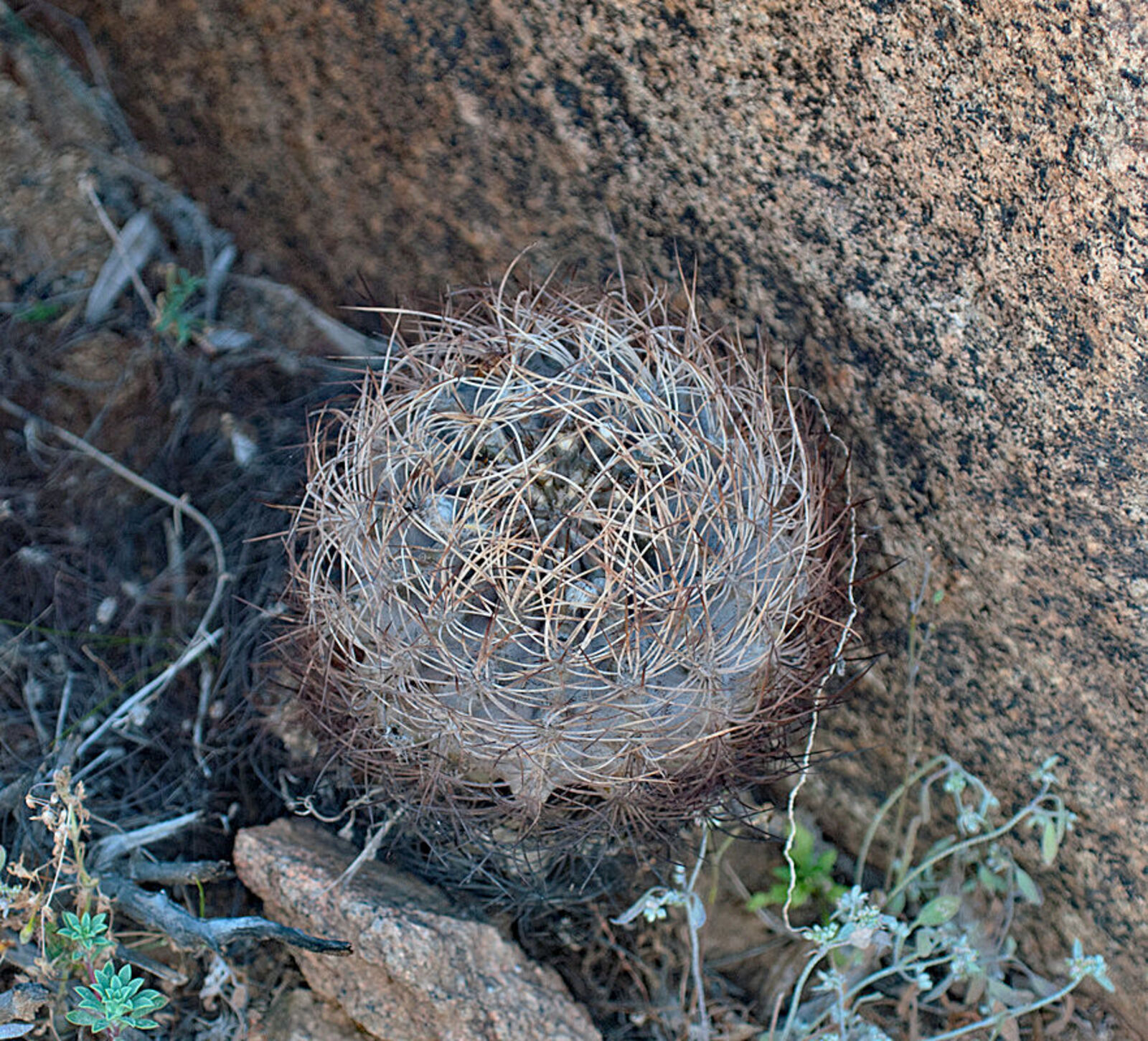
Eriosyce crispa
species of plant

Turbinicarpus subterraneus
species of plant
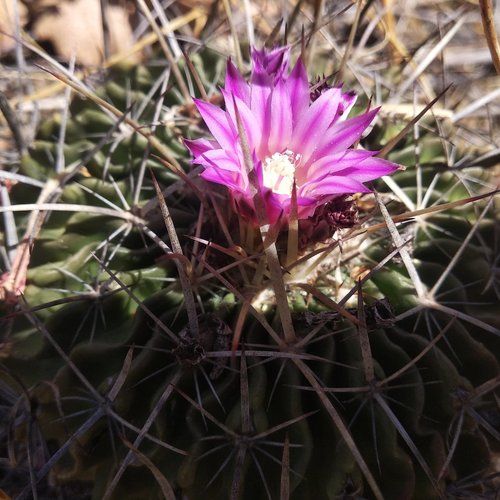
Stenocactus crispatus
species of plant
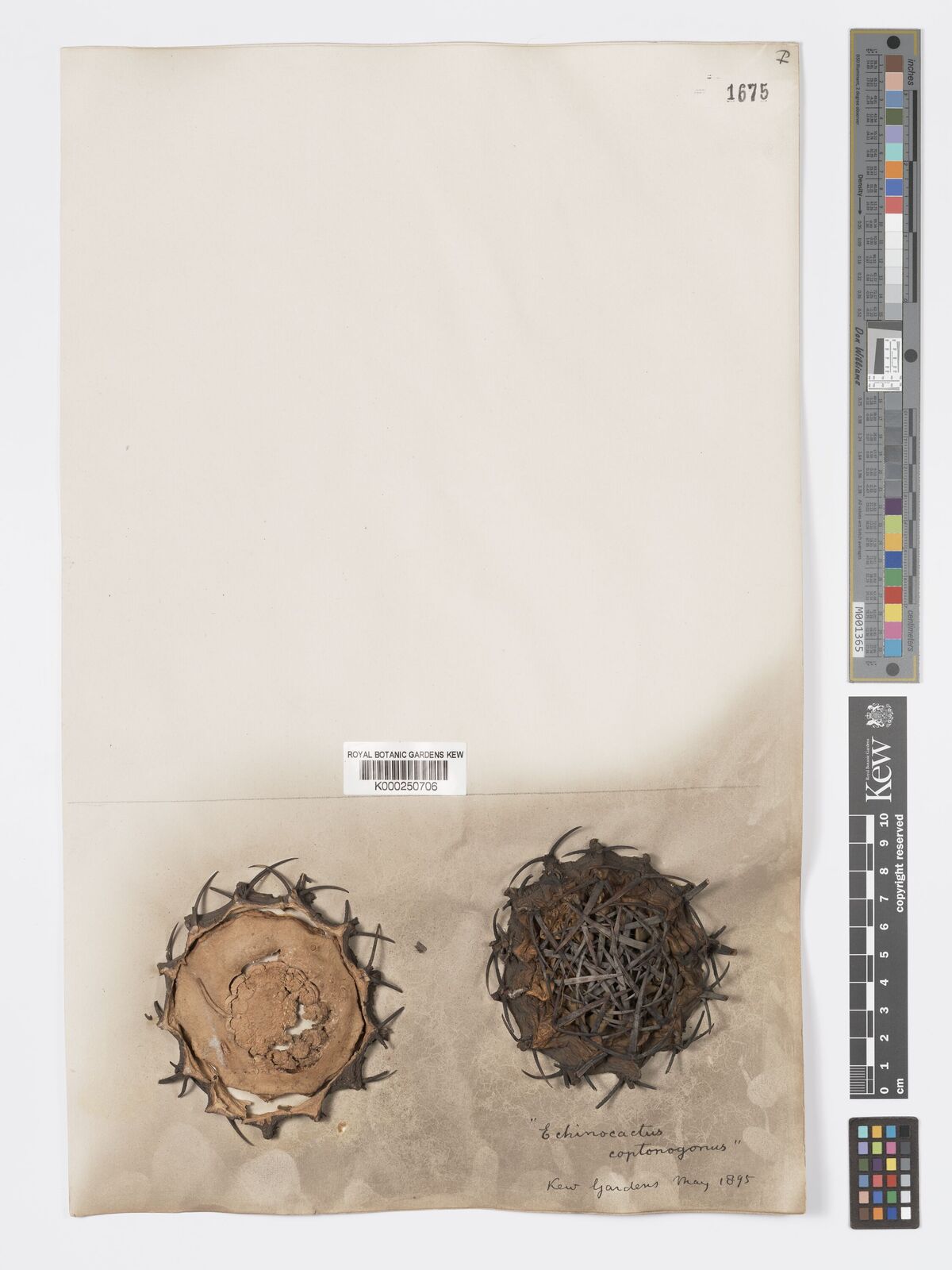
Stenocactus coptonogonus
species of plant
Geohintonia
Geohintonia mexicana (discovered in 1992) is a species of cacti, the only species in the genus Geohintonia. This genus is named after its discoverer George S. Hinton. As its specific epithet suggests, the plant is found in Mexico (Nuevo León), where it grows on gypsum hills near Galeana.

Praecereus euchlorus
species of plant
Leuchtenbergia
Leuchtenbergia is a genus of cactus which has only one species, Leuchtenbergia principis (agave cactus or prism cactus). It is native to north-central Mexico (San Luis Potosi, Chihuahua). The genus is named after Maximilian Eugen Joseph (1817–1852), Duke of Leuchtenberg and amateur botanist.

Leptocereus grantianus
species of plant

Leptocereus nudiflorus
species of cactus
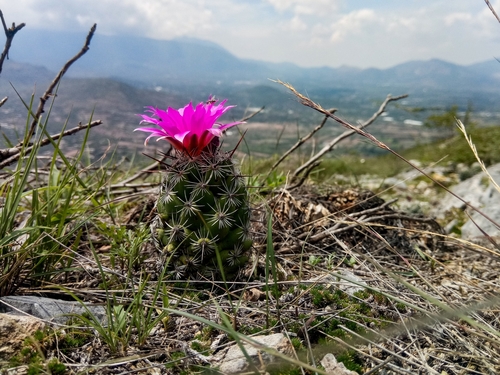
Neolloydia conoidea
species of plant
Yavia
Yavia cryptocarpa is a species of cactus (family Cactaceae) and the only species of the newly discovered genus Yavia. The genus is named after Argentina's department Yavi, Jujuy Province, where the plant is endemic to sparsely vegetated rocky slopes. The plant is also sometimes put in the tribe Notocacteae.
The specific epithet cryptocarpa refers to the plant being a cryptocarp. This means that the fruits are formed inside the plant's body, thus being only visible when the plant shrinks in the drought period.
==Description==
The species, with very tuberous roots, has a subglobular stem, has a
Stenocactus ochoterenanus
species of plant
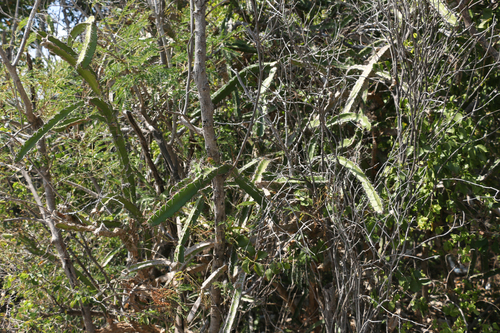
Leptocereus quadricostatus
species of plant
Praecereus saxicola
species of plant
Calymmanthium
Calymmanthium is a monotypic genus of primitive tree-like cacti from northern Peru. The only species is Calymmanthium substerile (also known as C. fertile). It belongs to the tribe Lymanbensonieae. The young flowers of Calymmanthium are completely encased within the plant's pedicel until it is fully developed, at which time the growing yellow flower swells until it cracks the pedicel open, allowing pollinators access. The plant has an upright trunk, but many of the branches sprawl on the ground.
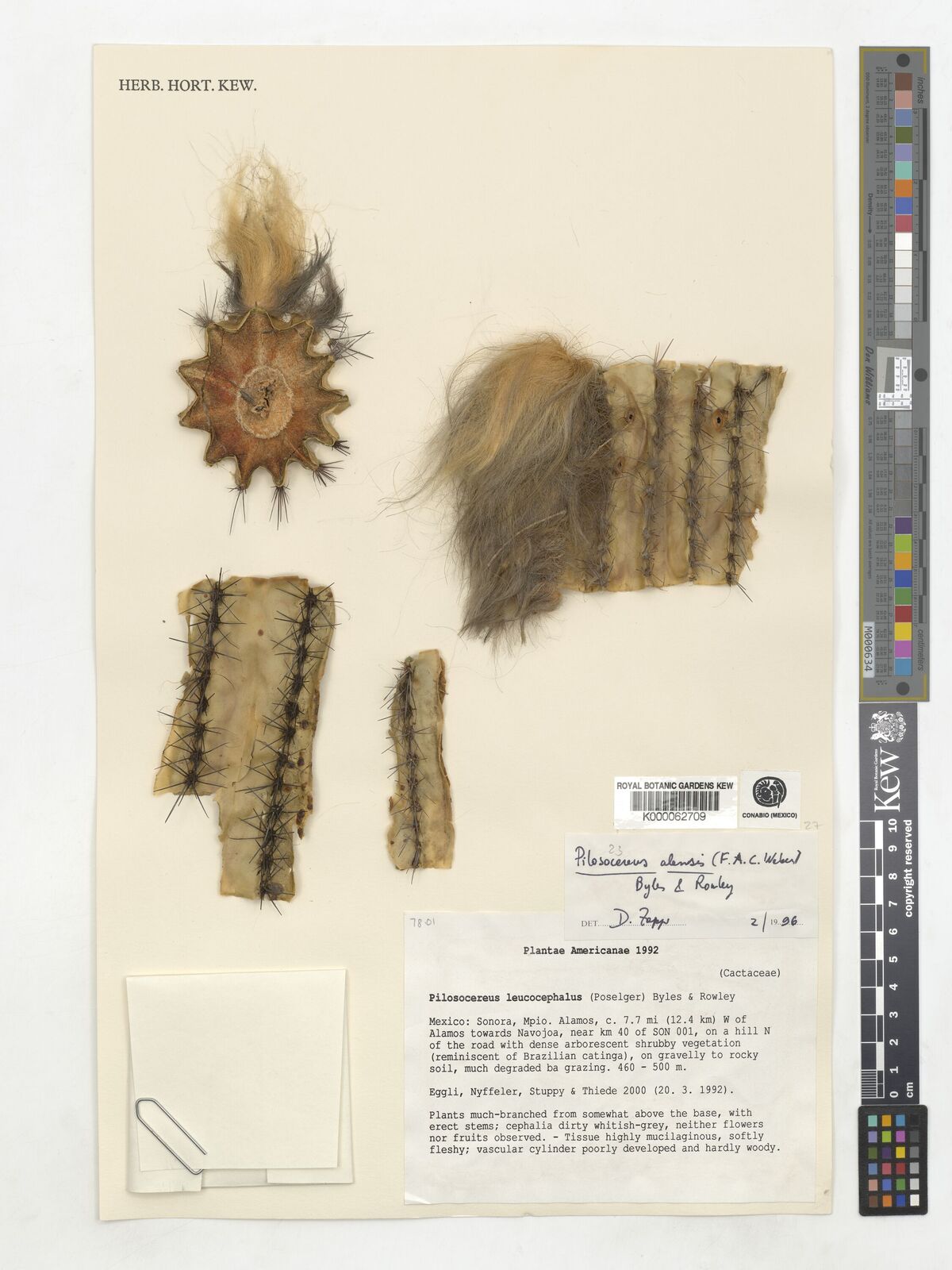
Pilosocereus alensis
species of plant
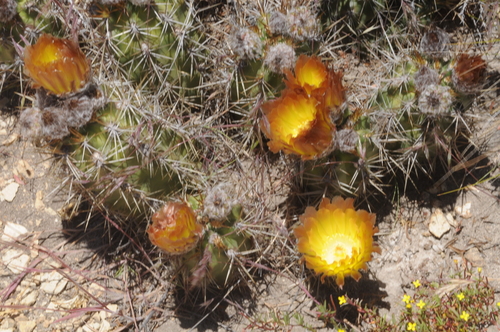
Austrocactus coxii
species of plant

Copiapoa atacamensis
species of plant