Category
page 1Carl Jung
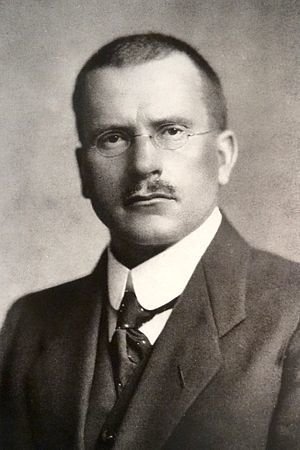
Carl Jung
Swiss psychiatrist and psychotherapist (1875–1961)
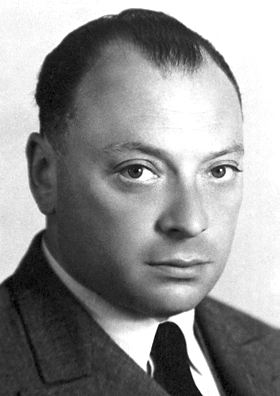
Wolfgang Pauli
physicist, Nobel prize winner (1900–1958)

libido
The libido or sex drive ( ; , "lust, desire") refers to a psychological energy that, in common parlance, encompasses all forms of sexual desire, but is sometimes also regarded as the driving force behind other needs, such as a mother's love for her infant. The term was originally developed by the Austrian neurologist Sigmund Freud, the pioneer of psychoanalysis. Initially it referred only to specific sexual needs, but he later expanded the concept to a universal desire, with the id being its "great reservoir". As driving energy behind all life processes, libido became the source of the social

introversion and extraversion
personality trait

Myers-Briggs Type Indicator
model of personality types
Sabina Spielrein
Russian physician and one of the first female psychoanalysts (1885–1942)
Jungian archetype
concept in psychology

synchronicity
Synchronicity () is a concept introduced by Carl Jung, founder of analytical psychology, to describe events that coincide in time and appear meaningfully related, yet lack a discoverable causal connection. Jung held that this was a healthy function of the mind, although it can become harmful within psychosis.
Shadow
term in Jungian psychology

oneirology
thumb|right|An artist's depiction of a dream
Emma Jung
psychoanalyst and writer (1882-1955)
self in Jungian psychology
psychological concept
oneiromancy
Oneiromancy () is a form of divination based upon dreams, and also uses dreams to predict the future. Oneirogen plants may also be used to produce or enhance dream-like states of consciousness. Occasionally, the dreamer feels as if they are transported to another time or place, and this is offered as evidence they are in fact providing divine information upon their return.

pleroma
Pleroma (, literally "fullness") generally refers to the totality of divine powers. It is used in Christian theological contexts, as well as in Gnosticism. The term also appears in the Epistle to the Colossians, which is traditionally attributed to Paul the Apostle. The word is used 17 times in the New Testament. In Valentinianism it represents as virtualities of the Son
C. G. Jung Institute Zürich

ENFJ
ENFJ (Extraversion, Intuition, Feeling, Judgement) is an abbreviation used in the publications of the Myers–Briggs Type Indicator (MBTI) to refer to one of 16 personality types. The MBTI assessment was developed from the work of prominent psychiatrist Carl G. Jung in his book Psychological Types. Jung proposed a psychological typology based on the theories of cognitive functions that he developed through his clinical observations.
Toni Wolff
psychologist (1888-1953)
puer aeternus
child-god who is forever young, in mythology and as an archetype
German collective guilt
collective guilt attributed to Germany
psychological astrology
school of astrology based on psychological theories, e.g. Jungian archetypes
Aniela Jaffé
German psychoanalyst (1903–1991)
Mary Esther Harding
American physician & Jungian analyst (1888–1971)
The Secret of the Golden Flower
classic Taoist text
International Association for Analytical Psychology
dreamwork
Dreamwork is the exploration of the images and emotions that a dream presents and evokes. It differs from classical dream interpretation in that it does not attempt to establish a unique meaning for the dream. In this way the dream remains "alive" whereas if it has been assigned a specific meaning, it is "finished" (i.e., over and done with). Dreamworkers take the position that a dream may have a variety of meanings depending on the levels (e.g. subjective, objective) that are being explored.
Sonu Shamdasani
British author, editor, and professor
C.G. Jung Tower Oberbollingen
villa of Carl Gustav Jung in Bollingen in the canton of St. Gallen, Switzerland