Category
page 1Chapters in the Quran
.jpg)
Al-Fātiḥah
thumb|Headings for Al-Fatiḥa, and for Chapter 2, Al-Baqara. From the Quran of [[Ibn al-Bawwab. Baghdad, 1000/1001. Chester Beatty Library]]
Al-Fātiḥah () is the first chapter () of the Quran. It consists of seven verses ('''') which consist of a prayer for guidance and mercy.

Al-Baqarah
thumb|upright=1.2|Folio from the [[Blue Quran with the fragment of the chapter Al-Baqara. Museum of Islamic Art, Doha.]]

surah
A surah (; ; ) is an Arabic word meaning "chapter" in the Quran. There are 114 surah in the Quran, each divided into verses (). The surah are of unequal length; the shortest surah ("al-Kawthar") has only three verses, while the longest (al-Baqarah) contains 286 verses. The Quran consists of one short introductory chapter (Q1), eight very long chapters, making up one-third of the Quran (Q2‒9); 19 mid-length chapters, making up another one-third (Q10‒28); and 86 short and very short ones of the last one-third (Q29‒114).

Al Imran
3rd chapter of the Qur'an

Al-ʾIkhlāṣ
Al-Ikhlāṣ (, "Sincerity"), also known as the '''Declaration of God's Unity and al-Tawḥid' (, "Monotheism"), is the 112th chapter (sūrah'') of the Quran.
According to George Sale, this chapter is held in particular veneration by Muslims, and declared, by Islamic tradition, to be equal in value to a third part of the whole Quran. It is said to have been revealed during the Quraysh's conflict with Muhammad; in answer to a challenge over the distinguishing attributes of God, Muhammad invited them to worship.

Al-Ma'idah
'''Al-Ma'idah''' (; 'The Table [Spread with Food]') is the fifth chapter of the Quran, containing 120 verses.

An-Nisāʼ
An-Nisa' (, ; The Women) is the fourth chapter (sūrah) of the Quran, with 176 verses (āyāt). The title derives from the references to women throughout the chapter, including verse 34 and verses .
.jpg)
Al-Nās
thumb|upright=1.25|Closing pages from a Mamluk Sultanate|Mamluk Qur'an with chapter 113 and 114 in [[muhaqqaq script. Cairo, c. 1360-1380. Chester Beatty Library]]

Al-Aʻrāf
7th chapter of the Qur'an

Al-Anfal
thumb|upright=1.2|Opening page from the juz' 10 of the Qur'an copied by [[Ahmad al-Suhrawardi, with verse 41 of the chapter Al-Anfal. Baghdad, ca. 1305–1307. Museum of the Islamic Era]]

Al-Anʻām
thumb|Folio|Bifolium from the [[Nurse's Quran (Mushaf al-Hadina) with fragment of the Surah Al-An'am. Kairouan, Zirid dynasty, 1020. Metropolitan Museum of Art]]

At-Tawbah
At-Tawbah () is the ninth chapter () of the Quran. It contains 129 verses () and is one of the last Medinan surahs. This Surah is also known as '''Al-Bara'ah''' (). It is called At-Tawbah in light of the fact that it articulates tawbah (repentance) and informs about the conditions of its acceptance (verse , ). The name Bara'at (release) is taken from the opening word of the Surah.

Ibrahim
14th chapter of the Qur'an
.jpg)
Yā Sīn
thumb|upright=1.25|Double-page with illuminated frames marking the start of Chapter Ya-Sin in a Malays (ethnic group)|Malay Qur'an manuscript from Patani. Despite the special significance of in lives of all Muslims, "this is the only Southeast Asian Qur'an manuscript known in which the beginning of Surat Yasin is marked with illuminated frames". 2nd half of the 19th century. [[British Library]]

Hūd
11th chapter of the Qur'an
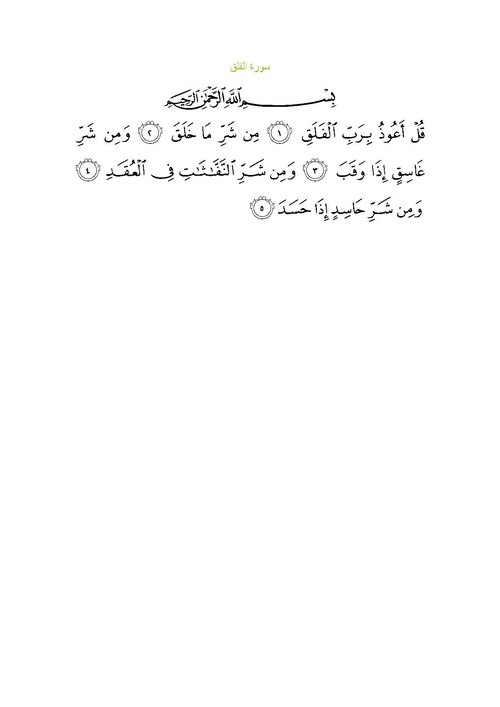
Al-Falaq
Al-Falaq (, al-falaq in Arabic language is (break apart; burst; cleave; fissure)[1] and was also explained as (creatures or creation) whereas it meant (Daybreak) in old explanations.

Al-Kawthar
Al-Kawthar () is the 108th chapter (sūrah) of the Quran. It is the shortest chapter, consisting of three ayat or verses:

Yunus
10th chapter of the Qur'an
%20sura%20from%20the%20Qur%E2%80%99an%20-%20Google%20Art%20Project.jpg)
Al-Kahf
thumb|upright=1.25|Surah Al-Kahf copied by Ottoman Empire|Ottoman calligrapher Kadı Mahmud Efendi (d. 1575). [[Muhaqqaq, thuluth and reqa script. Sakıp Sabancı Museum]]
upright=1.25|thumb|Central illumination of the Royal Terengganu Quran dated 1871. According to Malay tradition Al-Kahf verse 19 is accepted as the centre word of the Quran and Malay Qurans are often decorated in this place. [[Islamic Arts Museum Malaysia]]

Maryam
19th chapter of the Qur'an

Ar-Raʻd
'''Ar-Ra'd, ( ), or the Thunder''', is the 13th chapter (sūrah) of the Qur'an, composed of 43 verses (āyāt). It has the ''Muqatta'at'' (Quranic initials) المر (Alif. Lam. Mim. Ra or ALMR).

Al-Hijr
15th chapter of the Qur'an
Yūsuf
12th chapter of the Qur'an

Al-Aḥzāb
thumb|Section from verses 73 of Sura al-Ahzab

Al-Kāfirūn
right

An-Nahl
The Bee (Arabic: الْنَّحْل; an-naḥl) is the 16th chapter (sūrah) of the Qur'an, with 128 verses (āyāt). It is named after honey bees mentioned in verse 68, and contains a comparison of the industry and adaptability of honey bees with the industry of man.
%20with%20marginal%20medallion%2C%20Walters%20Art%20Museum%20Ms.%20568%2C%20fol.21a.jpg)
Ta-Ha
thumb|Illuminated Manuscript Koran, Illuminated heading for chapter 20 (Sūrat Tā Hā) with marginal medallion, Walters Art Museum Ms.
Ṭā Hā (; ) is the 20th chapter (sūrah) of the Qur'an with 135 verses (āyāt). It is named "Ṭā Hā" because the chapter starts with the Arabic ḥurūf muqaṭṭaʿāt (disjoined letters) (Ṭāhā), which is widely mistaken to be one of the names of the Islamic prophet Muhammad, but is just one of the many unlinked letters at the beginning of many other surahs of the Quran.

Al-Fīl
Al-Fīl (, "The Elephant") is the 105th chapter (surah) of the Quran. It is a Meccan sura consisting of 5 verses. The surah is written in the interrogative form.
Have you not seen [O Prophet] how your Lord dealt with the army of the Elephant?
Did he not frustrate their scheme?
For he sent against them flocks of birds,
that pelted them with stones of baked clay;
leaving them like chewed up straw
.jpg)
Al-Isra
thumb|right|Quran page with Al-Isra verses 34-44; a later interlinear Persian translation is in red. Delhi Sultanate, India late 14th-15th century.

Quraysh
106th chapter of the Qur'an

Al-Ḥajj
Al-Ḥajj (, ; "The Pilgrimage", "The Hajj") is the 22nd chapter (sūrah) of the Quran with 78 verses (āyāt). This surah takes its name from the 27th verse.

An-Naṣr
An-Naṣr () is the 110th chapter (sūrah) of the Qur'an with 3 āyāt or verses.
WHEN the assistance of Allah shall come, and the victory;
and thou shalt see the people enter into the religion of Allah by troops:
celebrate the praise of thy LORD, and ask pardon of him; for he is inclined to forgive.

Ar-Rum
The Romans () is the 30th chapter (sūrah) of the Quran, consisting of 60 verses (āyāt). The term Rūm originated in the word Roman, and during the time of the Islamic prophet Muhammad, it referred to the Eastern Roman Empire; the title is also sometimes translated as "The Greeks" or "The Byzantines".

Al-Furqan
Al-Furqan (, ; The Criterion) is the 25th chapter (sūrah) of the Qur'an, with 77 verses (āyāt). The name Al-Furqan, or "The Criterion", refers to the Qur'an itself as the decisive factor between good and evil. This Surah is named Al-Furqan from the 4th word in the 1st ayat.

Al-Anbiya
thumb|Folio from Samarkand Kufic Quran with surah Al-Anbiya. Late 8th–early 9th century. [[Metropolitan Museum of Art]]

Ar-Rahman
Ar-Rahman (; the Merciful; Most Gracious; Most Merciful) is the 55th Chapter (Surah) of the Qur'an, with 78 verses; (āyāt). The Surah was revealed in Mecca and emphasizes themes of mercy, creation, and the relationship between Allah and humanity, making it a significant chapter in Islamic teachings.

Al-Masad
Al-Masad (, ( "Twisted Strands" or "The Palm Fiber") is the 111th chapter (sūrah) of the Quran. It has 5 āyāt or verses and recounts the punishments that Abū Lahab and his wife will suffer in Hell.
.jpg)
An-Nūr
thumb|upright=1.2|Double-page from the Qur'an with chapter heading and the first five verses of the sura An-Nur (left side). Iran, 1186.

Al-Mu’minūn
Al-Muminun (, ; "The Believers") is the 23rd chapter (sūrah) of the Qur'an with 118 verses (āyāt). Regarding the timing and contextual background of the supposed revelation (asbāb al-nuzūl), it is a "Meccan surah" during the end period, which means it is believed to have been revealed before the migration of the Islamic prophet Muhammad and his followers from Mecca to Medina (Hijra).
Al-ʿAṣr
Al-Aṣr (, The Declining Day, Eventide, The Epoch, Time) is the 103rd chapter (sūrah) of the Qur’ān, the Muslim holy book. It contains three āyāt or verses. Surat al-‘Aṣr is the third shortest chapter after Al-Kawthar and Al-Naṣr, being shorter than Al-Naṣr by only two words in the 3rd verse.
By the afternoon;
verily man employeth himself in that which will prove of loss:
except those who believe, and do that which is right; and who mutually recommend the truth, and mutually recommend perseverance unto each other.

Al-‘Ankabūt
The Spider (, ) is the 29th chapter (surah) of the Quran with 69 verses (āyāt).

Sūrat al-Mulk
Al-Mulk () is the 67th chapter (surah) of the Quran, comprising 30 verses. Surah Al Mulk emphasizes the greatness of Allah and his creation, urging believers to reflect on the signs of God's power in the universe.

Al-Qadr
97th chapter of the Qur'an

Al-Fath
Al-Fath (, ; "The Victory") is the 48th chapter (surah) of the Qur'an with 29 verses (ayat). The surah was revealed in Medina in the sixth year of the Hijrah, on the occasion of the Treaty of Hudaybiya between the Muslim city-state of Madinah and Makkan polytheists. It mentions this victory, then criticizes the attitudes of the hypocrites, continues with further promises to the Muslims, and ends by mentioning certain important virtues of the Muslim community.
%20-%20Walters%20W55565B%20-%20Full%20Page.jpg)
An-Namli
An-Naml () is the 27th chapter (sūrah) of the Qur'an with 93 verses (āyāt).
.jpg)
As-Saaffat
As-Saffat (, , Those who rank themselves in Order, "Ranged in Row", "The Rangers") is the 37th chapter (sūrah) of the Qur'an with 182 verses (āyāt).

Fāṭir
thumb|upright=1.2|Folio from the [[Blue Quran with the first three verses of the chapter Fatir. Raqqada National Museum of Islamic Art, Tunisia]]

Al-Sajdah
thumb|Folio from the Qur'an manuscript with the verses 29-30 of the surah As-Sajdah. The decorative border that follows surrounds the title of the next section of the surah Al-Ahzab. [[Kufic script. Iraq or Syria, 9th or 10th century. Museum of Islamic Art, Berlin]]

Muhammad (surah)
47th chapter of the Koran

Sabaʾ
34th chapter of the Qur'an

Al-Fajr
89th chapter of the Qur'an

Al-Hashr
Al-Ḥashr (, "The Exile") is the 59th chapter (sūrah) of the Qur'an and has 24 Āyahs (verses). The chapter is named al-hashr because the word hashr appears in verse 2, describing the expulsion of Jewish Banu Nadir tribe from their settlements. The surah features 15 attributes of God in the last three verses. A similitude is given in verse 21. Verse 6 may be related to the controversies of the land of Fadak.
.jpg)
Fuṣṣilat
thumb|First pages from a 25 Juz' of the [[Qur'an commissioned by Sultan Uljaytu with verse 46 of chapter Fussilat in muhaqqaq. Mosul, 1310/1311 (710 AH). British Library]]

Al-Shuʿarāʾ
Ash-Shu‘ara’ (, ; The Poets) is the 26th chapter (sūrah) of the Qurʾan with 227 verses (āyāt). Many of these verses are very short. The chapter is named from the word Ash-Shu'ara in ayat 224. It is also the longest Meccan surah according to the number of verses.

Al-Qiyāmah
Al-Qiyama or Al-Qiyamah (, al-qiyāmah), meaning "The day of standing, is the seventy-fifth chapter (sūrah) of the Quran, with 40 verses (ayah).

Al-Jathiya
thumb|Page from the Qur'an manuscript with the verses 9 - 13 of the surah Al-Jathiyah. Commissioned by Timur (1370 - 1405) and copied by calligrapher [[Umar Aqta this manuscript was one of the largest Qur'ans ever made. With their original borders, each folio would have measured about 2.25 × 1.5 m. Muhaqqaq script, 177 × 101 cm. Art and History Collection, on loan in Arthur M. Sackler Gallery]]
Al-Māʿūn
'''Al-Ma'un''' (, , "Small Kindnesses, Almsgiving, Acts of Kindness, and Have You Seen") is the 107th surah of the Qur'an, with 7 ayat or verses.
Have you seen the one who denies the ˹final˺ Judgment?
That is the one who repulses the orphan,
and does not encourage the feeding of the poor.
So woe to those ˹hypocrites˺ who pray
yet are unmindful of their prayers;
those who ˹only˺ show off,
and refuse to give ˹even the simplest˺ aid.

Al-Bayyinah
Al-Bayyina or The Evidence (, al-bayyinah, "the clear proof") is the 98th chapter (surah) of the Qur'an, with 8 ayat or verses. The surah is titled after the word al-bayyinah, which occurs at the end of the first and fourth verses.

Al-Munafiqun
Al-Munāfiqūn () is the 63rd chapter (surah) of the Qur'an, with 11 verses. Almost all of the chapter is preserved in the Ṣan‘ā’1 lower text.

At-Takāthur
right|thumb|Calligraphy of the Sura of Rivalry
At-Takāthur (, "Rivalry, Competition") is the 102nd chapter (sūrah) of the Qur'an, with 8 verses (āyāt). Regarding the timing and contextual background of the believed revelation (asbāb al-nuzūl), it is an earlier "Meccan surah", which means it is believed to have been revealed in Mecca, rather than later in Medina.