Category
page 1Chemical processes

electrolysis
thumb|Illustration of a Hofmann voltameter|Hofmann electrolysis apparatus used in a school laboratory

sublimation
transition of a substance directly from the solid to the gas state

etching
thumb|upright|The Soldier and his Wife. Etching by Daniel Hopfer, who is believed to have been the first to apply the technique to printmaking.

adsorption
thumb|Brunauer, Emmett, and Teller's #BET|model of multilayer adsorption is a random distribution of molecules on the material surface.

vulcanization
thumb|295px|Worker placing a tire in a mold before vulcanization
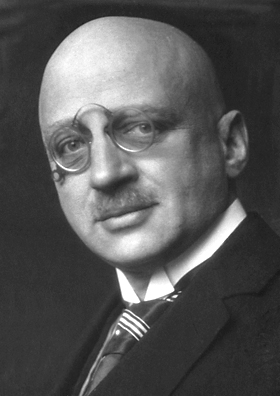
Haber-Bosch process
artificial nitrogen fixation process which is the main industrial procedure for the production of ammonia nowadays

oil refinery
industrial process plant where crude oil is processed and refined into more useful products

pyrolysis
thumb|Burning pieces of wood, showing various stages of pyrolysis, followed by oxidative combustion

cracking
thermal or catalytic decomposition of a compound such as a hydrocarbon into chemical species of smaller molecular weight

vaporization
Vaporization (vapourisation in British English) of an element or compound is a phase transition from the liquid phase to vapor. There are two types of vaporization: evaporation and boiling. Evaporation is a surface phenomenon, whereas boiling is a bulk phenomenon (a phenomenon in which the whole object or substance is involved in the process).

dissociation
general process in which molecules (or ionic compounds such as salts, or complexes) separate or split into smaller particles such as atoms, ions or radicals, usually in a reversible manner

saponification
Saponification is a process of cleaving esters into carboxylate salts and alcohols by the action of aqueous alkali. Typically aqueous sodium hydroxide solutions are used. It is an important type of alkaline hydrolysis. When the carboxylate is a long chain, its salt is called a soap. The saponification of ethyl acetate gives sodium acetate and ethanol:

refrigeration
thumb|Commercial refrigeration
Solvay process
common chemical process for producing sodium carbonate
disproportionation
In chemistry, disproportionation, sometimes called dismutation (the French word), is a redox reaction in which one compound of intermediate oxidation state converts to two compounds, one of higher and one of lower oxidation state. The reverse of disproportionation, such as when a compound in an intermediate oxidation state is formed from precursors of lower and higher oxidation states, is called comproportionation, also known as symproportionation.

alkylation
thumb|upright=1.5|Typical route for alkylation of benzene with ethylene and ZSM-5 as a heterogeneous catalystAlkylation is a chemical reaction that entails transfer of an alkyl group. The alkyl group may be transferred as an alkyl carbocation, a free radical, a carbanion, or a carbene (or their equivalents). Alkylating agents are reagents for effecting alkylation. Alkyl groups can also be removed in a process known as dealkylation. Alkylating agents are often classified according to their nucleophilic or electrophilic character. In oil refining contexts, alkylation refers to a particular alkyl

solvation
thumb|260px|A sodium ion solvated by water molecules

squalene
Squalene is an organic compound. It is a triterpene with the formula C30H50. It is a colourless oil, although impure samples appear yellow. It was originally obtained from shark liver oil (hence its name, as Squalus is a genus of sharks). An estimated 12% of bodily squalene in humans is found in sebum. Squalene has a role in topical skin lubrication and protection.
flocculation
thumb|4x speed video of floc settling after adding flocculant polymers during a jar test.

galvanization
thumb|right|Galvanized surface with visible spangle
thumb|Protective effect: completely rusted letter box mounted to a hot-dip galvanized wall
Galvanization (also spelled galvanisation) is the process of applying a protective zinc coating to steel or iron, to prevent rusting. The most common method is hot-dip galvanizing, in which the parts are coated by submerging them in a bath of hot, molten zinc.

calcination
Calcination is thermal treatment of a solid chemical compound (e.g. mixed carbonate ores) whereby the compound is raised to high temperature without melting with a restricted supply of oxygen (i.e. gaseous O2 fraction of air), generally for the purpose of removing impurities or volatile substances and/or to induce thermal decomposition.
Chemical vapor deposition
process used to make thin films for semiconductors or surface coating
Ostwald process
chemical process for producing nitric acid from ammonia and oxygen
Hall–Héroult process
aluminium smelting process

aeration
Aeration (also called aerification or aeriation) is the process by which air is circulated through, mixed with or dissolved in a liquid or other substances that act as a fluid (such as soil). Aeration processes create additional surface area in the mixture, allowing greater chemical or suspension reactions.
Bayer process
process of refining bauxite to produce alumina

decaffeination
Decaffeination is the removal of caffeine from coffee beans, cocoa, tea leaves, and other caffeine-containing materials. Decaffeinated products are commonly termed by the abbreviation decaf. To ensure product quality, manufacturers are required to test the newly decaffeinated coffee beans to make sure that caffeine concentration is relatively low. A caffeine content reduction of at least 97% is required under United States FDA standards. A 2006 study found decaffeinated drinks to contain typically 1–2% of the original caffeine content, but sometimes as much as 20%.

desiccation
thumb|Mudcrack|Desiccation cracks in [[sludge]]
thumb|Centripetal desiccation cracks in the Lower Jurassic [[Moenave Formation at the St. George Dinosaur Discovery Site at Johnson Farm, southwestern Utah. A dinosaur footprint is at the center.]]
dust explosion
rapid combustion of fine particles suspended in the air

de-icing
thumb|300px|An Aeroflot [[Airbus A330 being de-iced at Sheremetyevo International Airport]]
thumb|300px|Econ Salt Spreader
-3D-balls.png)
hydrometallurgy
Hydrometallurgy is a technique within the field of extractive metallurgy, the obtaining of metals from their ores. Hydrometallurgy uses solutions to recover metals from ores, concentrates, and recycled or residual materials. Usually the extracting solution is aqueous (water-based), often containing additives such as acids. In select cases, the extracting solvent is nonaqueous. Processing techniques that complement hydrometallurgy are pyrometallurgy, vapour metallurgy, and molten salt electrometallurgy. Hydrometallurgy is typically divided into three general areas:
Leaching
Solution concentrati
Leblanc process
early industrial process for producing sodium carbonate from salt
chemical process
method or means of somehow changing one or more chemicals or chemical compounds
thermal analysis
analysis of material by examining how it responds to heat
process
A process is a series or set of activities that interact to produce a result; it may occur once-only or be recurrent or periodic.
catalytic reforming
process for increasing the octane number of naphthas; involves isomerization of alkanes, dehydrogenation of cyclohexanes to aromatic hydrocarbons, isomerization and dehydrogenation of alkylcyclopentanes, and dehydrocyclization of alkanes
spontaneous process
time-evolution of a system in which it releases free energy and moves to a lower, more thermodynamically stable energy state
thermal spraying
materials processing technology
Kroll process
Pyrometallurgical industrial process
cathodic protection
corrosion prevention technique

electrotyping
thumb|right|Schematic apparatus for electrotyping. An electric current flows from the battery, through the copper anode, the electrolyte, and the coated mold. A copper film (the electrotype) grows onto the electrically conducting coating of the mold.|alt=Line drawing.
fluid catalytic cracking
conversion process in petroleum refining
integrated gasification combined cycle
thermodynamic cycle
recrystallization
separation and purification process of crystalline solids
contact process
contact process is a method to prepare sulphuric acid / oil of vitriol in industrial cases.
kraft process
industrial process to extract pure cellulose from wood pulp

reflux
thumb|right|The reflux system in a typical industrial distillation column
Reflux is a technique involving the condensation of vapors and the return of this condensate to the system from which it originated. It is used in industrial and laboratory distillations. It is also used in chemistry to supply energy to reactions over a long period of time.
steam reforming
method for producing hydrogen, carbon monoxide, or other useful products from hydrocarbon fuels
industrial etching
manufacturing process using baths of etching chemicals to remove material

carbonization
Carbonization or carbonisation is the conversion of organic matters like plants and dead animal remains into carbon through destructive distillation.
refinery
thumb|upright=1.35|Shell Haven Oil Refinery
A refinery is a production facility composed of a group of chemical engineering unit processes and unit operations refining certain materials or converting raw material into products of value.
process engineering
study of technical processes in which raw or starting materials are transformed into a product by chemical-physical or biological processes
biochemical cascade
series of chemical reactions which are initiated by a stimulus acting on a receptor that is transduced to the cell interior through second messengers and ultimately to effector molecules, resulting in a cell response to the initial stimulus
water-gas shift reaction
chemical reaction
coated paper
paper which has been coated by a compound or polymer

hydrodesulfurization
Hydrodesulfurization (HDS), also called hydrotreatment or hydrotreating, is a catalytic chemical process widely used to remove sulfur (S) from natural gas and from refined petroleum products, such as gasoline or petrol, jet fuel, kerosene, diesel fuel, and fuel oils. The purpose of removing the sulfur, and creating products such as ultra-low-sulfur diesel, is to reduce the sulfur dioxide () emissions that result from using those fuels in automotive vehicles, aircraft, railroad locomotives, ships, gas or oil burning power plants, residential and industrial furnaces, and other forms of fuel comb
Vapor-compression refrigeration
refrigeration process
curing
process of hardening a material into cross-linked polymer chains

efflorescence
thumb|right|300px|Secondary efflorescence on the dam of the Robert Moses Niagara Power Plant.
In chemistry, efflorescence (Derived from the Latin verb 'efflorescere' roughly meaning 'to flower') is the migration of a salt to the surface of a porous material, where it forms a coating. The essential process involves the dissolving of an internally held salt in water or occasionally, in another solvent. The water, with the salt now held in solution, migrates to the surface, then evaporates, leaving a coating of the salt.
Birkeland–Eyde process
nitrogen fixation using electrical arcs