Category
page 1Chinese classic texts
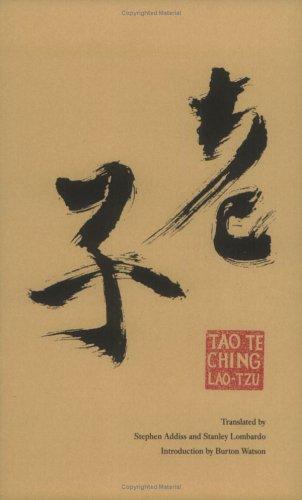
Tao Te Ching
Chinese classic text

Analects
The Analects, also known as the Sayings of Confucius, is an ancient Chinese philosophical text composed of sayings and ideas attributed to Confucius and his contemporaries, traditionally believed to have been compiled by his followers.

Classic of Poetry
collection of Chinese poetry, comprising works dating from the 11th to 7th centuries BC

Spring and Autumn Annals
official chronicle of the State of Lu covering the period from 722 BCE to 481 BCE

Book of Rites
collection of ancient Chinese texts that describe the social forms, administrative structures, and ceremonial rites of the Zhou dynasty, as interpreted during the Warring States period and the early Han dynasty

Book of Documents
one of the Five Classics of ancient Chinese literature
Four Books and Five Classics
books of Confucianism

Zhuangzi
Chinese Taoist text
Zuo Zhuan
ancient Chinese narrative history that is traditionally regarded as a commentary on the Spring and Autumn Annals

Great Learning
Chinese classic, preserved as a chapter in the Lijing; consists of a short main text attributed to Confucius and ten commentary chapters attributed to Zengzi

Doctrine of the Mean
Chinese Confucian text attributed to attributed to Zisi, grandson of Confucius
Thousand Character Classic
Chinese poem consisting of 1000 characters, each used only once, arranged into 250 lines and grouped into four line rhyming stanzas

Thirty-Six Stratagems
term used to illustrate a series of 36 stratagems (referenced: the Book of Qi's seventh biographical volume, Biography of Wáng Jìngzé (王敬則傳), ca. 436CE)

Liezi
thumb|Calligraphy of a segment of the "Yang Zhu" ("Yang-chu") chapter - Kojima Soshin
The Liezi () is a Taoist text attributed to Lie Yukou, a c. 5th century BC Hundred Schools of Thought philosopher. Although there were references to Lie's Liezi from the 3rd and 2nd centuries BC, a number of Chinese and Western scholars believe that the content of the current text was compiled around the 4th century CE by Zhang Zhan.
Shan Hai Jing
Chinese classic text and a compilation of mythic geography and myth
Huangdi Neijing
Han dynasty medical treatise

Mencius
book by Mencius
Huainanzi
The Huainanzi is an ancient philosophical and governmental Chinese text made up of essays from scholarly debates held at the court of Liu An, Prince of Huainan, before 139 BCE. Compiled as a compendium for an enlightened sovereign and his court, the work attempts to define the conditions for a perfect socio-political order, derived mainly from a perfect (or enlightened) ruler. With a notable Zhuangzi 'Taoist' influence, alongside Chinese folk theories of yin and yang and Wu Xing, the Huainanzi draws on Taoist, Legalist, Confucian, and Mohist concepts. But it subverts the latter three in favor
Three Character Classic
13th century Chinese literary work

Chu Ci
anthology of Chinese poetry traditionally attributed mainly to Qu Yuan and Song Yu from the Warring States period
Rites of Zhou
ancient Chinese work on bureaucracy and organizational theory
Classic of Filial Piety
Confucian treatise on filial piety (孝), allegedly composed from a conversation between Confucius and Zengzi but more probably from 4th century BC Warring States period
Hundred Family Surnames
classic composition of common surnames in China's Song dynasty
Shuowen Jiezi
2nd century Chinese character dictionary
Lüshi Chunqiu
Chinese classic text compiled by Lü Buwei (239 BC)
Chinese classics
classic texts of Chinese literature
Guoyu
ancient Chinese collection of speeches attributed to rulers and other men from the Spring and Autumn period

Etiquette and Ceremonial
Chinese classic text about Zhou dynasty social behavior and ceremonial ritual as it was practiced and understood during the Spring and Autumn period
Seven Military Classics
seven important military texts of ancient China

Record of the Western Regions
record of the travels of the Buddhist monk Xuanzang from Tang China to India and back
The Literary Mind and the Carving of Dragons
5th-century work on Chinese literary aesthetics by Liu Xie in fifty chapters

Baopuzi
thumb|Laojun rushan fu "Lord Laozi|Lao's amulet for entering mountains" from Baopuzi Inner Chapter 17
Baopuzi () is a literary work written by Ge Hong (AD 283–343), (), a scholar during the turbulent Jin dynasty.
Erya
The Erya or Erh-ya is the first surviving Chinese dictionary. The sinologist Bernhard Karlgren concluded that "the major part of its glosses must reasonably date from the 3rd century BC."
Zhoubi Suanjing
ancient Chinese treatise on mathematics related to astronomy and astrology
Thirteen Classics
Thirteen Chinese books
Bamboo Texts of Guodian
archaeological discovery in 1993 in Hubei, China

Customs of Cambodia
book written by Zhou Daguan during his stay at Angkor between 1296 and 1297
Biographies of Exemplary Women
book by Liu Xiang
Four Great Books of Song
collection of four Chinese books
Gongyang Zhuan
commentary on Spring and Autumn Annals
Wen Xuan
anthology of Chinese poetry and literature
Qi Min Yao Shu
literary work
Cantong qi
earliest book on Taoist alchemy in China
New Treatise on Military Efficiency
16th century Chinese military manual by Qi Jiguang

Sun Bin's Art of War
ancient Chinese classic work on military strategy, written by Sun Bin
Huangdi Yinfujing
8th century CE Daoist scripture associated with astrology and internal alchemy
Guliang Zhuan
Commentary on the Spring and Autumn Annals

leishu
thumb|upright|A page from the Complete Classics Collection of Ancient China, the largest leishu ever printed
Guwen Guanzhi
Chinese literary work
Fangyan
1st century Chinese dictionary of regional terms
Xunzi
book by Xunzi
Lunheng
The Lunheng, also known by numerous English translations, is a wide-ranging Chinese classic text by Wang Chong (27 – ). First published in 80, it contains critical essays on natural science and Chinese mythology, philosophy, and literature.
Chu Shi Biao
Memorials written by Zhuge Liang (227-228)

Classic of Music
Confucian classic text, lost by the Han dynasty

Heguanzi
The Heguanzi (鶡冠子, or Master Pheasant Cap) is a circa 3rd century BCE syncretic collection of writings from the Chinese Hundred Schools of Thought, particularly the schools of Huang-Lao, Daoism, Legalism, and the Military. Assumed a forgery in later Imperial China, discovery of the 2nd-century BCE Han dynasty Mawangdui Silk Texts lead to renewed studies into its textual history and philosophical significance. The previously unknown Huang-Lao Silk Manuscripts have many passages similar and identical with the Heguanzi,
Tribute of Yu
chapter of Book of Documents
Yanzi chunqiu
ancient Chinese text
Quan Tangshi
collection of Chinese poetry
Xiping Stone Classics
stone carved books of the Confucian classics (175-183)
Luxuriant Dew of the Spring and Autumn Annals
undated work by Dong Zhongshu