Category
page 1Chinese culture
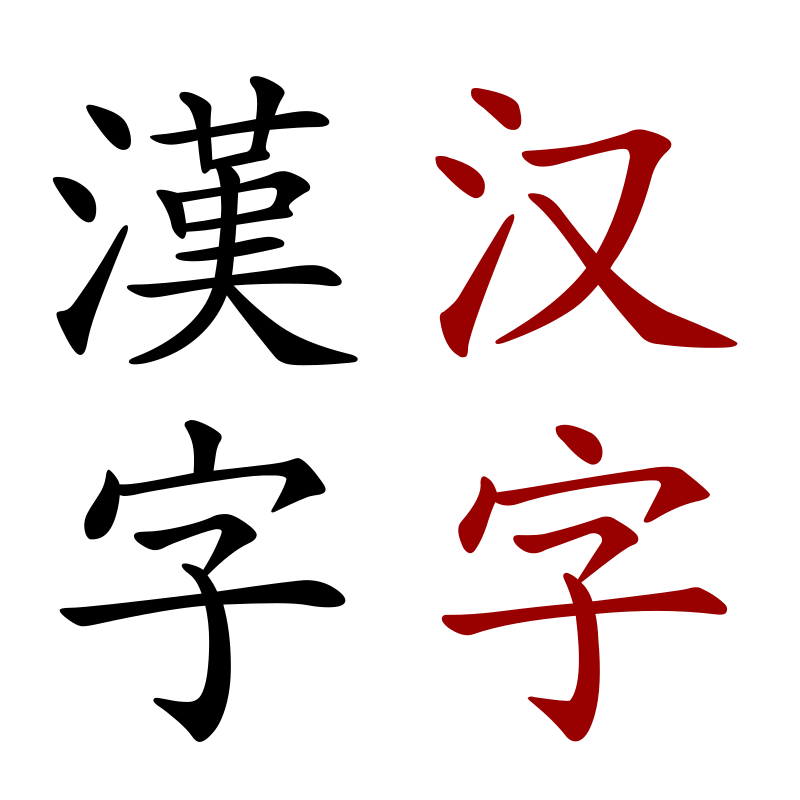
Chinese characters
logographic writing system with Han origin used in the Sinosphere for Chinese, Japanese, Korean and traditional Vietnamese languages

Chinese calendar
lunisolar calendar

porcelain
thumb|Chinese Ru ware celadon-glazed bottle vase, [[Northern Song, 11th–12th century]]
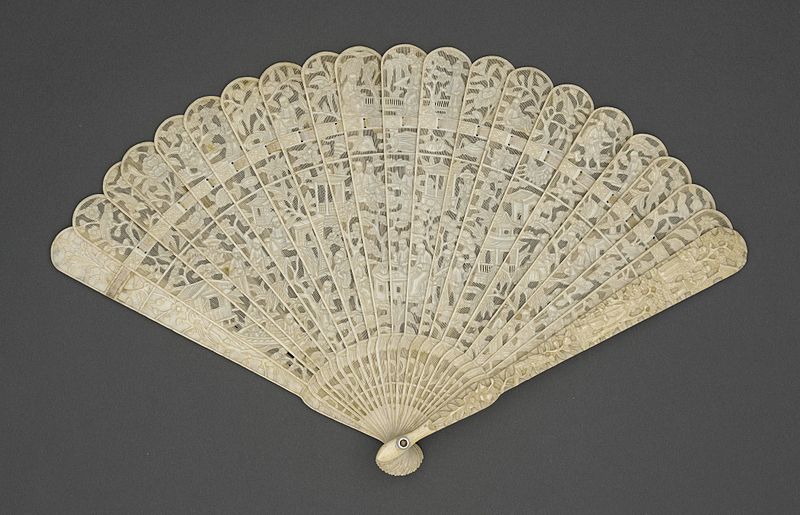
hand fan
device used to cool oneself, usually made of folded paper

Loong
legendary creature in Chinese mythology
sinology
Sinology, also referred to as China studies, is the academic discipline of studying China, including Chinese culture, Chinese history, and the Chinese language. It is a subfield of East Asian studies involved in social sciences and humanities research on any topic relating to China. It focuses on the study of the Chinese civilization primarily through linguistics, history, culture, literature, philosophy, art, music, cinema, and science. Its origin "may be traced to the examination which Chinese scholars made of their own civilization."

Chinese culture
pattern of human activity and symbolism associated with China and its people

Chinese zodiac
lunar calendar classification, assigning a symbolic animal and its reputed attributes to each traditional Chinese daily hour or Chinese lunar year for a repeating cycle of twelve forming the Earthly Branch
.jpg)
Chinatown
Chinatown () is a common term used to describe an ethnic enclave of Chinese people located outside of Mainland China, Hong Kong, Macau, and Taiwan, typically situated in an urban area. Chinatowns can be found around the world, including in Europe, Asia, Africa, Oceania, and the Americas. The history of Chinatowns date back to the Tang dynasty in the 10th century, arising from the nation's important role in global trade.

National Palace Museum
ancient Chinese imperial artifacts and artworks museum in Taipei, Taiwan

Sinosphere
thumb|Chinese dragons, legendary creatures in Sinosphere mythology and culture
thumb|A map of the families of List of writing systems|writing systems in East Asia, Southeast Asia, and South Asia. Red: [[Chinese characters; Green: Brahmi script; Blue: Aramaic (Mongolian script, Manchu alphabet, Old Uyghur alphabet, and Arabic script).]]
thumb|Map of the Sinosphere nations (Japan, Korea, China and Vietnam) in the 11th century
The Sinosphere, also known as the Chinese cultural sphere, East Asian cultural sphere, or the Sinic world, encompasses multiple countries in East Asia and Southeast Asia th

Prunus mume
species of plant

Dietfurt
Dietfurt an der Altmühl (officially Dietfurt a.d. Altmühl, , ), commonly known as Dietfurt, is a town in the district of Neumarkt in Bavaria, Germany. The town is situated on the river Altmühl, and is 38 km west of Regensburg, 30 km north of Ingolstadt, and is located 364 meters above sea level.

imperial examination
system used in appointing officials in dynastic China
V sign
hand gesture involving the index and middle fingers forming a "V" shape
Chinese astrology
Astrology based on Chinese astronomy
sky lantern
flying lantern used during celebrations
Ulambana
traditional Buddhist and Taoist festival
red envelope
monetary gift given in eastern Asia

sinicization
Sinicization, sinofication, sinification, or sinonization (from the prefix , 'Chinese, relating to China') is the process by which non-Chinese societies or groups are acculturated or assimilated into Chinese culture, particularly the language, societal norms, cultural practices, and ethnic identity of the Han Chinese—the largest ethnic group of China.
Thousand Character Classic
Chinese poem consisting of 1000 characters, each used only once, arranged into 250 lines and grouped into four line rhyming stanzas
Kung Fu Panda
franchise
Taiji
principle of supreme potential in Chinese philosophy
Four Beauties
four ancient Chinese women who are renowned for their beauty
Seven Sages of the Bamboo Grove
seven scholars known for metaphysic philosophy during the end of Cai Wei of the Three Kingdom period

Fuwa
thumb|275px|From left to right: Beibei, Jingjing, Huanhuan, Yingying and Nini
The Fuwa (; literally "good-luck dolls", also known as "Friendlies") were the mascots of the 2008 Summer Olympics in Beijing. The designs were created by Han Meilin, a Chinese artist. The designs were publicly announced by the National Society of Chinese Classic Literature Studies on 11 November 2005 at an event marking the 1000th day before the opening of the games.
naming taboo
cultural taboo against speaking or writing the given names of exalted persons in China and neighboring nations in the ancient Chinese cultural sphere

kowtow
A kowtow (), also spelled kaotao (), is the act of deep respect shown by prostration, that is, kneeling and bowing so low as to have one's head touching the ground. It was commonly used in religious worship which emphasizes its emotional depth, sincerity, and willing submission. In Sinospheric culture, the kowtow is the highest sign of reverence. It was widely used to show reverence for one's elders, superiors, and especially the Emperor of China, as well as for religious and cultural objects of worship.
East Asian age reckoning
type of age expression method in East Asia

Junzi
thumb|right | Confucius, whose philosophy created the ideal of a Junzi
The word junzi ( or "Son of the Vassal, or Monarch") is a Chinese philosophical term often translated as "gentleman", "superior person", or "noble man". Since the characters are overtly gendered, the term is frequently translated as "gentleman"; gentry and distinguished/moral person are common gender-neutral translations. Traditionally referring to the "aristocratic nobility of the Zhou", Junzi is employed in the Book of Changes to mean a superior, ideal person who constantly cultivates virtue and improves their character,
Zhonghua minzu
political term in modern Chinese nationalism
de
concept in Chinese philosophy

lhamo
thumb|Masked dancers (hero and leaping dog) at the Wangdue Phodrang District|Wangdue Phodrang tshechu, [[Bhutan, 2007.]]
thumb|Dance of the Lord of Death and his Consort, Paro, Bhutan|Paro, [[Bhutan, at a tsechu festival in 2006.]]
thumb|Lhamo during Qing dynasty
thumb|262x262px|Ache Lhamo in front of Gongkar Dzong, 1939|alt=
Asian seal
East Asian use of printing images and impressions in lieu of signatures on documents
postpartum confinement
Chinese tradition to give post-partum rest to the mother
guanxi
Guanxi () is a term used in Chinese culture to describe an individual's social network of mutually beneficial personal and business relationships. The character guan, 关, means "closed" and "caring" while the character xi 系 means "system" and together the term refers to a closed caring system of relationships that is somewhat analogous to the term old boy's network in the West. In Western media, the pinyin romanization guanxi is more widely used than common translations such as "connections" or "relationships" because those terms do not capture the significance of a person's guanxi to most pers
Gujin Tushu Jicheng
Chinese encyclopedia completed in 1725
night market
street market which operates at night
Six Arts
Education in Confucian philosophy
Yuelu Academy
Academy in Hunan, China
four arts of the Chinese scholar
four main academic and artistic accomplishments required of the aristocratic ancient Chinese scholar-gentleman caste
ancestral home in China
place of origin of one's extended family

scholar-official
right|thumb|220px|A 15th-century portrait of the Ming dynasty|Ming official [[Jiang Shunfu. The decoration of two egrets on his chest are a "mandarin square", indicating that he was a civil official of the sixth rank.]]
The scholar-officials, also known as literati, scholar-gentlemen or scholar-bureaucrats (), were government officials and prestigious scholars in Chinese society, forming a distinct social class.

Fulu
thumb|upright=0.9| for placement above the primary entrance of one's home, intended to protect against evil
The Peach Blossom Spring
Chinese fable
Chinese numerology
numbers in Chinese culture
Jin Chan
three-legged frog charm
Peacock dance
southeast Asian dance
cricket fighting
hobby and gambling activity involving the fighting of male crickets
face
sociological concept associated with status
water lantern
type of lamp that floats
Three Friends of Winter
East Asian art motif of the pine, bamboo and plum
Bing Dwen Dwen and Shuey Rhon Rhon
mascots of the 2022 Winter Olympics and Paralympics

Sinophile
right|thumb|Gottfried Wilhelm Leibniz, a 17th–18th century German [[polymath who made significant contributions in many areas of physics, logic, history, librarianship, and studied numerous aspects of Chinese culture]]
list of observances set by the Chinese calendar
Wikimedia list article
Qingtan
Qingtan () was a Chinese philosophical movement and social practice among political and intellectual elites which developed during the Wei-Jin () period and continued on through the Southern and Northern dynasties. Originating among Daoist scholars, particularly those belonging to the syncretic Xuanxue school, qingtan involved "pure conversation" concerning metaphysics and philosophy in the form of informal gatherings for discourse and debate. These gatherings originated as politically impartial continuations of the more explicitly politically "pure criticism" () protests of the later Han dyna
Four Pillars of Destiny
Chinese astrological method
Wuji
concept in Chinese philosophy and Taoism, as opposed to Taiji

Bride-show
thumb|250px|Modern representation of a Byzantine bride-show, with Theophilos (emperor)|Theophilos choosing Theodora to be his empress
thumb|250px|1882 painting of Tsar Alexis of Russia choosing his bride in 1648. Painting by [[Grigory Sedov.]]
color in Chinese culture
values ascribed to colors in Chinese cultural tradition