Category
page 1Chinese martial arts

Tai chi chuan
Chinese martial art practiced for defense training, health benefits and meditation

wushu
Chinese sport
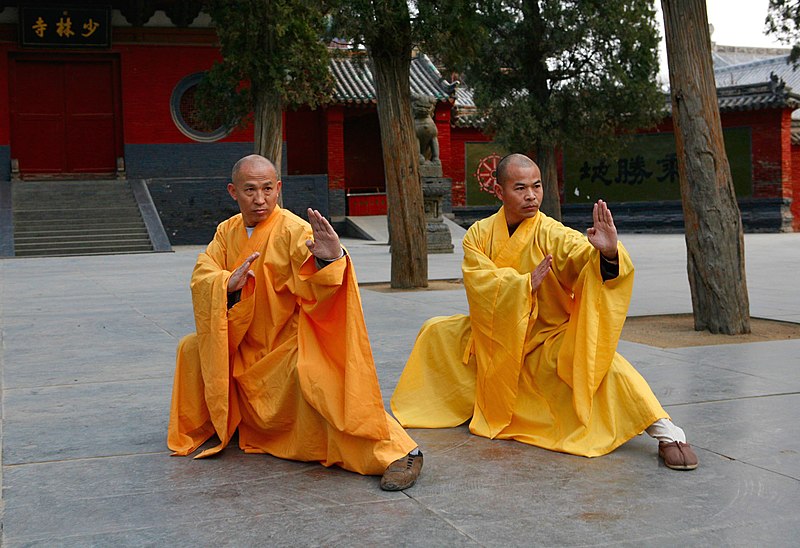
Chinese martial arts
variety of fighting styles developed in China

qigong
Qigong () is a system of coordinated body-posture and movement, breathing, and meditation said to be useful for the purposes of health, spirituality, and martial arts training. With roots in Chinese medicine, philosophy, and martial arts, qigong is traditionally viewed by the Chinese and throughout Asia as a practice to cultivate and balance the mystical life-force qi.

Wing Chun
martial art

Jeet Kune Do
martial art
Sanda
Chinese self-defense system and combat sport
baguazhang
Baguazhang () is one of the three main Chinese martial arts of the Wudang school, the other two being tai chi and xingyiquan. It is more broadly grouped as an internal practice (or neijia). Baguazhang literally means "eight trigram palm", referring to the bagua "trigrams" of the Yijing, one of the canons of Daoism.
Shaolin Kung Fu
Chinese martial art

Xingyiquan
Xingyiquan (), also known as xingyi (), is a style of internal Chinese martial arts. The word approximately translates to "Form-Intention Fist", or "Shape-Will Fist".
Hung Gar
style of Chinese martial art
Choy Li Fut
Chinese martial art
Zui Quan
martial-arts styles that imitate the movements of a drunk

Khakkhara
thumb|En no Gyōja holding a khakkhara, Japan, [[Kamakura period, polychromed wood]]
Kung Fu Fighting
original song written, composed, and performed by Carl Douglas
three-section staff
Chinese flail weapon
Yijin Jing
manual containing series of exercises said to enhance physical health
Changquan
Changquan () () refers to a family of external (as opposed to internal) martial arts (kung fu) styles from northern China.

Kuntao
thumb|A demonstration in Indonesia
thumb|A member of the San Francisco based Parangal Dance Company performing a Langka Kuntao routine as part of their Bangsamoro suite of dances at the 14th Annual Fil-Am Friendship Celebration at Serramonte Center in Daly City, California.
{| class="wikitable floatright"
|+ Kuntao
|-
| Written Chinese || 拳道
|-
| Bopomofo:
| ㄑㄩㄢㄉㄠ
|-
| Pinyin || Quándào
|-
| Pe̍h-ōe-jī || Kûn-thâu
|-
| Indonesian || Kuntao
|-
| Malay || Kuntau
|-
| Filipino || Kuntaw
|}
Kuntao or kuntau (, ) is a Hokkien term for the martial arts of the Chinese community of Southeast As
Shuai jiao
style of Kung-Fu jacket wrestling
Neijia
Neijia (內家) is the collective name for the internal Chinese martial arts. It relates to those martial arts occupied with spiritual, mental or qi-related aspects, as opposed to an "external" approach focused on physiological aspects. The distinction dates to the 17th century, but its modern application is due to publications by Sun Lutang, dating to the period of 1915 to 1928. Neijin is developed by using neigong or "internal changes", contrasted with waigong (外功; wàigōng) or "external exercises" .
Ng Mui
master of the various martial arts & founder of the Wǔ Méi Pài (Ng Mui style), Wing Chun, Dragon style, White Crane, and Five-Pattern Hung Kuen from Shaolin Temple
Fujian White Crane
one of five animal-inspired constituent martial arts of the "Five Ancestors Fist" style
meteor hammer
thrown weapon
Yiquan
Yiquan (), also known as dachengquan (), is a Chinese martial art founded by the xingyiquan master Wang Xiangzhai. Yì (意) means "intent" (but not intention), while quán (拳) means "boxing."
Chin Na
technique in Chinese martial arts
gun
long Chinese staff weapon used in Chinese martial arts
Nanquan
martial arts traditions from southern China characterized by an emphasis on short hitting and arm movements
Rope dart
weapon in Chinese martial arts
Mizongyi
Mizongyi () is a style of Chinese martial art based on deception and mobility.
Chin Woo Athletic Association
organization
International Wushu Federation
international governing body for wushu
Liuhebafa
Liuhebafa quan () is an internal Chinese martial art. It has been called "xinyi liuhebafa" (心意六合八法拳) and is also referred to as "water boxing" () due to its principles.
Chāquán
Chaquan () is a Chinese martial art that features graceful movements and some acrobatic aerial maneuvers and includes a large range of weapons. Chaquan falls under the classification Changquan, a type of Northern Chinese martial arts known for their extended, long movements.
Weng Chun
Chinese martial art
chain whip
Chinese weapon of martial arts
Five Animals
Piguaquan
Piguaquan (), also known as Piguazhang () due to its emphasis on palm techniques, is often practiced along with Bajiquan () and is a style of wushu (Chinese martial arts) that features explosive, long-range power. It originated in Cangzhou, a prefecture in Hebei Province of North China, but today is also well known in other locales, including Taiwan. Piguaquan's power is from the accelerational force of the arms which are often in rotation. The hip movement in Piguaquan is more subtle and gentle compared to Bajiquan, because you only need enough to guide the big chops whereas in Bajiquan, the
Eagle Claw
style of Chinese martial arts
Monkey Kung Fu
Chinese martial art
taijijian
thumb|right|Taijijian
thumb|right|Pan Ying performing taijijian in the Temple of Heaven Park in Beijing.
Taijijian () is a straight two-edged sword used in the training of the Chinese martial art tai chi. The straight sword, sometimes with a tassel and sometimes not, is used for upper body conditioning and martial training in traditional tai chi schools. The different family schools have various warmups, forms and fencing drills for training with the double-edged sword known as jian.
Snake Kung Fu
Chinese martial art
Fut Gar
style of kung fu
Southern Shaolin Monastery
building in Putian, China
zou huo ru mo
thumb|Qing-dynasty illustration of the [[Baduanjin qigong exercise Separate Heaven and Earth]]
Wudang chuan
Wudangquan () is a class of Chinese martial arts. In contemporary China, Chinese martial arts styles are generally classified into two major groups: Wudang (Wutang), named after the Wudang Mountains; and Shaolin, named after the Shaolin Monastery. Whereas Shaolin includes many martial art styles, Wudangquan includes only a few arts that use the focused mind to control the body. This typically encompasses tai chi, xingyiquan and baguazhang, but most also include bajiquan and Wudang Sword.
Five Elders of Shaolin
Legendary Chinese martial artists
24-form tai chi chuan
Short version of tai chi
Qinggong
Qinggong () is a training technique for jumping off vertical surfaces from the Chinese martial arts. One way of training is to run up a slightly inclined ramp, gradually increasing the steepness of the incline until it is vertical.
Tongbeiquan
Tongbeiquan (通背拳 tōngbèiquán; literally "Spreading Power from the Back Boxing", as tong means "through," bei means "back" and quan means "fist/boxing") is a school of martial arts popular in northern China, known for engaging opponents from maximum distance. Tongbeiquan's basic precepts are Taoist in nature and many of the training methods in tongbeiquan are similar to those of the internal styles. In traditional tongbeiquan training, several parts are included: basic training (stance, arm techniques, leg techniques and conditioning), combinations, forms training, two-person free sparring, wea
Pào Chuí
Martial art in China
Eighteen Arms of Wushu
Main weapons in Chinese martial arts
Chinese archery
Traditional art in Chinese culture and philosophy
Northern Shaolin
Chinese martial art discipline

Wind and fire wheels
melee weapon
Hei hu quan
Black Tiger Fist () is a northern Chinese martial art originating in Henan Province.''''
Tán Tuǐ
style of Martial Arts
Zi Ran Men
thumb|right|Ziranmen iron rings.
Liu Zi Jue
form of Chinese qigong
list of Chinese martial arts
Wikimedia list article