Category
page 1Christmas in Germany
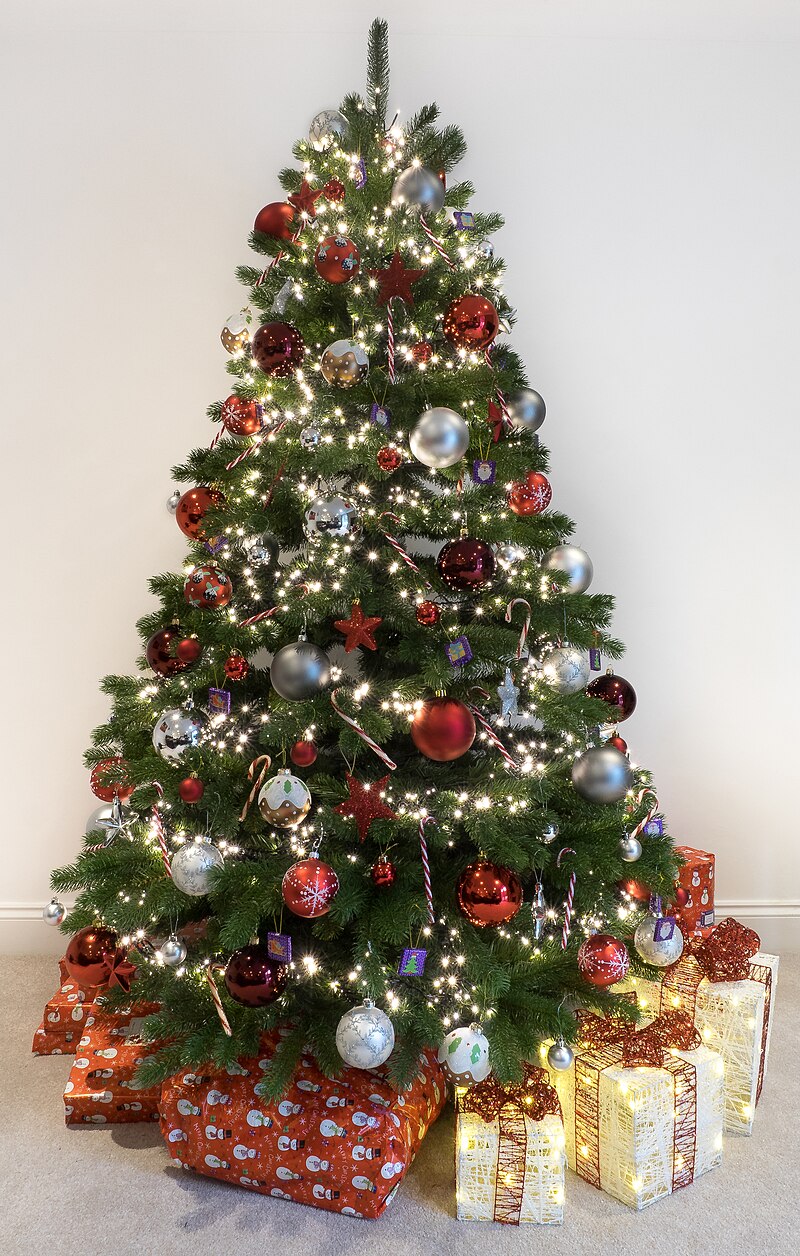
Christmas tree
tree, often decorated, used in the celebration of Christmas

marzipan
Marzipan is a confection consisting primarily of sugar and almond meal (ground almonds), sometimes augmented with almond oil or extract.
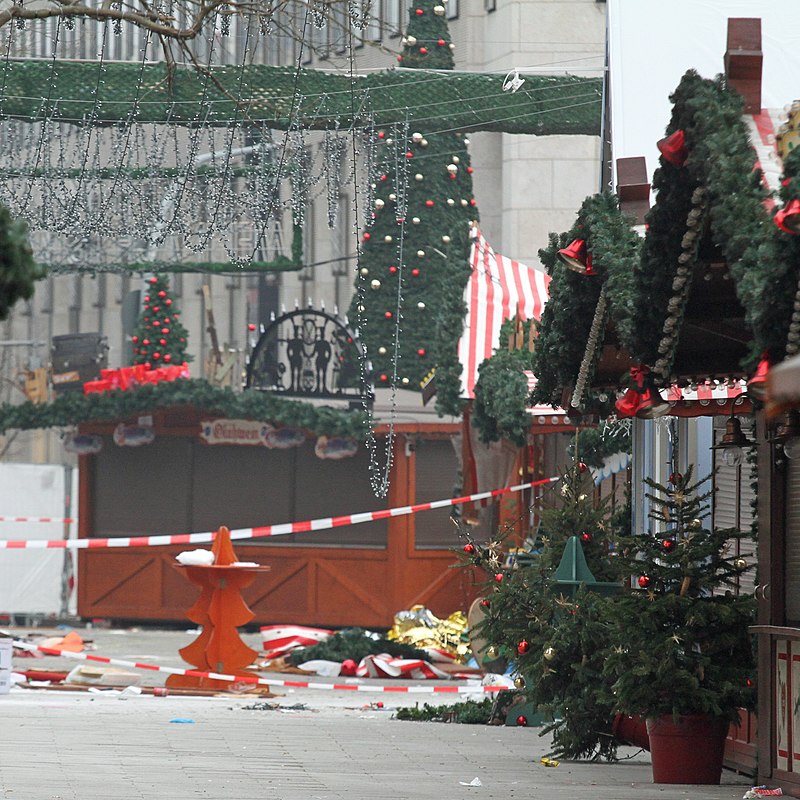
2016 Berlin attack
attack at Breitscheidplatz in Berlin on 19 December 2016

Christmas market
market, usually outdoor, associated with the celebration of Christmas

Krampus
thumb|upright|1900s illustration of Saint Nicholas and Krampus visiting a child
The Krampus () is a horned anthropomorphic figure who, in the Central and Eastern Alpine folkloric tradition, is said to accompany Saint Nicholas on visits to children during the night of 5 December (Krampusnacht; "Krampus Night"), immediately before the Feast of St. Nicholas on 6 December. In this tradition, Saint Nicholas rewards well-behaved children with small gifts, while Krampus punishes badly behaved ones with birch rods.

24-day christmas calendar
special calendar used to count the days of Advent in anticipation of Christmas

Stollen
Stollen ( or ) is a fruit bread of nuts, spices, and dried or candied fruit, coated with powdered sugar or icing sugar and often containing marzipan. It is a traditional German Christmas bread. During the Christmas season the cake-like loaves are called Weihnachtsstollen (after "Weihnachten", the German word for Christmas) or Christstollen (after Christ). A ring-shaped Stollen made in a Bundt cake or Gugelhupf pan is called a Stollenkranz (stollen wreath).

O Tannenbaum
Christmas song
Advent wreath
symbol of advent period

speculaas biscuit
Speculoos (; ; or Karamellgebäck ), known as speculaas in the Netherlands ( or biscoff ( ) internationally, is a biscuit, with origins in the Low Countries (Belgium and the Netherlands), baked with speculaas spices, which is a mix of cinnamon, and sometimes other spices: nutmeg, clove, ginger, cardamom and black pepper — the actual spice mix varies by region and manufacturer. They are usually flat, crisp and moulded to carry certain traditional images. Historically it was popular to eat speculoos around the feast of Saint Nicholas (Dutch: Sinterklaas). The oldest sources on speculoos also
Christmas Oratorio
oratorio by Johann Sebastian Bach
roast goose
dish
Vanillekipferl
'''''' are Austrian, German, Swiss, Czech, Slovak and Hungarian small, crescent-shaped biscuits. They were originally made with walnuts, but almonds or hazelnuts can also be used. They get their typical flavour from a heavy dusting of vanilla sugar.

Dominostein
thumb|Three varieties of Dominostein
Christmas ornament
decoration typically placed on a Christmas tree

tinsel
300px|thumb|Tinsel garland on a Christmas tree
Tinsel is a type of decorative material that mimics the effect of ice. It consists of thin strips of sparkling material attached to a thread. When in long narrow strips not attached to thread, it is called "lametta", and emulates icicles. It was originally a metallic garland for Christmas decoration. The modern production of tinsel typically involves plastic, and is used particularly to decorate Christmas trees. It may be hung from ceilings or wrapped around statues and lampposts. Modern tinsel was invented in Nuremberg, Germany, in 1610, and was

lebkuchen
' (), (, ) or ' (, ) are honey-sweetened German cakes, moulded cookies or bar cookies that have become part of Germany's Christmas traditions. They are similar to gingerbread.
Es ist ein Ros entsprungen
German Christmas song
Bethmännchen
Bethmännchen (German for "a little Bethmann") is a pastry made from marzipan with almond, powdered sugar, rosewater, flour and egg. It is a traditional cookie usually baked for Christmas Day and is widely available in chocolate shops around Frankfurt.
Christmas pyramid
German Christmas decoration comprising a pyramidal frame with candle holders and a central carousel with a rotor at the top driven by candles’ warm air, decorated with nativity scenes, angels, wise men, miners, forest scenes, etc.
Christmas in Nazi Germany
Christmas celebrations and traditions in Nazi Germany

Feuerzangenbowle
thumb|upright|' with the burning '
Moravian star
Christmas decoration
.jpg)
Christmas in Germany
thumb|A man dressed as Nikolaus for Weihnachten in Baden-Baden| alt= A man dressed as Saint Nicholas in Baden-Baden for Weihnachten celebrations |340x340px
Weihnachten () is the observance of what is commonly known in English as Christmas in the German-speaking countries such as Germany, Austria and Switzerland. It is also widespread in countries with a German-speaking minority, such as Transylvania in Romania, South Tyrol in Italy, Eupen in Belgium, and various diasporas such as the German Brazilian and German American communities. Traditions of Weihnachten influenced Advent and Christmastide

pfeffernusse
Pfeffernüsse are small spice cookies, popular as a holiday treat with Germans and ethnic Mennonites in North America. Similar cookies are made in Denmark, and The Netherlands, as well. They are called (plural, singular is ) in German, pepernoten (sing. pepernoot) in Dutch, päpanät in Plautdietsch, pfeffernusse or peppernuts in English, and pebernødder in Danish.

Springerle
Springerle () is a type of South German biscuit or cookie with an embossed design made by pressing a mold onto rolled dough and allowing the impression to dry before baking. This preserves the detail of the surface pattern. While historical molds show that springerle were baked for religious holidays and secular occasions throughout the year, they are now most commonly associated with the Christmas season.
nutcracker doll
decorative christmas toy, tool and figure of German origin
Räuchermann
The Räuchermann (diminutive Räuchermännchen ; Erzgebirgisch: Raachermannel) is an incense smoker, the invention of toy makers in the Ore Mountains, used to burn down cone incense, known as Räucherkerzchen.
Ihr Kinderlein
German Christmas carol
Alle Jahre wieder
German Christmas carol
O du fröhliche
sacred Song with lyrics by Johannes Daniel Falk, Heinrich Holzschuher
Rumtopf
Rumtopf (), which literally means rum pot, is an Austrian, German and Danish dessert of mixed fruit and alcohol traditionally eaten around Christmas. It is also made in northern Italy, especially in the valleys of Trentino, where it became traditional in Valsugana.
Zimtstern
thumb|A classical
thumb|, a cinnamon star with orange zest in the middle
A '''''' (, ; pl.: ) is a Christmas cookie, originally from Swabia in Southwest Germany, made from foam of whipped egg white, sugar, at least 25% almonds, cinnamon and a maximum of 10% flour. It is most popular in Germany, Switzerland, and Alsace.
froebel star
Christmas decoration made from paper
Schwibbogen
thumb|upright=1.3|A typical schwibbogen
thumb|Bunter Erzgebirgischer Schwibbogen1
thumb|Lichterbogen Kunstguss Döhler
Bremer Klaben
type of dried fruit filled bread from Bremen, Germany

Lasst uns froh und munter sein
German Christmas carol
Spritzgebäck
thumb|Traditional holiday cookie plate with green tree-shaped spritz
(), also called a spritz cookie in the United States, is a type of biscuit or cookie of German and Alsatian-Mosellan origin made of a rich shortcrust pastry. When made correctly, the cookies are crisp, fragile, somewhat dry, and buttery.
Belsnickel
Belsnickel (also known as Belschnickel, Belznickle, Belznickel, Pelznikel, Pelznickel, Bell Sniggle) is a crotchety, fur-clad Christmas gift-bringer figure in the folklore of the Palatinate region of southwestern Germany along the Rhine, the Saarland, and the Odenwald area of Baden-Württemberg. The figure is also preserved in Pennsylvania Dutch communities and Brazilian-German communities.
Pflaumentoffel
thumb|Pflaumentoffel
Pflaumentoffel (probably etymologically related to , meaning 'stupid, clumsy person') is a traditional German edible sweet in the shape of a human figure made from dried or baked prunes and produced by bakeries, pastry shops and gingerbread makers for children for Christmas.
Kling Glöckchen
German Christmas carol
Räucherkerzchen
thumb|upright|A burning Räucherkerzchen
goose as food
use of goose for human food
Es kommt ein Schiff, geladen
sacred Song with lyrics by Daniel Sudermann
Eierpunsch
thumb
Eierpunsch () is the German name given to a warm, sweetened alcoholic, egg-based drink similar to eggnog. It is commonly a winter drink and can be found served in the popular Christmas markets of Germany and Austria. Eierpunsch is made with egg yolks, sugar, white wine and vanilla. Sometimes cream or custard can be added.