Category
page 1Chronic lower respiratory diseases

asthma
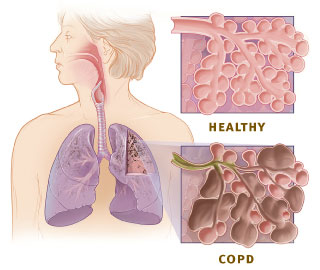
chronic obstructive pulmonary disease
lung disease involving long-term poor airflow

bronchitis
Bronchitis is inflammation of the bronchi (large and medium-sized airways) in the lungs that causes coughing. Bronchitis usually begins as an infection in the nose, ears, throat, or sinuses. The infection then makes its way down to the bronchi. Symptoms include coughing up sputum, wheezing, shortness of breath, and chest pain. Bronchitis can be acute or chronic.
pulmonary emphysema
Emphysema is a condition of the lung marked by abnormal enlargement of the alveoli with loss of pulmonary elasticity. Most commonly, emphysema refers to the permanent enlargement of air spaces (alveoli) in the lungs, and is also known as pulmonary emphysema.

bronchiectasis
tracheitis
Tracheitis is an inflammation of the trachea.
Although the trachea is usually considered part of the lower respiratory tract, in ICD-10 tracheitis is classified under "acute upper respiratory infections".
chronic bronchitis
lung disease that involves excessive mucus production and is accompanied by a continuous cough