Category
page 1Cichlid genera

Pterophyllum
Pterophyllum is a small genus of freshwater fish from the family Cichlidae known to most aquarists as angelfish. All Pterophyllum species originate in the Amazon Basin, Orinoco Basin and various rivers in the Guiana Shield in tropical South America. The three species of Pterophyllum are unusually shaped for cichlids, being greatly laterally compressed, with round bodies and elongated triangular dorsal and anal fins. This body shape allows them to hide among roots and plants, often on a vertical surface. Naturally occurring angelfish are frequently striped transversely, colouration which provid

Tilapia
genus of fish in the cichlid family (Cichlidae)
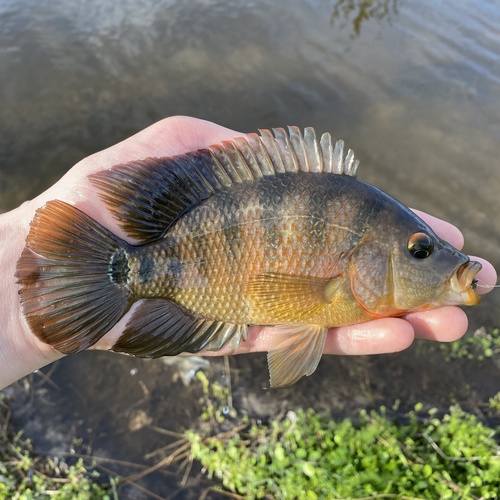
Cichla
genus of fishes
.jpg)
Astronotus
Astronotus is a genus of South American fish from the family Cichlidae. There are two commonly recognized species in the genus (listed below), though genetic evidence suggests that additional species exist; several of these possibly distinct populations also have very different juvenile coloration from the two recognized species. Both of the commonly recognized species are found in the Amazon Basin, while one of two also is found in the Paraná and Paraguay rivers. Astronotus species grow to 35 cm in size, and are monomorphic. They are opportunistic omnivores and consume a range of smaller

Oreochromis
Oreochromis is a large genus of oreochromine cichlids, fishes endemic to Africa and the Middle East. A few species from this genus have been introduced far outside their native range and are important in aquaculture. Many others have very small ranges; some are seriously threatened, and O. ismailiaensis and O. lidole possibly are extinct. Although Oreochromis primarily are freshwater fish of rivers, lakes and similar habitats, several species can also thrive in brackish waters and some even survive in hypersaline conditions with a salinity that far surpasses that of seawater. In addition to ov

Cichlasoma
Cichlasoma is a genus of freshwater fish in the cichlid family. The genus was previously very large (a wastebasket taxon), including cichlids from North America, including Central America, and South America.
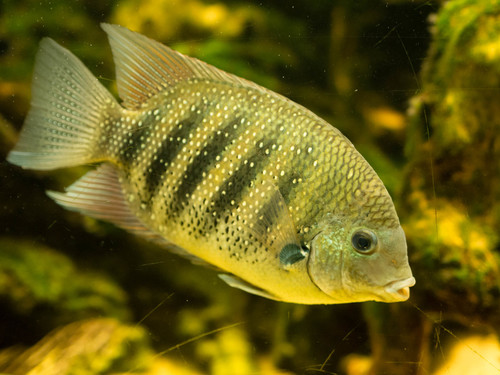
Etroplus
Etroplus is a small genus of cichlids native to southern India and Sri Lanka. Together with Pseudetroplus (which formerly was included in Etroplus), they are the only cichlids of this region.
.jpg)
Haplochromis
Haplochromis is a ray-finned fish genus in the family Cichlidae. It has been used as the default "wastebin taxon" for Pseudocrenilabrinae cichlids of the East African Rift, and as such became the "largest" fish "genus". Many of these cichlids are popular aquarium fishes; like similar Haplochromini they are known as "haplos", "happies" or "haps" among aquarium enthusiasts.
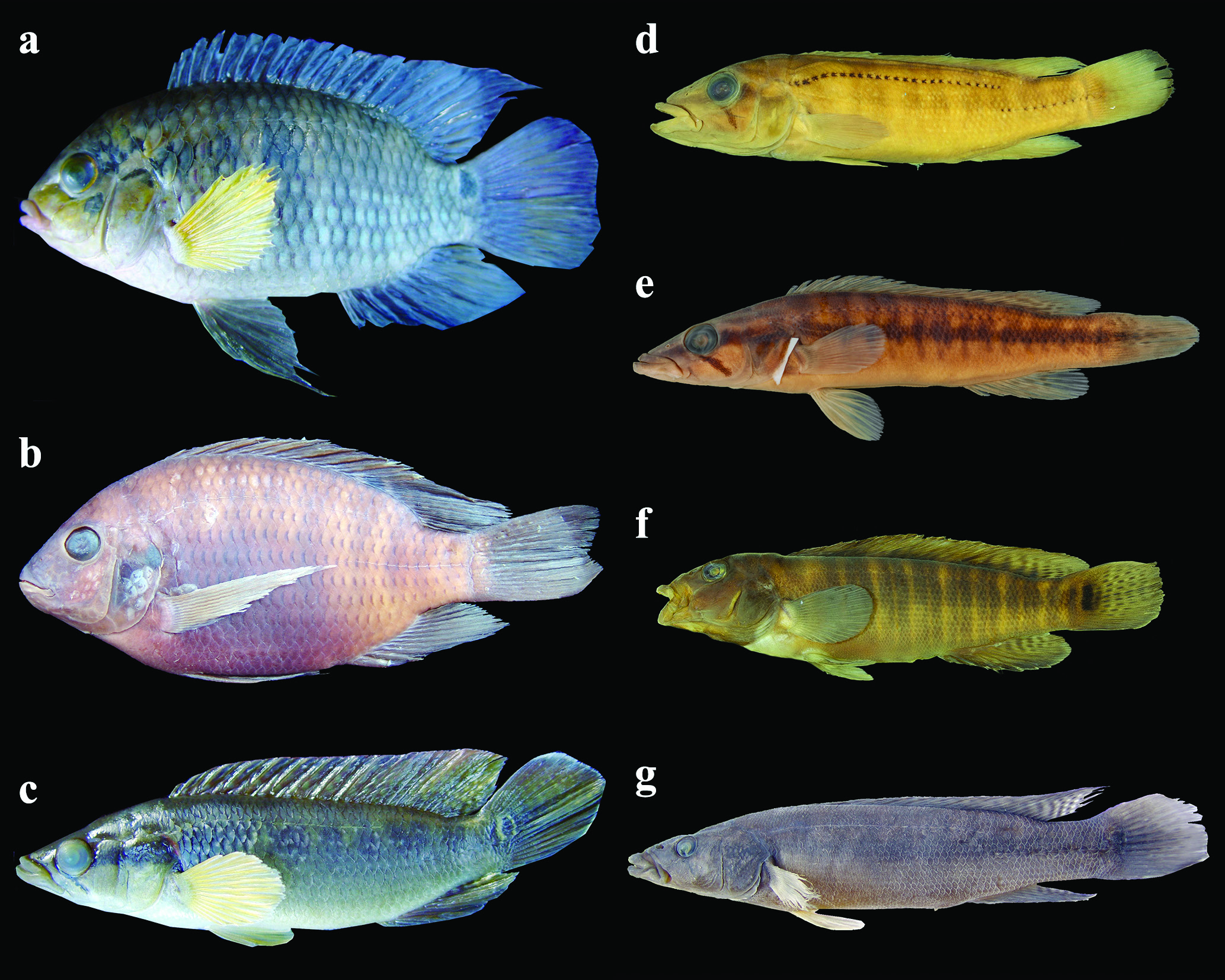
Crenicichla
Crenicichla is a genus of cichlids native to South America, which are one of the genera commonly known as pike cichlids. They are found in most tropical and subtropical freshwater habitats between the Andes and the Atlantic.

Neolamprologus
Neolamprologus is a genus of cichlids endemic to eastern Africa with all species occurring in Lake Tanganyika. It is the largest genus of cichlids in Lake Tanganyika and also the largest genus in the tribe Lamprologini, which includes Altolamprologus, Chalinochromis, Julidochromis, Lamprologus, Lepidiolamprologus, Telmatochromis and Variabilichromis. The latter is a monotypic genus doubtfully distinct from Neolamprologus.

Geophagus
Geophagus is a genus of cichlids that mainly live in South America as far south as Argentina and Uruguay, but a single species, G. crassilabris is from Panama. They are found in a wide range of freshwater habitats. They are part of a group popularly known as eartheaters and mostly feed by picking up mouthfuls of sediment to sift out food items such as invertebrates, plant material and detritus. The largest species reach up to in standard length. They are mostly kept in aquariums.

Pseudotropheus
Pseudotropheus is a genus of fishes in the family Cichlidae. These mbuna cichlids are endemic to Lake Malawi in Eastern Africa.
%203087685650.jpg)
Aulonocara
Aulonocara is a genus of haplochromine cichlids endemic to Lake Malawi in East Africa. All Aulonocara species are maternal mouth brooders. Particularly in the aquarium hobby, Aulonocara species are also known as peacock cichlids, aulonocaras or simply "peacocks". This genus is strongly sexually dichromic, even by haplochromine standards.
Dicrossus
Dicrossus is a genus of small cichlid fishes native to rivers in the Amazon and Orinoco basins in South America. These cichlids have several dark spots on the sides of their bodies (although very faint in some). Depending on the species, they typically only reach in length.
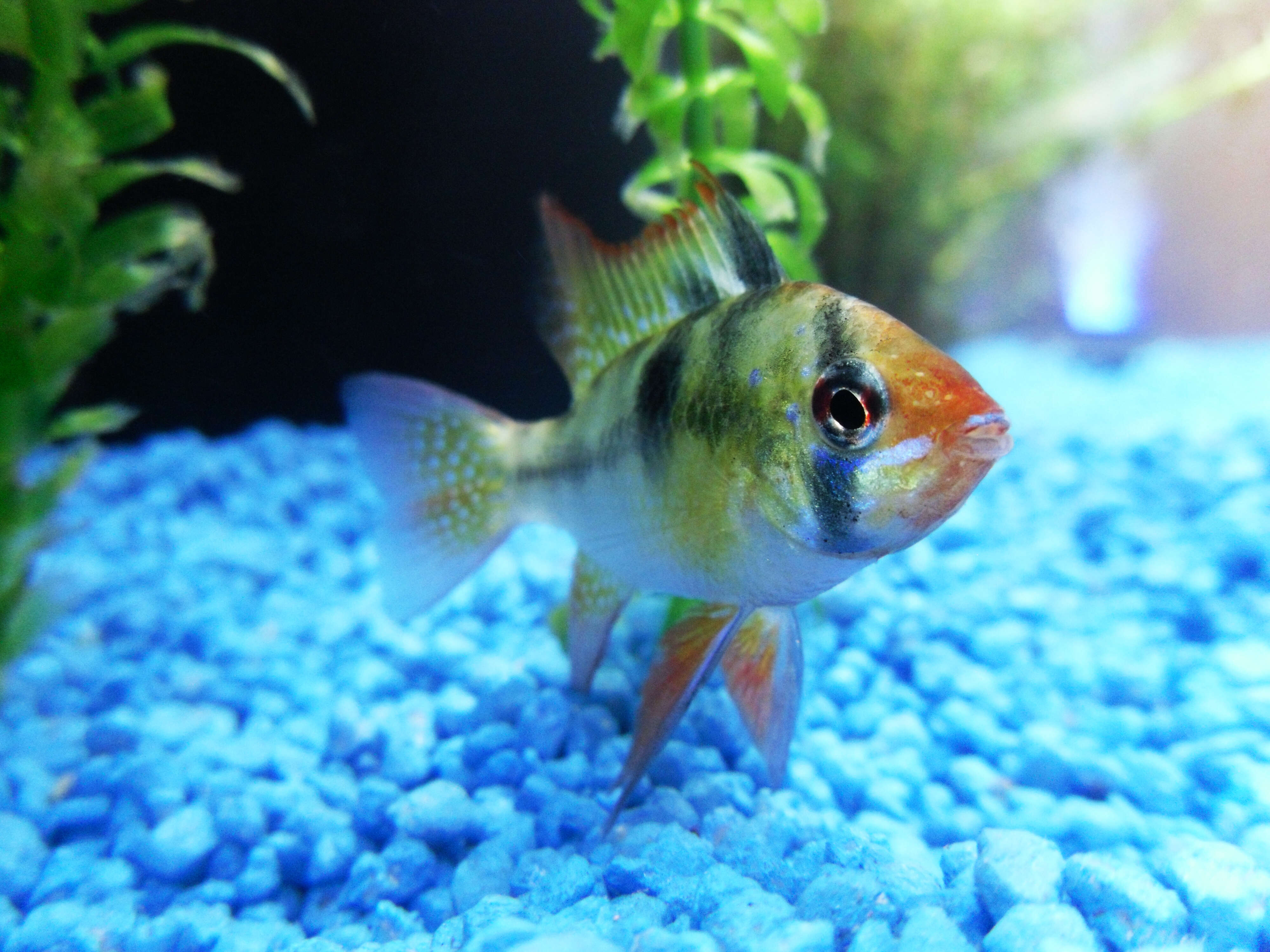
Microgeophagus
Mikrogeophagus is a genus of cichlids native to the Llanos wetlands (Orinoco basin) and Guaporé–Mamoré river system (southern Amazon basin) in tropical South America. They are dwarf cichlids that reach up to in standard length.

Heros
genus of fishes

Tropheus
Tropheus is a small genus of at least six species of cichlids endemic to Lake Tanganyika in East Africa. The genus is widespread across all regions of Lake Tanganyika, from Burundi in the north to Zambia in the south. Males and females are relatively similar in color, with only subtle sexual dimorphism in the form of the male's larger size. All species are maternal mouthbrooders, with the females caring for their eggs and fry in their mouths; this characteristic provides their generic name, Tropheus, which comes from the Greek trophos, which means "to nurse" or, according to Boulenger, "one wh
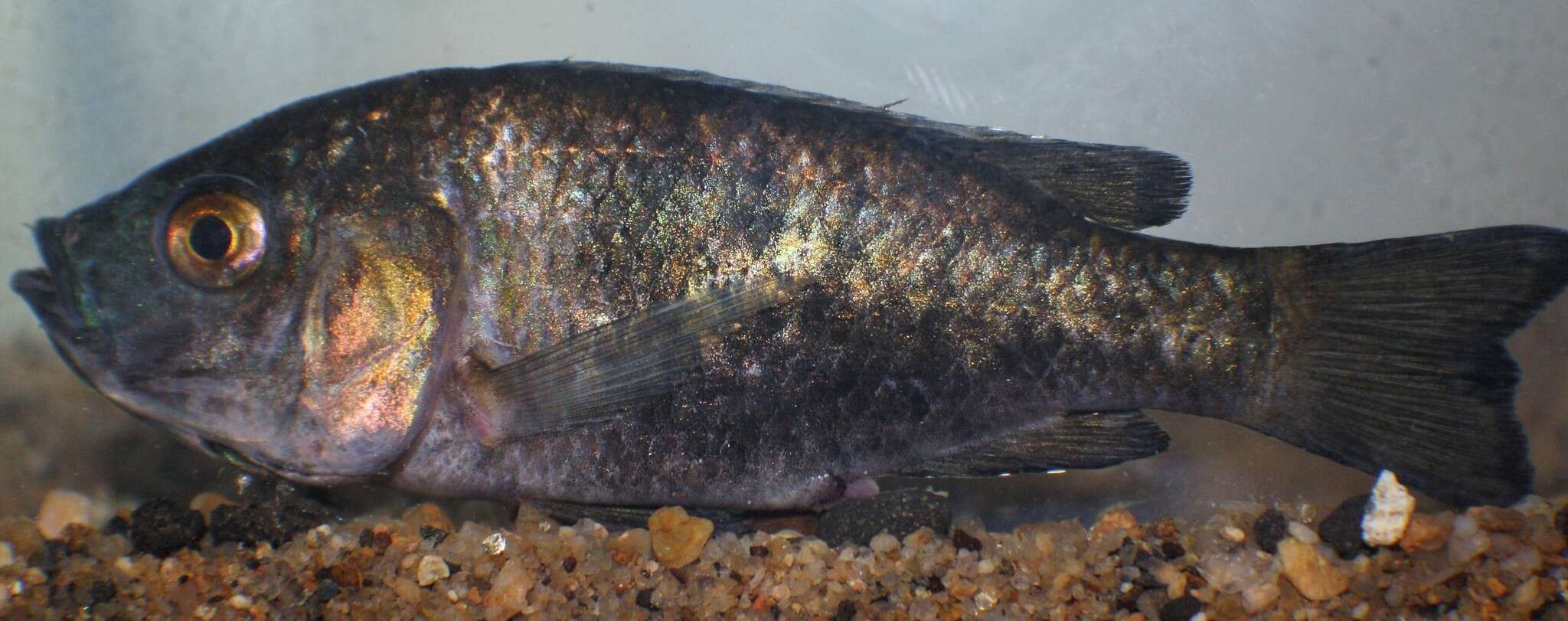
Myaka myaka
The myaka (Myaka myaka) is a critically endangered species of cichlid endemic to Lake Barombi Mbo in western Cameroon. It prefers open, deeper waters where it feeds on phytoplankton and small insects, only venturing into shallower waters to spawn. This species can reach a length of SL. It is currently the only known species in the genus Myaka, but it is very close to Sarotherodon. The myaka is threatened because of pollution and sedimentation due to human activities. It is potentially also threatened by large emissions of carbon dioxide (CO2) from the lake's bottom (compare Lake Nyos), althoug

Anomalochromis thomasi
Anomalochromis is a genus of fish in the family Cichlidae, containing the single species Anomalochromis thomasi, the African butterfly cichlid. It is a small cichlid growing to a length of . The natural habitat of A. thomasi is Sierra Leone, Liberia, and Guinea, mainly in smaller streams. The fish are typically found in slightly acidic, oxygen-rich water with other West African cichlid genera such as Hemichromis and Pelvicachromis.

Amatitlania
Amatitlania is a genus of cichlid fishes native to freshwater habitats in Central America from El Salvador and Guatemala to Panama. They are fairly small cichlids, typically reaching up to in standard length depending on exact species, although captives may grow larger.

Julidochromis
Julidochromis is a genus of cichlids in the subfamily Pseudocrenilabrinae. They are commonly called julies and are endemic to Lake Tanganyika in eastern Africa. This genus includes six formally described species, some with a number local variants of uncertain taxonomic status. Further taxonomic work is required to determine how many species exist; the closely related Chalinochromis with two more species is sometimes included here and this may be correct. Hybridization makes attempts to determine relationships with molecular phylogenetic methods difficult.
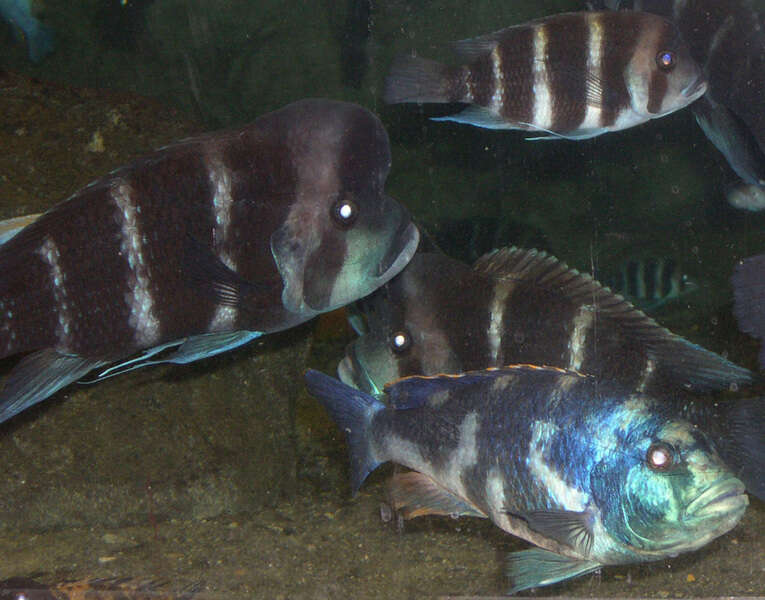
Cyphotilapia
Cyphotilapia is a small genus of African cichlids endemic to Lake Tanganyika, with C. frontosa being roughly confined to the northern half of the lake and C. gibberosa roughly to the southern half. They have a distinctly banded pattern, bulbous foreheads when mature and can reach up to in length.
Mesonauta
Mesonauta, the flag cichlids, is a small genus of cichlids native to the Amazon, Orinoco, Essequibo, Paraná and Paraguay basins in South America. Mesonauta is included in the subfamily Cichlasomatinae. They occur in various freshwater habitats such as streams and lakes, especially in areas with little water movement and aquatic vegetation. They are generally found in small groups that stay near the water surface. To avoid predators, adults may jump out of the water and juveniles mimic leaves.
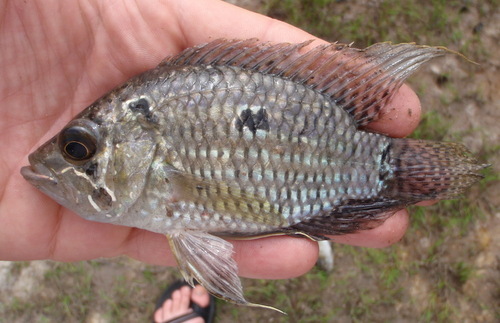
Acaronia
Acaronia is a small genus of cichlids found in the Amazon, Orinoco and other basins in northern South America.
Sarotherodon
Sarotherodon is a genus of oreochromine cichlids that are native to the northern half of Africa (south as far as the Congo River basin), with a single species, S. galilaeus, also ranging into the Levant. A couple of species from this genus have been introduced far outside their native range, and are important in aquaculture (S. galilaeus and to a lesser degree S. melanotheron). Most other species have small ranges and some are seriously threatened. They mainly inhabit fresh and brackish water, but a few can live in salt water (at least for a period). Species in this genus, as well as those in
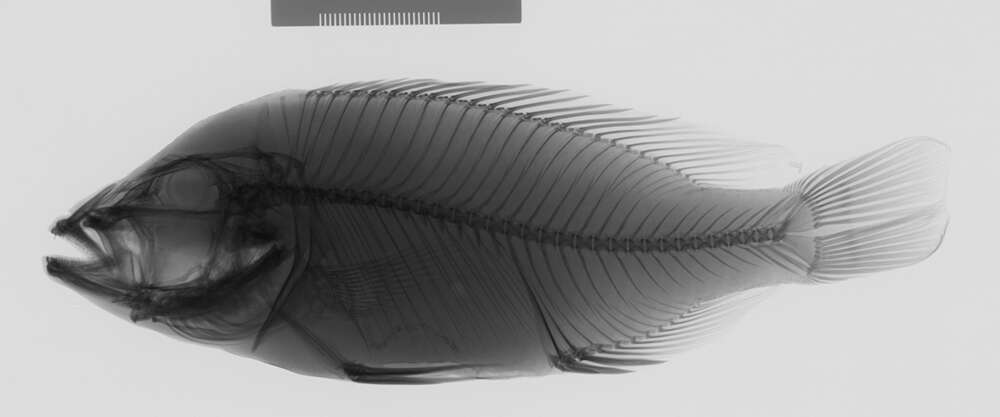
Nimbochromis
Nimbochromis is a genus of haplochromine cichlids mostly endemic to Lake Malawi in East Africa. They are known as sleeper cichlids or kaligono ("sleepers" in Chichewa) due to their unique hunting behaviour: these piscivorous species are often seen lying motionless on the lake bottom near rocks where mbuna live, even adopting an unusual sideways position rarely seen in living fish. When smaller fish approach, the Nimbochromis will "wake up" and try to seize them from ambush. Their coloration has an irregular dark cloudy pattern on lighter background (giving them their generic name) which provid
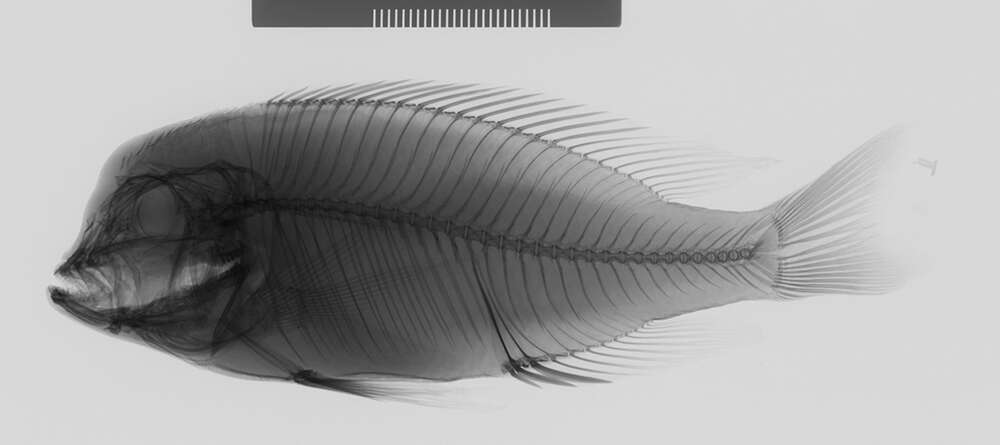
Cyrtocara moorii
Cyrtocara moorii, commonly known as the hump-head, is a species of haplochromine cichlid endemic to Lake Malawi in east Africa where they prefer areas with sandy substrates. It can grow to a length of TL. The species is popular among aquarium keepers where it is known as the hump-head cichlid, blue dolphin cichlid, Malawi dolphin or simply as moorii. It is currently the only known member of its genus. The specific name honours the English cytologist and biologist John Edmund Sharrock Moore (1870-1947).
Amphilophus
Amphilophus is a genus of cichlid fishes from Central America, ranging from southern Mexico to Panama. The genus currently contains 23 species, including several that are well known from the aquarium trade. However, studies led by Oldřich Říčan in 2008 and 2016 suggested that several species within Amphilophus should be moved to the genus Astatheros. Species proposed to be moved to Astatheros in 2008 were A. alfari, A. altifrons, A. bussingi, A. diquis, A. longimanus, A. macracanthus (which would be the type species for Astatheros), A. margaritifer, A. rhytisma, A. robertsoni and A. rostratus.

Herichthys
Herichthys is a genus of cichlid fishes native to North and Central America. Most are endemic to Mexico, but H. cyanoguttatus is also found in southern Texas (United States) and has been introduced to central Texas and Florida.

Copadichromis
Copadichromis is a genus of haplochromine cichlids endemic to Lake Malawi in Eastern Africa. Copadichromis are part of a group known as utaka and are popular with aquarists, as this genus is relatively peaceful in captivity compared to the mbuna.
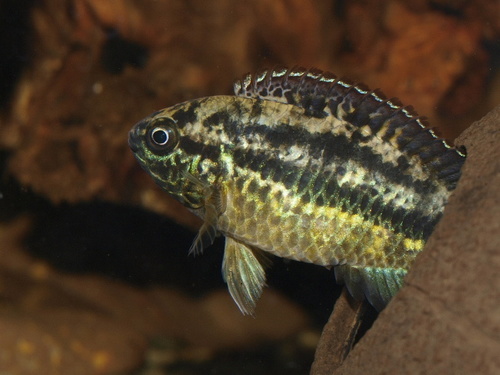
Nannacara
Nannacara is a genus of small freshwater cichlid fish endemic to South America. The genus is part of the Cichlasomatini tribe of the Cichlasomatinae subfamily. In the aquarium hobby, the fish is considered a dwarf cichlid along with Apistogramma, Mikrogeophagus, and Dicrossus species. Nannacara anomala is the most commonly encountered species in the aquarium trade.
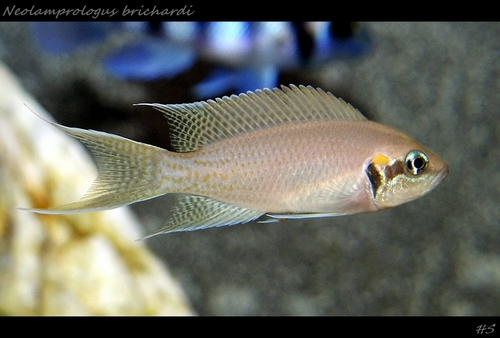
Lamprologus
Lamprologus is a genus of fishes from the cichlid family. They are native to Lake Tanganyika (where several species are shell dwellers) and the Congo River Basin in Africa. The type species for this genus is Lamprologus congoensis, a species from the Congo River. The genus is under some revision and may eventually be restricted to these riverine types.
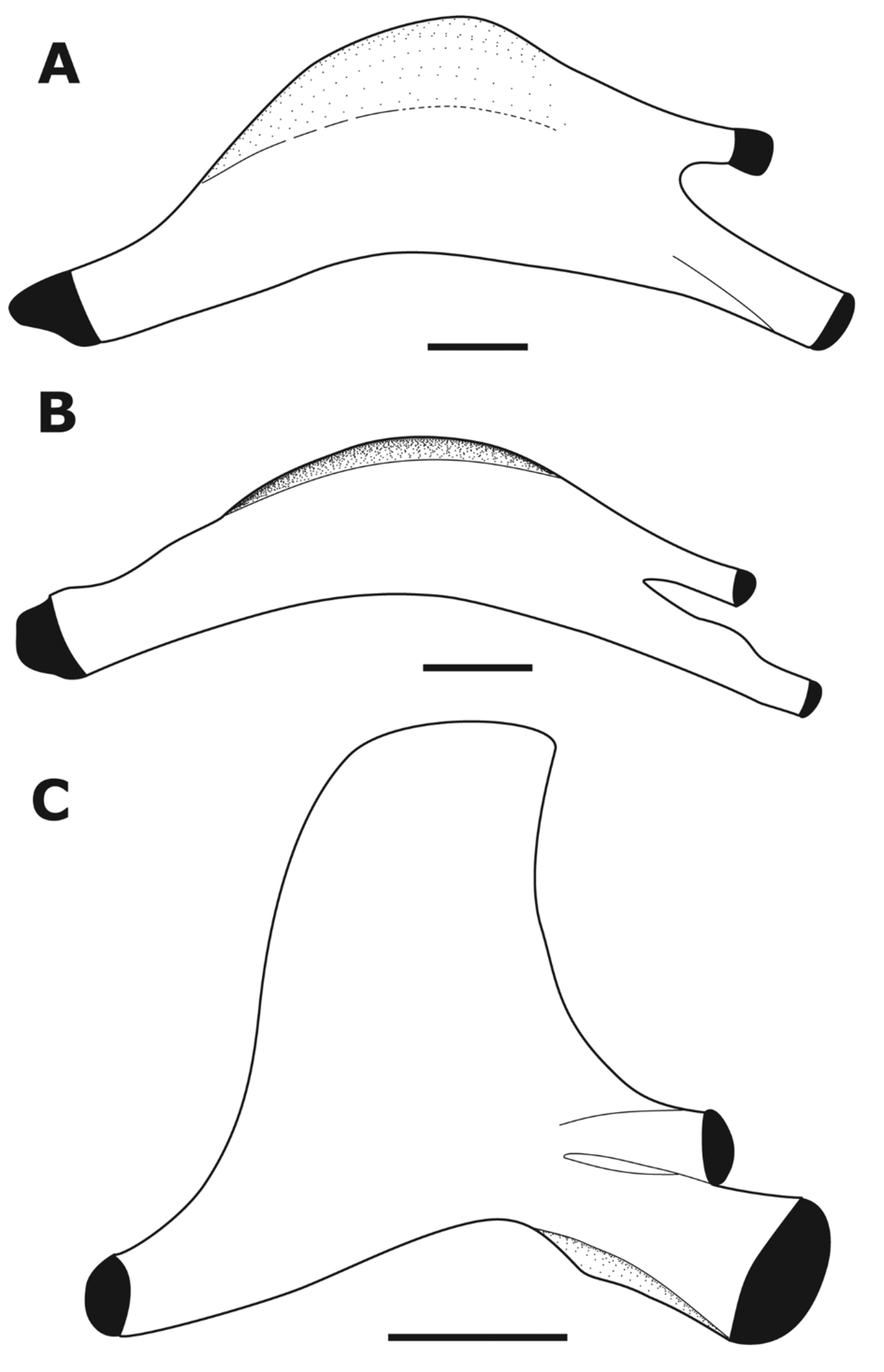
Retroculus
Retroculus is a genus of cichlids native to tropical South America, where three are native to rivers in southeastern Amazon Basin in Brazil, while the final is native to rivers in Amapá (Brazil) and French Guiana. It is the sole genus included in the subfamily Retroculinae, although some authorities classify this as a tribe, Retroculini, of the subfamily Cichlinae. These rheophilic cichlids are superficially similar to Geophagus.

Maylandia
thumb|left|Male Maylandia lombardoi
Maylandia or Metriaclima is a genus of haplochromine cichlids endemic to Lake Malawi in East Africa. They belong to the mbuna (rock-dwelling) haplochromines.

Steatocranus
Steatocranus is a genus of small rheophilic cichlids mostly native to the Congo River Basin in DR Congo/Congo Brazzaville, although one species, S. irvinei, is restricted to the Volta River in Ghana and Burkino Faso, and it belongs in a separate genus. There are also at least 10 undescribed species in the Congo River basin awaiting scientific description.
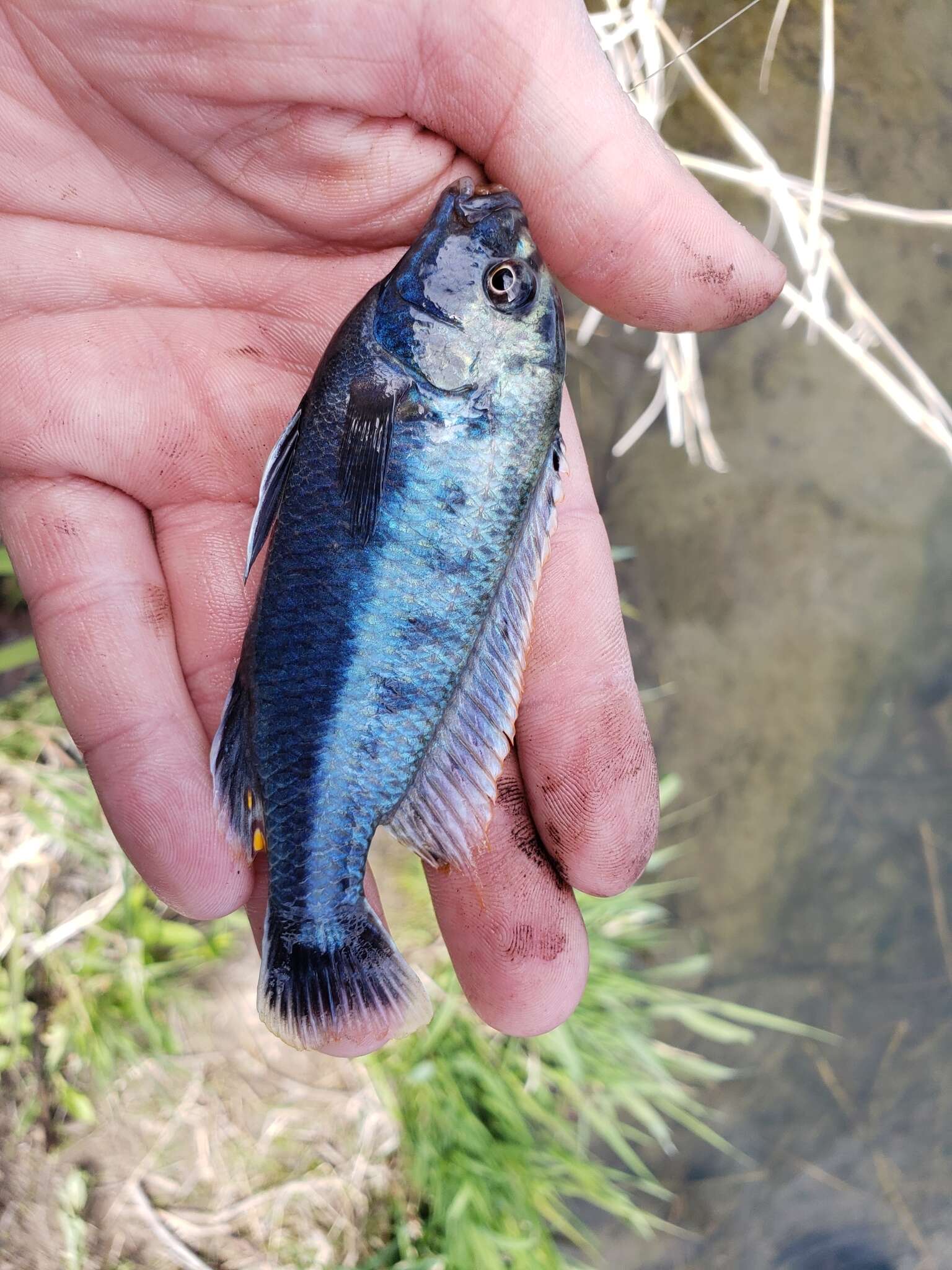
Melanochromis
Melanochromis is a genus of haplochromine cichlids endemic to Lake Malawi in Eastern Africa. Ecologically, they belong to the rock-dwelling mbuna cichlids of Lake Malawi.
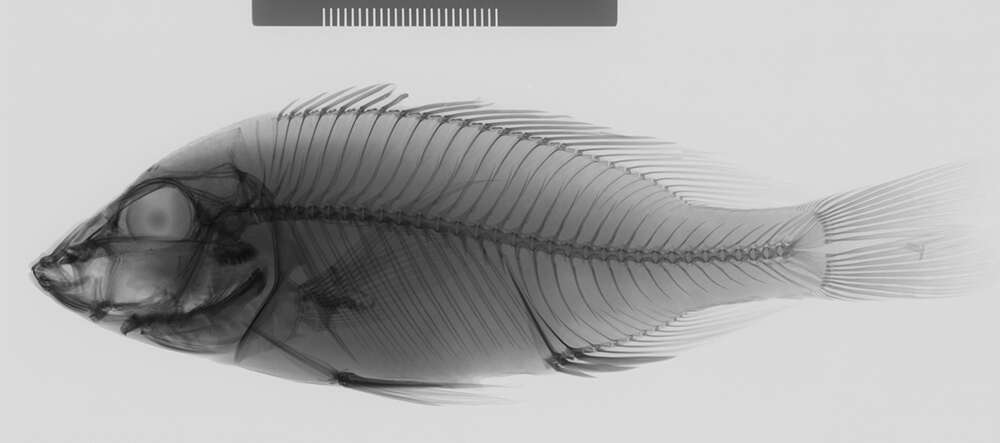
Placidochromis
Placidochromis is a genus of cichlids endemic to Lake Malawi in Eastern Africa. They are part of the haplochromine lineage of Lake Malawi's cichlid taxa. Most Placidochromis species live in the open or sandy regions of the lake.
%20collected%20in%20Zambia%20by%20South%20African%20Institute%20for%20Aquatic%20Biodiversity3.jpg)
Serranochromis
Serranochromis is a genus of relatively large, robust cichlids from freshwater habitats in mainland Southern Africa, ranging as far north as DR Congo and Tanzania, with the highest species richness in the upper Zambezi, Okavango and Congo basins. They are typically known as largemouths or, especially among fishers, breams (although unrelated to other fish known as "bream"). Serranochromis are mostly piscivores and they are important in local fisheries.

Labeotropheus
Labeotropheus is a genus of fish in the family Cichlidae endemic to Lake Malawi in eastern Africa. It includes at least 11 species, each with a number of subspecies or races. Further taxonomic work is required to determine how many species exist. These cichlids are popular ornamental fish and are ideally suited to the cichlid aquarium. Like many Malawi cichlids, these species are algal grazers. Like all cichlids from Lake Malawi these cichlids are best maintained in hard, alkaline water. This genus are best kept in aquariums with volumes greater than 120 L (31.5 gallon). The aquarium should be

Lethrinops
__NOTOC__
Xenotilapia
Xenotilapia is a genus of cichlids species endemic to Lake Tanganyika in east Africa.
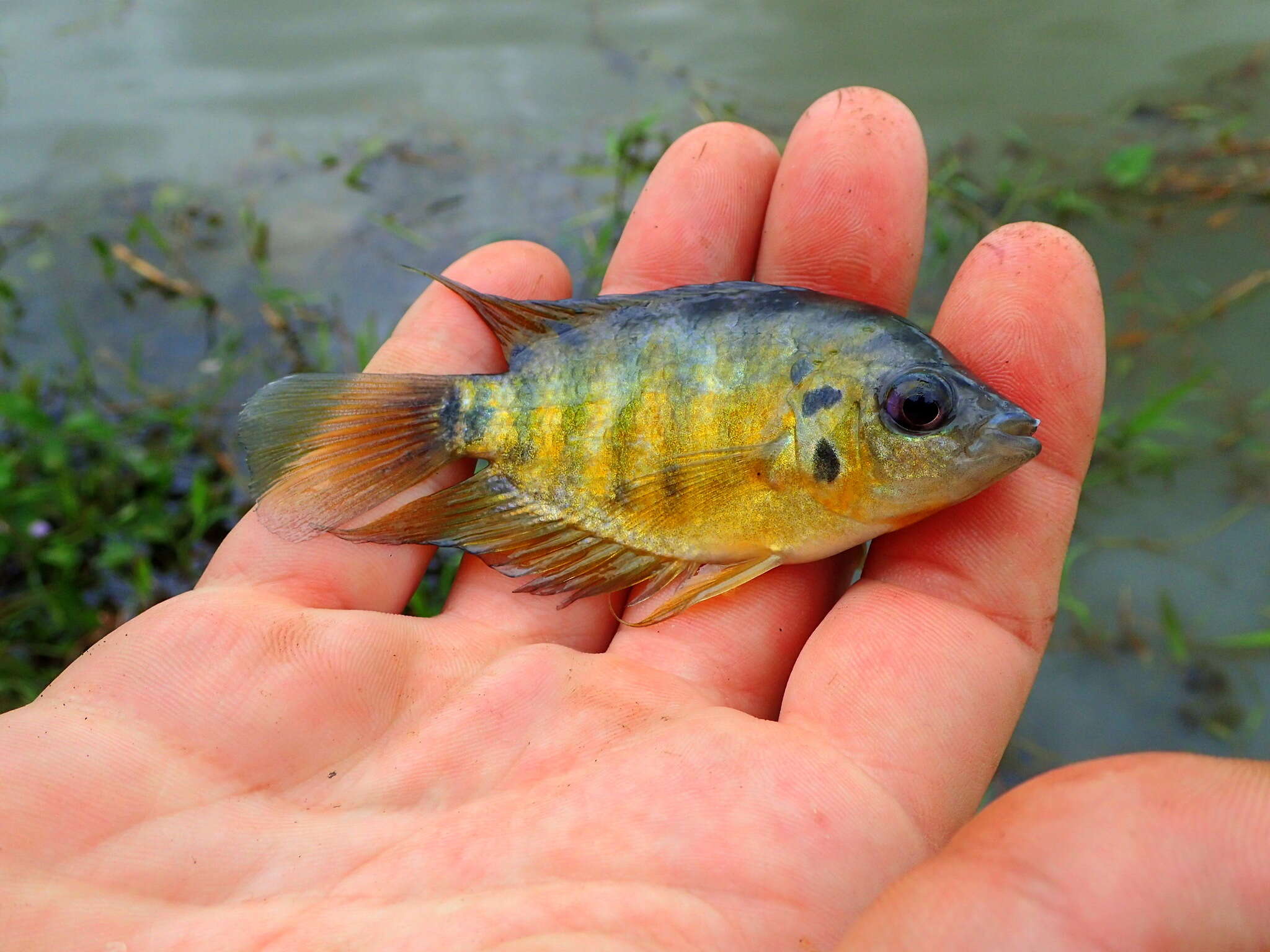
Archocentrus
Archocentrus is a genus of cichlid fish from Central America. It currently contains a single species, the flier cichlid (Archocentrus centrarchus), which is found in stagnant and slow-moving freshwater habitats such as lakes, ponds, ditches, swamps and rivers in Honduras, Nicaragua and Costa Rica. It is up to long and feeds on invertebrates and detritus.
Teleogramma
Teleogramma is an African genus of cichlids with five species. These dark and slender fish barely reach in length and are limited to rapids in the Western Congo River basin in DR Congo/Congo Brazzaville. They are distinctive, with specialized anatomy. They are characterized by elongated heads with tubular nostrils and a lateral line that is not interrupted, as it is in most cichlids.
Uaru
Uaru is a small genus of cichlids found in blackwater and whitewater habitats in the upper Orinoco and the Amazon basin.
.jpg)
Labidochromis
right|thumb|235px|Labidochromis caeruleus

Caquetaia
Caquetaia is a small genus of cichlid fishes from tropical South America. The genus currently contains three species. Caquetaia spp. are ambush predators that predominantly feed on invertebrates. Seasonal fluctuations in water level have been shown to contribute to Caquetaia spp. consuming a larger variety of invertebrates, especially when the water level is low during dry seasons. Caquetaia are known for their highly protrusible jaws, an adaptation hypothesized to improve their ability to capture prey by enhancing overall ram velocity.
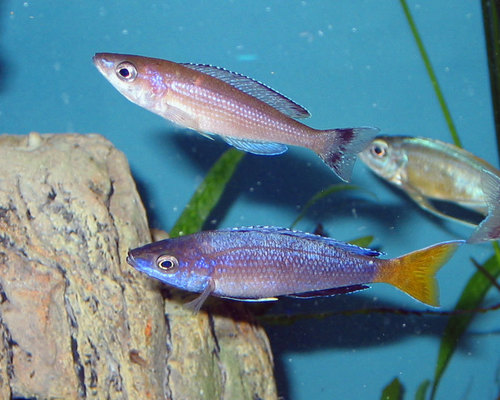
Cyprichromis
Cyprichromis is a genus of cichlids with five species. They are also known as the herring cichlids or sardine cichlids, since they form large schools in the open water of Lake Tanganyika. Of the known species, only C. microlepidotus has been recorded outside Lake Tanganyika (in eastern Tanzania).

Australoheros
Australoheros is a fish genus in the cichlid family. Most are restricted to rivers and streams in southeastern Brazil, Paraguay, Uruguay and northeastern Argentina, but at least one species is also found in lakes and swamps. This genus was erected after a taxonomic revision in 2006. These are relatively small cichlids that typically do not surpass in length, although A. facetus reaches about .

Sciaenochromis
Sciaenochromis is a genus of haplochromine cichlids endemic to Lake Malawi in East Africa. The species are popular in the aquarium hobby, most notably S. fryeri.
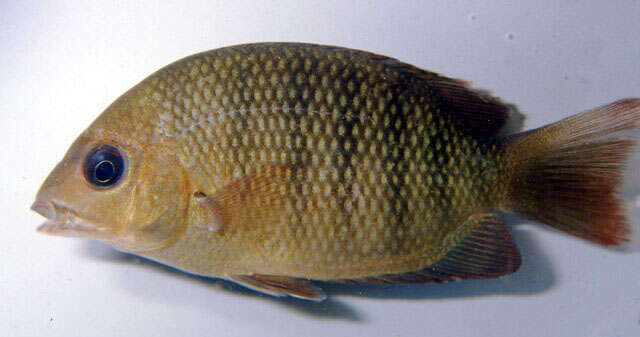
Paretroplus
Paretroplus is a genus of fishes in the cichlid family, all of which are endemic to lakes and rivers of Madagascar. The vast majority are threatened and restricted to the northwestern part of the island. Only P. polyactis is found in the southern half of Madagascar and only P. polyactis and P. gymnopreopercularis are found in eastern drainages. Most are restricted to freshwater, but at least P. polyactis and P. maromandia can also be seen in brackish habitats.

Andinoacara
Andinoacara is a genus of fish in the family Cichlidae. The genus was described in 2009. Before this the members of Andinoacara were placed in the "catch-all" genus Aequidens although they are not closely related to the other members of this genus. The genus Andinoacara is restricted to freshwater habitats in northwestern South America (Trinidad and the Orinoco Basin west to the Pacific coast of South America as far south as Peru) and southern Central America (Costa Rica and Panama). There are no members of the genus in the Amazon Basin.

Thorichthys
Thorichthys is a genus of cichlid fish that is native to the Atlantic slope of Middle America, ranging from southern Veracruz and the Yucatán Peninsula in Mexico, to Guatemala and Honduras, with introduced populations in a few other countries. They tend to inhabit moderately-flowing to standing water such as rivers, streams, lakes, ditches and lagoons, and they are primarily freshwater fish, although T. helleri and T. meeki may occur in slightly brackish habitats.
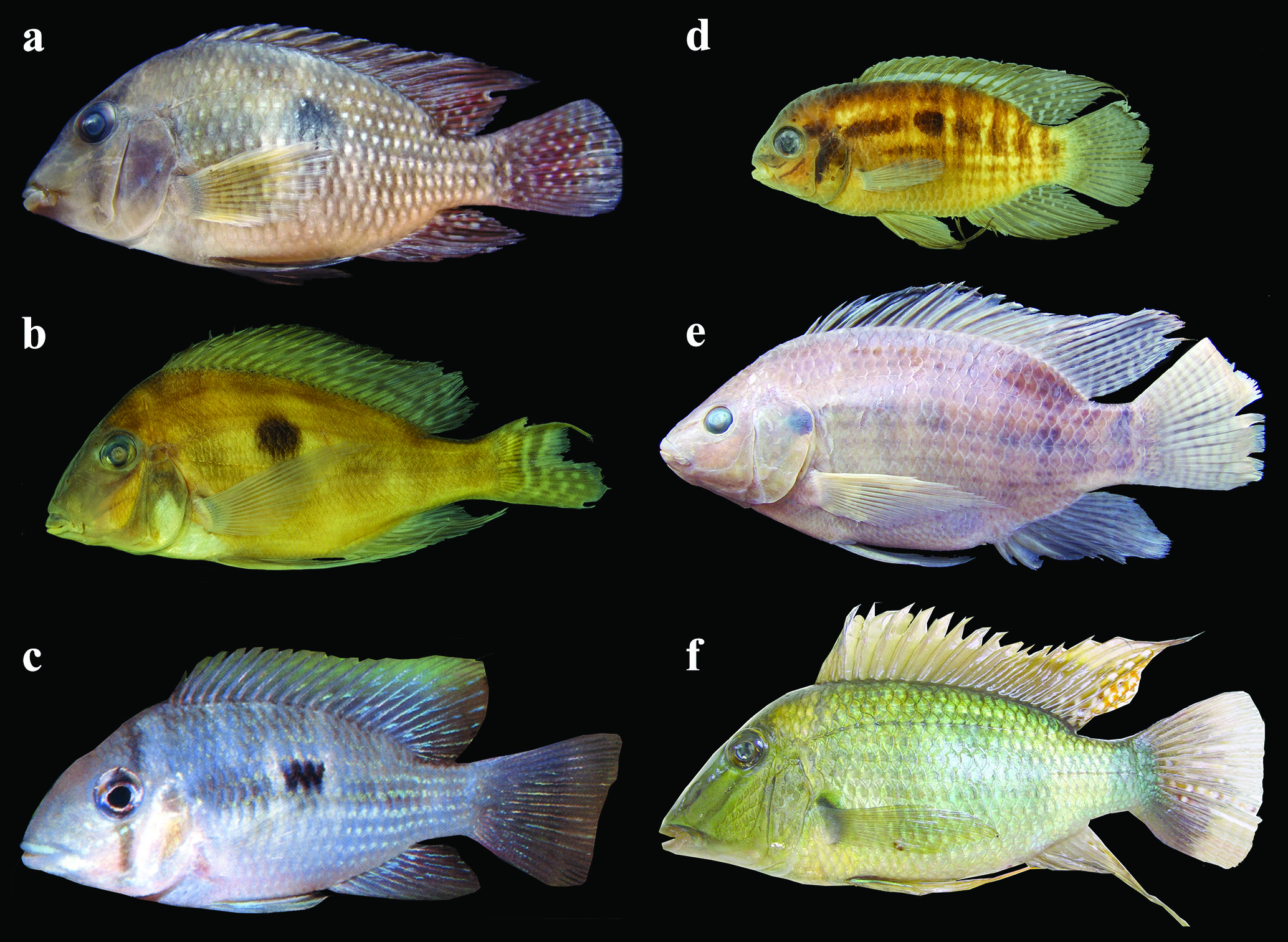
Satanoperca
Satanoperca is a small genus of cichlids from South America, where they are known from the Orinoco, Essequibo, Nickerie, Amazon and Paraná–Paraguay river basins. They are mainly found in areas with slow-moving waters, but some species have also been recorded from rapids.

Pelvicachromis
Pelvicachromis is a genus of small (), brightly coloured cichlids from tropical West Africa and Central Africa. They typically inhabit soft, acidic water (pH 5.6 – 6.9).
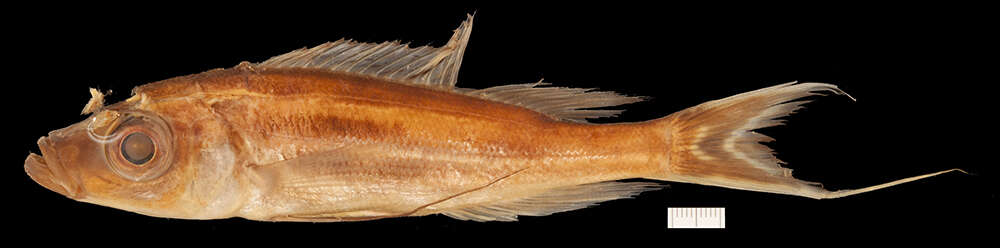
Benthochromis
Benthochromis is a small genus of planktivorous cichlid fish that are endemic to relatively deep waters in Lake Tanganyika in Africa.

Orthochromis
thumb|Orthochromis polyacanthus
Orthochromis is a genus of relatively small haplochromine cichlids native to rivers and lakes in Eastern and Middle Africa. Most of its species are rheophilic.
Nyassachromis
Nyassachromis is a genus of haplochromine cichlids endemic to Lake Malawi. They are open-water mouthbrooders, an ecological niche known as utaka to locals.
Chaetobranchopsis
Chaetobranchopsis is a small genus of cichlid fishes from South America, where they are found in the Amazon, Paraná and Paraguay river basins.
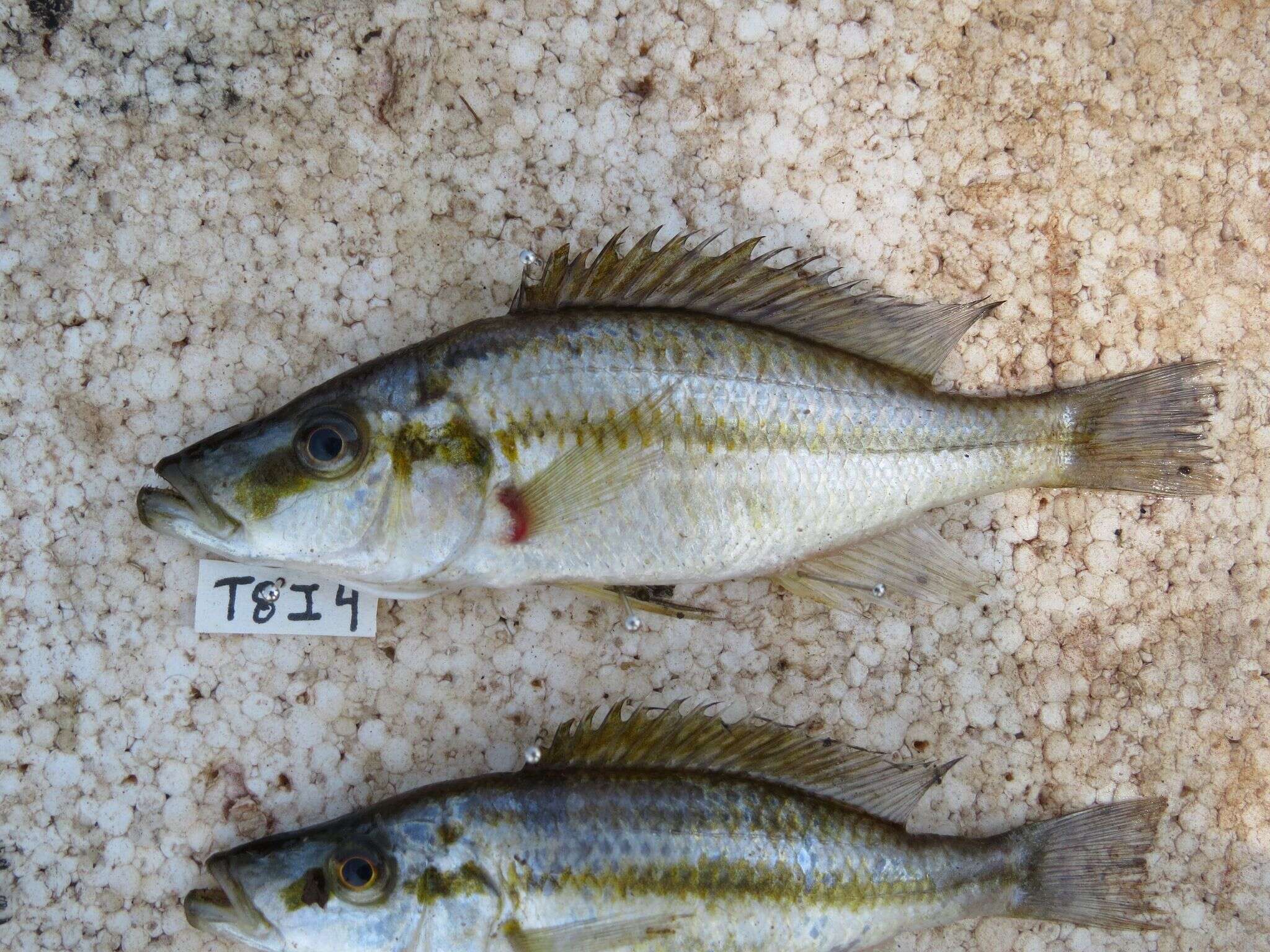
Dimidiochromis
Dimidiochromis is a genus of haplochromine cichlids endemic to Lake Malawi in East Africa. All of its species are elongated in shape and predatory on smaller fishes.
Pseudocrenilabrus
Pseudocrenilabrus is a genus of fish in the family Cichlidae, commonly known as the mouthbrooders endemic to rivers and lakes in Central and Eastern Africa.