Category
page 1Cities in ancient Egypt
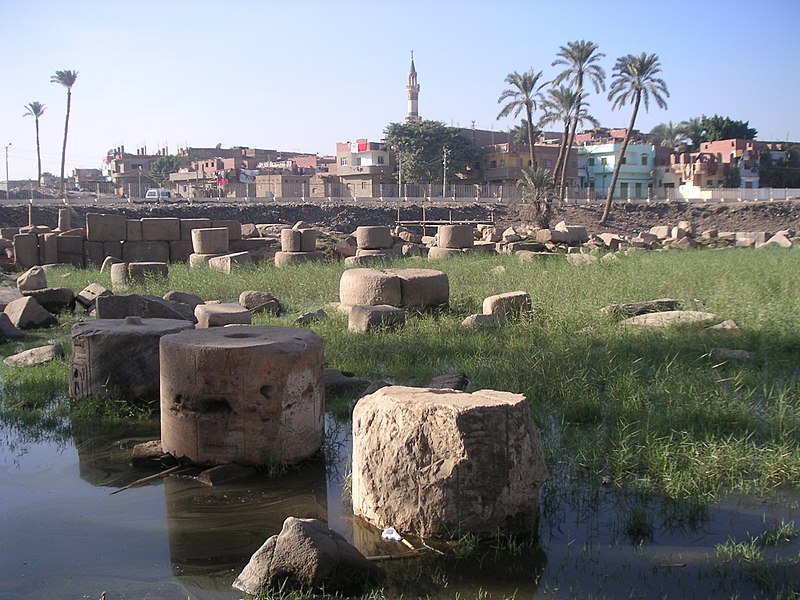
Memphis
ancient capital of Inebu-hedj, Egypt

Thebes
ancient Egyptian city

Asyut
Asyut ('''' ) is a city in Upper Egypt and the capital of the modern Asyut Governorate in Egypt. It was built close to the ancient city of the same name, which is situated nearby. The modern city is located at , while the ancient city is located at . The city is home to one of the largest Coptic Christian communities in the country.

Heliopolis
city of ancient Egypt

Desouk
Desouk (, ) is a city in northern Egypt. Located 80 km east of Alexandria, in the Kafr El Sheikh Governorate and had a population of 137,660 inhabitants as of 2011. It is bordered to the west by the Beheira Governorate.

Edfu
Edfu (, , , ; also spelt Idfu, or in modern French as Edfou) is an Egyptian city, located on the west bank of the Nile River between Esna and Aswan, with a population of approximately 60,000 people. Edfu is the site of the Ptolemaic Temple of Horus and an ancient settlement, Tell Edfu. About south of Edfu are remains of ancient pyramids.

Abydos
city in ancient Egypt

Amarna
Amarna (; ) is an extensive ancient Egyptian archaeological site containing the ruins of Akhetaten, the capital city during the late Eighteenth Dynasty. The city was established in 1346 BC, built at the direction of the Pharaoh Akhenaten, and abandoned shortly after his death in 1332 BC.

Sais
village in Gharbia Governorate, Egypt

Tanis
thumb|Map of ancient Lower Egypt showing Tanis
Tanis ( ; ; ) or San al-Hagar (; ; ; or or ; ) is the Greek name for ancient Egyptian ḏꜥn.t, an important archaeological site in the northeastern Nile Delta of Egypt, and the location of a city of the same name. Tanis was the capital of the Egyptian Kingdom in its 21st and 22nd Dynasties. It is located on the Tanitic branch of the Nile, which has long since silted up.

Dendera
Dendera ( Dandarah; ; Bohairic ; Sahidic ), also spelled Denderah, ancient Iunet 𓉺𓈖𓏏𓊖 “jwn.t”, Tentyris,(Arabic: Ewan-t إيوان-ة ), or Tentyra is a small town and former bishopric in Egypt situated on the west bank of the Nile, about south of Qena, on the opposite side of the river. It is located approximately north of Luxor and remains a Latin Catholic titular see. It contains the Dendera Temple complex, one of the best-preserved temple sites from ancient Upper Egypt.

Napata
Napata (, ; ; and ) was a city of ancient Kush at the fourth cataract of the Nile founded by the Egyptian Amun cult for Egyptian pilgrims given by its, as suggested, Egyptian name. It is located approximately 1.5 kilometers from the east side of the river at the site of modern Karima, Sudan.

Abusir
Abusir ( ; Egyptian pr wsjr; '''', "the resting place of Osiris"; ) is the name given to an ancient Egyptian archaeological pyramid complex comprising the ruins of four kings' pyramids dating to the Old Kingdom period, and is part of the Pyramid Fields of the Memphis and its Necropolis UNESCO World Heritage Site.
Bubastis
thumb|Map of ancient Lower Egypt showing Bubastis

Kom Ombo
city
.jpg)
Nekhen
thumb|Possible illustration of the conflict between Abydos, Egypt|Abydos and Nekhen (Hierakonpolis), on the [[Gebel el-Arak Knife, Louvre Museum, 3300–3200 BCE.]]
Nekhen (, ), also known as Hierakonpolis (; , meaning City of Hawks or City of Falcons, a reference to Horus; ) was the religious and political capital of Upper Egypt at the end of prehistoric Egypt ( 3200–3100 BC) and probably also during the Early Dynastic Period ( 3100–2686 BC).

Herakleopolis Magna
archaeological site in Egypt

Hermopolis
Hermopolis (or Hermopolis Magna) was a major city in antiquity, located near the boundary between Lower and Upper Egypt. Its Egyptian name Khemenu derives from the eight deities (the Ogdoad) said to reside in the city.
right|thumb|upright|Black siltstone [[obelisk of King Nectanebo II (r. 358 to 340 BCE). According to the vertical inscriptions he set up this obelisk at the doorway of the sanctuary of Thoth Thrice-Great, Lord of Hermopolis. It is now on display in the British Museum, London.]]
A provincial capital since the Old Kingdom of Egypt, Hermopolis developed into a major city of Roman E

Avaris
thumb|An official wearing the "mushroom-headed" hairstyle also seen in contemporary paintings of Western Asiatic foreigners, from Avaris, the capital of the Hyksos. Dated to 1802–1640 BC. Staatliche Sammlung für Ägyptische Kunst.

Thinis
Thinis (Greek: Θίνις Thinis, Θίς This ; Egyptian: Tjenu; ;
) was the capital city of pre-unification Upper Egypt. Thinis remains undiscovered but is well attested by ancient writers, including the classical historian Manetho, who cites it as the centre of the Thinite Confederacy, a tribal confederation whose leader, Menes (or Narmer), united Egypt and was its first pharaoh. Thinis began a steep decline in importance when the capital was relocated to Memphis, which was thought to be the first true and stable capital after the unification of Egypt by Menes. Thinis's location on the border of th

Deir al-Balah
city in the State of Palestine
Pi-Ramesses
Pi-Ramesses (; Ancient Egyptian: , meaning "House of Ramesses") was the new capital built by the Nineteenth Dynasty Pharaoh Ramesses II (1279–1213 BC) at Qantir, near the old site of Avaris. The city had served as a summer palace under Seti I (c. 1290–1279 BC), and may have been founded by Ramesses I (c. 1292–1290 BC) while he served under Horemheb.
.svg)
Buto
Buto (, , Butu), Bouto, Butus (, Boutos) or Butosus was a city that the Ancient Egyptians called Per-Wadjet. It was located 95 km east of Alexandria in the Nile Delta of Egypt. What in classical times the Greeks called Buto, stood about midway between the Taly (Bolbitine) and Thermuthiac (Sebennytic) branches of the Nile, a few kilometers north of the east-west Butic River and on the southern shore of the Butic Lake (, Boutikē limnē).
Samannud
Samannud ( ) is a city (markaz) located in Gharbia Governorate, Egypt. Known in classical antiquity as Sebennytos (), Samannud is a historic city that has been inhabited since the Ancient Egyptian period. As of 2019, the population of the markaz of Samannud was estimated to be 410,388, with 83,417 people living in urban areas and 326,971 in rural areas.

Mendes
Mendes (, gen.: ), the Greek name of the ancient Egyptian city of Djedet, also known in ancient Egypt as Per-Banebdjedet ("The Domain of the Ram Lord of Djedet") and Anpet, is known today as Tell El-Ruba ().
Qus
Qus (, older name , from ) is a city in the modern Qena Governorate, Egypt, located on the east bank of the Nile.

Heracleion
Heracleion (Ancient Greek: ), also known as Thonis (Ancient Greek: ; from the Ancient Egyptian: ; ) and sometimes called Thonis-Heracleion, was an ancient Egyptian port city located near the Canopic Mouth of the Nile, about northeast of Alexandria on the Mediterranean Sea. It became inundated; its remains are located in Abu Qir Bay, which in 2022 was off the coast and approximately underwater, and near Abukir. The sanctuary of Neith of Sais was located in Thonis. A stele found on the site indicates that late in its history the city was known by both its Egyptian and Greek names.

Kerma
Kerma was the capital city of the Kingdom of Kerma, which had its roots in the pre-Kerma culture in present-day Sudan from 3500 BC. Kerma is one of the largest archaeological sites in ancient Nubia. It has produced decades of extensive excavations and research, including thousands of graves and tombs and the residential quarters of the main city surrounding the Western, or Lower, Deffufa.

Antinoöpolis
Leontopolis
Leontopolis was an ancient Egyptian city located in the Nile Delta, Lower Egypt. It served as a provincial capital and Metropolitan Archbishopric. The archaeological site and settlement are known today as Kafr Al Muqdam.

Itjtawy
Itjtawy or It-Towy ("Seizer of the Two Lands"), also known by its full name Amenemhat-itjtawy ("Amenemhat seizes the Two Lands"), was an ancient Egyptian royal city established by pharaoh Amenemhat I.

Taposiris Magna
ancient Egyptian site
Atfih
Atfih ( '' , Tpeh or Tpēh'') is a town in Middle Egypt. It was part of the now defunct Helwan Governorate from April 2008 to April 2011, after which it was reincorporated into the Giza Governorate. As of 2001, it has a population of 106,300 inhabitants.
Aten
archeological site
Busiris
village in Gharbia Governorate, Egypt

El Hiba
village in Beni Suef Governorate, Egypt

Xois
village and archaeological site in Egypt

Letopolis
thumb|Standard of the Letopolite nome (Egypt)|nome
thumb|Five faience ushabti of Ankh-hapi, a priest in Letopolis during the Ptolemaic dynasty. The Archaeological Civic Museum (MCA) of Bologna|Bologna, Museo Civico Archeologico
Letopolis (Greek: Λητοῦς Πόλις) was an ancient Egyptian city, the capital of the second nome of Lower Egypt. Its Egyptian name was Khem 𓋊𓐍𓐝𓂜𓊖𓉐 (ḫm), and the modern site of its remains is known as Ausim (, from ). The city was a center of worship of the deity Khenty-irty or Khenti-kheti, a form of the god Horus. The site and its deity are mentioned in texts from as
Sharuna
Sharuna is an archaeological site in central Egypt. It was a settlement in ancient Egypt, located east of the Nile, almost opposite of Per Medjed. It was occupied from the Old Kingdom of Egypt until the Late Roman/Byzantine period. Archaeological excavation of the site began in 1984 and have continued through 2010, locating numerous tombs, temples and churches.
Abusir
village in Alexandria Governorate, Egypt

Tebtunis
thumb|Tebtunis and Soknebtynis temple-Fajyum gouvernorát
Tjebu
human settlement

Rhacotis
thumb | 220x124px | right
Rhacotis (Egyptian: r-ꜥ-qd(y)t, Coptic: ⲣⲁⲕⲟϯ , Greek Ῥακῶτις; also romanized as Rhakotis) was the name for a city on the northern coast of Egypt at the site of Alexandria. Rhacotis may have been the name for an earlier settlement on the site of Alexandria or, alternatively, a term meaning "construction site" referring to the establishment of the new city.
Marina
Holiday resort in Egypt
Tjaru
Tjaru () was an ancient Egyptian fortress on the Way of Horus or Horus military road, the major road leading out of Egypt into Canaan. It was known in Greek as Selē (), in Latin as Sile or Sele, and in Coptic as Selē or Slē (). It has been suggested that its remains form the Tel el-Habua near Qantarah.

Tell el-Balamun
village in Dakahlia Governorate, Egypt
Clysma
Clysma (; ; ) was an ancient city and bishopric in Egypt. It was located at the head of the Gulf of Suez.

Soknopaiu Nesos
archaeological site in the Egyptian depression of el-Faiyum
Urban planning in ancient Egypt
list of ancient Egyptian towns and cities
Wikimedia list article
Hieracon
Per Nemty (pr nmty; House of Nemty), an Ancient Egyptian settlement also known in Greek as Hieracon and at the modern village of al-Atawla, on the right/eastern bank of the Nile River northeast of Assiut (5 km). It was the capital of the 12th Nome of Upper Egypt. The town was centered on the Temple of Nemty, the god Nemty being the ferryman god.
.jpg)
Terenuthis
Tarrana (Arabic: الطرانة Aṭ-Ṭarrānah, Coptic: ⲧⲉⲣⲉⲛⲟⲩⲑⲓ Terenouthi), known in classical antiquity as Terenouthis (Ancient Greek: Τερενοῦθις), is a town that is currently referred to as Monufia Governorate of Egypt. This site is located in the western Nile Delta, circa 70 km north-west of Cairo, between the southern prehistoric site of Merimde Beni-salame and the northern town of Kom el-Hisn. The modern name for the necropolitain ancient city of Ternouthis (El-Tarrana) is Kom Abou Billou. Tarrana was once a popular commercial center, and housed a diverse demographic that erupted during the
Herwer
Herwer was an ancient Egyptian town in the 16th nome (Oryx nome) in Upper Egypt. It is mentioned in several ancient inscriptions dating from the Old, Middle and New Kingdom. The main deities of the place were Khnum and Heqet, both several times called lord or lady of Herwer. Perhaps in the Middle Kingdom, the place became the capital of the 16th Upper Egyptian nome. The local governor Amenemhat of that nome was indeed overseer of the priests of Khnum of Herwer. The place is often mentioned in the tombs of Beni Hasan.
Tell es-Sakan
archaeological site in Palestine
Cusae
Cusae (; ) was a city in Upper Egypt. Its Ancient Egyptian name was qjs (variant qsy), conventionally rendered Qis or Kis, with many further transliterations such as Qosia. Today, the town is known as El Quseyya, and is located on the west bank of the Nile in the Asyut Governorate.
Idfa
Idfa () is a village in Sohag Governorate in Upper Egypt located from the nearby city of Sohag. In antiquity, it was known by the ancient Egyptians as Iteb, then it was named by the Greeks as Itos ().
Hebenu
Hebenu (, , ) or Alabastron () was a city in ancient Egypt. It was located in Middle Egypt, or the Heptanomy, and belonged to the Hare nome (. It was the early capital of the Oryx nome (. The modern village of Zawiyat al-Amwat () (Minya Governorate) is built on the site where the ancient city stood.
list of ancient Egyptian sites
Wikimedia list article
Shashotep
Hypselis or Hypsela (; ), known to the ancient Egyptians as Shashotep, is an ancient Egyptian city and Roman bishopric, which was located near the modern town of Shutb (or ash-Shatb, Chutb) in the Asyut Governorate.
Crocodilopolis
Sumenu or Smenu (Egyptian: S(w)mnw) was an ancient Egyptian town located in Upper Egypt. It housed the most prominent early-Middle Kingdom sanctuary of the crocodile-god Sobek.