Category
page 1Citizen science

amateur astronomy
hobby whose participants enjoy watching the sky

citizen science
collaborative approach that involves members of the public in scientific research

iNaturalist

Tabby’s Star
binary system in the constellation Cygnus
genetic genealogy
use of DNA testing in combination with traditional genealogical methods to infer relationships between individuals and find ancestors
Xeno-Canto
xeno-canto is a citizen science project and repository in which volunteers record, upload and annotate recordings of birds, orthoptera, bats, frogs and land mammals. Since it began in 2005, it has collected over 1,000,000 sound recordings from more than 12,900 species worldwide, and has become one of the biggest open collections of wildlife sounds in the world. All the recordings are published under one of the Creative Commons licenses, including some with open licences. Each recording on the website is accompanied by a spectrogram and location data on a map displaying geographical variation.
Galaxy Zoo
crowdsourced astronomy project
Genographic Project
citizen science project
Cosmic-Ray Extremely Distributed Observatory
science project
Hanny's Voorwerp
astronomical object appearing as a bright blob close to spiral galaxy IC 2497 in Leo Minor, discovered by Hanny van Arkel

BioBlitz
thumb|Base camp at a BioBlitz in Auckland, New Zealand

BugGuide
BugGuide (or BugGuide.net) is a website and online community of naturalists, both amateur and professional, who share observations of arthropods such as insects, spiders, and other related creatures. The website consists of informational guide pages and many thousands of photographs of arthropods from the United States and Canada which are used for identification and research. The non-commercial site is hosted by the Iowa State University Department of Entomology. BugGuide was conceived by photographer Troy Bartlett in 2003 and since 2006 has been maintained by John VanDyk, an adjunct assistan

Zooniverse
Zooniverse is a global platform for people-powered research, also known as participatory science or citizen science. It is a collaboration between Chicago’s Adler Planetarium, the University of Oxford, and the University of Minnesota. It is home to some of the Internet's largest, most popular and most successful citizen science projects.

Steve
thumb|A STEVE over Little Bow Resort, [[Alberta, in August 2015]]
thumb|A STEVE over Crossfield, Alberta, in March 2018 (around 12:30 a.m.)
DIY biology
biotechnological social movement
EyeWire
Eyewire is a citizen science game from Sebastian Seung's Lab at Princeton University. It is a human-based computation game that uses players to map retinal neurons. Eyewire launched on December 10, 2012. The game utilizes data generated by the Max Planck Institute for Medical Research. As of March 2025, Eyewire has had around 350,000 players and resulted in the tracing of 6,000 neurons.''''''
Pea galaxy
possibly a type of luminous blue compact galaxy which is undergoing very high rates of star formation
Avibase
Avibase is an online taxonomic database that organizes bird taxonomic and distribution data globally. The database relies on the notion of taxonomic concepts rather than taxonomic names. Avibase incorporates and organizes taxonomic data from the main avian taxonomic publishers (The Clements Checklist of Birds of the World, Handbook of the Birds of the World, BirdLife International, IOC Checklist and the Howard and Moore Complete Checklist of the Birds of the World) and other regional sources (e.g. all editions of the American Ornithological Society Checklist of North American Birds since 1886)

Karen Masters
astrophysicist
Tela Botanica
French botanical community

Observation.org
Observation.org is a worldwide platform of naturalists, citizen scientists, and biologists to collect, validate and share biodiversity observations. Observation.org may be accessed via its website or from its mobile applications like ObsIdentify or Observation. By 2026, the database has grown to include over 314 million nature observations of 145,595 species, supported by 138 million photos contributed by 584,000 users. It is published and hosted in the Netherlands under Dutch and European law by the non-profit foundation Observation International.
Planet Hunters
citizen science project to find exoplanets
Stardust@home
thumb|Stardust@home logo

Na'Taki Osborne Jelks
American environmental scientist
City Nature Challenge
annual, global, community science competition to document urban biodiversity

World Water Monitoring Day
citizen science project
amateur chemistry
pursuit of chemistry as a hobby
Birds of the World
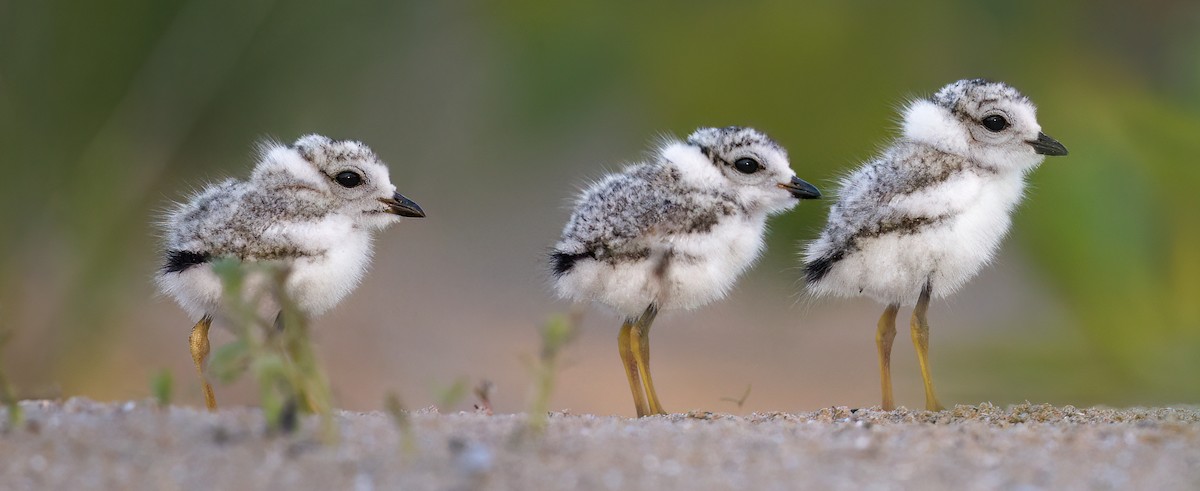
website from the Cornell Lab of Ornithology
Mushroom Observer
website
GLOBE at Night
citizen science project
Pl@ntNet project
Pl@ntNet is a citizen science project for automatic plant identification through photographs and based on machine learning. Users take a photograph, and the system can identify it as one of more than 77,000 plant species. Pl@ntNet has processed more than a billion photographs from users.
Backyard Worlds
citizen science project
Disk Detective
citizen science project
Atlas of Living Australia
online repository of information about Australian plants, animals, and fungi

EteRNA
Eterna is a browser-based "game with a purpose", developed by scientists at Carnegie Mellon University and Stanford University, that engages users to solve puzzles related to the folding of RNA molecules. The project is supported by the Bill and Melinda Gates Foundation, Stanford University, and the National Institutes of Health. Prior funders include the National Science Foundation.
National Moth Week
Citizen science project
Safecast
Safecast is an international, volunteer-centered organization devoted to open citizen science for environmental monitoring. Safecast was established by Sean Bonner, Pieter Franken, and Joi Ito shortly after the Fukushima Daiichi nuclear disaster in Japan, following the Tōhoku earthquake on 11 March 2011 and manages a global open data network for ionizing radiation and air quality monitoring.