Category
page 1Citrus hybrids

Citrus × limon
The lemon ('''Citrus × limon') is a species of small evergreen tree in the Citrus genus of the flowering plant family Rutaceae. A true lemon is a hybrid of the citron and the bitter orange. Its origins are uncertain, but some evidence suggests lemons originated during the 1st millennium BC in what is now northeastern India. Some other citrus fruits are called lemon''.

Citrus × paradisi
The grapefruit ('''Citrus × paradisi''') is a subtropical citrus tree known for its relatively large, sour to semi-sweet, somewhat bitter fruit. The flesh of the fruit is segmented and varies in color from pale yellow to dark red.

Citrus sinensis
sweet orange plant, hybrid between pomelo and mandarin

Citrus × aurantium
species of plant, the bitter orange
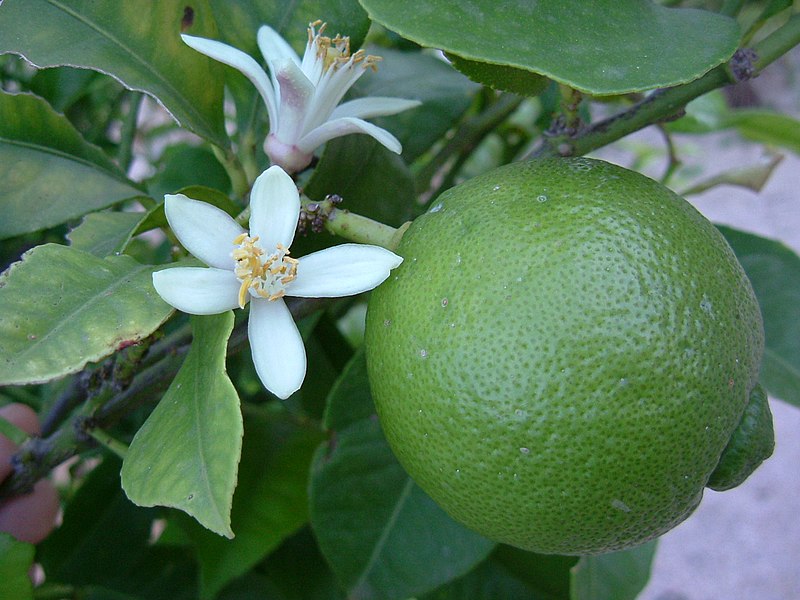
lime
green and acidic citrus fruit of various Citrus species

Citrus × aurantiifolia
species of plant, Key lime

Citrus ×bergamia
nothospecies of plant, Bergamot orange

calamansi
Calamansi ('''Citrus × microcarpa), also known as calamondin, Philippine lime, or Philippine lemon''', is a citrus hybrid cultivated predominantly in the Philippines. It is native to the Philippines, parts of Indonesia (Borneo, Sumatra, and Sulawesi), Malaysia, and Brunei, as well as Taiwan, and parts of southern China.

Citrinos × clementina

tangerine
The tangerine is a type of citrus fruit that is orange in colour, that is considered either a variety of the mandarin orange (Citrus reticulata), or a closely related species, under the name Citrus tangerina, or yet as a hybrid ('''Citrus × tangerina''') of mandarin orange varieties, with some pomelo contribution.

Citrus ×tangelo
The tangelo ( , ; C. reticulata × C. maxima or × C. paradisi), Citrus × tangelo, is a citrus fruit hybrid of a Citrus reticulata variety, such as mandarin orange or tangerine, and a Citrus maxima variety, such as a pomelo or grapefruit. The name is a portmanteau of 'tangerine' and 'pomelo'.

blood orange
variety of orange

Persian lime tree
species of hybrid citrus tree that produces the Persian lime
Ugli fruit
trademark for the Jamaican tangelo

oroblanco
The oroblanco, oro blanco, or sweetie (Citrus grandis Osbeck × C. paradisi Macf.) is a citrus hybrid, resulting from a cross between an acidless pomelo and a Marsh grapefruit. Its fruit is oblate and mostly seedless, with a thick rind that remains green long after it has already matured. It has a sweet, mild taste, and lacks the bitterness generally associated with grapefruit. It requires less heat to grow than other varieties of grapefruit and are harvestable sooner. Oroblancos grown in moderate climates tend to yield the highest-quality fruit.

Citrus sudachi
thumb|upright|Sudachis in cuisine
Sudachi (Citrus x sudachi; Japanese: スダチ or 酢橘) is a small, round, green citrus fruit of Japanese origin that is a specialty of Tokushima Prefecture in Japan. Harvested before it fully ripens to yellow, it is tart and not eaten as a table fruit but used to flavor sauces and marinades, desserts, and drinks in place of lemon or lime. Genetic analysis shows it to be the product of a cross between a yuzu and another citrus fruit akin to the koji and tachibana orange.

kabosu
Kabosu (カボス or 臭橙; binomial name: Citrus sphaerocarpa) is a citrus fruit of an evergreen broad-leaf tree in the family Rutaceae. It is popular in Japan, especially Ōita Prefecture, where its juice is used to improve the taste of many dishes, especially cooked fish, sashimi, and hot pot dishes.
Rangpur
citrus fruit hybrid

Meyer lemon
species of citrus fruit tree
.jpg)
limequat
The limequat ('''Citrus × floridana''') is a citrus hybrid that is the result of a cross between the Key lime and the kumquat, hybridized by Walter Tennyson Swingle in 1909.

dekopon
thumb|Dekopon blossom
thumb|Dekopon

Amanatsu
or is a yellow citrus fruit, a cultivar that originated as a mutation of the or . It was discovered in 1935 in Tsukumi, Oita Prefecture, Japan. The original natsu mikan that served as the basis for amanatsu was found in Yamaguchi Prefecture around 1700.

Citrus depressa
small, green citrus fruit
tangor
The tangor (C. reticulata × C. sinensis) is a citrus fruit hybrid of the mandarin orange (Citrus reticulata) and the sweet orange (Citrus sinensis). The name "tangor" is a formation from the "tang" of tangerine and the "or" of "orange." Also called the temple orange, its thick rind is easy to peel and its bright orange pulp is sour-sweet and full-flavoured. The name "temple orange" is taken from the name of citrus magnate William Chase Temple.

Citrus ×insitorum
The citrange (a portmanteau of citrus and orange) is a citrus hybrid of the sweet orange and the trifoliate orange.

kinnow
thumb|right|Kinnow

Citrus ×iyo
thumb|Iyokan for sale in Japan.
citrangequat
The citrangequat ('''Citrus × georgiana''') is a citrus hybrid of a citrange and a kumquat, developed by Walter Swingle at Eustis, Florida, in 1909. Citrangequats are bitter in taste, but are considered edible by some at the peak of their maturity. Three named cultivars exist:
'Sinton' – Nagami kumquat (Fortunella margarita) x Rusk citrange; named for the city of Sinton, Texas
'Telfair' – Nagami kumquat x Willits citrange; named for Telfair County, Georgia
'Thomasville' – most common citrangequat; named for the city of Thomasville, Georgia. 'Thomasville' is considered the most cold-hardy edibl
Citrus leiocarpa
species of plant
×Citrofortunella
thumb|Citrofortunella varieties (left to right): Jiangsu kumquat, calamansi, limequat, mandarinquat
Citrofortunella are a large group of commercial hybrids that cross the kumquat with other citrus. In the system of citrus taxonomy established by Swingle, kumquats were placed in a different genus, Fortunella, from Citrus, which included citron, mandarin orange, pomelo and papedas. The result of genetic crosses between kumquats and these other citrus would then be intergeneric hybrids, so a novel genus name was coined for them in 1975, by compounding the names of the contributing genera to form
Citrus amblycarpa
species of plant
Kanpei
thumb|A peeled kanpei fruit
Lumia
nothospecies of plant
Citrus wilsonii
The shangjuan, or Ichang lemon ('''Citrus × wilsonii') is a cold-hardy citrus fruit and plant originating in East Asia. It is a hybrid between Citrus cavaleriei and Citrus maxima''.
Citrus × deliciosa
species of fruit-bearing plant
Bizzarria
thumb|upright|Citrus aurantium bizzarria. Drawing; A.Poiteau 1811, watercolor; D.Del Pino 1821
Kiyomi
(Citrus unshiu × sinensis) is a Japanese, sweet citrus fruit that is a hybrid of a Miyagawa Wase mikan and an orange. The new breed was the first tangor created in Japan in 1949. It was named Kiyomi after the temple and the lagoon near its experiment station in Shizuoka city and registered as "Tangor Nōrin No.1" in 1979.
Shonan Gold
hybrid Japanese citrus
cold-hardy citrus
term describing citrus with increased frost tolerance
Yukou (Japanese citrus)
The , also written yukou, is a Japanese citrus found in the Nagasaki Prefecture and Saga Prefecture of Japan. Genetic analysis has shown it to be a cross between the kishumikan and koji, a part-tachibana orange hybrid native to Japan.
mandarinquat
The mandarinquat, also misleadingly called orangequat, is any cross between a mandarin and a kumquat (Citrus crassifolia). Mandarinquats are members of the citrofortunella group.
Ponderosa lemon
citrus species