Category
page 1Cloud clients

Android
operating system created by Google for use on mobile devices

smartphone
thumb|A Nexus 6, an Android smartphone, displaying the [[Main Page of the English Wikipedia]]

Google Chrome
Google Chrome is a cross-platform web browser developed by Google. It was launched in 2008 for Microsoft Windows and was built with free software components from Apple WebKit and Mozilla Firefox. Versions were later released for Linux, macOS, iOS, iPadOS, and Android, where it is currently the default browser. The browser is also the main component of ChromeOS, on which it serves as the platform for web applications.
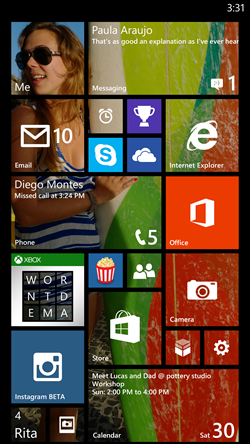
Windows Phone
operating system for mobile devices created by Microsoft

ChromeOS
ChromeOS (sometimes styled as chromeOS and formerly styled as Chrome OS) is a proprietary operating system designed and developed by Google. It is derived from the open-source operating system (which itself is derived from Gentoo Linux), and uses the Google Chrome web browser as its principal user interface.

netbook
thumb|A Samsung NC10 netbook computer
A netbook is a small-sized and inexpensive laptop; the term was used throughout the late 2000s and early 2010s, designed mostly as a means of accessing the Internet and being significantly less expensive than full-sized laptops with lower or cut-down specifications.
thumb|An Acer Aspire One netbook sitting on a standard sized [[Toshiba Satellite laptop, demonstrating the size difference]]
At their inception in late 2007, as smaller-than-typical laptop computers optimized for low weight and low cost, netbooks began appearing without certain then-standard la

Chromium
free and open-source cross-platform web browser

Chromebook
Chromebook (stylized in all-lowercase) is a line of laptops, desktops, tablets and all-in-one computers that run ChromeOS, a proprietary operating system developed by Google.

MIUI
MIUI is a deprecated mobile operating system developed and used by Xiaomi for its smartphones and mobile devices from 2010 to early 2024, prior to the launch of its successor Xiaomi HyperOS. MIUI was based on the Android Open Source Project. Xiaomi produced versions for Xiaomi-branded smartphones and its own Poco, MIUI Pad, MIUI Watch, and MIUI TV (PatchWall).

CyanogenMod
CyanogenMod ( ; CM) is a discontinued open-source operating system for mobile devices, based on the Android mobile platform. Developed between 2009 and 2016, it was free and open-source software based on the official releases of Android by Google, with added original and third-party code, and based on a rolling release development model. Although only a subset of total CyanogenMod users elected to report their use of the firmware, on 23 March 2015, some reports indicated that over 50 million people ran CyanogenMod on their phones. It was also frequently used as a starting point by developers o
Ubuntu Touch
mobile interface for Ubuntu, developed by UBports
Windows Phone 8.1
third generation of Microsoft's Windows Phone mobile operating system
mini PC
small, inexpensive, low-power, legacy-free desktop computer designed for basic tasks
SRWare Iron
web browser based on Chromium
gOS
Linux distribution
Xiaomi HyperOS
mobile personalization layer based on Android published by Xiaomi
AliOS
AliOS (formerly YunOS and Aliyun OS) is a Linux distribution developed by Alibaba Cloud, a subsidiary of Mainland Chinese company Alibaba Group. It is designed for smart cars and Internet of Things (IoT) devices, and it had been used as a mobile operating system.
Replicant
free software version of Android

Joli OS
Linux distribution
Comodo Dragon
web browser based on the Chromium web browser
Android Things
embedded operating system
plug computer
Small, compact computer resembling an AC outlet plug/adapter
Chromebit
The Chromebit was a stick PC running Google's ChromeOS. It was able to be plugged into any display via HDMI to act as a personal computer. Keyboards and mice were able to be connected over Bluetooth or Wi-Fi. The device was announced in April 2015 and began shipping November 2015. The Chromebit no longer received updates after November 2020.
Chromebox
A Chromebox is a small form-factor PC that runs Google's ChromeOS operating system. The first device debuted in May 2012.
Rclone
Rclone is an open source, multi threaded, command line computer program to manage or migrate content on cloud and other high latency storage. Its capabilities include sync, transfer, crypt, cache, union, compress and mount. The rclone website lists supported backends including S3 and Google Drive.
OPhone
OPhone (also known as OPhone OS, and sometimes called OMS, short for Open Mobile System) was a mobile operating system running on the Linux kernel and based on early versions of Android. The operating system was developed for China Mobile by software firm Borqs.
Baidu Yi
Mobile operating system
Zonbu
Zonbu was a technology company that marketed a computing platform which combined a web-centric service, a small form factor PC, and an open source based software architecture. Zonbu was founded by Alain Rossmann (previously founder and CEO of Openwave) and Gregoire Gentil (previously co-founder of Twingo Systems).