File:Samsung_laptop_nc10.jpg · Wikimedia Commons · See Wikimedia Commons
netbook
Sign in to saveAlso known as nettop
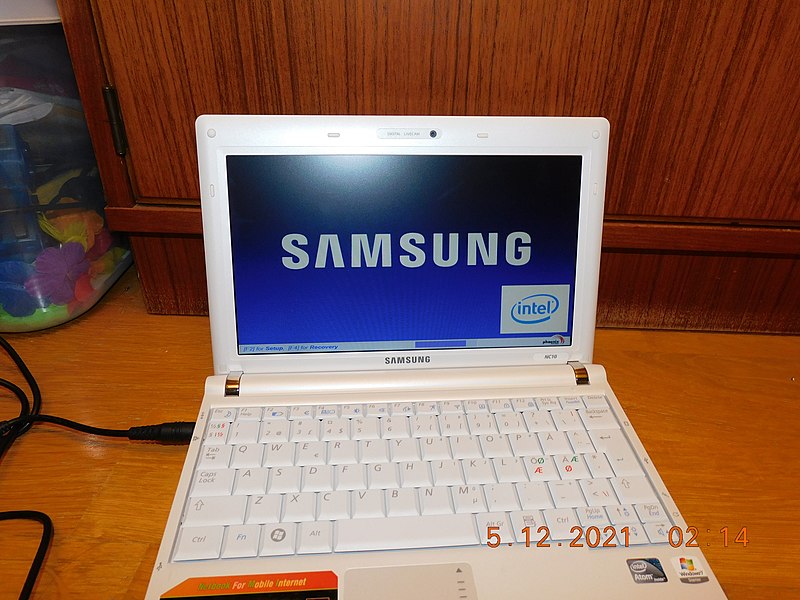
thumb|A Samsung NC10 netbook computer A netbook is a small-sized and inexpensive laptop; the term was used throughout the late 2000s and early 2010s, designed mostly as a means of accessing the Internet and being significantly less expensive than full-sized laptops with lower or cut-down specifications. thumb|An Acer Aspire One netbook sitting on a standard sized [[Toshiba Satellite laptop, demonstrating the size difference]] At their inception in late 2007, as smaller-than-typical laptop computers optimized for low weight and low cost, netbooks began appearing without certain then-standard la
A netbook is a small, inexpensive laptop computer that became popular in the late 2000s and early 2010s, designed primarily for accessing the Internet with lower specifications than full-sized laptops. These devices mattered because they offered an affordable computing option for people who mainly needed web browsing and basic tasks rather than the more powerful features of traditional laptops.
AI-generated from the Wikipedia summary — may contain errors.
Wikidata facts
- Instance of
- form factor
- Subclass of
- subnotebook
- Image
- Laptop, Small notebook, Netbook, Rostov-on-Don, Russia.jpg
Show 3 more facts
- Commons category
- Netbooks
- topic's main category
- Category:Netbooks
- inception
- 2007-00-00
Sources (3)
via Wikidata · CC0
~18 min read
Encyclopedic overview
13 sectionsContents
- History
- Educational use
- Hardware
- Operating systems
- Windows
- Android
- ChromeOS
- Other
- Use
- Trademarks and Psion lawsuit
- See also
- References
- External links
thumb|A Samsung NC10 netbook computer A netbook is a small-sized and inexpensive laptop; the term was used throughout the late 2000s and early 2010s, designed mostly as a means of accessing the Internet and being significantly less expensive than full-sized laptops with lower or cut-down specifications. thumb|An Acer Aspire One netbook sitting on a standard sized [[Toshiba Satellite laptop, demonstrating the size difference]] At their inception in late 2007, as smaller-than-typical laptop computers optimized for low weight and low cost, netbooks began appearing without certain then-standard laptop features (such as an optical drive), and with less computing power than in full-sized laptops. They ranged in size from about 5" screen diagonal to 12", with a typical weight of about (), and were often significantly less expensive than other laptops. Soon after their appearance, netbooks grew in size and features, and converged with smaller laptops and subnotebooks until the specifications were so similar that there was little distinction between the devices. At their peak, the low cost gave them a significant portion of the laptop computer market.
When Windows 7 released, netbook manufacturers had to increase specifications in order for their devices to run it. This pushed netbooks into a market niche where they had few distinctive advantages over traditional laptops. With these constraints and the increasing popularity of tablet computers in 2011, it led to declining sales of netbooks. By the end of 2012, few new laptops were marketed as "netbooks", and the term disappeared from common usage.
Excerpted from Wikipedia’s “netbook” article, available under the CC BY-SA 4.0 licence.