Category
page 1Cnidaria orders
.jpg)
Siphonophorae
Siphonophores (from Ancient Greek σίφων (siphōn), meaning "tube" and -φόρος (-phóros), meaning "bearing") are cnidarian animals of the hydrozoan order Siphonophorae. According to the World Register of Marine Species, the order contains 194 species described thus far.
Rhizostomeae
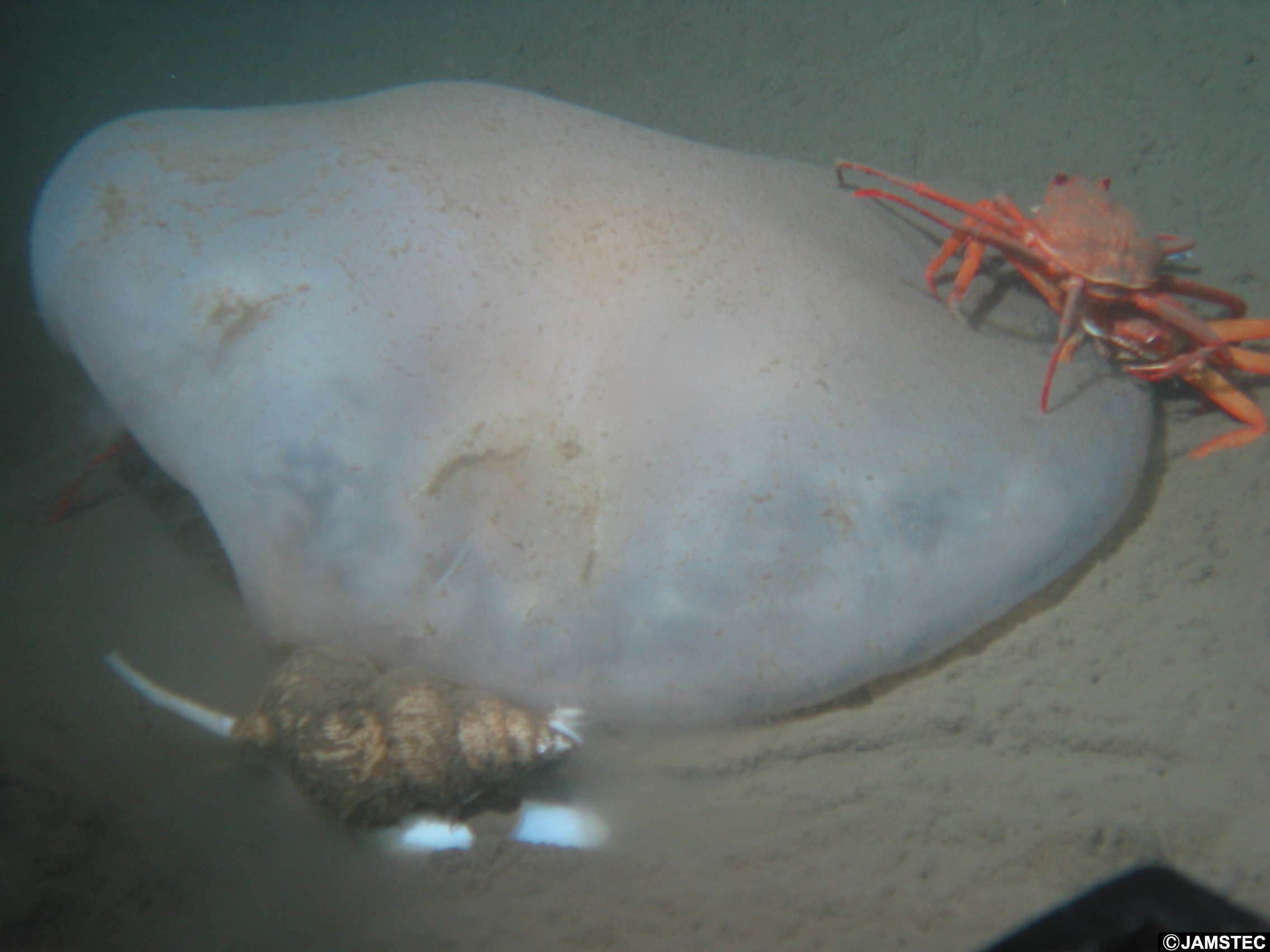
Rhizostomeae is an order of jellyfish. Species of this order have neither tentacles nor other structures at the bell's edges. Instead, they have eight highly branched oral arms, along which there are suctorial minimouth orifices. (This is in contrast to other scyphozoans, which have four of these arms.) These oral arms become fused as they approach the central part of the jellyfish. The mouth of the animal is also subdivided into minute pores that are linked to coelenteron.

Semaeostomeae
Semaeostomeae (literally "flag mouths") is an order of large jellyfish characterized by four long, frilly oral arms flanking their quadrate mouths. The umbrella is domed with scalloped margins, and the gastrovascular system consists of four unbranched pouches radiating outwards from the central stomach; no ring canal is present. They usually possess eight tentacles; four are per-radical and four are inter-radical.

Crown jellyfish
order of cnidarians

Trachymedusae
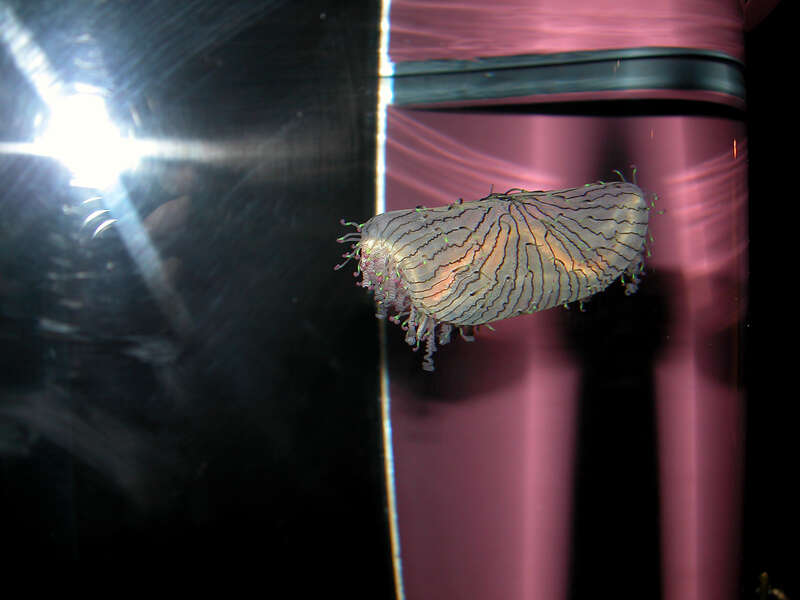
Trachymedusae belong to the phylum Cnidaria and the class Hydrozoa. The Trachymedusae include five families, among which are 30 genera and around 50 species in all. The family Rhopalonematidae has the greatest diversity.
Limnomedusae
Limnomedusae is an order of hydrozoans.

Leptothecata
Leptothecata, or thecate hydroids, are an order of hydrozoans in the phylum Cnidaria. Their closest living relatives are the athecate hydroids, which are similar enough to have always been considered closely related, and the very apomorphic Siphonophorae, which were placed outside the "Hydroida". Given that there are no firm rules for synonymy for high-ranked taxa, alternative names like Leptomedusa, Thecaphora or Thecata, with or without the ending emended to "-ae", are also often used for Leptothecata.
Narcomedusae
Narcomedusae is an order of hydrozoans in the subclass Trachylinae. Members of this order do not normally have a polyp stage. The medusa has a dome-shaped bell with thin sides. The tentacles are attached above the lobed margin of the bell with usually a gastric pouch above each. There are no bulbs on the tentacles and no radial canals. Narcomedusans are mostly inhabitants of the open sea and deep waters. They can be found in the Mediterranean in large numbers. Narcomedusae are essential to the ecosystem as they are top-down regulators for the midwater environment.

Anthoathecata
Anthoathecata, or the athecate hydroids, are an order of hydrozoans belonging to the phylum Cnidaria. A profusion of alternate scientific names exists for this long-known and heavily discussed group. It has also been called Gymnoblastea and (with or without an emended ending -ae), Anthomedusa, Athecata, Hydromedusa, and Stylasterina. There are about 1,200 species worldwide.
Actinulida
Actinulida are an order of hydrozoans in the subclass Trachylinae. Very small, medusoid Hydrozoa without polyp phase, living in the sand interstitial, solitary, bell entirely or very much reduced, epidermis ciliated, 1-2 whorls of tentacles, statocysts present or not, club shaped and derived of ecto- and entodermal tissue; cnidome may include stenoteles.
Bivalvulida
Bivalvulida is an order of myxosporean parasites which contains a number of species which cause economically significant losses to aquaculture and fisheries, such as Myxobolus cerebralis and Ceratomyxa shasta. The Myxosporean stages of members of the bivalvulida are characterised by their two spore valves (hence the name), which meet in a "suture line" which encircles the spore. They usually contain two polar capsules, but species have been reported which contain either one or four.
Multivalvulida
Multivalvulida is an order of myxozoan.
Ceriantipatharia
Ceriantipatharia (rare synonym: Hexacorallia Goette, 1902 [non Haeckel, 1866]) is a taxon (usually a subclass) of Anthozoans used in some systems. It consists of the two taxa (usually orders) Ceriantharia (tube anemones) and Antipatharia (black corals).